Applications
See-Shell: 3D printed transparent skull to ‘see’ how the brain works
At the University of Minnesota, researchers have developed a unique 3D printed transparent skull implant for mice. The skull named the See-Shell can be used to view real-time activity on the brain surface and could provide new insights for human…
- 3 min read
- Applications
- Six more stories

At the University of Minnesota, researchers have developed a unique 3D printed transparent skull implant for mice. The skull named the See-Shell can be used to view real-time activity on the brain surface and could provide new insights for human brain conditions such as Alzheimer’s and Parkinson’s disease.
Suhasa Kodandaramaiah, Ph.D. and co-author of the study explains, “What we are trying to do is to see if we can visualise and interact with large parts of the mouse brain surface, called the cortex, over long periods of time. This will give us information about how the human brain works.” The study published in the journal Nature Communications states that non-human primates share similar genetics, anatomy, physiology and behaviour to humans; in this case mice provide a good substitute. Timothy J.Ebner, Professor at the University of Minnesota and co-author of the study comments, “These are studies we couldn’t do in humans, but they are extremely important in our understanding of how the brain works so we can improve treatments for people who experience brain injuries or diseases.”
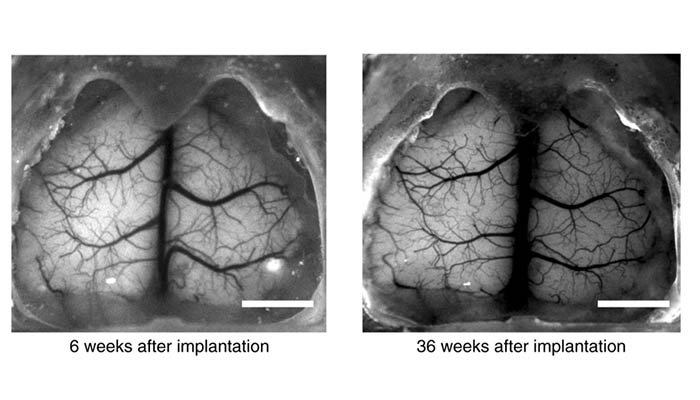
Image via Nature communications
3D Printing the See-Shell
In order to make the See-Shell, the researchers digitally scanned the surface of the mouse’s skull and then used this to model the frame using CAD software. The frame has the same contours as the original skull and was 3D printed out of PMMA (also known as acrylic). On the frame, a thin and transparent PET film was attached forming the window to the mouse’s brain. Following this, the top of the mouse skull was replaced with the 3D printed transparent skull device. Suhasa Kodandaramaiah explains, “This new device allows us to look at the brain activity at the smallest level zooming in on specific neurons while getting a big picture view of a large part of the brain surface over time. Developing the device and showing that it works is just the beginning of what we will be able to do to advance brain research.”
More from the desk
Six other notes from the rest of the bench.
 ApplicationsRelativity Space to Open New 1M Square Foot Factory in CaliforniaA few weeks ago, Relativity Space announced that it had raised $640M to scale production of its entirely 3D printed rocket, Terran R. Now, we know how they intend to use at least part of those funds. Yesterday, the company…
 NewsTop 5 Videos: Korthotics’ 3D Printed Orthoses and More!This week, we introduce you to Korthotics, the Australian company that, through 3D printing, produces custom orthotics. Thanks to 3D technologies, Korthotics is able to offer its patients fast and reliable production. For the second video, we’re taking this opportunity to r
 GuidesNano Dimension on the Future of Electronics in Additive ManufacturingAdditive manufacturing has been growing in importance in a number of different industries in the past few years. The ability to create objects that are customizable, more optimized, and often cheaper than parts created through traditional methods has made AM…
 NewsU.S. Army 3D prints their first concrete barracksThe U.S. Army’s Construction Engineering Research Laboratory (CERL) in Champaign, Illinois, has announced the successful construction of a 512-square foot, 3D printed concrete barracks. The laboratory used an in-house 3D printing technology that was developed in partnership
 NewsWEBINAR: How to Start and Scale a 3D Printing ServiceOn the 29th of October, 3Dnatives hosted a webinar on how to start and scale a 3D printing service. Mike Moceri, CEO of MakerOS, led this masterclass in not just how to build a 3D printing service from the ground up,…
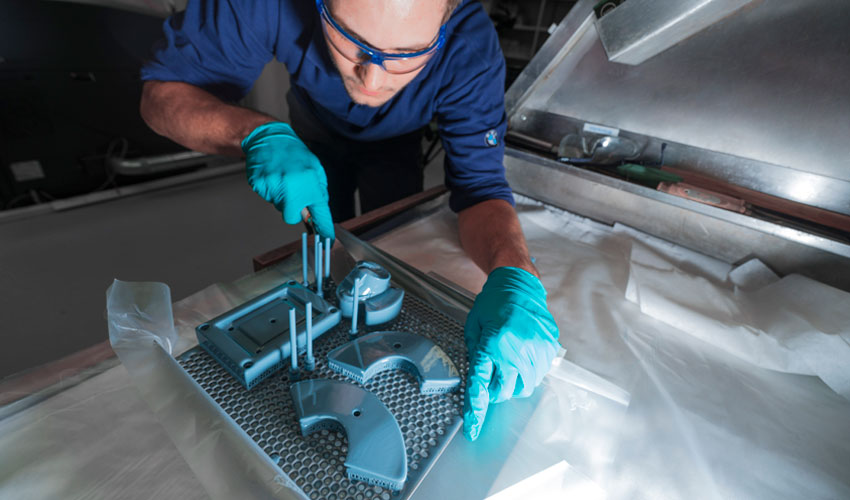 NewsBMW accelerates the integration of additive manufacturing into its production cycleGerman automaker BMW has announced the launch of a new additive manufacturing plant to accelerate the implementation of the technology in its manufacturing process. The construction of this additive manufacturing campus will cost 10 million euros and is expected to…