News
3D Printed Runners for Hydropower Dams to be Developed by ORNL
According to the Department of Energy (DOE), hydropower accounts for nearly 27% of utility-scale renewable electricity generation in the United States. A runner, the rotating part of a turbine that turns the energy of falling water into electricity, is key…
- 3 min read
- News
- Six more stories

According to the Department of Energy (DOE), hydropower accounts for nearly 27% of utility-scale renewable electricity generation in the United States. A runner, the rotating part of a turbine that turns the energy of falling water into electricity, is key to this technology. However, runners are almost entirely produced overseas; when they fail, it can take years to create and receive replacements. To address this problem, the DOE allocated $15 million to their Oak Ridge National Laboratory so they could develop a system to produce runners themselves. Their project, the Rapid Research on Universal Near Net Shape Fabrication Strategies for Expedited Runner Systems (Rapid RUNNERS), will develop a program combining additive manufacturing and conventional tools to produce runners domestically.
Throughout the three-year project, the Rapid RUNNERS team at ORNL will create the software, hardware, robotics, and manufacturing strategies necessary to produce these large components. The program relies on software that allows six or more robots to work simultaneously, completing tasks like wire arc welding, grinding, metrology, and other functions traditionally done by workers.
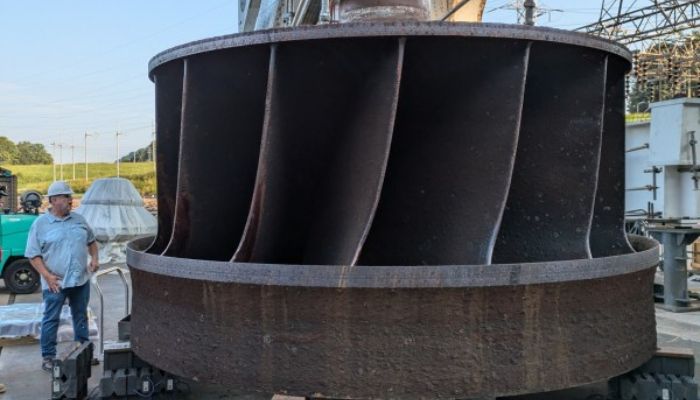
ORNL’s Jay Tiley inspects a hydroelectric runner from TVA’s Cherokee Dam (photo credits: Jim Tobin/ORNL, U.S. Dept. of Energy)
At ORNL, Rapid RUNNERS will produce three runners for hydropower dams, demonstrating their system’s capability. They’ll fabricate the runners using a robotic welder that will deposit metal layer by layer. While the solution used isn’t explicitly noted, the technology clearly falls under Directed Energy Deposition, DED. This AM strategy will quickly create metal parts that are close to the desired final dimensions, known as near-net-shape. Traditional machining techniques will then be used for post-processing in a way that is more time and materially-efficient than existing procedures.
More from the desk
Six other notes from the rest of the bench.
 ApplicationsHow is Additive Manufacturing Being Adopted in Defense?When it comes to the military, flexibility and innovation are key in ensuring the success of operations in all corners of the globe. Indeed, when we think of military personnel one of the underlying characteristics of their actions is rapidity,…
 ApplicationsA Customizable Concept Car Made With 3D PrintingAt the Japan Mobility Show held at the end of last year, carmaker Daihatsu Motor Co presented several new vehicles. One of these was a concept car called me:MO, featuring several 3D-printed parts. The small electric car is said to…
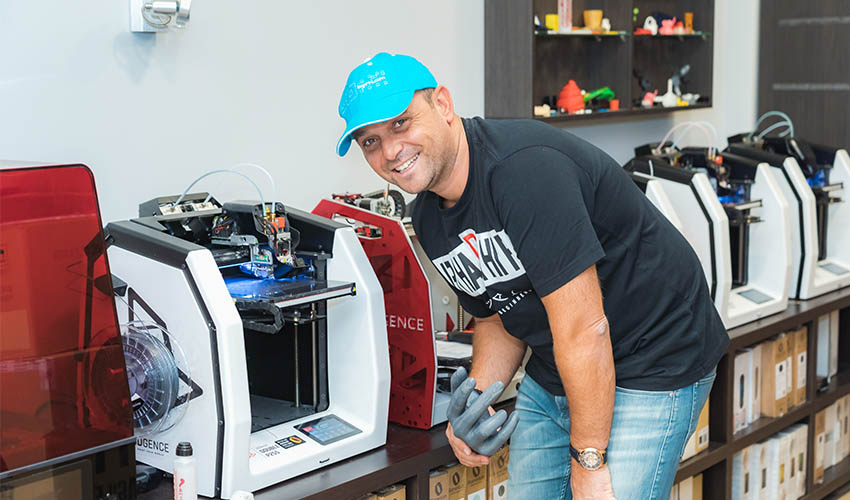 Guides3DBGPRINT gives access to 3D printing technologies in Europe3DBGPRINT was founded by Yordan Angelov, who, after spending his early career in marketing and sales in big software companies in Bulgaria decided to found a consultancy business in additive manufacturing. Therefore, 3DBGPRINT was founded in 2013 to inform, educate…
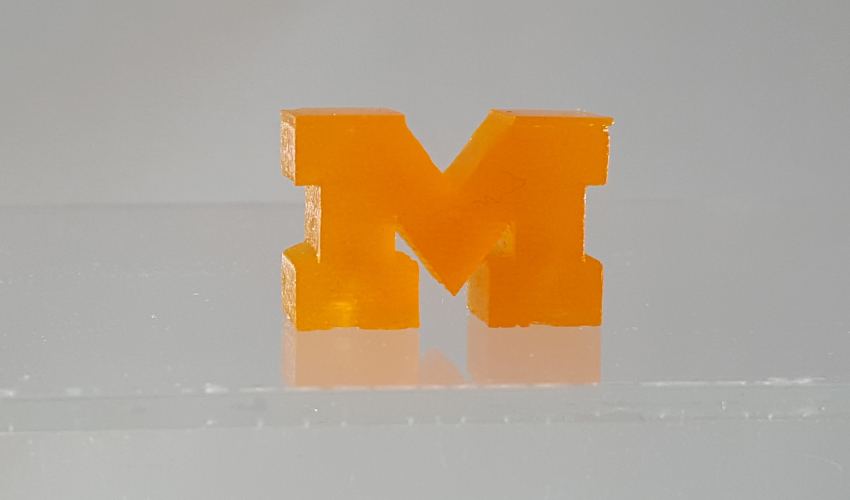 News3D Printing with Light: it’s 100 times fasterAt the University of Michigan, researchers have developed a new 3D printing method which is 100 times faster than normal. The paper published in the journal Science Advances described the new process; it promises faster and more efficient small-scale manufacturing…
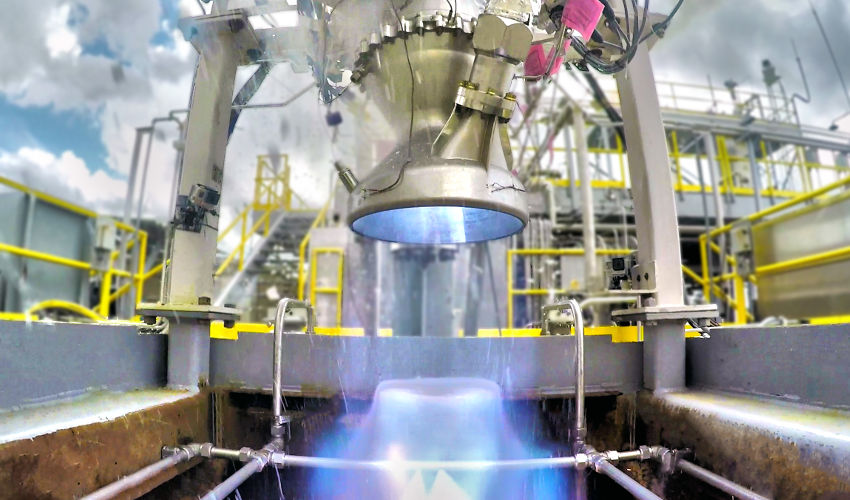 Guides#3DStartup: Relativity Space, Creating 3D Printed Rockets for MarsAdditive manufacturing pushes the earth’s limits and invades space : Relativity Space is a perfect example! This American startup has invented a 3D printing method to create whole rockets that could well take off in a few years. Their Stargate process would indeed be&hellip
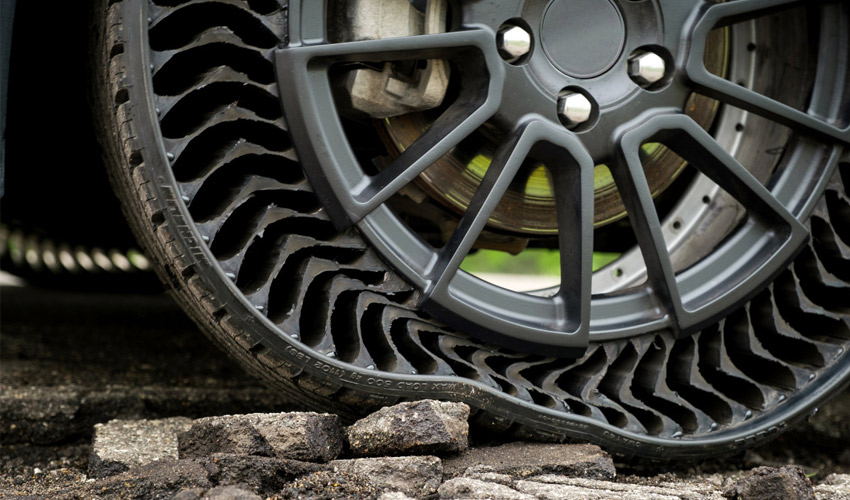 ApplicationsUptis, airless and puncture-proof tire thanks to 3D printingThe French tire manufacturer Michelin presented its first prototype tire, supported by additive manufacturing technologies – it is called Uptis (Unique Puncture-proof Tire System) and it is a mounted assembly designed without air to avoid all punctures. The company worked&h