Applications
3D Printed Lunar Regolith Bricks Can Withstand the Extreme Environments in Space
Since the first space flight in the 1960s, humankind has dreamed of not just visiting the stars but of residing among them. Though living on the Moon or Mars might seem like science-fiction, it is actually something that is being…
- 3 min read
- Applications
- Six more stories
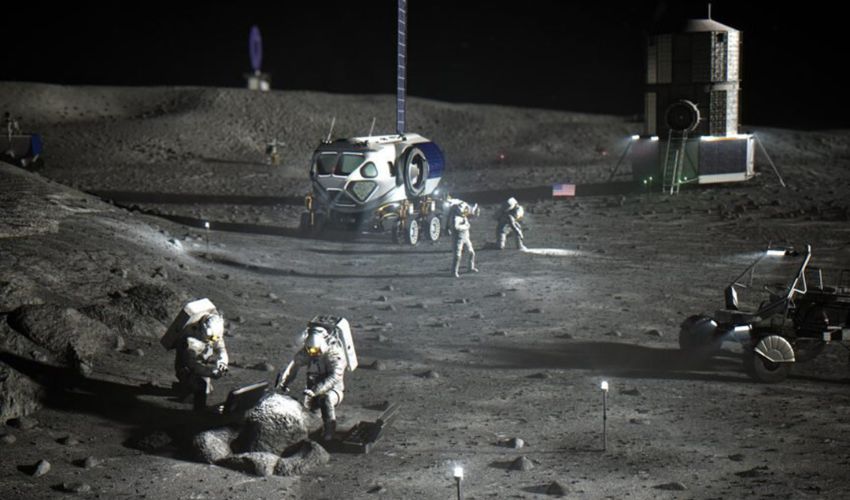
Since the first space flight in the 1960s, humankind has dreamed of not just visiting the stars but of residing among them. Though living on the Moon or Mars might seem like science-fiction, it is actually something that is being actively worked towards by a number of organizations and 3D printing may be one of the keys to its success. And now it may be one step closer to feasibility. Researchers at the University of Central Florida have successfully created 3D printed bricks that could be used to construct bases on the Artemis Base Camp made out of lunar regolith and saltwater.
This is certainly not the first time that efforts have been made to use 3D printing for housing in space. In fact, there are a number of projects that are currently ongoing testing. This includes Redwire’s testing on the international space station to determine whether lunar regolith, or the soil and rock deposits on the surface of the Moon could be used to create habitations, NASA’s current work with AI Space Factory on a 3D printed lunar habitat and Washington State University’s research into 3D printing on Mars. However, up to this point it has been relatively hypothetical. This is one of the first projects to show that regolith bricks are able to withstand the extreme environments that are found in outer space.
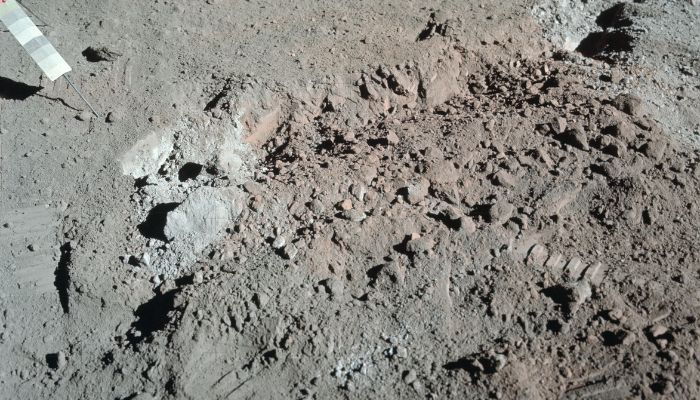
Lunar regolith consists of loose rocks, dust and materials found on the surface of the Moon (photo credits: NASA)
3D Printed Lunar Regolith Bricks Able to Withstand Extremes
The study Effect of sintering temperature on microstructure and mechanical properties of molded Martian and Lunar regolith was published in a recent issue of Ceramics International and was undergone by researchers from a team led by Associate Professor Ranajay Ghosh from UCF’s Department of Mechniacal and Aersopace Engineering. The lead author is Peter Warren, a research assistant, but co-authors include Nandhini Raju, Hossein Ebrahimi, Milos Krsmanovic and aerospace engineering professor Seetha Raghavan and Jayanta Kapa. They sought to discover whether a fixed Artemis base camp on the Moon could be constructed from these 3D printed lunar regolith bricks.
More from the desk
Six other notes from the rest of the bench.
 NewsiPhone X Face ID Deceived by 3D Printed MaskSince being announced in September, the iPhone X is Apple’s latest smartphone release. New features of the iPhone X include a facial recognition tool to unlock the device or send payments. When presented, Apple lauded how accurate their tool was.…
 NewsCOBOD and PERI 3D print 4 houses in 4 days at BautecIn Berlin, the international Bautec construction exhibition gathered over 30,000 visitors from more than 40 countries. This was the perfect occasion for COBOD, one of the leading actors in concrete 3D printing to demonstrate the productivity of their BOD2 3D…
 PrintersA New Resin 3D Printer Combines a CT Scanner and Light to Increase its SpeedAt the Technical University of Denmark (DTU), a team of researchers have developed a new kind of 3D printer whose technology combines a CT scanner and light. By reversing the principle of CT scanning, they could create all types of…
 NewsScan the World and its Open Source 3D models of Cultural ArtifactsFor several years, many artists have used 3D printing to create their works. American-Israeli artist, Neri Oxman, for example, is known internationally for her 3D printed designs. In the United States, England and South America, several artists have happily turned…
 GuidesCurifyLabs and the Automated Production of Personalized Medicines through 3D PrintingCurifyLabs is a Finnish healthcare company specializing in the development of solutions for the production of personalized medicines in pharmacies and hospitals. Thanks to 3D printing and the inks it has developed, the company offers a complete package for producing…
 NewsWhat are the best 3D startups of 2020?Startups are young companies with innovative business ideas. They serve as drivers and integrators of digitalization and promote competitiveness and innovation. As the 3D printing market still has a great potential for growth, startups are of great importance in the…