Applications
A Network of 3D-Printed Blood Vessels to Facilitate Transplants
At the Israel Institute of Technology, Technion, scientists have created a network of 3D-printed blood vessels that would be able to supply the necessary amount of blood to an implanted tissue. Still in the research stage, this project could have…
- 3 min read
- Applications
- Six more stories
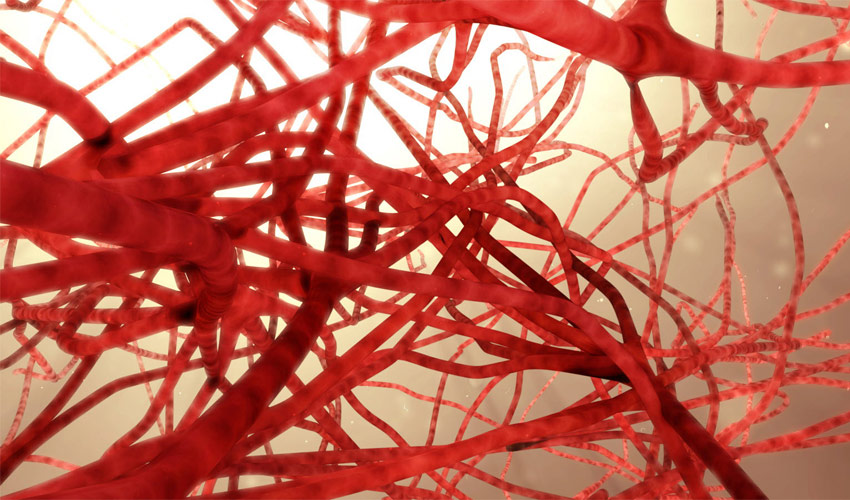
At the Israel Institute of Technology, Technion, scientists have created a network of 3D-printed blood vessels that would be able to supply the necessary amount of blood to an implanted tissue. Still in the research stage, this project could have a significant impact on the implantation of tissues in humans: the tissues in question could indeed be better assimilated by a patient and reduce the risk of rejection. The use of 3D printing would also offer a personalized solution to each individual, thus improving operations. This blood vessel network has been successfully tested on a rat and the objective is to move on to larger animals such as pigs.
By using additive manufacturing in their research, many scientists are able to reproduce organs, blood vessels, tumors, or tissues to improve medical operations, their understanding of certain diseases, or reduce the risks associated with transplants. For example, the University of California at San Diego has 3D-printed scaffolds that allow the creation of blood vessels to better treat cancerous tumors. In this case, the team in Israel seeks to improve tissue transplants in a patient.
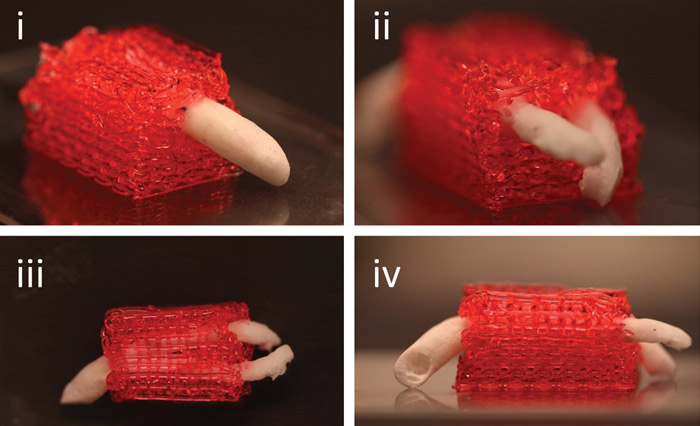
The researchers first 3D-printed a scaffold covered with a 3D printed hydrogel. (Photo Credit: Advanced Materials)
3D-Printed Blood Vessel Network Made from Collagen
When a patient receives new tissue, it must first be permeated by the body’s blood vessels so that it can receive all the nutrients and oxygen it needs to function and survive. The tissue is therefore first implanted in a “healthy” area of the patient’s body, before being placed in the right location. This step adds a certain complexity to the operation and an additional delay. However, Technion scientists have devised a 3D-printed solution to directly feed this new tissue without going through the patient’s body.
More from the desk
Six other notes from the rest of the bench.
 ApplicationsOsseus Announces FDA510 clearance Of New Pisces-SA ALIF SystemAmerican medical device company Osseus recently announced the launch and FDA 510(k) clearance of its Pisces-SA standalone Anterior Lumbar Interbody Fusion (ALIF) system. It has been developed to be used with bone screws and alternative fixation bone anchors to enable…
 PrintersSLS: The New 3D Printer from Dynamical ToolsDynamical Tools are a Spanish 3D printer manufacturer based in Zaragoza. They are rapidly expanding and have recently moved into a new, larger headquarters. Their CEO, Pablo Murillo, says “We do not want to stop growing and we work hard…
 NewsWEBINAR: Mass Production in Additive ManufacturingAdditive manufacturing applications are rapidly evolving. Manufacturers are moving from rapid prototyping to small or even large series production. Their objective is to leverage the benefits of additive manufacturing such as the ability to design custom-made, complex and durable
 NewsMonitoring Food Freshness With 3D Printing and Neural NetworksCan we rely on our five senses to know if fruits and vegetables are fresh or not? In most cases, it is enough to observe, smell or touch the food to realize that we can eat it. In these cases,…
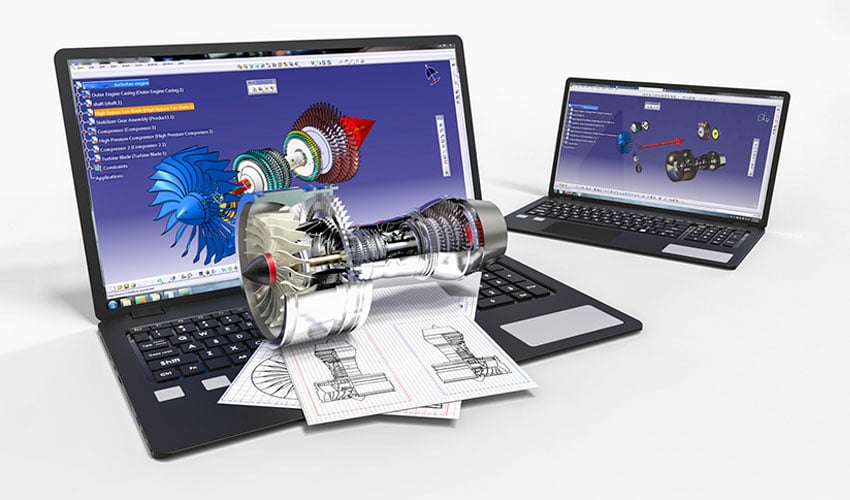 SoftwareThe Top CAD Software for All LevelsThe software used for designing a 3D printed part depends entirely on what it is and its complexity. In general, modeling software can be separated into two categories: CAD software and 3D modeling software. In the case of CAD software, it is used to…
 GuidesPlat Institute and the Use of 3D Printing as a Gastronomic ToolIn the culinary field, the use of new technologies is increasingly present. This growth is mainly due to the need to find innovative methods that offer users new gastronomic experiences. In Spain, one of the organizations that is investigating this…