News
3D Printed Bacon Is Hitting European Supermarkets
Plant-based products are revolutionizing the food industry. Already, in many European countries especially, a wide range of these foods are now available in supermarkets and people see them as a healthy alternative to eating meat in large quantities. It is…
- 3 min read
- News
- Six more stories
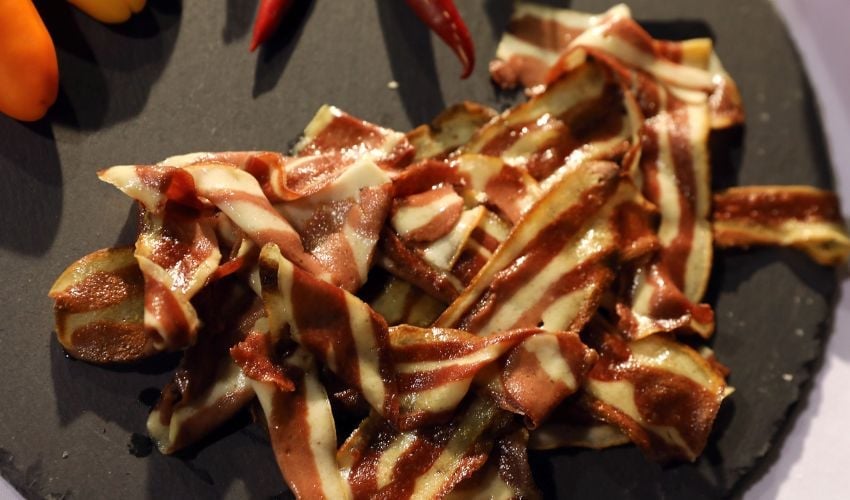
Plant-based products are revolutionizing the food industry. Already, in many European countries especially, a wide range of these foods are now available in supermarkets and people see them as a healthy alternative to eating meat in large quantities. It is even possible to find plant-based tuna, salmon or pork, which are very similar in taste and texture to the animal models they are modeled on. This trend is also present in Spain. There, the companies Cocuus and Foodys are continuously promoting the consumption of meat alternatives and are pioneers in the Spanish market for plant-based products as an alternative to meat. Now they are attracting attention with 3D printed bacon.
In recent years, Foodys has launched products such as burgers and nuggets made from plants in an attempt to imitate the original food model. The basic idea is to create an alternative to meat in order to promote sustainability. At Foodys, all products are plant-based, but at Cocuus this does not apply to all products. For its part, the company works with 3D printing in four different areas, from 3D printing meat from plants, cells or the meat itself to what they call “softmimic”, i.e. purées that resemble real food. Thanks to the combination of these different areas, it was possible to produce 3D-printed bacon.
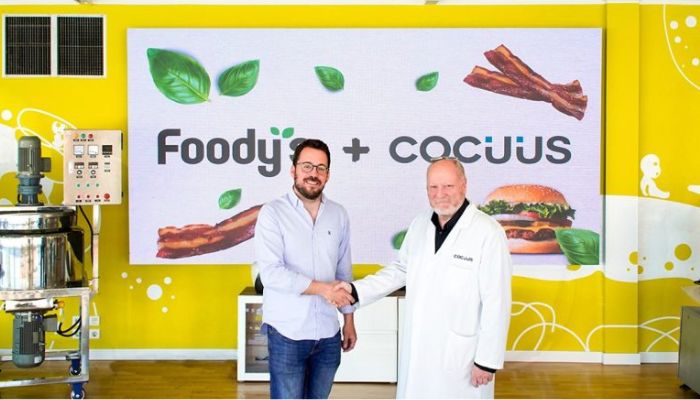
A photo to commemorate the start of the project between Foodys and Cocuus (photo credits: Foodys and Cocuus)
The two companies started this joint project a few months ago with the intention of building the world’s first large-scale plant-based 3D printed organic food facility. Companies such as REVO FOODS also produce 3D printed plant-based foods on a large scale, but do not have a production facility like Cocuus and Foodys. Thanks to this project, one thing has become clear: The production of 3D-printed bacon requires fewer resources and causes less pollution. “We are able to reproduce in five minutes the bacon that two pigs produce in a lifetime,” says Cocuus.
More from the desk
Six other notes from the rest of the bench.
 ApplicationsRelativity Space Unveils Next Generation Metal 3D Printers for RocketsOut of all the sectors using additive manufacturing, aerospace has always been one of the pioneers when it comes to embracing the technology. Indeed, 3D printing is critical for a variety of applications in the field thanks to its ability…
 NewsP-Rouette, the 3D printed ballet slippersP-Rouette is the new invention of Hadar Neeman that should interest more than one ballet dancer. He has created 3D printed ballet slippers. This young graduate of the Academy of Art and Design of Bezalel has found the solution to most…
 NewsThe SPE Additive Manufacturing and 3D Printing Chapter on Its Work to Promote Plastic 3D PrintingAt this point, you have almost certainly heard about the Society of Plastics Engineers (SPE). But did you know that there is an SPE Chapter dedicated entirely to additive manufacturing and 3D printing? We had the opportunity to speak with…
 NewsFormnext 2023 Puts the Nordic Region in the SpotlightFormnext 2023 has officially opened its doors! As people travel around the world to enjoy conferences, discussions and more, the role of exhibitors in particular cannot be ignored. Especially those who come to take part while representing the annual partner…
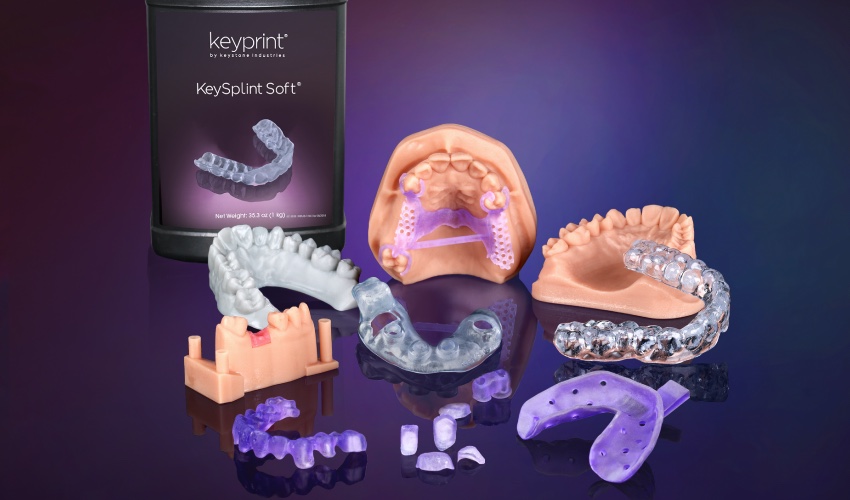 ApplicationsPartnership between Henkel and Keystone to advance dental AM solutionsAccording to the report by a consulting and market research firm, QY Research, the dental 3D printing industry is expected to reach $930 million by the end of 2025. In other words, the market is estimated to grow at an annual…
 NewsDubai Launches World’s First Certification Program for the 3D Printing Construction SectorThe additive manufacturing construction sector has been growing exponentially due to its fast completion time and lower labor costs, with projects cropping up all over the world. Concrete 3D printing in particular has seen marked development in its construction practices…