Applications
3D Printed Acoustic Holograms to be Used to Treat Nervous System Diseases
Recently, a research team has used 3D printing to create acoustic holograms to treat diseases in the nervous system. The project has been developed thanks to a collaboration between the Polytechnic University of Valencia (UPV), the Spanish National Research Council…
- 3 min read
- Applications
- Six more stories
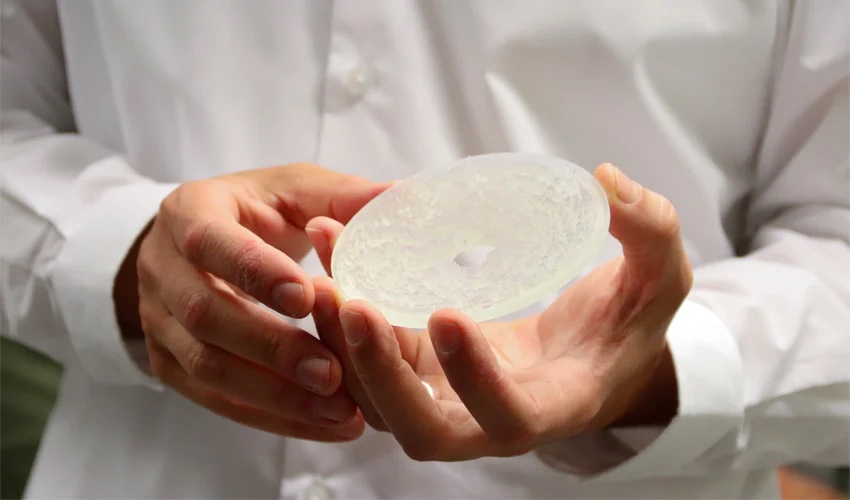
Recently, a research team has used 3D printing to create acoustic holograms to treat diseases in the nervous system. The project has been developed thanks to a collaboration between the Polytechnic University of Valencia (UPV), the Spanish National Research Council (CSIC) and Columbia University in the USA. Thanks to these devices, the blood-brain barrier could be opened in a selective, efficient and targeted manner. This would facilitate the administration of therapeutic drugs to treat this type of nerve pathology.
According to the Pan American Health Organization (PAHO), in 2019 neurological conditions accounted for 533,172 deaths in total or about 32.9 deaths per 100,000 people. This encompasses diseases such as Alzheimer’s, Parkinson’s, multiple sclerosis and schizophrenia. However, already in 2020 it was possible to see advancements in the treatment of neurodegenerative diseases with 3D printing, thanks to a device created by the company Renishaw. Now, the research team made up of the aforementioned organizations continues to bet on this technology thanks to the multiple advantages it offers in the field of health and the development of medical devices.
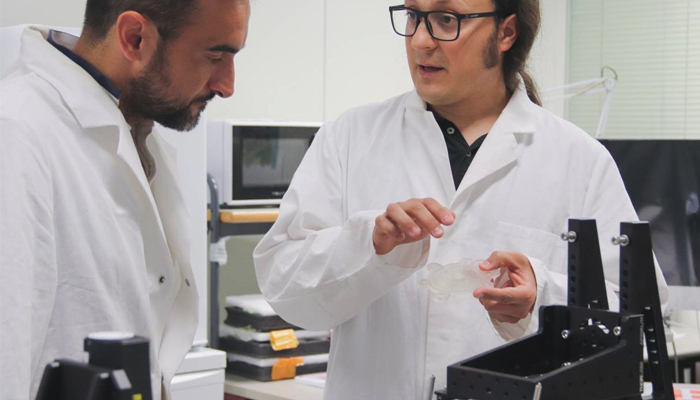
Photo Credits: UPV
3D Printed Acoustic Holograms
According to project experts, focused ultrasound has great potential in the treatment of neurological diseases. This is due to the ability to generate therapeutic effects in a precise and noninvasive manner. However, it is difficult to apply them to the structures of the nervous system for various reasons. These include the aberration and attenuation effects of the skull bones, and the complex spatial distribution of brain structures. To solve this problem, the researchers resorted to the additive fabrication of 3D acoustic holograms.
More from the desk
Six other notes from the rest of the bench.
 NewsChina creates their first 3D printed bridgesThe School of Architecture and Urban Planning at Tongji University in Shanghai has created the first 3D printed pedestrian bridges in China. The two bridges were made of plastic and measure 11 meters and 4 meters long. With China’s latest…
 NewsA 3D Printed Elephant Sculpture is Emerging From a Storefront in ChinaImagine a metal elephant coming out of a store window when you are doing your holiday shopping. Well, in China, it’s a reality! The I Do store has installed a 9-meter high metal sculpture to enhance its design, with the…
 News3D Daily Show #2: Industrial 3D Printing MaterialsFor the 3D Daily Show #2, we took a look at industrial 3D printing materials and tried to understand how they can improve production performance. We walked the aisles of the show to find out which materials were the most…
 NewsDo Shapeways and voxeljet’s Announcements Indicate Growing Momentum in AM?2024 has not been the most straightforward one for additive manufacturing. While we have seen incredible applications and innovations throughout the year, there have also been a number of economic difficulties. Notably, we have seen companies like KIMYA closing and…
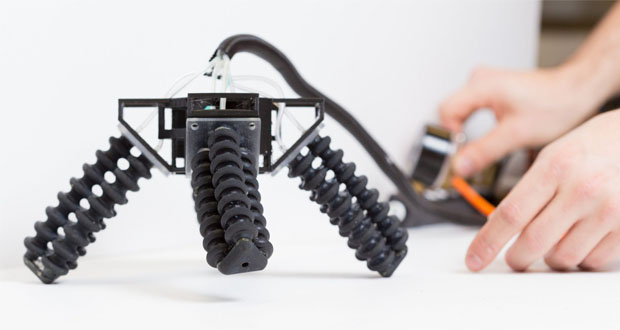 NewsIntroducing this 3D printed robot that is able to walk on multiple terrainsScientists at the University of California San Diego have used 3D printing to create robots that have the ability to walk on different surfaces, including sand. The 3D printed robot could be used to retrieve information in hazardous environments or…
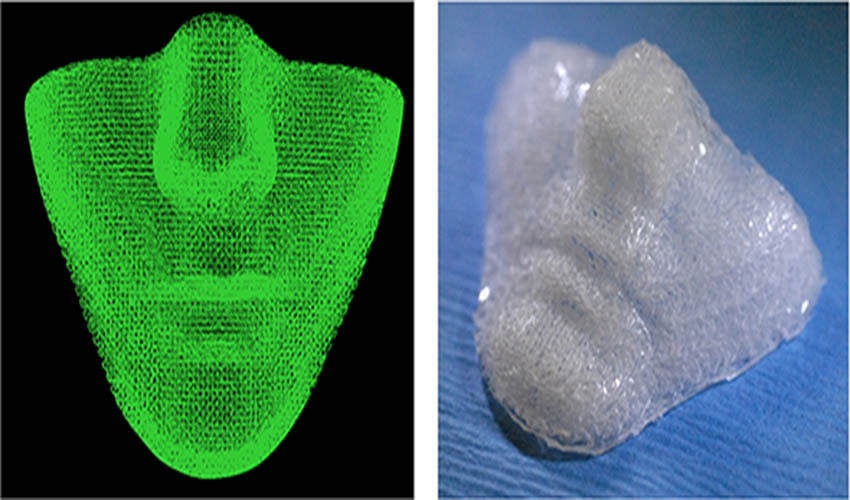 NewsA team from the Wake Forest Institute for Regenerative Medicine 3D bioprints face mask to heal woundsThe Wake Forest Institute for Regenerative Medicine (WFIRM) in the United-States aims to translate scientific discovery into clinical therapies. Today, this interdisciplinary team is working to engineer more than 30 different replacement tissues, organs and develop healing cell t