Applications
$1.8M in Funding Given to 3D Print ‘Organ-on-a-Chip’ to Eliminate Animal Testing
In pharmaceuticals, the development of new treatments involves a long series of tests and strict government scrutiny. The arduous journey from theory to drug approval is fraught with challenges. One of the biggest is undoubtedly the current testing methods that…
- 3 min read
- Applications
- Six more stories
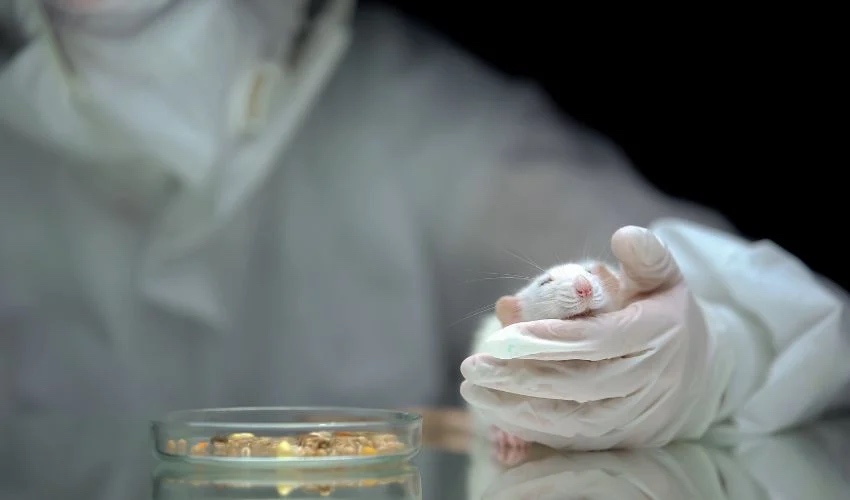
In pharmaceuticals, the development of new treatments involves a long series of tests and strict government scrutiny. The arduous journey from theory to drug approval is fraught with challenges. One of the biggest is undoubtedly the current testing methods that experiment on animals before human trials are initiated. In addition to being subject to criticism over the ethics involved, there is a discrepancy in testing drugs on such different living beings. Even so, the most recent data indicate that every year more than 110 million animals are sacrificed in laboratories in the United States alone.
But what can be done? It turns out that a $1.8 million grant has recently been announced by the National Institutes of Health (NIH) for a project that will seek to develop solutions to try to put an end to this type of testing. The team brings together experts from multiple institutions, including Georgia Tech, Virginia Tech and Harvard Medical School, and will be led by Jeff Schultz, co-founder of 3D printed microfluidics company Phase Inc.
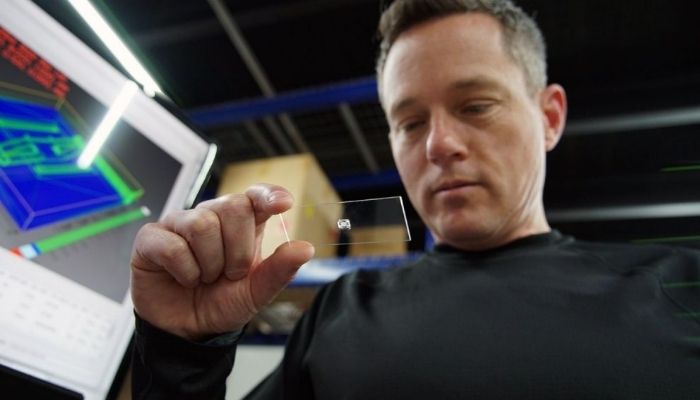
Jeff Schultz holding a 3D printed organ-on-a-chip (photo credits: Alex Parrish/Virginia Tech).
How Has the ‘Organ-on-a-Chip’ Come About?
The reality is that all team members have already been working together for some years in this line of research. From now on, Rafael Davalos, Seemantini Nadkarni, Amrinder Nain and Jeff Schultz will combine their expertise with Phase Inc.’s 3D printing technique to overcome the remaining challenges. This innovative approach leverages organ-on-a-chip technology, where small devices made of microfluidics simulate the functions of human organs. By testing drugs on these cell-based platforms, researchers can obtain more accurate and reliable data on how drugs will work in the human body.
More from the desk
Six other notes from the rest of the bench.
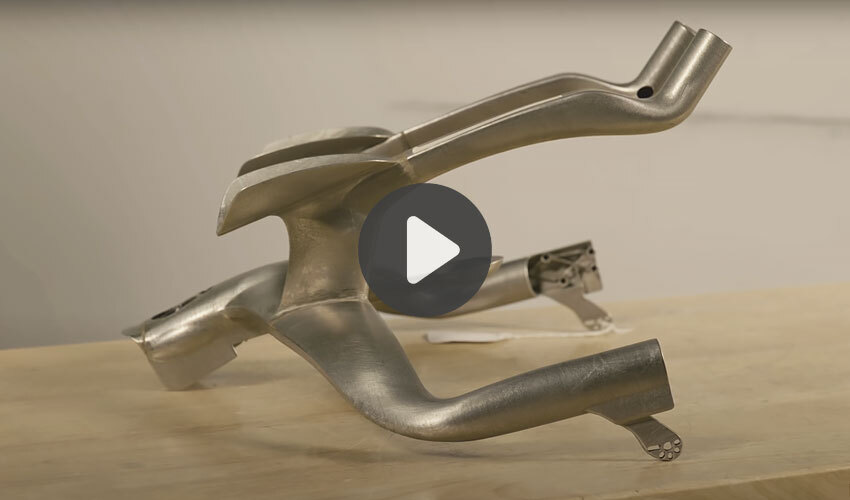 NewsTOP 5 Videos: 3D Printed Titanium BikeThis week we found the top 5 videos about 3D printing and the way additive manufacturing is changing production. The technology has infiltrated many sectors, from medical to automotive: check our selection of the week to keep up with the innovations! If you enjoy these, you&helli
 ApplicationsThe 3D printed fiberglass boat, MAMBO, finally takes to the open seaRemember that 3D printed fiberglass boat we were showing you in the aisles of Formnext 2019? Designed by Moi Composites in collaboration with Autodesk, Catmarine, Micad and Owens Corning, it finally went to sea! Named MAMBO (Motor Additive Manufacturing Boat), it…
 News#3DExpress: Aectual Announces its Own 3D Printed WoodIt’s time to take a look back at some of the news that has marked the additive manufacturing sector this week! We start this 3DExpress with a new development from Aectual: the company is now offering 3D-printed objects made from…
 GuidesJay Dinsmore Debunks Common Misconceptions in Additive ManufacturingPart of the reason additive manufacturing (AM) has been able to grow so steadily and become ever stronger since its origins in the 80s is because of the people involved. This is especially the case when it comes to organizations…
 NewsRoyal Caribbean and Snapchat bring 3D printing underwaterSnapchat, the video and photo-sharing app, is the cornerstone of many people’s vacations; used as a key form to show off your latest foodie endeavor or the latest beach you’ll be laying on for the next week. Now, thanks to…
 NewsThe SPE Additive Manufacturing and 3D Printing Chapter on Its Work to Promote Plastic 3D PrintingAt this point, you have almost certainly heard about the Society of Plastics Engineers (SPE). But did you know that there is an SPE Chapter dedicated entirely to additive manufacturing and 3D printing? We had the opportunity to speak with…