Software
10 Reasons Why DfAM Matters in 3D Printing
At this point, if you are involved with additive manufacturing, you know just how important design is for the creation of a part, with modeling being the first step in any 3D printing process. Enter Design for Additive Manufacturing, or…
- 3 min read
- Software
- Six more stories
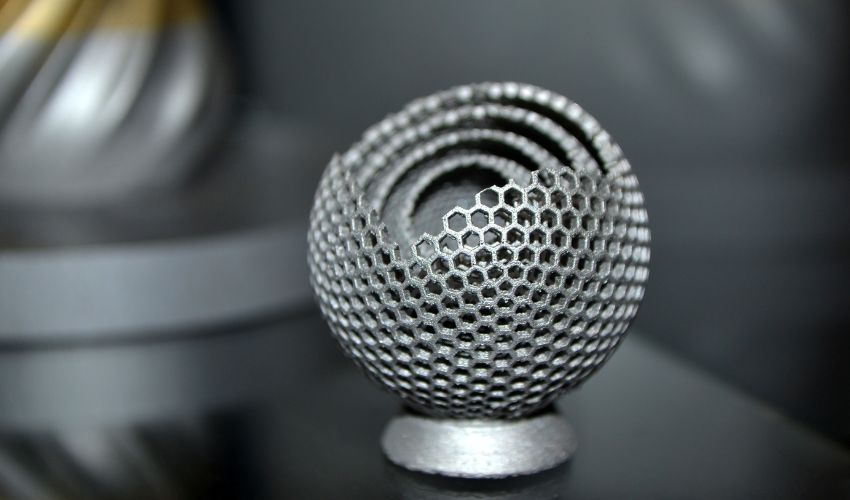
At this point, if you are involved with additive manufacturing, you know just how important design is for the creation of a part, with modeling being the first step in any 3D printing process. Enter Design for Additive Manufacturing, or DfAM as it is more commonly known. Defined as “design for manufacturability” for additive manufacturing, or more simply as the design methods and tools that can optimize parts that are created using additive manufacturing, DfAM allows users to take advantage of the benefits of the design freedom that is present in 3D printing and is key to creating functional, high-performing parts. But, even with that knowledge, DfAM is sometimes ignored in the industry. But why is it important? What benefits can it bring to parts? We explore these questions in our new editorial format where we list 10 reasons why DfAM matters in 3D printing.
#1. Reduced 3D Printing Mistakes
Printing failures are the bane of any user of additive manufacturing technologies. Especially when it comes to highly industrial processes, such as LPBF or SLS which use lasers, or expensive materials like PEEK and PEKK, small mistakes that ruin the part can really set users back in terms of cost and time. This is where the value of DfAM becomes quickly obvious. Through design, it is possible not just to properly orient and support the model (both of which go a long way in ensuring properties such as isotropy and in ensuring there will be no warping), but also to allow users to choose the right infill and layer settings for a part. This in turn significantly reduces print failures.
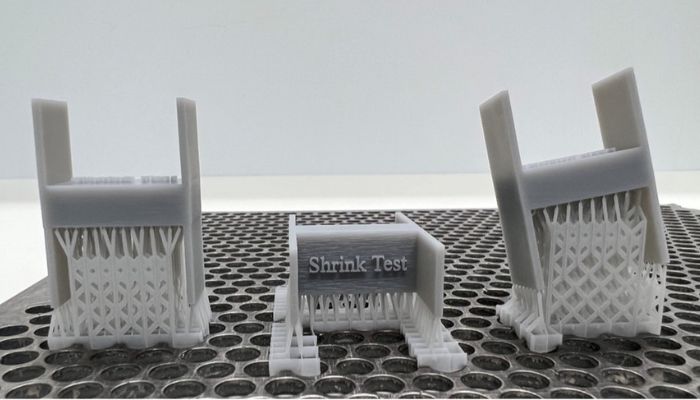
Correction orientation is one of the considerations in DfAM (photo credits: Protolabs)
#2. Faster Printing
Speed is a core benefit of additive manufacturing as the technologies enable users to create parts at a fraction of the time that would be used with conventional manufacturing methods. However, that speed is not a given. By using DfAM, it is possible to optimize the design using tricks like lattice structures to keep the strength while minimizing the amount of material that needs to be used. It also will allow users to minimize support structures which, as will be discussed below, also cuts down on print time.
More from the desk
Six other notes from the rest of the bench.
 News#TOP5 videos: A 3D printed house and much more!We found the TOP 5 videos of the week related to 3D printing and collected the additive manufacturing here. You can enjoy even more 3D printing videos on the our Youtube channel, as well as share your videos and comment on…
 NewsProtolabs acquires 3D Hubs to launch largest digital manufacturing platformFrom today, 3D Hubs will officially become a part of Protolabs. The two companies announced earlier that they had sealed a deal in a definitive agreement. In it, Protolabs will acquire 3D Hubs in a $280 million deal, of which…
 SoftwareThangs, the new most powerful search engine for 3D models?Physna has just announced the launch of Thangs, the world’s first geometric search engine for 3D models. Just a couple of days after its release, the platform is already deemed the most powerful online community for 3D model creators. Physna,…
 NewsTest Form ENRegister and win a Bambu Lab PS1 3D Printer! * Required Email * First Name * Last Name * Company * Country * 3D Printing IndustryAerospaceAutomotive and transportArchitecture / ConstructionDesignConsumer GoodsEducationElectronicManufacturingMakers / FabLabMedicalOil and GasOther
  ApplicationsTop 5 Videos: Manufacturing Scooters & Recreus’ New Purifier FilamentDid you know that the manufacture of skates and scooters is not what it used to be? Advances in new manufacturing technologies have reimagined the way these modes of transportation are produced. And that’s what we’ll see in the weekly…
 GuidesMeet the “3D-Up!” App: Delivering Maximum Performance In Orthopedic TechnologyOrthopedic technicians create personalized orthopedic aids, combining traditional skills with digital technologies. Yet, while digital tools are increasingly part of their workflow, additive manufacturing often remains underutilized. Many technicians lack the time or expertise to