News
HENSOLDT and Nano Dimension create 10-layer 3D printed circuit board
Sensor solutions provider HENSOLDT together with the one of the leading Additively Manufactured Electronics (AME) providers, Nano Dimension, has achieved a major breakthrough on its way to utilizing 3D printing in the development process of high-performance electronics components
- 3 min read
- News
- Six more stories
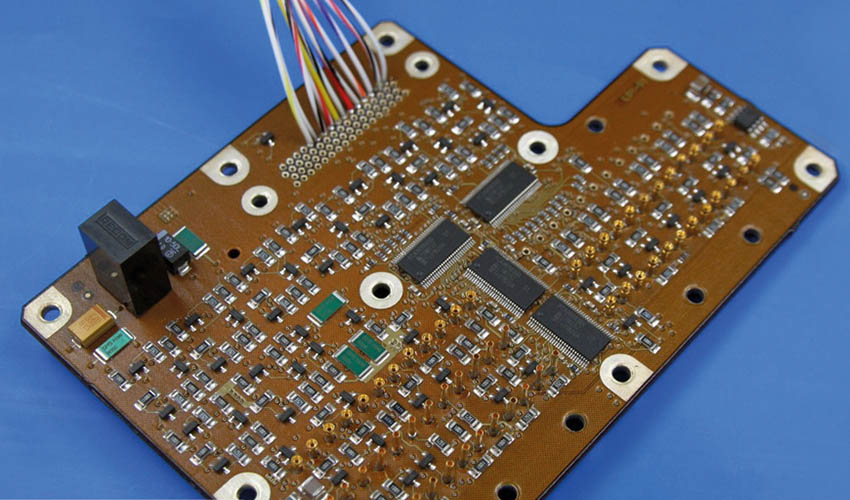
Sensor solutions provider HENSOLDT together with the one of the leading Additively Manufactured Electronics (AME) providers, Nano Dimension, has achieved a major breakthrough on its way to utilizing 3D printing in the development process of high-performance electronics components. As you may know, the electronics industry is one of the least well versed in additive manufacturing. Over the last few years, the sector has been slowly integrating AM technologies into its activities for prototyping and small series production. Additive manufacturing can bring new capabilities by enabling a new-level of customization for micro and nanoscale electronics components. Clearly demonstrated by HENSOLDT and Nano Dimension’s new breakthrough.
In fact, utilizing a newly developed dielectric polymer ink and conductive ink from Nano Dimension, HENSOLDT succeeded in assembling the world-wide first 10-layer 3D printed circuit board (PCB) which carries high-performance electronic structures soldered to both outer sides. Until now, 3D printed boards could not bear the soldering process necessary for a two-sided population of components. This application could be useful for many sectors that require a high level of precision and performance. Thomas Müller, HENSOLDT CEO, explains: “Military sensor solutions require performance and reliability levels far above those of commercial components. To have high-density components quickly available with reduced effort by means of 3D printing gives us a competitive edge in the development process of such high-end electronic systems.”
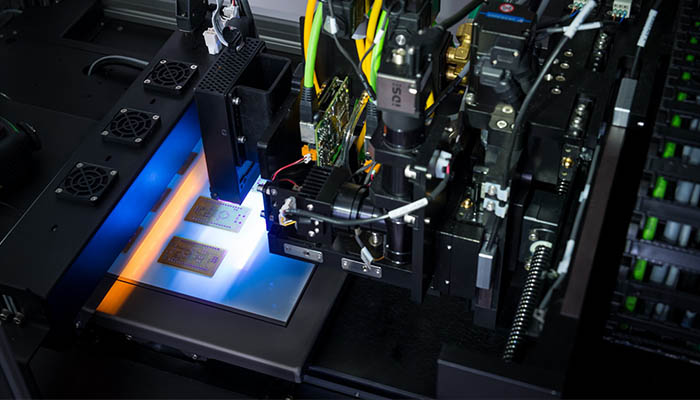
Nano Dimension’s technology can produce 3D printed circuit boards | Credits: Nano Dimesion
Nano Dimension has developed and been using an inkjet 3D printing technology to produce electronic components for some years now. Based on photopolymerization, their printhead deposits dielectric nanoparticles, conductive nanoparticles and polymers onto the build plate, which are cured by UV light in between successive depositions – creating structures that are conductive and insulating at the same time.
More from the desk
Six other notes from the rest of the bench.
 ApplicationsRocket Lab Set to be Valued $4.1 billion Following MergerRocket Lab USA has just announced that it will become publicly traded in after entering into a definitive merger agreement with Vector Acquisition Corporation. The well-established end-to-end space company is a global leader in the launch, space systems and space…
 PrintersBenefits of an SLS 3D Printer: with Natural RoboticsThe technology of selective laser sintering involves creating objects via a powder material. It was developed in the 80s, but in its early years it was inaccessible to most because of its high price. In 2014 the patent expired, opening…
 News3D Hubs raises $18M to invest in its automation capabilities3D Hubs, one of the world’s largest network of manufacturing services has just raised $18 million in series C funding. The investment round was led by the Dutch growth capital investment firm Ended Capital and will focus on developing the…
 PrintersStratasys to acquire Origin and launch in the polymers marketStratasys has announced that it will acquire the 3D printing startup Origin Inc. in a transaction for total consideration of up to $100 million. Origin Inc. is a US-based startup that introduced its Origin One 3D printer back in May…
 GuidesLino3D facilitates the integration of 3D printing technologies for industry professionalsExpert in 2D printing for more than 30 years, the Greek Lino Group recently opened an entity fully dedicated to additive manufacturing. Named Lino3D, this unit aims to support manufacturers in their manufacturing process, to help them choose the right…
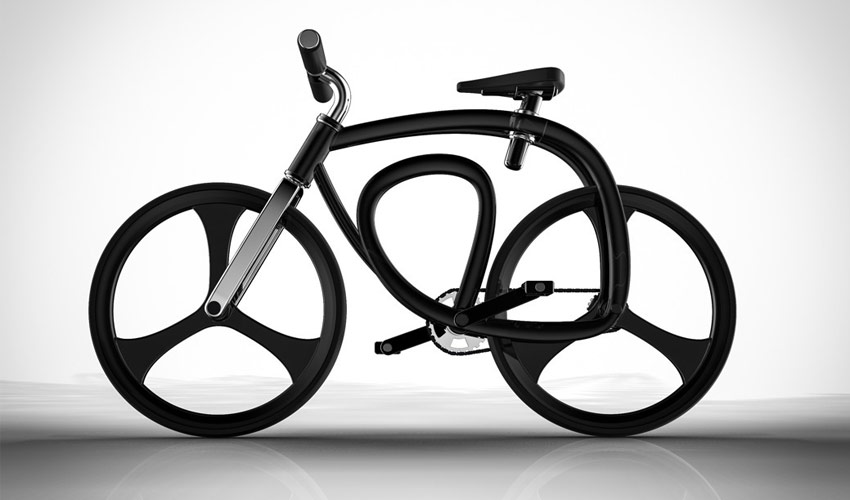 NewsA 3D printed bicycle with a futuristic lookFor some time we have been clear that 3D technologies could also impact the cycling industry. Whether manufacturing puncture proof tires or lighter structures. But the design of Steve Jenkins went further this time by proposing a futuristic bicycle completely 3D printed. It gives