
Revolutionizing Your Plate: The Future of Food with 3D Printed Vegan Steaks
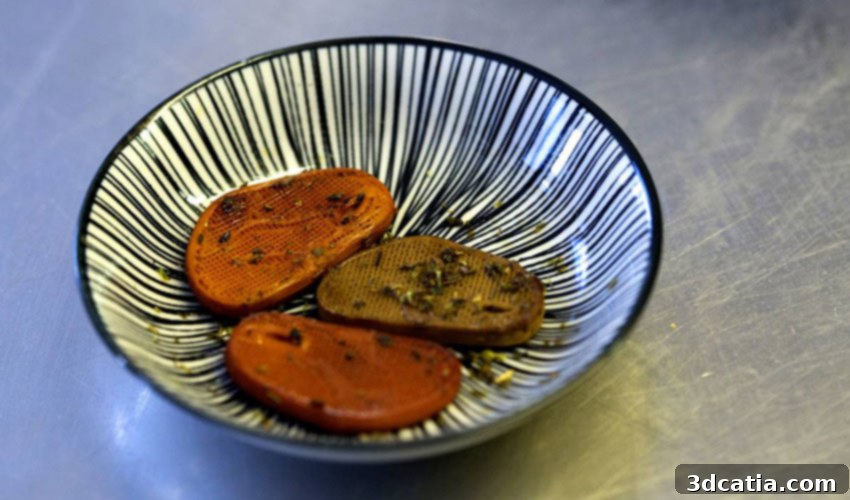
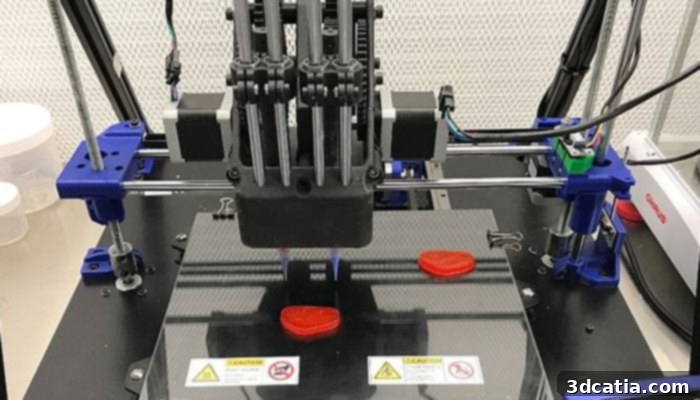
Imagine a world where your favorite steak is not derived from an animal, but meticulously crafted by a 3D printer, layer by delicious layer. This seemingly futuristic concept is rapidly becoming a reality, thanks to pioneering research in food technology. Italian researcher Giuseppe Scionti, from the Polytechnic University of Catalonia in Barcelona, has successfully developed a groundbreaking project that modifies a standard fused deposition modeling (FDM) 3D printer to produce various vegetable-based steaks. His innovative approach aims to perfectly mimic the appearance and texture of traditional animal meat, offering a compelling alternative that addresses critical concerns around animal welfare and environmental sustainability. While the notion of a printed steak might initially sound unconventional or even unappetizing to some, it represents a significant leap forward in food science, particularly at a time when vegetarianism, veganism, and plant-based diets are gaining unprecedented momentum worldwide.
The application of 3D printing in food is not entirely new; we’ve seen fascinating developments like 3D printed menus in school canteens, designed to make meals more appealing and potentially more nutritious for children. However, Scionti’s work delves into a more ambitious and impactful domain: the production of sophisticated plant-based meat substitutes. Specifically, he focuses on creating a dish that replicates the intricate fibrous structure and visual appeal of a genuine piece of steak. This innovation not only opens up new culinary possibilities but also provides a tangible solution to the ethical and environmental challenges associated with conventional meat production, moving us closer to a future where sustainable and humane food options are readily available and widely accepted.
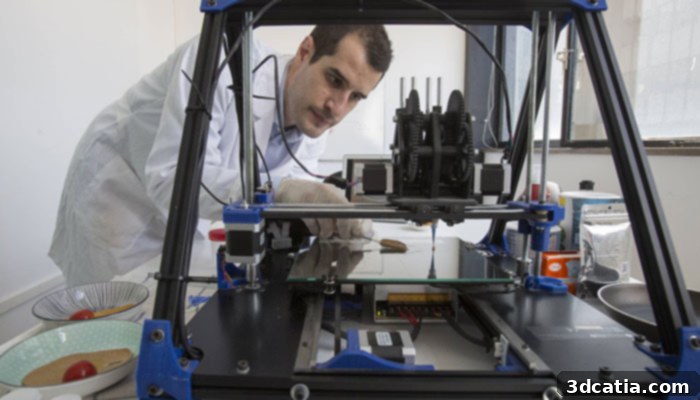
Giusseppe Scionti and his 3D printer
The Visionary Behind the Innovation: Giusseppe Scionti’s Mission
Giuseppe Scionti’s dedication to this project stems from a profound desire to combat the pervasive issue of animal exploitation within the food industry. His 3D printed steak is meticulously formulated from a combination of common plant-based ingredients: rice, peas, and seaweed. Through extensive experimentation, Scionti has managed to process these ingredients into a reddish paste that, when extruded, forms a texture remarkably similar to that of red meat. While the aesthetic refinement of the final product is an ongoing endeavor, the overarching objective remains crystal clear: to provide a viable, appealing, and sustainable alternative that can ultimately contribute to ending the exploitation of animals for food. This mission is particularly relevant in today’s global climate, where consumers are increasingly conscious of the origins of their food and its impact on the planet.
In an insightful interview with the Daily Mail, Scionti elaborated on the progress and challenges of his work. He candidly admitted, “The taste of the first prototypes is good, but it doesn’t mimic the taste of animal meat, yet.” However, this does not deter him. He confidently added, “However, that does not worry me, because the technologies to imitate the taste of animal meat have already been developed in the last years, while the main challenge for me was to obtain the animal meat-like consistency and texture, which was not invented yet.” This statement highlights a crucial distinction: while replicating taste is an important aspect that can be addressed by existing flavor technologies, achieving the authentic fibrous consistency and chewiness of animal meat through 3D printing was a novel hurdle Scionti successfully tackled. His focus on texture is paramount, as it is often a key determinant for consumer acceptance of meat alternatives, particularly for those accustomed to traditional meat products. This innovative approach to texture, combined with future taste enhancements, promises a truly compelling alternative.
Engineering a Plant-Based Culinary Experience
The Process of Creating a 3D Printed Steak
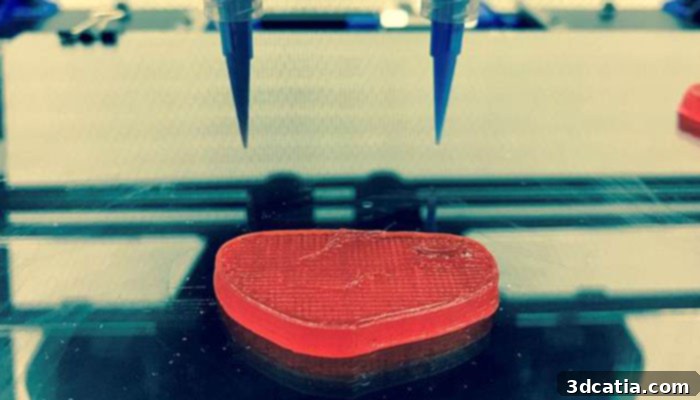
The creation of these innovative plant-based steaks hinges on a sophisticated adaptation of existing 3D printing technology. Scionti’s method involves using natural, globally approved proteins and algae as the foundational ingredients. These components are critical not only for their nutritional value but also for their structural properties, which enable the replication of meat-like consistency. The Italian researcher explains that he took a standard 3D printer and integrated a specialized syringe system. This syringe is designed to extrude the prepared plant-based paste with precision, transforming the mixture into minute printing micro-filaments. These filaments are then deposited layer by layer, gradually building up the desired form and structure of the meatless steak. The true “secret sauce” to the final texture, Scionti emphasizes, lies less in the printing process itself and more in the carefully formulated recipe of this paste. The unique combination and preparation of the ingredients are what give the printed steak its characteristic mouthfeel and fibrous quality, which is crucial for consumer acceptance. Nevertheless, the manufacturing technique itself, with its ability to precisely control the deposition of material, is what truly enables the creation of such a detailed and realistic product, offering an unparalleled degree of control over the final gastronomic experience.
Ingredients and Composition: Crafting the Perfect Plant-Based Bite
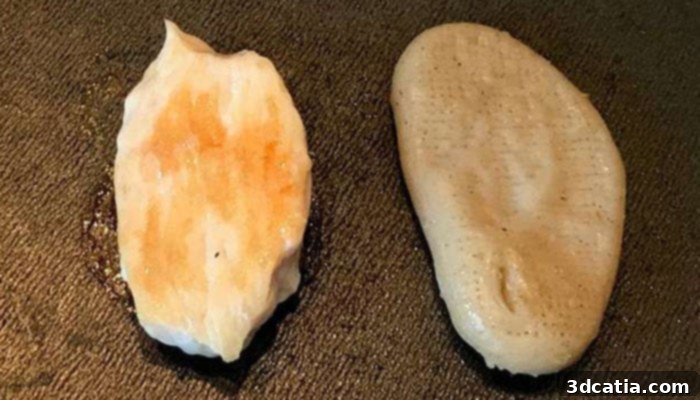
The choice of rice, peas, and seaweed as primary ingredients for Scionti’s 3D printed steak is both deliberate and strategic. Each component plays a vital role in achieving the desired characteristics of the final product. Rice provides a stable base and contributes to the overall structure and carbohydrate content. Peas are an excellent source of plant-based protein, crucial for both nutritional value and for mimicking the protein-rich nature of animal meat. Furthermore, pea protein can contribute to the texture and binding properties of the paste. Seaweed, on the other hand, brings a unique set of benefits. It can add subtle umami flavors, enhance the reddish coloration desired for a steak, and potentially offer beneficial micronutrients and gelling agents that aid in achieving the desired consistency. When combined and processed, these ingredients form a pliable paste that can be precisely extruded. The reddish hue of this paste is particularly important, as visual appeal is a significant factor in how consumers perceive food. By carefully balancing these natural ingredients, Scionti is able to construct a food product that is not only ethical and sustainable but also visually and texturally appealing, laying the groundwork for a truly convincing meat alternative.
Efficiency, Cost, and Market Potential
Accelerating Production: From Concept to Plate
Currently, Scionti’s innovative process allows him to produce a 110-gram raw vegetarian steak in approximately 30 to 50 minutes. While this timing represents a significant achievement in complex food manufacturing, the researcher is committed to further optimizing the process. His ambitious goal is to reduce the production time to a mere 10 minutes from start to finish, which would make the method significantly faster and more competitive than many existing plant-based meat manufacturing techniques. Such an improvement would be transformative, enabling higher volume production and broader commercial viability. Faster production times are essential for scalability, allowing these 3D printed steaks to move from a niche innovation to a mainstream food product capable of meeting the demands of a growing market. This efficiency is key to realizing the full potential of food 3D printing as a sustainable and accessible solution for future food systems.
An Affordable and Sustainable Solution
Beyond speed, the cost of production for these 3D printed steaks is another compelling aspect. The Italian researcher projects that the cost will not exceed 50 cents per steak. This incredibly low production cost is fantastic news for consumers, particularly for the ever-increasing number of vegetarians and vegans who are often seeking affordable and high-quality alternatives to animal products. A cost-effective solution makes plant-based eating more accessible to a wider demographic, removing a common barrier to adopting more sustainable dietary choices. The economic benefits extend beyond the consumer, potentially disrupting the traditional meat industry and promoting a more sustainable food economy. By offering a delicious, ethical, and inexpensive option, Scionti’s 3D printed steaks could play a pivotal role in accelerating the shift towards a more plant-centric global diet, benefiting both individual budgets and the planet.
Culinary Collaboration and Future Acceptance
The acceptance of any novel food product largely depends on its culinary appeal and how it is perceived by those who prepare and consume it. Scionti has already begun engaging with various chefs to introduce them to his innovative creation. Encouragingly, some chefs have shown considerable enthusiasm for the idea of incorporating a dish that visually and texturally resembles meat, yet offers a distinct, perhaps mushroom-like, flavor profile. This receptiveness from the culinary world is a crucial indicator of potential mainstream adoption. Chefs are trendsetters and gatekeepers in the food industry; their willingness to experiment with and feature 3D printed vegan steaks on their menus could significantly boost consumer interest and acceptance. The ability to present a familiar form with a unique plant-based taste opens doors for creative culinary applications, allowing chefs to innovate and cater to diverse dietary preferences while upholding ethical and environmental values. This collaborative approach between science and cuisine is vital for successfully integrating such advanced food technologies into our daily lives.
The Broader Landscape of Food 3D Printing
Giuseppe Scionti’s work is a shining example within the burgeoning field of food 3D printing, a technology poised to revolutionize how we produce, perceive, and consume food. Beyond mimicking traditional meat, food 3D printing offers immense potential in areas such as personalized nutrition, where meals can be tailored to individual dietary needs and preferences. Imagine elderly individuals with specific chewing difficulties, or patients requiring precise nutrient intake; 3D printing can create foods with customized textures and compositions. Furthermore, it holds promise in reducing food waste by utilizing unconventional ingredients or creating appealing forms from less desirable parts of produce. The ability to precisely control ingredients also opens up avenues for creating novelty foods, artistic culinary creations, and even food for space travel. While applications like 3D printed meals for school canteens focus on engagement and nutrition for children, Scionti’s endeavor elevates the technology to address fundamental ethical and environmental concerns, pushing the boundaries of what is possible in sustainable gastronomy.
Ethical and Environmental Imperatives: Why 3D Printed Vegan Meat Matters
The core motivation behind Scionti’s project—to end the exploitation of animals—resonates deeply with growing global awareness about ethical food choices. Traditional meat production is often associated with significant animal welfare concerns, from cramped living conditions to inhumane slaughter practices. By providing a delicious and convincing plant-based alternative, 3D printed vegan steaks offer a pathway to reducing reliance on animal agriculture, thereby alleviating these ethical burdens. Moreover, the environmental footprint of conventional meat production is staggering. It demands vast quantities of land for grazing and feed crops, consumes immense amounts of fresh water, and contributes significantly to greenhouse gas emissions through methane from livestock and deforestation. In contrast, plant-based alternatives like Scionti’s 3D printed steaks require substantially fewer resources, presenting a much more sustainable and eco-friendly option. This shift has the potential to mitigate climate change, conserve biodiversity, and ensure food security for a rapidly growing global population. The innovation is not just about a new way to eat; it’s about pioneering a more responsible and compassionate food system for the future.
What are your thoughts on this revolutionary 3D printed steak or this innovative vegetarian alternative? We invite you to share your opinions and insights by leaving a comment below or engaging with us on our vibrant Facebook and Twitter pages! Stay informed about all the latest advancements in additive manufacturing by signing up for our free weekly Newsletter, delivering cutting-edge news directly to your inbox!