
Mastering Additive Manufacturing: Your Comprehensive Guide to 3D Printing Training and Certification
Additive manufacturing, commonly known as 3D printing, has rapidly evolved from a niche technology into an indispensable production method. Its transformative potential is being embraced by an ever-increasing number of companies, ranging from multinational corporations and innovative startups to dynamic small and medium-sized enterprises (SMEs). However, effectively leveraging this technology demands a sophisticated understanding across various disciplines, including advanced modeling techniques, intricate machine operation, material science, and diverse application knowledge. This complexity underscores the critical importance of identifying and pursuing the right 3D printing training programs. Numerous reputable companies, educational organizations, and academic institutions now offer specialized courses designed to impart essential knowledge and equip professionals from all backgrounds with these in-demand skills. To help you navigate the myriad of options and make an informed decision, we’ve gathered invaluable insights and expert advice from three prominent leaders in the additive manufacturing field.
Our first distinguished expert is Professor John Hart, who serves as the Director of MIT’s Center for Additive and Digital Advanced Production Technologies (CADAPT) and holds a full professorship in the Department of Mechanical Engineering. In 2018, Professor Hart’s team pioneered MIT’s Additive Manufacturing for Innovative Design and Production program, which has since become one of the market’s leading professional online programs for AM. Our second expert is Rob Lent, the visionary VP and co-founder of Vision Miner. Vision Miner is dedicated to empowering and equipping the future leaders of additive manufacturing, helping businesses and individuals unlock their full potential in functional AM. The company offers specialized 3D printing services, expert consultation, and tailored training solutions, including personalized one-on-one packages designed to meet specific needs and experience levels. Last but certainly not least, our third expert is Alex Bordino, an Autodesk Inventor Certified Professional and an Accredited Stratasys Additive Manufacturing consultant based in the UK. Alex works with the 3D Print Academy, an organization committed to empowering design and engineering companies to achieve superior, faster, and more efficient designs through their first-class Autodesk and Additive Manufacturing training and consultancy services.
-

- Professor John Hart

-
- Robert Lent

-
- Alex Bordino

Exploring Your Learning Path: Different 3D Printing Training Options
Today, a significant hurdle to the widespread adoption of additive manufacturing at scale is the pervasive knowledge gap. With a vast array of courses and programs on the market, selecting the ideal training pathway can be daunting, especially for newcomers. Some programs are meticulously designed to introduce the fundamental principles of the technology, while others cater to professionals seeking advanced certifications or specialized knowledge for industrial applications. Professor John Hart from MIT emphasizes this crucial first step, stating, “Selecting the right course for you will require you to harmonize your personal learning objectives with the content approach, hands-on opportunities, and cost-benefit of any program you evaluate.” This thoughtful alignment of personal goals with program offerings is indeed an essential prerequisite to choosing the most suitable 3D printing training.
Starting Your 3D Printing Journey: Options for Beginners
For individuals with limited or no prior experience in additive manufacturing, several accessible entry points exist. Businesses looking to explore the technology without a substantial initial investment might find practical, hands-on options particularly appealing. Rob Lent of Vision Miner offers insightful advice: “You can pick up a $200 printer. We recommend this over more expensive beginner machines, because you will be forced to learn how it works, put it together, and you’ll actually understand the technology, before moving into the big leagues. Most open-filament machines require basic maintenance, and you need to be familiar with slicing software. Buying a machine that “just works” with PLA won’t teach you what you need to know for higher-end materials, so we recommend you get something cheap, which you build yourself, to really get the basics. That will prepare you for tuning the more advanced materials, and fixing basic issues like clogged nozzles and bed leveling.” This approach fosters a foundational understanding of the mechanics and troubleshooting essential for mastering more complex systems.
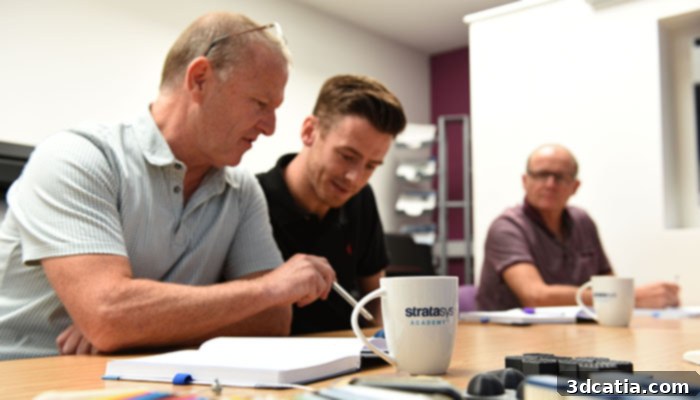
Credits: 3D Print Academy
Echoing this sentiment, Alex Bordino from 3D Print Academy advises complete beginners to prioritize learning the overall process, material characteristics, and design principles before attempting their first print. The digital landscape is rich with free and paid online resources, tutorials, and introductory courses perfectly suited for this foundational learning. Alex elaborates, “The print technology that you adopt will dramatically influence the outcome and design constraints that must be adhered to in order to get successful parts for your chosen application. In September 2019, we are looking to launch our brand new IAM course (Intro to Additive Manufacturing), ideally suited to novice users or businesses early in the explorative stages of additive technologies.” These introductory programs provide a structured pathway to understanding the core concepts and methodologies of AM.
Advanced 3D Printing Training for Industrial Applications
Beyond foundational knowledge, the world of industrial additive manufacturing demands a far more sophisticated skill set. Professor John Hart outlines some of the advanced options available for those interested in industrial applications, particularly through collegiate programs: “AM as an industrial process goes far beyond desktop polymer equipment that you may have in your office or workshop, and its implications extend to all aspects of the product lifecycle. Here, professionals looking to use or deploy AM in a professional setting – from functional prototypes for performance goods to custom jigs or fixtures for an assembly task – are better served by a professional program like MIT’s, or other quality programs available both online (e.g. Purdue’s “Online Additive Manufacturing Certification” led by Dr. John Barnes) and hands-on (e.g. Penn State University’s “Additive Manufacturing and Design” Master’s Program, led by Prof. Tim Simpson).” These programs delve into advanced topics such as design for additive manufacturing (DfAM), material qualification, process optimization, quality assurance, and post-processing techniques, preparing professionals for high-stakes industrial environments. Such comprehensive training is crucial for engineers, designers, and manufacturing professionals aiming to integrate AM into complex production workflows.
The Undeniable Benefits of Pursuing 3D Printing Training and Certification
Our three experts unanimously concur that additive manufacturing holds immense and diverse applicability across nearly every industrial sector, translating into a rapidly escalating demand for expertly trained personnel. Paradoxically, despite this surging demand, there remains a persistent shortage of individuals equipped with the specialized knowledge and skills to effectively implement and manage AM processes. Professor John Hart elaborates on this critical need: “Expert technology users are few- and far-between, and are valuable assets to any organization. An AM professional certification can demonstrate to prospective and current employers a degree of competency in the language and the practice of AM, and is proven to enable professionals to lead new programs and initiatives using AM.” Investing in professional training not only validates an individual’s capabilities but also positions them as a key player in driving innovation and strategic growth within their organization.
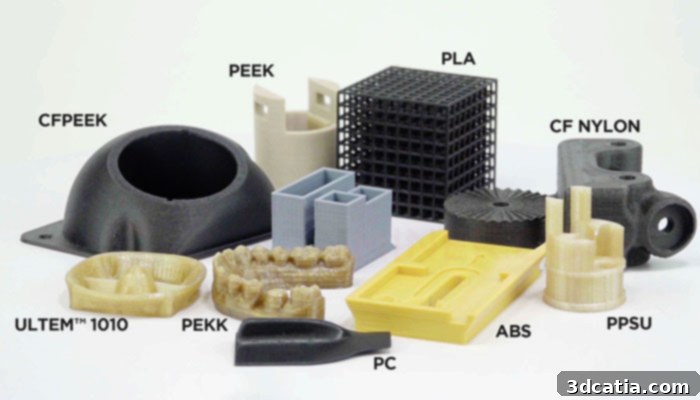
Vision Miner is an expert in engineering-grade thermoplastics such as PEEK, PEI, PPSU, and Carbon Fiber composites | Credits: Vision Miner
Rob Lent at Vision Miner further underscores the tangible business advantages: “Rapid iteration and in-house production offer significant cost-savings to most businesses. If you can learn and master the processes and provide that value, you’ll be desirable in almost any industry. Working knowledge of 3D modeling programs will also help massively, as you can design parts specifically for the different 3D printing processes.” The ability to quickly prototype, innovate, and produce parts internally grants companies unparalleled agility and a distinct competitive edge, making skilled AM professionals invaluable. Moreover, a solid understanding of CAD software is crucial for optimizing designs for additive manufacturing, taking full advantage of the technology’s design freedom.
Beyond immediate job market benefits, additive manufacturing is a technology in constant flux, marked by continuous development and rapid change. This dynamic nature means there is always more to learn and discover. Alex Bordino highlights this exciting aspect: “It’s one of the hottest topics in the engineering world at the moment with new innovations, applications and materials being created and tested every day. We hear how 3D printing is changing the world in a variety of sectors from aerospace to medical. Completing an academy course will give delegates the confidence to know what technology they need to adopt to suit their business needs. We have everyone from MD’s to tool engineers coming on our courses, and there is no industry sector where we haven’t seen additive manufacturing not have a positive impact.” Formal training provides a structured framework to keep pace with these advancements, ensuring professionals remain at the forefront of this groundbreaking field and can strategically apply AM solutions across diverse industries.
Expert Advice for Maximizing Your 3D Printing Training Success
One of the most encouraging aspects of entering the additive manufacturing field is that individuals don’t necessarily require extensive prior knowledge to get started. While a basic understanding of manufacturing processes is certainly beneficial for identifying where and how AM can effectively replace or augment existing workflows, and some proficiency in CAD software can aid in translating complex, generative designs into manufacturing-ready geometries, the journey can truly begin with curiosity and a willingness to learn.
Rob Lent of Vision Miner emphasizes the power of practical application and persistence: “We have witnessed people that have gone from knowing ZERO to becoming extremely proficient in a matter of months. If you’re willing to dive in head first and learn through trial and error, then there is no reason anyone can’t become an expert after some time. The basics are available, and provide an excellent foundation, but once you pick a process, specialized training is most effective for shortening the learning curve. Working with experts in your specific application is always the best choice, and that’s in just about everything – whether it’s manufacturing, music, or martial arts, learning directly from a master is always the best choice.” This highlights the importance of hands-on experience and seeking specialized guidance once initial competencies are established. Identifying a specific AM process or material you wish to master and then seeking tailored training can significantly accelerate your progress and expertise.
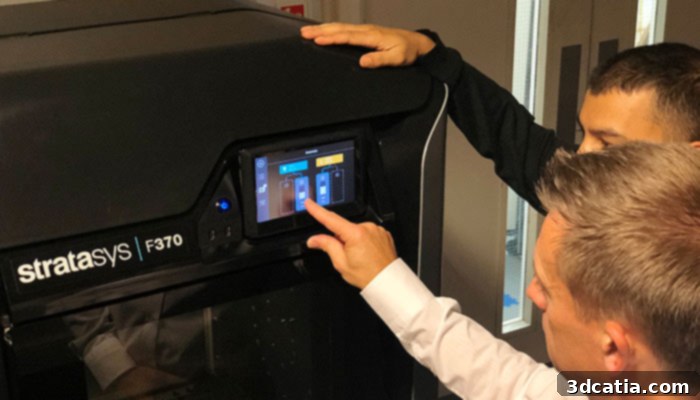
3D Print Academy is the UK’s first accredited Stratasys Training Centre for Additive Manufacturing
For those embarking on more advanced programs, such as those offered at MIT, Professor John Hart provides insight into the characteristics of successful learners: “There is no singular profile. The plurality of our learners have more than 15 years of work experience, but still roughly a quarter of them are very early in their professional careers (1 to 3 years). More importantly, I can say that the “best” learners – those that are, anecdotally, most likely to succeed in the program and use the knowledge gained to lead exciting AM implementation efforts – are those that are palpably excited about the technology. These bright individuals constantly ask important questions, take it upon themselves to learn more, and share back the most exciting results.” This underscores that passion, curiosity, and a proactive approach to learning are often more critical than a specific professional background or years of experience. Engage deeply, question assumptions, explore beyond the curriculum, and share your discoveries to truly excel in the field of additive manufacturing.
To further explore the training opportunities discussed, you can find more detailed information on these specific programs and organizations via the following links:
- Vision Miner
- MIT Center for Additive and Digital Advanced Production Technologies (CADAPT)
- 3D Print Academy
We hope this comprehensive guide, enriched by expert advice, has been useful in illuminating the diverse pathways to mastering 3D printing and additive manufacturing. Your journey into this exciting field is just beginning, and with the right training, you can unlock incredible potential for innovation and career growth. Let us know in a comment below or on our Facebook and Twitter pages if this expert guidance has proven valuable! Don’t forget to sign up for our free weekly Newsletter, delivering all the latest news in 3D printing directly to your inbox!