
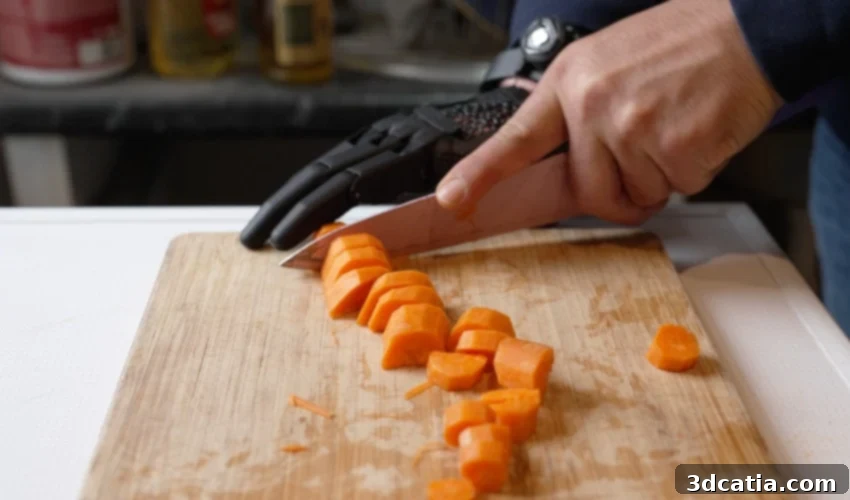
Revolutionizing Limb Difference: How Open Bionics’ 3D Printed Hero Gauntlet is Redefining Prosthetics
The field of prosthetics has undergone a dramatic transformation in recent years, driven largely by the innovative capabilities of 3D printing technology. This synergy has opened up entirely new possibilities for individuals with limb differences, offering solutions that are more customized, functional, and aesthetically pleasing than ever before. Amidst this exciting era of technological advancement, a groundbreaking development has emerged from the UK: a 50-year-old London teacher, three decades after his amputation, has become the inaugural beneficiary of Open Bionics’ state-of-the-art 3D printed hand, known as the Hero Gauntlet. This milestone marks not just a personal triumph but a significant leap forward for the UK’s prosthetics landscape and the global limb-difference community.
Suleman Chohan’s Three-Decade Wait for a Functional Solution
For Suleman Chohan, a dedicated teacher from East London, the journey since the traumatic amputation of his right hand 30 years ago has been marked by significant challenges and limitations. Living with a limb difference in an era where prosthetic technology was rudimentary at best meant enduring years of frustration. Simple, everyday tasks that most people take for granted—like carrying groceries, using a mobile phone, or engaging in hobbies—often presented formidable obstacles. The options available to Chohan and others in similar situations were largely non-functional, cumbersome, and profoundly uncomfortable.
His initial experience with prosthetics, provided by the National Health Service (NHS), involved a bulky latex hand. While perhaps well-intentioned, this early prosthetic proved to be more of a hindrance than a help. It lacked any practical functionality, offering little more than a cosmetic covering, and its sheer discomfort made prolonged wear impossible. This common scenario for amputees from that period often led to devices being abandoned, leaving individuals to adapt without technological assistance, further underscoring the pressing need for truly effective and user-friendly solutions.
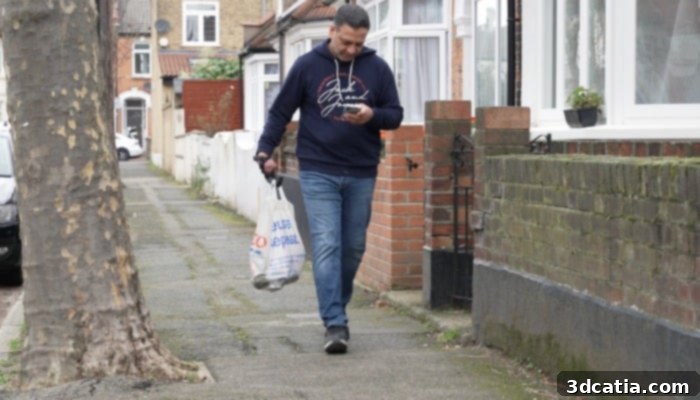
Once a difficult task, the Hero Gauntlet allows Suleman Chohan to easily carry groceries.
The Hero Gauntlet: A Paradigm Shift in Partial Hand Prosthetics
The recent introduction of the Hero Gauntlet prototype has been nothing short of life-changing for Suleman Chohan. This custom-made partial hand prosthetic stands in stark contrast to the outdated options of the past, representing a significant leap in design, comfort, and utility. Its development leverages the very latest in 3D scanning, modeling, and printing technologies, allowing for an unprecedented level of personalization. Each Hero Gauntlet is precisely tailored to the user’s anatomy, ensuring an optimal fit that maximizes comfort and functionality. This bespoke approach minimizes the issues of discomfort and poor fit that plagued traditional prosthetics, which were often mass-produced with limited customization.
Empowered by his new Hero Gauntlet, Chohan has regained control and mobility that he thought were lost forever. The prosthetic’s advanced design grants him complete, intuitive mobility of his 3D printed fingers. This newfound dexterity has allowed him to reintegrate into beloved activities that were previously challenging or impossible, such as the dynamic sport of mountain biking and the intricate controls of video gaming. Beyond recreation, the Hero Gauntlet has profoundly simplified his daily routine. Tasks like confidently holding his phone, opening doors, gripping utensils, or precisely preparing ingredients for cooking are now executed with remarkable ease, restoring a profound sense of independence and normalcy to his life. This is not just about performing tasks; it’s about reclaiming personal agency and enjoying a fuller, more engaged existence.
Open Bionics: Pioneers of User-Centric Design and Innovation
The Hero Gauntlet is the brainchild of Open Bionics, a British robotics company that has rapidly established itself as a frontrunner in creating advanced bionic prosthetics. Their mission is deeply rooted in addressing the unique challenges faced by individuals with partial hand limb differences, as well as other types of limb loss. A cornerstone of Open Bionics’ philosophy is an unwavering commitment to user-centric design. This isn’t merely a theoretical approach; it’s a practical methodology that involves extensive, direct collaboration with the very community they serve.
To ensure the Hero Gauntlet’s design and functionality genuinely cater to the specific and often nuanced requirements of amputees, Open Bionics engages in continuous dialogue and testing with users. Hellie Mutter, the lead engineer for the Hero Gauntlet, eloquently articulated this collaborative ethos: “We designed the product in collaboration with users via lab testing, weekly diaries, and clinic visits. We were really excited to see how intuitive our users found the active operation mechanism, which meant that even the early prototype versions were able to open up new experiences for our users. It’s been especially great to hear how the look of the device has given some of our test users a confidence boost regarding their limb difference.” This feedback loop is crucial; it means that the prosthetic is not just engineered for mechanical efficiency but also for real-world usability, comfort, and the psychological uplift that comes from a device that feels natural and looks appealing. The emphasis on an “intuitive active operation mechanism” highlights a design that is easy to learn and control, fostering immediate user confidence, while the positive impact on self-esteem underscores the holistic approach taken by Open Bionics.
Building on a Legacy: The Success of the Hero Arm
The development of the Hero Gauntlet stands on the shoulders of Open Bionics’ prior success with the Hero Arm. Launched earlier, the Hero Arm is an advanced, lightweight 3D printed bionic arm specifically designed for individuals with below-elbow amputations. This innovation was heralded for its multi-grip functionality, allowing users to perform a variety of tasks with different grip patterns, and its high visual appeal, breaking away from the often sterile and uninspired aesthetics of traditional prosthetics. Its success was immediate and widespread, quickly becoming available in over 800 locations across major regions including the USA, UK, Europe, Australia, and New Zealand. Critically acclaimed as one of the lightest bionic arms available on the market, the Hero Arm set a new benchmark for what advanced prosthetics could achieve in terms of functionality, comfort, and user acceptance. The Hero Arm’s groundbreaking design and widespread adoption proved that a highly functional, visually engaging, and accessible bionic limb was not just a futuristic concept but a present-day reality.
Through the Hero Gauntlet, Open Bionics aims to extend this legacy of cutting-edge prosthetics, bringing the same level of innovation and user-focused design to those with partial hand limb differences. The company’s commitment to providing complete customizability ensures that each prosthetic is not just a tool, but a truly personal extension of the individual, perfectly attuned to their specific needs and aspirations. This continuous drive for improvement and personalization is what distinguishes Open Bionics in the rapidly evolving world of bionic technology. To explore more about Open Bionics and the transformative capabilities of the Hero Gauntlet, you can click here to visit their dedicated page.
The Transformative Power of 3D Printing in Prosthetics
The stories of Suleman Chohan and the Hero Gauntlet perfectly illustrate the profound impact of 3D printing on the prosthetics industry. This technology has revolutionized the design, manufacturing, and accessibility of prosthetic limbs in several key ways:
Unprecedented Customization and Fit
Perhaps the most significant advantage of 3D printing is its ability to create highly customized devices. Traditional prosthetics often involve labor-intensive molding processes and limited customization options. With 3D scanning, a precise digital model of the residual limb can be created, allowing designers to craft a prosthetic that fits perfectly, reducing discomfort, pressure points, and the likelihood of skin irritation. This tailored approach enhances comfort, control, and overall functionality, making the prosthetic feel like a natural extension of the body.
Cost-Effectiveness and Accessibility
While advanced prosthetics have historically been prohibitively expensive, 3D printing offers a more cost-effective manufacturing solution. It reduces material waste and streamlines the production process, potentially lowering the overall cost for patients. This increased affordability can make high-tech bionic limbs accessible to a much broader population globally, especially in regions where advanced medical technologies are scarce or too expensive.
Rapid Prototyping and Iteration
The speed at which 3D printers can produce prototypes allows for rapid design iteration and testing. Engineers can quickly modify designs based on user feedback, print a new version, and test it almost immediately. This accelerated development cycle means that improvements can be implemented faster, leading to superior products reaching patients sooner. For individuals like Suleman, this means getting access to cutting-edge solutions without decades of waiting.
Enhanced Design Complexity and Lightweight Materials
3D printing allows for the creation of intricate geometries and internal structures that are impossible with traditional manufacturing methods. This capability enables the design of lighter, yet stronger, prosthetics. Lighter prosthetics reduce the burden on the wearer, minimizing fatigue and improving maneuverability. Additionally, designers can integrate complex mechanisms and electronic components more seamlessly into the structure, enhancing functionality without adding unnecessary bulk.
Aesthetics and Psychological Impact
Beyond pure functionality, 3D printing offers immense freedom in terms of aesthetic design. Prosthetics can be designed to look futuristic, sporty, or even blend seamlessly with skin tones, depending on the user’s preference. This personalization contributes significantly to the user’s self-confidence and body image, transforming a medical device into something that can be embraced or even celebrated. As Hellie Mutter noted, the “look of the device has given some of our test users a confidence boost,” highlighting the psychological benefits of well-designed prosthetics.
Looking Ahead: The Future of Personalized Bionic Solutions
The success of the Hero Gauntlet and the broader advancements in 3D printed prosthetics herald a future where personalized bionic solutions are the norm, not the exception. We can anticipate even more sophisticated integration of sensor technology, artificial intelligence, and haptic feedback systems, making prosthetics feel even more natural and intuitive. The ongoing research into nerve interfaces and mind-controlled prosthetics promises to further blur the lines between human and machine, offering unprecedented levels of control and sensory feedback. As 3D printing technology continues to evolve, pushing the boundaries of material science and design capabilities, the possibilities for individuals with limb differences will only continue to expand, ensuring a future filled with greater independence, functionality, and dignity.
What are your thoughts on the Hero Gauntlet, the functional 3D printed hand from Open Bionics, and the future of prosthetics? Share your insights in a comment below or connect with us on our LinkedIn, Facebook, and Twitter pages! Don’t forget to sign up for our free weekly Newsletter here, to receive the latest 3D printing news straight to your inbox! You can also find all our videos on our YouTube channel.
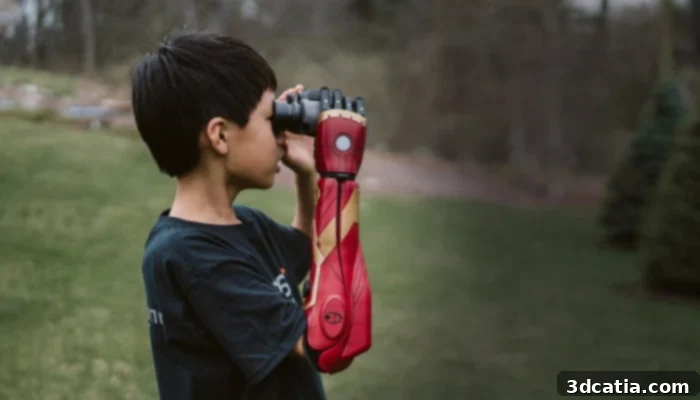
Open Bionics’ Hero Arm in use.
All Photo Credits: Open Bionics