
Weekly 3D Printing Innovations: Top Videos Showcasing Advancements in Defense, Skincare, Medical Tech, and Education
Welcome to another insightful Sunday roundup of the most captivating developments in the world of additive manufacturing! As we gear up for the week ahead, we’ve meticulously curated five essential 3D printing videos that highlight the technology’s transformative impact across various sectors. From revolutionizing naval operations with high-performance materials to pioneering personalized skincare solutions, enhancing medical prosthetics, introducing cutting-edge industrial printers, and shaping the future of education, 3D printing continues to push boundaries. Join us as we explore these groundbreaking applications, featuring collaborations with industry leaders like Intamsys and Nourished, innovative projects from creators like Ian Davis, and educational initiatives by institutions such as SETU Waterford. Get ready for an inspiring look at how additive manufacturing is not just a tool, but a catalyst for innovation and progress.
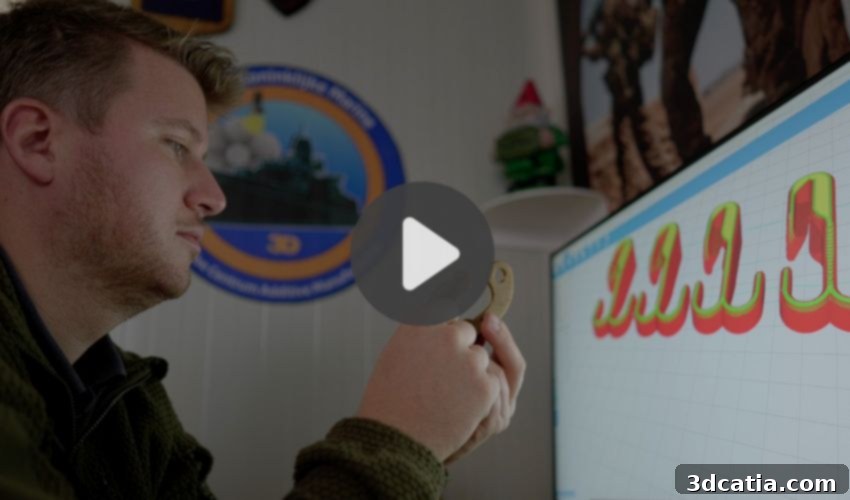
Top 1: The Royal Netherlands Navy Embraces High-Performance 3D Printing with INTAMSYS
The integration of additive manufacturing into the defense sector is rapidly moving from an experimental concept to a strategic imperative. In a significant development, the Royal Netherlands Navy has decisively adopted 3D printing technology, leveraging its capabilities to produce parts with unprecedented speed and efficiency. This move underscores a growing global trend among military forces to enhance operational readiness, reduce logistical footprints, and create resilient supply chains through localized, on-demand manufacturing. Specifically, the Dutch Navy is utilizing advanced INTAMSYS 3D printers, renowned for their precision and ability to process high-performance materials. This strategic choice enables them to manufacture critical components that can withstand extreme conditions, a necessity for naval environments which are characterized by harsh saltwater exposure, varying temperatures, and high mechanical stresses. The benefits extend beyond mere speed; 3D printing allows for the creation of complex geometries that are difficult or impossible to produce with traditional methods, leading to optimized part designs that are lighter, stronger, or more functionally integrated. This shift towards additive manufacturing signifies a profound modernization of maintenance and repair protocols, ensuring that naval vessels remain operational longer and more effectively. Dive into the video below to witness firsthand how the Dutch Navy is harnessing this innovative technology to create a new paradigm for defense logistics and engineering, showcasing specific applications and the profound impact on their operational capabilities.
Top 2: Neutrogena Unveils 3D Printed Personalized Skincare Supplements at CES with SKINSTACKS 360s
The Consumer Electronics Show (CES), an annual global stage for technological innovation, consistently showcases groundbreaking advancements, and this year’s event in Las Vegas, held from January 5th to 8th, was no exception. Among the myriad of exciting reveals, 3D printing applications once again captured significant attention, particularly within the health and beauty industries. A standout announcement came from Neutrogena, a leading name in skincare, which unveiled its revolutionary Skin360 SKINSTACKS in collaboration with Nourished. This innovative product represents a paradigm shift in personalized wellness: 3D printed skincare supplements tailored precisely to individual needs. The concept behind SKINSTACKS 360s is deeply rooted in personalization, utilizing a sophisticated analysis of an individual’s skin to determine the optimal blend of active ingredients. Additive manufacturing makes this level of customization possible, allowing for the precise layering and combination of vitamins, minerals, and other compounds into a single, easily digestible supplement. This technology goes beyond traditional encapsulation, offering custom geometries and controlled release mechanisms that maximize efficacy. The partnership with Nourished, known for its expertise in personalized nutrition through 3D printing, has been instrumental in bringing this vision to fruition. This initiative not only highlights the vast potential of 3D printing in consumer health but also marks a significant step towards a future where beauty and wellness products are not one-size-fits-all, but instead, precisely formulated for each unique individual. Explore the video to see how Neutrogena and Nourished are leading the charge in personalized skincare through the power of 3D printing.
Top 3: Innovating Medical Solutions with a Partially 3D Printed Prosthetic Hand
The medical sector stands as one of the most promising frontiers for 3D printing, where its impact is profoundly felt, particularly in the creation of prosthetics and orthotics. The inherent need for these devices to be custom-made for each unique user makes additive manufacturing an ideal solution. Unlike traditional manufacturing methods, 3D printing allows for rapid iteration and personalization, ensuring a perfect fit and enhanced functionality, which is crucial for patient comfort and rehabilitation. In this compelling video, YouTube creator Ian Davis showcases an incredibly innovative partially 3D printed prosthetic hand, offering a glimpse into the future of accessible and advanced medical devices. What makes this particular example stand out is its unique design: rather than encompassing the entire hand, it focuses on extending from the fingers, providing a more intuitive and less intrusive solution for individuals with specific forms of hand impairment. While possessing a somewhat robotic aesthetic, its design prioritizes functionality and adaptability, demonstrating how 3D printing can create devices that are not only tailored to individual anatomy but also optimized for specific needs. The ability to quickly design, modify, and produce these devices at a lower cost compared to traditional methods democratizes access to advanced prosthetics, making life-changing technology available to a wider population. This case illustrates the immense potential of 3D printing to improve quality of life, reduce manufacturing lead times, and foster innovation in healthcare, moving beyond traditional limitations to deliver truly personalized care. Explore the video to see this remarkable prosthetic in action and understand its implications for the future of medical technology.
Top 4: BCN3D Unveils the Next Generation of Epsilon Industrial 3D Printers
Since its initial launch in 2020, the BCN3D Epsilon series has rapidly established itself as a leading force in the industrial FDM 3D printing landscape, particularly recognized for its Spanish engineering excellence. These printers have garnered a reputation for their unparalleled ability to produce exceptionally durable parts with high quality and precision, catering to a wide array of industrial applications, from functional prototyping to end-use parts. Now, BCN3D is elevating this legacy with the introduction of its new generation of Epsilon 3D printers, packed with significant enhancements designed to further boost performance, reliability, and user experience. Among the notable improvements, the new Epsilon printers feature upgraded electronics, which translate into more stable and consistent printing processes, improved communication between components, and ultimately, higher print success rates and finer detail resolution. A key innovation is the integration of automatic XYZ calibration, a feature that drastically simplifies setup and maintenance, ensuring optimal print bed leveling and precise nozzle alignment without manual intervention. This not only saves valuable operator time but also guarantees consistent print quality across every batch. Furthermore, the new generation boasts a refreshed design and aesthetics, reflecting BCN3D’s commitment to both form and function. This includes improved ergonomics and a more robust build, enhancing the overall user interaction and printer longevity. These advancements collectively reinforce the Epsilon series’ position as a go-to solution for demanding industrial environments where reliability, precision, and ease of use are paramount. Delve into the video below to discover the full suite of features and witness the capabilities of BCN3D’s latest Epsilon 3D printers, setting new benchmarks for industrial FDM technology.
Top 5: SETU Waterford Launches a New BSc in Additive Manufacturing to Bridge the Skills Gap
Despite the exponential growth and transformative potential of additive manufacturing, a persistently cited obstacle to its widespread adoption is the significant lack of specialized training available to potential users and the existing workforce. This critical skills gap often hinders companies from fully leveraging the technology’s capabilities. However, a promising shift is underway, driven by an increasing number of educational institutions stepping up to offer comprehensive training programs in additive manufacturing. A prime example of this proactive approach is highlighted in our final video, where South East Technological University (SETU) Waterford proudly introduces its new Bachelor of Science (BSc) in Additive Manufacturing. This pioneering degree program is meticulously designed to address the industry’s need for highly skilled professionals, offering a robust curriculum that covers all facets of advanced AM applications. The program aims to empower individuals already working in the field to upskill and master cutting-edge techniques, as well as to cultivate a new generation of experts. The curriculum is expected to encompass a broad range of critical areas, including design for additive manufacturing, material science for AM, various 3D printing processes (such as DMLS, SLS, FDM, SLA), post-processing techniques, quality control, and regulatory compliance specific to different industries. Graduates from this program will be equipped to excel in diverse sectors, including Med-Tech, Bio-Pharma, Aerospace, Agri-Tech, and Precision Engineering, where additive manufacturing is making a profound impact. Developed by SETU Waterford and spearheaded by the Additive Manufacturing Advancing the South-East (AMASE) initiative, this vital program is generously funded by the Irish Government, underscoring a national commitment to fostering innovation and economic growth through advanced manufacturing. This degree represents a crucial step in building a competent workforce capable of driving the future of additive manufacturing. Witness the details of this groundbreaking educational initiative and its potential impact in the video below.
From military advancements and personalized consumer products to life-changing medical devices and essential educational initiatives, this week’s roundup showcases the incredible breadth and depth of 3D printing’s influence. Each video offers a unique window into how additive manufacturing is not just shaping industries but fundamentally transforming the way we innovate, produce, and learn. What are your thoughts on the Royal Netherlands Navy’s strategic adoption of 3D printing for defense, or the visionary personalized skincare solutions from Neutrogena? We’d love to hear your insights and perspectives on these fascinating developments!
Let us know in a comment below or join the conversation on our LinkedIn, Facebook, and Twitter pages! Don’t forget to sign up for our free weekly Newsletter here for the latest 3D printing news delivered straight to your inbox! You can also find all our compelling videos on our YouTube channel, offering a visual journey through the world of additive manufacturing.
*Cover Photo Credits: Intamsys