
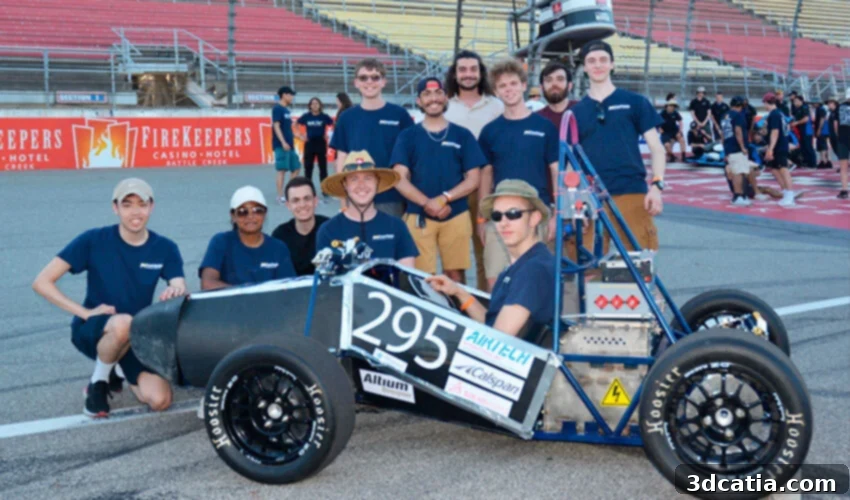
Empowering Future Engineers: Drexel Electric Racing’s Innovation with SolidCAM and Metal 3D Printing for Formula SAE
The landscape of modern manufacturing is rapidly evolving, making comprehensive training in additive manufacturing (AM) an absolute necessity. To stay at the forefront of technological advancements, professionals across diverse industries must continuously update their skill sets. Recognizing this critical need, many industry-leading companies are now offering robust educational programs tailored for individuals and organizations keen on integrating 3D printing into their operations, regardless of their specific sector. This commitment to education is exemplified in the automotive industry, where hands-on experience with cutting-edge technologies is paramount for innovation and competitive advantage.
A compelling instance of this educational drive comes from the world of collegiate motorsports, specifically through the participation of the Drexel Electric Racing team in the “SolidCAM Additive Challenge.” This unique challenge provides aspiring university engineers with unparalleled access to the very latest in 3D printing technologies and expert guidance. The primary objective is to empower these students to optimize their design and production processes, enabling them to create high-performance, functional parts for their Formula SAE race car. This initiative not only equips students with practical skills but also allows them to push the boundaries of what’s possible in vehicle design and manufacturing.
The Drexel Electric Racing team comprises a dedicated group of students passionately committed to designing, manufacturing, and rigorously testing electric race cars. From initial conceptualization and detailed CAD modeling to precise fabrication and stringent quality assurance, the students manage every aspect of vehicle production. Once built, their all-electric, single-seat race car is transported to Michigan to compete against other university teams in the highly prestigious Formula SAE events. These competitions are more than just races; they serve as dynamic platforms that actively encourage the younger generation to explore and adopt new technologies, foster interdisciplinary collaboration, and develop crucial engineering skills.
Formula SAE events challenge undergraduate and graduate students to conceive, design, produce, and ultimately race small, formula-style vehicles. The experience is invaluable, bridging theoretical knowledge with real-world application. Thanks to the comprehensive training and innovative solutions provided by SolidCAM, the Drexel Electric Racing team has been able to delve deep into the transformative possibilities of metal 3D printing. This partnership allowed them to design and manufacture critical final parts for their single-seater race car, achieving levels of optimization and performance previously unattainable through conventional methods.
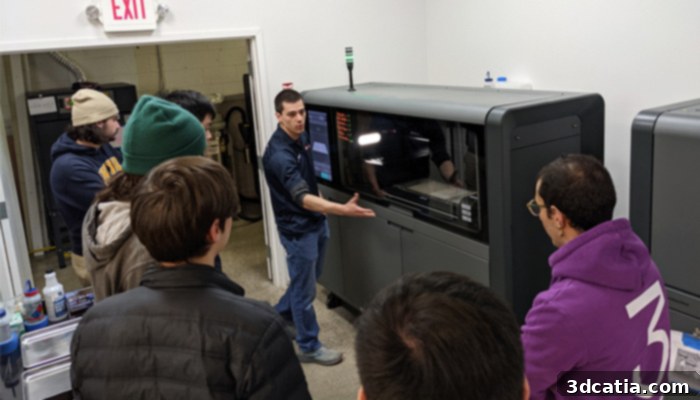
Peter Genovese with a group of students
Drexel Electric Racing’s Strategic Integration of Advanced 3D Printing
Success in a Formula SAE event hinges on a meticulous balance of factors, including the final cost of production, the sophistication of the technology employed, the ingenuity of the vehicle’s design, and, critically, the overall functionality and performance. The SolidCAM Additive Challenge was specifically structured to equip students with direct access to advanced additive manufacturing solutions, coupled with continuous expert guidance to navigate any technical hurdles. This exposure significantly broadened the team’s perspective on manufacturing, allowing them to approach design and production in entirely new ways, effectively circumventing many of the traditional limitations inherent in conventional fabrication methods.
A key outcome of this collaboration was the Drexel Electric Racing team’s visit to SolidCAM’s state-of-the-art hybrid manufacturing center in Newtown, Pennsylvania. This opportunity allowed them to directly apply theoretical knowledge to practical part creation for their race car. Operating within a practical budget of $1,000 for material costs, the students were challenged to make judicious decisions, balancing material properties, manufacturing processes, and cost-effectiveness—a crucial aspect of real-world engineering projects. This experience not only honed their technical skills but also instilled valuable lessons in resource management and strategic planning within a high-performance engineering context.
Peter Genovese, a highly experienced Additive Engineer at SolidCAM, played a pivotal role in guiding the Drexel team. He introduced them to a comprehensive array of metal 3D printing solutions, ranging from large-scale workshop machines to compact desktop systems, alongside the essential supporting hardware and software ecosystems. Genovese emphasized the transformative nature of the challenge, stating, “The Challenge inspires students to create parts for additive technology beyond the plastic printers they have access to on campus. Each additive technology has its own advantages and design guidelines that Drexel Electric Racing was able to capitalize on.” His mentorship highlighted how different metal additive manufacturing processes offer distinct benefits, such as superior strength-to-weight ratios, enhanced thermal properties, and complex geometric capabilities that are ideal for high-stress automotive components.
The SolidCAM team’s objective was to instill a deep understanding of metal additive manufacturing’s potential. They shared extensive knowledge and provided hands-on experience, ensuring the students could fully leverage the benefits of metal additive manufacturing. This included not just operating the machines but also understanding material science, design for additive manufacturing (DfAM) principles, and the nuances of post-processing. This holistic approach ensured that the students gained a well-rounded understanding of the entire metal AM workflow, preparing them for future innovations in advanced engineering.
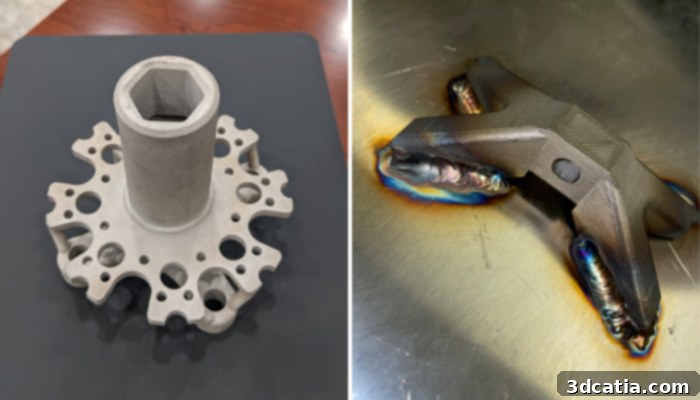
Two examples of 3D printed parts made with SolidCAM’s manufacturing solutions
During their immersive experience, the students experimented with two cutting-edge methods for creating their final metal parts: metal binder jetting and Bound Metal Deposition™. Metal binder jetting involves selectively depositing a liquid binder onto a thin layer of powdered metal, building up a “green part” layer by layer. This part then undergoes a critical sintering process in a furnace to achieve its final density and strength. Bound Metal Deposition™, on the other hand, extrudes a filament of metal powder bound in a polymer matrix, similar to FDM plastic printing, followed by debinding and sintering. Both technologies offer significant advantages for complex geometries and allow for a wide range of metal materials, making them ideal for high-performance automotive applications.
A crucial part of their learning involved understanding and executing the proper post-treatment procedures essential for metal additive parts. The team engaged directly in depowdering the parts, meticulously removing excess metal powder, and then observed the parts being discharged from the furnace after the high-temperature sintering process. This hands-on involvement demystified the often-overlooked but vital steps that transform a fragile “green part” into a fully dense, mechanically robust component. Through these sophisticated production systems, the students successfully fabricated two critical components for their race car: steel back spindles and steel battery holders.
The steel back spindles, which are vital for wheel mounting and suspension geometry, required exceptional precision and strength. To achieve the required tolerances and surface finish, additional material was strategically added during the 3D printing phase as compensation. This allowed for subsequent precision finishing using CNC machining, effectively creating truly hybrid parts that combine the design freedom of additive manufacturing with the exactitude of traditional subtractive methods. In contrast, the steel battery mounts, designed to securely house the vehicle’s power source, could be used directly as printed and then welded to the car’s chassis, demonstrating the versatility of AM for different functional requirements.
Beyond metal parts, the team also leveraged advanced polymer 3D printing. They utilized a high-resolution resin 3D printer from manufacturer ETEC to create custom steering wheel grips. The use of resin printing allowed for intricate ergonomic designs and specific material properties (e.g., grip, vibration dampening, durability) that are crucial for driver control and comfort during races. By integrating these diverse manufacturing technologies, the Drexel Electric Racing students were able to comprehensively optimize various aspects of their vehicle, from structural integrity to driver interface, while gaining invaluable practical experience in the capabilities and limitations of modern manufacturing technologies.
The Indispensable Role of Practical Training in Modern Engineering
In today’s fast-paced technological landscape, it is more critical than ever to provide engineering students with hands-on opportunities that enable them to develop tangible skills directly applicable to their future careers. Experiential learning not only solidifies theoretical knowledge but also fosters problem-solving capabilities, innovative thinking, and an understanding of real-world manufacturing challenges. This proactive approach to education is instrumental in preparing the next generation of engineers to tackle complex problems and drive technological advancement. Furthermore, by equipping future professionals with additive manufacturing expertise, this strategy helps accelerate the adoption of 3D printing across industries, where it increasingly serves as a powerful complement to traditional large-scale manufacturing methods.
SolidCAM has a distinguished legacy of nearly four decades in empowering the next generation of manufacturing professionals, primarily through its expertise in CNC machining. The integration of additive manufacturing into its educational offerings represents a logical and strategic evolution, significantly enhancing its ability to prepare students for the demands of Industry 4.0. This expansion ensures that SolidCAM remains at the forefront of manufacturing education, bridging the gap between conventional and advanced digital fabrication techniques. Kenny Betz, a key member of the SolidCAM EDU team, underscored the success and future potential of such partnerships, concluding, “We were happy to partner with Drexel Electric Racing and share our knowledge of both CNC Machining and Additive Manufacturing to enhance their capabilities and looking forward to continuing the sponsorship into the future.” This ongoing commitment highlights the long-term vision of fostering innovation and skill development in engineering education.
To learn more about SolidCAM’s extensive range of solutions, including their cutting-edge additive manufacturing offerings and educational programs, please visit their official website HERE. Their platform provides detailed insights into how they are driving the future of manufacturing through technology and education.
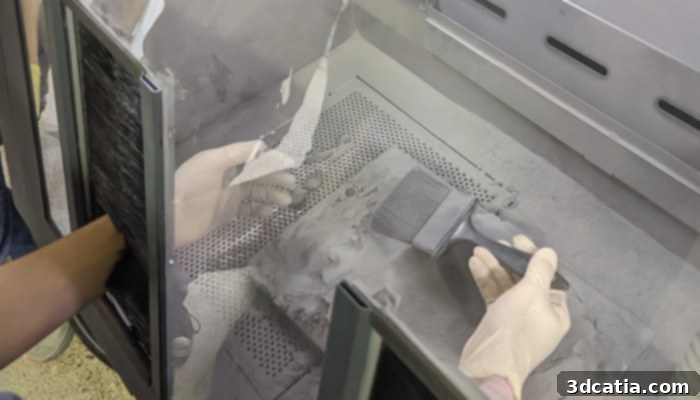
Depowdering of the parts
The innovative approach taken by Drexel Electric Racing, integrating advanced additive and subtractive manufacturing techniques, showcases a promising future for engineering education and motorsport development. Their success with hybrid manufacturing for end-use race car parts provides a compelling case study for the broader automotive industry. What are your thoughts on this blend of traditional and cutting-edge manufacturing? We invite you to share your insights in a comment below or join the conversation on our LinkedIn, Facebook, and Twitter pages! Don’t forget to sign up for our free weekly Newsletter here to receive the latest 3D printing news directly in your inbox! You can also explore all our videos and in-depth content on our YouTube channel.
*All Photo Credits: SolidCAM