
Deriva Sailmakers: Pioneering Sustainable Backpacks with Recycled Sails and 3D Printing
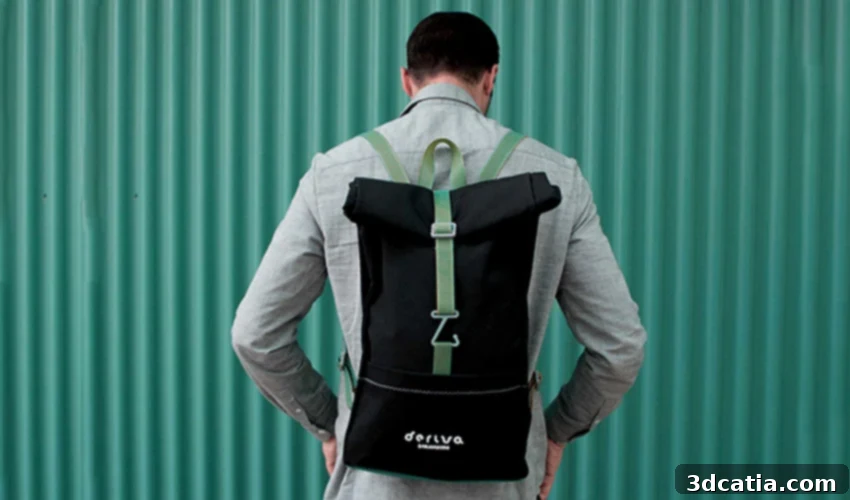
Deriva Sailmakers emerges as a visionary backpack brand, proudly rooted in the rich maritime heritage of the Basque Country. This innovative company is deeply committed to revolutionizing the fashion industry through a highly sustainable manufacturing process. At its core, Deriva Sailmakers strives to foster a cleaner, more robust local fashion ecosystem by ingeniously incorporating parts and fabrics created with advanced 3D printing technology. The brand’s distinctive backpacks boast a sleek, elegant aesthetic, imbued with a profound marine inspiration. Each piece is meticulously developed from recycled nautical materials, effectively embodying a “zero-waste” philosophy that stands in stark contrast to conventional manufacturing practices. Beyond its innovative product design, Deriva Sailmakers actively champions local production, utilizing sails originally produced and discarded within the region. This dedication not only supports local economies but also significantly reduces the environmental footprint associated with long-distance transportation and new material consumption. To gain a deeper insight into this truly eco-sustainable design project and the passionate minds behind it, we had the privilege of interviewing Alba Albelda and Ramón Goñi, the two dynamic entrepreneurs who founded Deriva Sailmakers.
3DN: Could you please introduce yourselves and elaborate on the mission and origins of Deriva Sailmakers?
We are Alba Albelda and Ramón Goñi, the co-founders of Deriva Sailmakers. Our brand is more than just a company; it’s a small, passionate initiative dedicated to breathing new life into disused nautical equipment. We pride ourselves on manufacturing our products in collaboration with skilled local craftsmen, ensuring that every backpack carries a piece of the region’s artisanal tradition. A key aspect of our process involves leveraging 3D printing to create and integrate any missing components, blending traditional techniques with modern innovation. Our story, much like our products, is born from the sea. Deriva Sailmakers finds its roots in a small, bustling sailing workshop from the 1980s, a time when sailing the rugged Basque coast in denim was a common sight. This era also saw the creation of functional bags fashioned from broken or damaged sails, a practice born out of necessity and ingenuity. Deriva Sailmakers emerged from this profound sense of nostalgia – a desire to preserve these invaluable old traditions and to continue offering beautifully crafted, durable bags made from sails that have completed their seafaring journeys. We believe in the inherent value of these materials, each carrying a unique story of adventure and resilience.
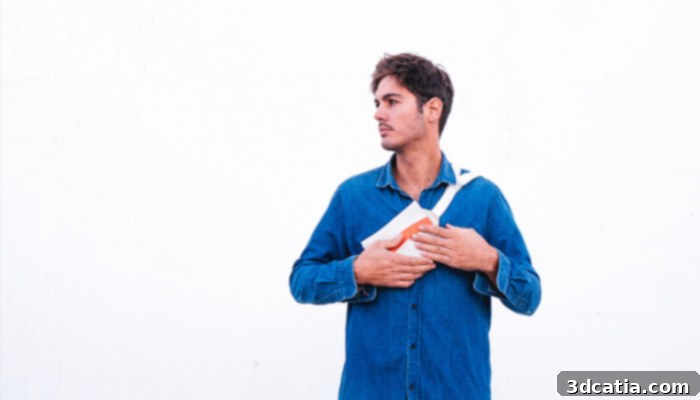
When we began sketching our very first model, the “1701,” which would become our inaugural backpack, we quickly realized that while the sail material formed the heart of our design, we needed something more to achieve the perfect finish and functionality. This is precisely where 3D printing seamlessly integrated into our process. Our incredible partner, Comme des Machines, played a pivotal role in helping us bring these initial designs to life, adding those crucial final touches to make each Deriva backpack not only beautiful but also exceptionally functional and robust. This collaboration exemplifies our commitment to blending heritage with innovation, ensuring that every element of our backpacks contributes to their unique character and sustainable ethos. By embracing both recycled materials and cutting-edge manufacturing, we’re crafting products that are truly unique and responsible.
3DN: Could you explain in detail the manufacturing process of your eco-friendly backpacks?
Our manufacturing process is a testament to our commitment to sustainability, local collaboration, and artisanal quality. It begins with sourcing our primary material: disused nautical equipment. We collaborate with a network of dedicated sailmakers scattered across the picturesque regions of the Basque Country and Galicia. These workshops are a treasure trove of discarded materials – sails that are torn, worn, or simply deemed unfit for further maritime use, along with various other abandoned fabrics and components. Instead of these valuable materials ending up in landfills, we meticulously collect them, giving them a new purpose. Upon collection, each piece undergoes a rigorous selection process. We carefully inspect and choose materials based on their condition, durability, and unique characteristics, all with the design of our backpacks in mind. We intentionally maintain a focused product line, with all our backpack models evolving from our foundational “1701” design. This allows us to maintain consistency in quality and design while embracing the inherent uniqueness of our recycled materials.
One of the most exciting aspects of our production is the dynamic nature of our designs. The availability of material dictates the colors and specific textures of our backpacks, meaning that the number of bags produced in any given color is inherently limited. This creates a sense of exclusivity and ensures that each Deriva backpack is truly one-of-a-kind. Once the ideal material has been selected, it moves to the cutting phase, after which it is entrusted to our local craftsmen. These artisans, with their invaluable skills and deep understanding of textile work, meticulously cut and sew the sails, transforming them into the robust and elegant structure of our backpacks. Following this traditional craftsmanship, the innovative step of integrating 3D printed parts comes into play. These specially designed components are easily sewn onto the sailcloth, complementing the fabric without compromising its integrity. With our FDM (Fused Deposition Modeling) 3D printers, we have the incredible flexibility to print a wide array of personalized elements. This includes custom fasteners that ensure durability, unique decorative elements like miniature boats that subtly hint at our maritime origins, and, of course, our distinctive Deriva Sailmakers logo. This hybrid approach – combining recycled materials, local craftsmanship, and advanced additive manufacturing – allows us to create beautiful, durable, and uniquely sustainable backpacks that tell a story of innovation and responsibility.
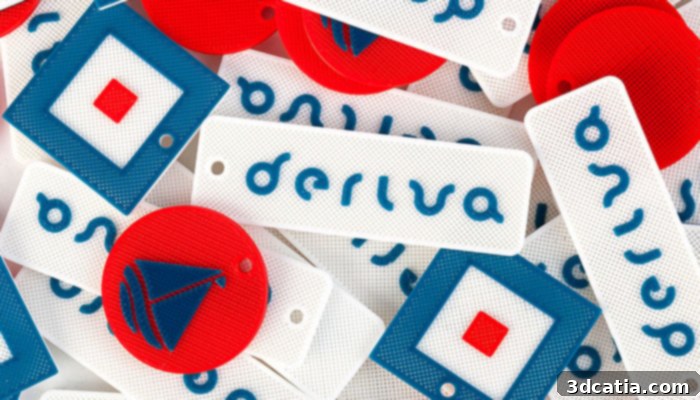
The 3D printed parts seamlessly integrated into Deriva Sailmakers’ unique bags | Credits: Deriva Sailmakers
3DN: What specific advantages does 3D printing offer Deriva Sailmakers for personalizing its sustainable backpacks?
For a small, eco-conscious brand like Deriva Sailmakers, 3D printing represents a transformative technology, offering unparalleled benefits for personalization while upholding our sustainable principles. Firstly, it’s an incredibly sustainable and accessible form of customization. Traditional manufacturing methods often demand large minimum order quantities for custom parts, leading to excessive waste and high costs that are simply unfeasible for independent labels. 3D printing, however, allows us to produce components precisely as needed, drastically minimizing material waste and optimizing resource consumption. This perfectly aligns with our zero-waste vision. Secondly, 3D printing grants us an exceptional degree of flexibility in terms of design iteration. If we want to refine a fastener, experiment with a new decorative element, or introduce a unique feature, we can do so with remarkable speed and efficiency. This agility in design development would be impossible or prohibitively expensive with conventional molding or injection processes. We can quickly prototype, test, and adapt, ensuring our designs are always evolving and meeting the highest standards of functionality and aesthetics. Finally, and crucially for a brand focused on unique, limited editions, 3D printing enables us to produce small, highly customized series with incredible ease. Whether it’s a specific color variant for a component, a unique logo placement, or a custom accessory designed for a particular collection, we can manufacture these bespoke elements efficiently and affordably. This level of customization allows us to offer truly unique products, reinforcing the artisanal and distinctive character of each Deriva backpack. It means less waste, more innovation, and greater personalization for our customers.
3DN: How critical are technologies like additive manufacturing for fostering sustainable production practices in the fashion industry?
Additive manufacturing, more commonly known as 3D printing, is not just important; it is absolutely critical for driving sustainable production practices, especially within the context of a small, local brand like ours. As we’ve highlighted, 3D printing empowers us to offer unparalleled customization without incurring the prohibitive additional costs typically associated with bespoke manufacturing. This capability is revolutionary for independent brands. Historically, achieving customization often necessitated producing vast quantities of goods to make the process economically viable. This leads to overproduction, significant waste, and an inherent disadvantage for smaller businesses that lack the capital or market reach for such large-scale runs. Additive manufacturing completely sidesteps this challenge. It allows us to produce components on-demand, in precise quantities, eliminating the need for inventory overstocking and the waste that inevitably follows. This efficiency translates directly into a reduced environmental footprint. For Deriva Sailmakers, this technology is an incredibly powerful tool. It allows us to maintain our core values: producing locally, supporting regional craftsmanship, and operating in a limited, controlled manner. We do not have to compromise on our commitment to sustainability or local sourcing simply to achieve design flexibility or personalization. 3D printing provides the means to innovate and customize while staying true to our ethos of responsible, mindful production. It democratizes design and manufacturing, enabling brands like ours to compete and thrive by offering unique, high-quality, and environmentally conscious products without succumbing to the pressures of mass production. It’s a testament to how advanced technology can be harnessed to support and enhance traditional, sustainable practices, creating a truly circular economy model for fashion.
3DN: Do you have any final thoughts or a message you’d like to share with our readers about Deriva Sailmakers or the future of sustainable fashion?
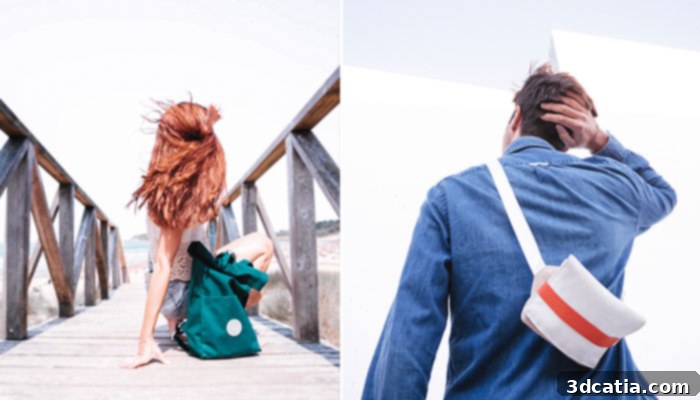
Absolutely. For us at Deriva Sailmakers, 3D printing is no longer just a manufacturing tool; it has become an integral part of our brand identity, defining our innovative approach to sustainable design. We are constantly exploring new possibilities and are actively working on developing exciting new products, all of which will, of course, incorporate custom 3D printed parts. We want to encourage everyone – entrepreneurs, designers, and consumers alike – to never stop innovating and to truly believe in the potential of their projects, especially when it comes to sustainability. While 3D printing might still conjure images of a distant, futuristic world for some, its reality is much more grounded and impactful today. It is a tangible, accessible tool that allows us to revert to principles of production that were once common but have been largely lost in the age of mass manufacturing. It enables us to create things as before: close to home, supporting local economies and artisans, and crucially, without generating excessive waste. This is the essence of what Deriva Sailmakers stands for – blending the best of traditional craftsmanship with cutting-edge technology to create a more responsible and meaningful future for fashion. We invite you to discover more about our mission, our unique products, and our journey towards a sustainable future by visiting our official website HERE. You can also gain further insights into our process and philosophy by watching the video below. Thank you for your interest in Deriva Sailmakers and in the broader movement towards a more sustainable world.
What are your thoughts on Deriva Sailmakers’ unique blend of recycled materials and 3D printing for sustainable fashion? We’d love to hear your comments below, or feel free to share your insights on our Facebook and Twitter pages! Don’t miss out on the latest advancements and news in the world of additive manufacturing; sign up for our free weekly 3D printing newsletter, delivered straight to your inbox!