
Revolutionizing Culinary Arts: The Rise of 3D Printed Food and Cold Extrusion Innovations
Additive manufacturing, a technology once confined to industrial prototyping and advanced engineering, has now profoundly infiltrated nearly every sector, including the dynamic world of food production. The concept of 3D printed food isn’t a recent flight of fancy but a burgeoning field with roots tracing back to serious scientific inquiry. As early as 2006, NASA embarked on pioneering research into 3D food printing, driven by the critical need to develop sustainable and nutritious feeding solutions for astronauts during extended space missions. This initial exploration laid the groundwork for an exciting new frontier in gastronomy and nutritional science.
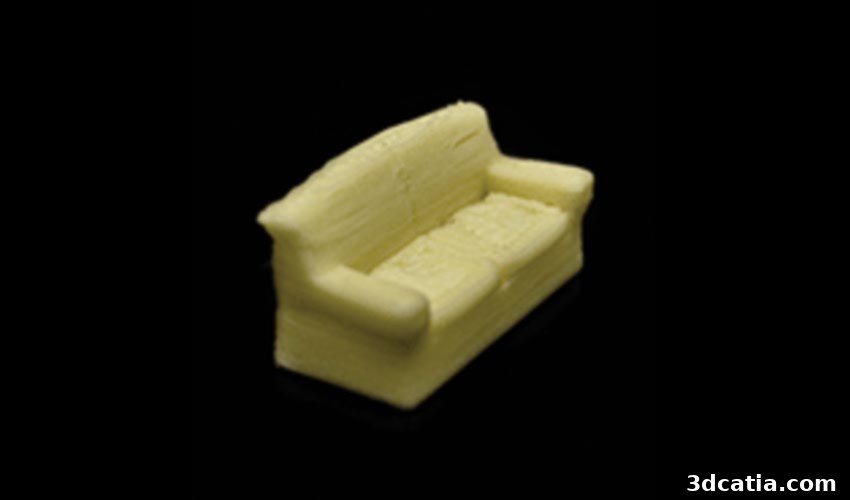
Fast forward more than a decade, and the interest in leveraging advanced 3D printing technologies to create innovative and customized dishes from a wide array of food types has only intensified. Researchers globally are pushing the boundaries of what’s possible, seeking to transform how we perceive, prepare, and consume food. Among these innovators are the dedicated scientists at the Singapore University of Technology and Design (SUTD), who have made significant strides by developing a groundbreaking 3D printing method capable of fabricating intricate milk structures at ambient room temperature. Their novel approach utilizes a Direct Ink Writing (DIW) 3D printing technique, distinguished by its simplicity and the innovative formulation of a single-ingredient milk ink.
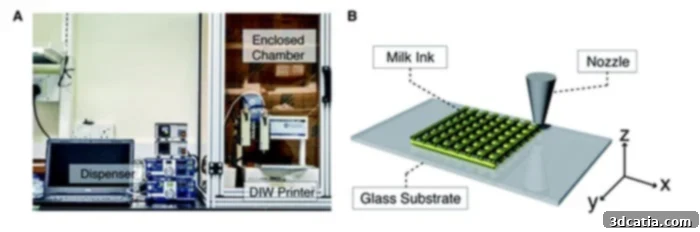
Direct Ink Writing (DIW) stands out as a versatile extrusion-based additive manufacturing method, primarily celebrated for its precision in crafting meso and micro-scale structures. In the DIW process, a liquid-phase ‘ink’ – in this case, milk – is meticulously dispensed through finely calibrated nozzles. The flow rates are precisely controlled, allowing the material to be deposited along predefined digital paths. This layer-by-layer deposition gradually builds complex three-dimensional structures with remarkable accuracy and detail. The SUTD scientists ingeniously developed their unique milk ink directly from milk itself, simplifying the ingredient list and highlighting the potential for pure, unadulterated food printing.
The versatility inherent in the demonstrated DIW method holds immense promise, extending far beyond the current scope of food manufacturing. The SUTD team envisions a future where the cold extrusion of various food inks becomes a standard practice in the creation of not only highly nutritious but also visually captivating and personalized meals. This innovation opens doors to formulating foods tailored to specific dietary needs, allergies, and material properties, addressing challenges faced by diverse populations, from the elderly requiring soft textures to individuals with specific health conditions. The ability to extrude food inks at room temperature is a game-changer, as it crucially preserves essential nutrients that would otherwise be degraded or destroyed by the elevated temperatures typically required by conventional food processing and other 3D printing techniques. This nutrient retention is a significant advantage, ensuring that the printed foods maintain their health benefits and nutritional integrity.
While cold extrusion methods like DIW offer distinct advantages for delicate ingredients, it’s important to recognize that other technologies are also employed in the diverse landscape of 3D food printing. For instance, techniques such as Selective Laser Sintering (SLS) or Fused Filament Fabrication (FFF) have found niche applications. In SLS, the printable food materials are often restricted to those primarily based on sugars and fats, as these ingredients can undergo thermal fusion when exposed to a laser. This limitation means SLS is not suitable for a broad spectrum of nutrient-rich foods that do not possess these thermal properties or are heat-sensitive. Similarly, while extrusion-based methods are broadly used in food printing, often employing hot-melt extrusion, they share a critical drawback when it comes to temperature-sensitive ingredients.
Methods like hot-melt extrusion and SLS, by their very nature, necessitate elevated temperatures to melt or fuse the food samples into desired shapes. This requirement poses a significant challenge for delicate ingredients. For example, milk, a staple in many diets, is abundantly rich in vital nutrients such as calcium and protein. These particular micronutrients are highly susceptible to thermal degradation. Exposure to high temperatures during processing can significantly diminish their nutritional value, alter their molecular structure, and even compromise their bioavailability. The researchers eloquently explained that processes involving high temperatures are fundamentally incompatible with preserving the full nutritional profile of such sensitive ingredients, making innovative cold extrusion techniques like SUTD’s DIW method indispensable for the future of healthy and nutrient-dense 3D printed foods.
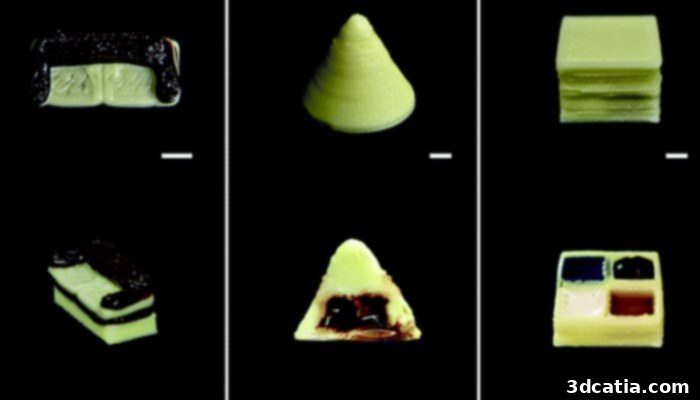
Beyond single-material printing, the SUTD researchers have also successfully demonstrated the remarkable capability of multi-material printing. This advanced technique allows for the creation of intricate food items incorporating a variety of edible materials within a single print cycle. This breakthrough vastly expands the creative and functional possibilities for 3D printed cuisine, enabling the development of complex flavors, textures, and nutritional compositions that were previously unachievable. Imagine a personalized meal where layers of protein, carbohydrates, and vitamins are precisely deposited, each maintaining its optimal texture and nutritional integrity.
Research efforts like this one are not merely academic exercises; they vividly showcase the transformative potential of food additive manufacturing for the future of nutrition and dining. The applications are extensive, ranging from the highly anticipated customization of food texture, essential for individuals with dysphagia or specific chewing difficulties, to the precise tailoring of nutritional content, addressing metabolic disorders, allergies, or athletic performance requirements. Food can be designed layer by layer to meet exact dietary prescriptions, ensuring optimal health outcomes and enhancing quality of life.
Furthermore, the aesthetic possibilities are virtually limitless. Chefs and food designers can create visually stunning, geometrically complex food items that elevate the dining experience to an art form. This innovation also holds promise for reducing food waste by enabling on-demand production and utilizing alternative, sustainable ingredients more efficiently. The advancements in 3D food printing are poised to redefine our relationship with food, moving towards a future where meals are not just consumed but are meticulously engineered for health, enjoyment, and sustainability. You can delve deeper into the specifics of this pioneering research and its methodologies by accessing more information HERE.
What are your thoughts on the intriguing prospect of 3D printed food? Do you envision a future where your meals are printed on demand, customized to your precise needs and preferences? We’d love to hear your perspectives and insights! Please share your comments and opinions below, or engage with us on our Facebook and Twitter pages! Don’t miss out on the latest advancements and breaking news in the exciting world of 3D printing – remember to sign up for our free weekly Newsletter, delivering all the essential updates straight to your inbox!