
Revolutionizing Military Logistics: Craitor’s FieldFab and the Future of 3D Printing in Extreme Environments
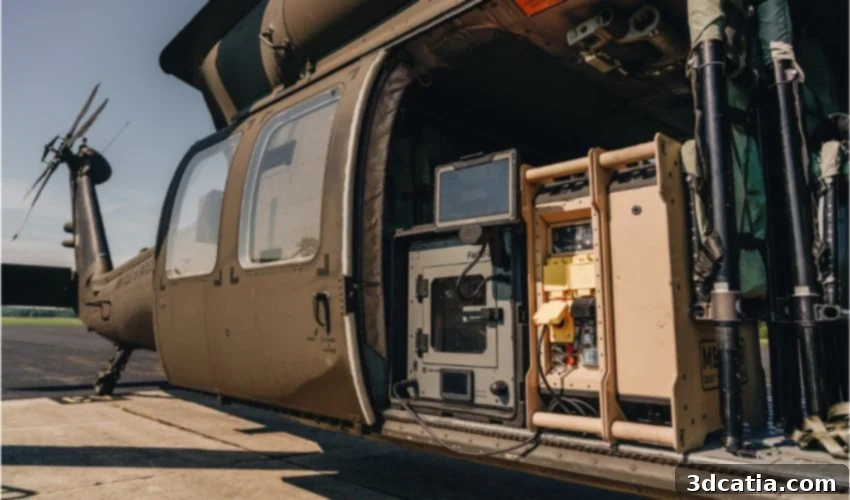
In a groundbreaking demonstration of additive manufacturing’s capabilities, U.S. troops successfully 3D printed drone parts inside a UH-60 Black Hawk helicopter last October. This mid-flight feat showcased the potential of on-demand manufacturing in challenging conditions. The printing process continued seamlessly even as the aircraft executed tactical maneuvers, highlighting the resilience of the technology amidst turbulence, temperature variations, and constant vibration.
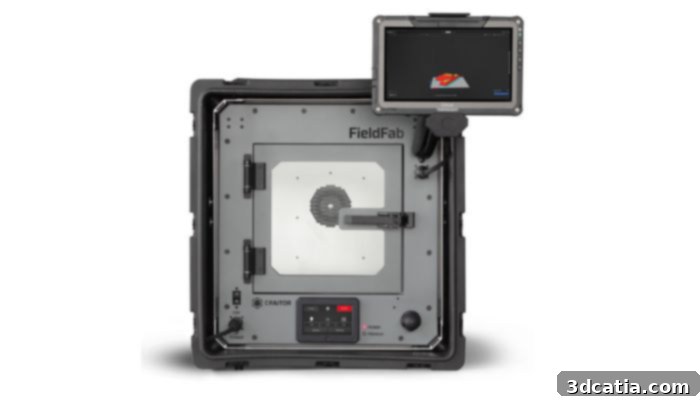
The key to this success was FieldFab, an innovative system developed by Craitor. Designed to withstand extreme temperatures, altitude changes, operational movements, and even harsh weather conditions, FieldFab represents a significant leap forward in portable and reliable 3D printing. To gain a deeper understanding of Craitor and the technology behind FieldFab, we interviewed Eric Shnell, co-founder and CEO of Craitor.
An Interview with Eric Shnell, CEO of Craitor
3DN: Eric, please introduce yourself and tell us about your journey into the world of 3D printing.
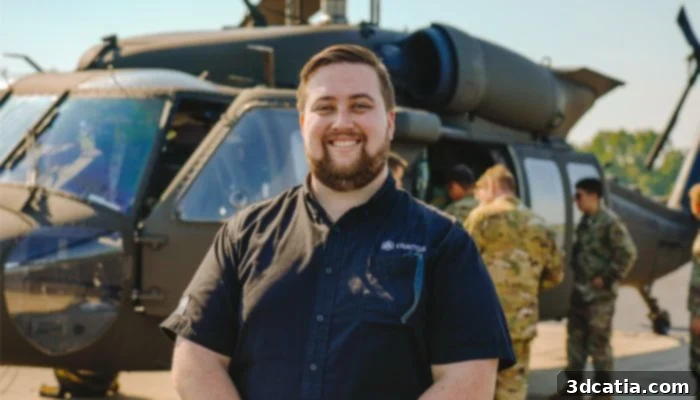
Eric Shnell: I’m Eric Shnell, co-founder and CEO of Craitor. My 3D printing journey began in the early 2010s as a hobbyist, where I spent time building and modifying my own printers within the vibrant maker community.
Eric Shnell
While pursuing my Mechanical Engineering degree at UC San Diego, I had the opportunity to train and supervise students in the campus maker studios. This experience led to more in-depth work on the reliable and scalable deployment of additive manufacturing. Ultimately, I collaborated with the U.S. Marine Corps as a strategic technical advisor, supporting their advanced manufacturing initiatives.
These experiences directly inspired the founding of Craitor. Our mission is to make additive manufacturing a practical and dependable solution in real-world operational settings, addressing the limitations I witnessed firsthand.
Craitor’s Mission: Manufacturing Anywhere
3DN: What is Craitor’s mission, and how did the company come to be?
Eric Shnell: Craitor was born from my work with the U.S. Marine Corps. I recognized the transformative potential of 3D printing, but also saw the practical hurdles preventing its widespread adoption in demanding operational environments. Existing systems simply weren’t designed to reliably produce critical parts in such conditions.
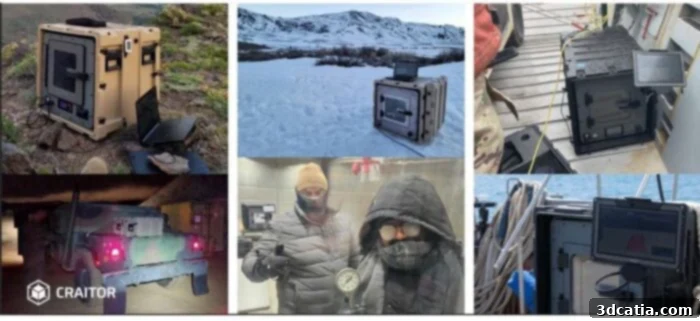
FieldFab is capable of printing in challenging environments.
Craitor was established to bridge that gap. Our vision is to enable manufacturing capabilities that can produce mission-critical components in the most extreme and resource-constrained environments, where traditional supply chains are unreliable or inaccessible. We aim to establish a true digital supply chain, making manufacturing possible anywhere. Our core mission is simple: Manufacture anywhere.
FieldFab: Engineered for Extreme Environments
3DN: What specific features make FieldFab suitable for fabrication in challenging or demanding environments?
Eric Shnell: FieldFab is specifically designed and certified for operation in extreme environments. The system is engineered to meet MIL-STD-810H requirements, ensuring reliable printing in temperatures ranging from -40°F to 120°F, across all humidity levels. It’s also certified for tactical transportation via air, land, and sea, making it ideal for deployment in diverse operational theaters.
Beyond its environmental resilience, FieldFab boasts a high degree of automation. This significantly reduces the training time required for operators. Unlike traditional 3D printers that often require days of training, FieldFab operators can be trained in approximately 15 minutes. This ease of use allows the system to function more like a parts vending machine than a complex piece of equipment, ensuring consistent and reliable performance.
This reliability enables us to collaborate directly with OEM partners to build digital supply chains, where certified parts can be produced on demand, precisely where they’re needed.
Versatile Applications of FieldFab
3DN: FieldFab is compatible with all polymer-based filaments. What types of applications do your users employ it for?
Eric Shnell: FieldFab is used to produce functional parts for a wide array of mission-critical applications. These include vehicle systems and transportation, communications infrastructure, medical equipment, robotics, and power generation and distribution. The versatility of the system makes it a valuable asset across diverse operational areas.
These deployments typically occur in environments where supply chain disruptions can have serious, even life-threatening, consequences. FieldFab simplifies and reduces the cost of supplying certain parts by enabling local production. It also serves as a crucial emergency repair capability when unexpected equipment failures occur.
In this sense, FieldFab functions as both a primary point of supply and a reliable backup when traditional logistics methods falter.

FieldFab can print direct metal replacements, biocompatible parts, flexible parts, and standard parts.
The Black Hawk Mission and Beyond
3DN: Can you share any particularly memorable missions that FieldFab has been a part of? Are there any that stand out?
Eric Shnell: FieldFab has been deployed in numerous field exercises, both within the U.S. and internationally, with the U.S. Department of Defense, allied nations, and commercial partners. Each deployment provides valuable insights and demonstrates the capabilities of the system.
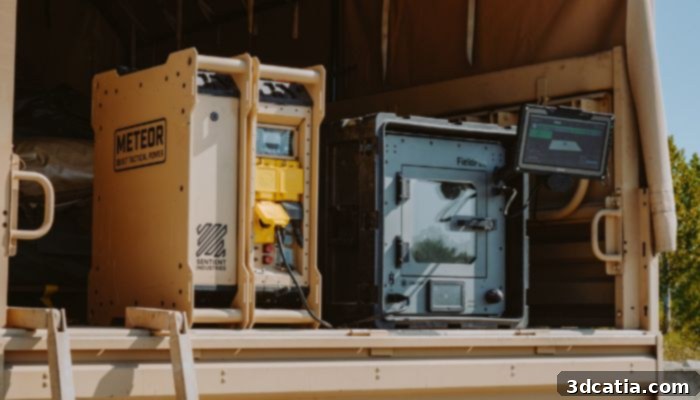
One deployment that stands out involved integrating FieldFab into a UH-60 Black Hawk helicopter alongside Sentient Industries’ METEOR power system. During the exercise, we successfully printed UAV components from 2nd Order Effects while the aircraft was in flight, performing combat maneuvers. The ability to manufacture parts in-flight demonstrated the robustness of the system under vibration, motion, and power variability—and I was fortunate enough to be on board for that test.
Expanding the Digital Supply Chain Ecosystem
3DN: Beyond FieldFab, do you have plans to develop more products or expand the company’s scope?
Eric Shnell: Absolutely. We are actively developing a broader ecosystem of manufacturing capabilities and digital architecture designed to enable truly integrated digital supply chains. This extends from the factory floor all the way to the tailgate of a JLTV operating in a remote jungle environment. Our vision is to create a seamless flow of information and materials.
In 2026, we plan to formally announce multiple tiers within this ecosystem. These tiers will form a cohesive nexus of hardware, software, and certified digital data, connecting design authority, manufacturing, and the end user into a single, coordinated system. This interconnectedness will be critical for optimizing performance and reducing logistical challenges.
Overcoming Challenges and Building for Warfighters
3DN: Since founding Craitor in 2019, what challenges have you faced, and how have you overcome them?
Eric Shnell: Building a defense hardware company before defense startups were as common as they are today presented real challenges. We steered the company through a global pandemic, bootstrapped our growth, and for a significant portion of that time, I was also a full-time college student. These were difficult but ultimately formative experiences.
What made those challenges manageable was the collaborative spirit we fostered. I never faced them alone. My team, mentors, and partners were crucial to our success. Craitor has been built with warfighters, for warfighters, and that clear mission has allowed us to succeed where others have struggled. The team understands what is at stake, why the mission matters, and remains fully committed to seeing it through.
A Final Word: Build!
3DN: Any final thoughts for our readers?
Eric Shnell: Go out and build! The future of manufacturing is in your hands.
What do you think of Craitor? Share your thoughts in the comments below or on our LinkedIn or Facebook pages! You can read the full press release here to learn more about the announcement. Plus, don’t forget to sign up for our free weekly Newsletter to get the latest 3D printing news straight to your inbox. You can also find all our videos on our YouTube channel. For more 3D printing news in the aerospace and defense sectors, check out our dedicated page HERE.