
Revolutionizing Ear Reconstruction: How 3D Printing and Tissue Engineering are Crafting Realistic Human Ears
The rapid advancements in 3D printing technology have profoundly transformed various sectors, with its impact on the medical field being particularly groundbreaking. This innovative technology has unlocked a myriad of new possibilities, enabling the creation of intricate structures with unparalleled precision. Its applications span across critical areas such as surgery, prosthetics, and advanced tissue engineering, heralding new approaches to complex medical challenges. A shining example of this transformative potential comes from a collaborative research effort between scientists at Weill Cornell Medicine and Cornell Engineering. These pioneering researchers have successfully fabricated a remarkably realistic replica of an adult human ear, utilizing a sophisticated blend of advanced tissue engineering techniques and state-of-the-art 3D printing. This landmark study not only demonstrates the feasibility of crafting grafts with exact shapes but also highlights the ability to imbue them with appropriate biomechanical properties, offering immense hope and promising prospects, especially for individuals suffering from congenital ear deformities like microtia or those who have lost an ear due to trauma or disease.
Traditionally, surgeons have relied on a procedure that involves harvesting cartilage from a child’s ribs to construct a replacement ear. While this method can yield a functional ear, it is often associated with significant drawbacks. The operation itself is frequently painful, leaving behind noticeable scars at the donor site on the child’s chest. Furthermore, although the resulting graft can be meticulously shaped to mimic the original ear, it commonly falls short in replicating the natural ear’s inherent flexibility and soft, pliable feel. This can lead to both aesthetic and functional compromises, impacting the patient’s quality of life and self-esteem. The limitations of conventional reconstructive surgery have long underscored the urgent need for more advanced, less invasive, and more biomechanically sound solutions. This is precisely where the innovative approach of Weill Cornell and Cornell Engineering researchers steps in, aiming to overcome these long-standing hurdles. Their work seeks to answer a critical question: how can we leverage cutting-edge technologies like 3D printing to realistically reproduce a human ear, offering a superior alternative to current methods?

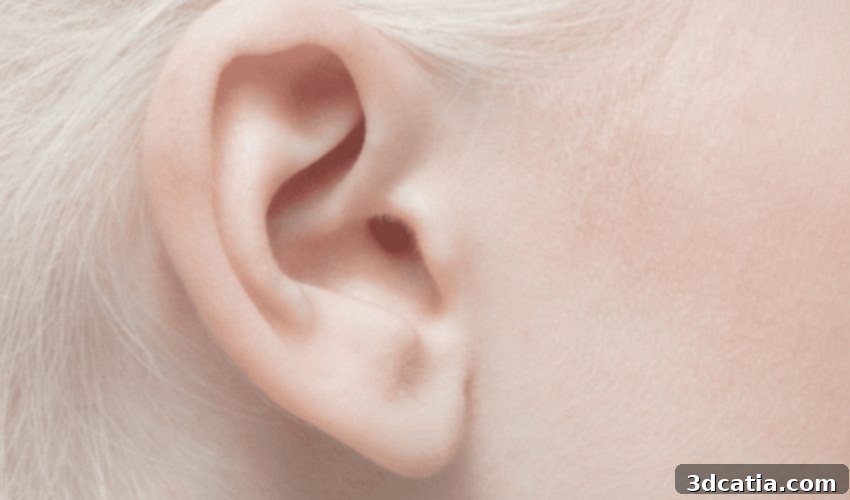
The 3D printed ear graft showcasing the detailed structure and realistic form achieved through advanced tissue engineering. (Photo Credits: Weill Cornell Medicine)
The Evolving Landscape of Ear Reconstruction: How 3D Printing Provides New Hope
One of the most promising avenues for creating a more realistic and functionally superior replacement ear involves the sophisticated use of chondrocytes—the specialized cells responsible for producing and maintaining cartilage tissue. Dr. Jason Spector, a distinguished figure as the Chief of the Division of Plastic and Reconstructive Surgery at NewYork-Presbyterian/Weill Cornell Medical Center and Professor of Plastic Surgery at Weill Cornell Medicine, has been at the forefront of this groundbreaking research. Dr. Spector and his dedicated team previously experimented with animal-derived chondrocytes to cultivate a structure primarily composed of collagen, a vital protein that forms a significant component of cartilage. While these early grafts demonstrated initial success in growth, a critical challenge emerged: over time, the carefully sculpted, distinct shape of the ear tended to diminish, losing its anatomical fidelity. This indicated that while the building blocks were present, a more robust structural support system was needed to maintain the complex three-dimensional architecture of the ear.
Addressing the persistent problem of maintaining the ear’s intricate shape, Dr. Spector and his innovative team refined their approach. Their latest methodology incorporates sterilized animal cartilage, which undergoes a special treatment to effectively prevent adverse immune system reactions in a potential recipient. This pre-treated cartilage is then meticulously inserted into a complex plastic scaffold. This scaffold, a crucial component of the new design, is precisely engineered using a high-resolution 3D printer. The design of this intricate structure is based on detailed anatomical data obtained from a human ear, ensuring an accurate and realistic mimicry of the natural form. These strategically placed pieces of animal cartilage serve as critical internal supports, acting as a framework that not only helps define the initial shape but also guides the formation and growth of new tissue within the structure. This ingenious combination leverages the mechanical strength of the scaffold while providing a biological template for cellular integration.
To rigorously evaluate the performance and durability of these advanced ear replicas, comprehensive strength tests were conducted. The results of these tests were highly encouraging, demonstrating that the 3D printed grafts exhibited an elasticity remarkably close to that of natural human ear cartilage. This biomechanical fidelity is paramount for a successful ear reconstruction, as it ensures the graft will not only look realistic but also feel natural and possess the pliability required for daily life activities, such as wearing glasses or sleeping. This combination of structural integrity and realistic flexibility marks a significant leap forward in the quest for truly lifelike and functional ear replacements. Dr. Spector aptly summarized the intricate nature of this work, stating, “Ear reconstruction requires multiple surgeries and an incredible amount of artistry and finesse. This new technology may eventually provide an option that feels real for thousands needing surgery to correct outer ear deformities.” His statement underscores the profound potential of this research to revolutionize current surgical practices and dramatically improve the lives of countless individuals.
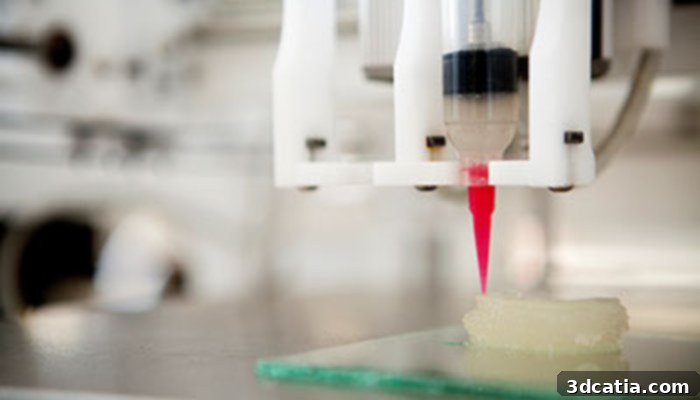
Researchers at Weill Cornell Medicine have continuously strived to develop improved 3D printed ear replicas, with dedicated efforts dating back to 2013. (Photo Credits: Weill Cornell Medicine)
Overcoming Challenges: Enhancing Strength and Biocompatibility
Despite the significant progress made in achieving realistic elasticity and shape retention, one critical challenge remained: the material initially employed for the scaffold, even with the added cartilage, lacked the full strength and resilience of natural cartilage, making it potentially prone to tearing under certain stresses. Recognizing this limitation, Dr. Spector proactively proposed an ingenious solution to further enhance the durability and biological integration of the grafts. His vision involves the strategic addition of autologous chondrocytes—cartilage cells ideally sourced from a small, discreet segment of cartilage from the recipient’s own ear. This personalized cellular component is crucial because these endogenous cells would actively facilitate the production of essential elastic proteins and other extracellular matrix components. These proteins are vital for fortifying the intrinsic strength and overall structural integrity of the ear cartilage, leading to a more robust and biologically harmonious graft. The use of the patient’s own cells also dramatically reduces the risk of immune rejection, paving the way for a more successful and long-lasting reconstruction.
The Future of Personalized Medicine: Broader Implications of 3D Printed Organoids
This pioneering research from Weill Cornell Medicine and Cornell Engineering extends far beyond the realm of ear reconstruction. It represents a significant leap forward in the broader field of regenerative medicine and personalized surgical solutions. The methodologies and insights gained from creating these realistic ear replicas lay critical groundwork for developing other complex tissue and organ structures. Imagine a future where patient-specific organs or complex tissue grafts could be 3D printed on demand, customized to the individual’s unique anatomy and physiological needs. This could revolutionize treatments for various conditions, from facial reconstruction to cardiovascular repair, and even potentially address the critical shortage of donor organs. The journey involves continued research into biocompatible materials, advanced bioprinting techniques, and the intricate biology of cell-matrix interactions. Regulatory pathways and ethical considerations will also need careful navigation as these technologies move closer to widespread clinical application. However, the promise of providing highly functional, aesthetically pleasing, and biologically integrated solutions for patients with congenital defects, trauma, or disease is incredibly compelling.
The impact of 3D printing in medicine is already vast and continually expanding. Beyond complex tissue engineering, it aids in creating highly accurate surgical guides for intricate operations, developing customized prosthetics that offer improved fit and comfort, and even fabricating models for pre-surgical planning and medical education. It also plays a role in personalized drug delivery systems and the creation of organ-on-a-chip models for drug discovery and disease modeling. The work on 3D printed ears is a testament to the synergistic power of engineering and biology, pushing the boundaries of what is possible in reconstructive surgery and offering a beacon of hope for thousands worldwide. The vision of a future where medical devices and biological constructs are tailored precisely to each patient is rapidly becoming a reality, driven by innovations like those championed by Dr. Spector and his collaborators.
What are your thoughts on this revolutionary 3D printed ear technology and its potential to transform reconstructive surgery? We invite you to share your insights in a comment below or join the conversation on our LinkedIn, Facebook, and Twitter pages! To stay informed about the latest breakthroughs in additive manufacturing and medical 3D printing, don’t forget to sign up for our free weekly newsletter here, delivering the most current news straight to your inbox. You can also explore all our fascinating videos and interviews on our YouTube channel for deeper dives into the world of 3D printing innovation.