
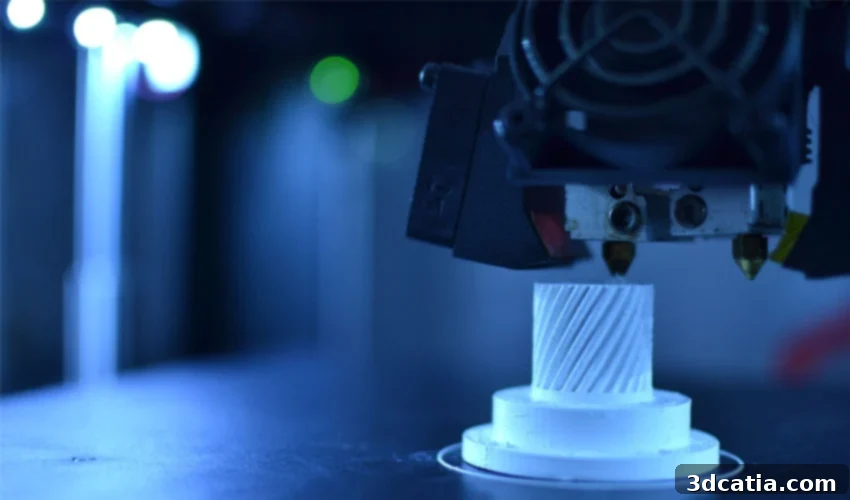
The Future of Manufacturing: Exploring the Benefits and Challenges of Ceramic 3D Printing
The landscape of advanced manufacturing is rapidly evolving, and ceramic 3D printing stands out as a technology with immense potential. Last year, SmarTech Analysis underscored this by releasing a comprehensive report on ceramic 3D printing, projecting the market to reach an approximate valuation of $4.8 billion by 2030. This forecast highlights a significant emerging opportunity within the industrial sector, driven by the concrete advantages additive manufacturing offers. These advantages span across critical areas such as part geometry, the range of available materials, and significant improvements in manufacturing costs and lead times.
Historically, ceramics have been integral to machining and various high-performance applications due to their exceptional properties. Today, their role is expanding dramatically. Modern ceramics possess several fascinating characteristics—including high thermal stability, excellent wear resistance, chemical inertness, and biocompatibility—making them invaluable for demanding sectors such as aerospace, medical device manufacturing, and precision casting. The advent of 3D printing technologies capable of producing intricate parts from advanced ceramic materials like zirconia, alumina, and various carbides is profoundly impacting manufacturers’ workflows and their reliance on traditional production methods. This paradigm shift raises crucial questions for the industry: Why should companies embrace 3D ceramic printing? What tangible benefits does this technology offer? What are the inherent challenges that need to be addressed? To provide a deeper understanding, we gathered insights and expert advice from leading figures in the field on how to effectively integrate this transformative technology into modern production strategies.
Our panel of experts brings diverse perspectives from across the ceramic additive manufacturing ecosystem. Our first expert, Dr. Romain Faye, holds a PhD in Science and Materials and currently serves as the R&D Project Manager for Nanoe’s 3D printing division. Nanoe, a prominent French company, is renowned for its expertise in producing innovative raw materials, and has been at the forefront of developing specialized ceramic and metal filaments for additive manufacturing, making advanced materials more accessible.
Next, we consulted Vagelis Mavropoulis, the Director of Lino3D’s 3D department. Based in Greece, Lino3D plays a vital role in assisting manufacturers through their entire additive manufacturing journey, from initial process selection and material identification to acquiring the necessary skills and understanding the complex stakes and functionalities of 3D technologies. Their comprehensive approach helps companies successfully navigate the integration of AM.
Finally, our third expert is Olivier Greck, the Innovation and Development Business Manager at AVIGNON CERAMIC. With a rich history dating back to 1870, this French company specializes in the injection molding of refractory ceramic cores for investment casting, a testament to their deep-rooted expertise in traditional ceramic processing. In recent years, AVIGNON CERAMIC has made significant strategic investments in ceramic additive manufacturing, bridging traditional craftsmanship with cutting-edge technology. These experts offer invaluable perspectives on the current state and future trajectory of ceramic 3D printing.
- Romain Faye
- Vagelis Mavropoulis
- Olivier Greck
Exploring Currently Available Ceramic 3D Printing Technologies and Materials
The diverse landscape of ceramic 3D printing is characterized by numerous processes, each leveraging different forms of ceramic materials such as filaments, powders, and resins. Understanding these distinct technologies is paramount for successful implementation. For instance, high-resolution applications often utilize stereolithography (SLA) and Digital Light Processing (DLP) techniques, with key players like 3DCeram and Lithoz pushing the boundaries of precision and surface finish for ceramic parts. These resin-based methods are ideal for producing intricate designs with fine details.
Another significant method is binder jetting, exemplified by companies like ExOne. This process involves depositing a liquid binding agent onto a powder bed, layer by layer, to build a part. Binder jetting is particularly advantageous for larger components and offers greater material versatility, although it typically requires subsequent sintering for full density and strength. Similarly, material jetting, as seen with XJet, uses an array of nozzles to jet tiny droplets of ceramic-laden liquid or suspension, which are then cured, enabling very fine features and multi-material capabilities. Furthermore, traditional fused deposition modeling (FDM), more commonly associated with plastics, has also adapted to ceramics. Innovators like Nanoe have introduced ceramic filaments compatible with a wide array of FDM machines, making ceramic additive manufacturing more accessible and cost-effective for initial experimentation and prototyping.
As Dr. Romain Faye aptly advises, a critical first step before committing to any investment in ceramic additive manufacturing is to “understand the advantages and disadvantages of each technology.” This crucial understanding involves a thorough assessment of specific needs concerning part production, desired precision, manufacturing speed, design complexity, and material properties. This principle isn’t exclusive to ceramic AM but underscores the importance of a well-informed decision-making process for any industrial application of 3D printing. Selecting the right process significantly influences the final part quality, cost-effectiveness, and suitability for the intended application.
The choice of manufacturing process is inherently linked to the material selection. The market currently offers several types of technical ceramics, broadly categorized into three major families, as highlighted by Romain Faye: oxides, carbides, and nitrides. The oxide category encompasses widely used technical ceramics such as zirconia and alumina. Zirconia is celebrated for its excellent fracture toughness and strength, making it ideal for dental implants and structural components. Alumina, on the other hand, offers high hardness, good thermal conductivity, and strong electrical insulation, frequently utilized in cutting tools and electronic substrates. Many oxide ceramics are also highly biocompatible, making them particularly popular and indispensable in the medical sector for prosthetics and surgical instruments.
In contrast, carbides and nitrides are distinct for their exceptional thermal shock resistance, extreme hardness, and superior mechanical properties at elevated temperatures. These characteristics make them highly suitable for demanding high-temperature applications, wear-resistant parts, and components in harsh environments. Olivier Greck elaborates on this versatility, stating: “In additive manufacturing, we can work with all oxide ceramics (porcelain, zirconia, alumina, alumina-zirconia composites, cordierite) and recently also with non-oxides (carbide and silicon nitride) to cover new applications that require abrasive wear resistance, rigidity or super refractoriness properties.” This expansion into non-oxide ceramics significantly broadens the scope of ceramic AM, enabling the creation of components for applications requiring even more extreme performance, from industrial furnaces to specialized chemical processing equipment.
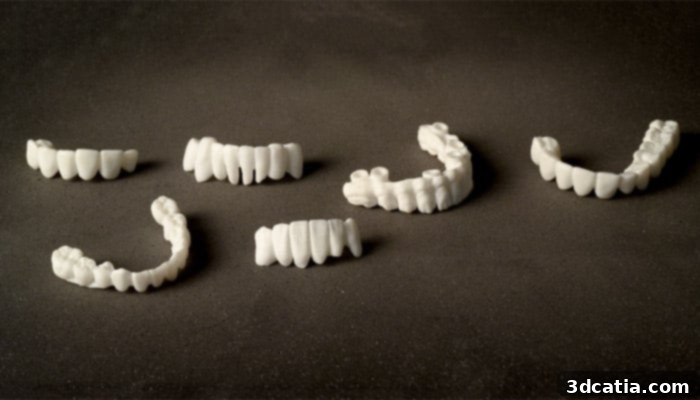
Ceramic additive manufacturing is widely used in the medical field (photo credits: Lino3D)
Unlocking Potential: The Advantages of Ceramic Additive Manufacturing
One of the most compelling benefits of 3D printing across all material types is its unparalleled ability to produce highly complex parts with intricate geometric shapes and internal patterns that are simply unattainable through traditional manufacturing methods. This advantage is particularly pronounced in ceramic additive manufacturing (CAM). The technical ceramic materials used today, known for their inherent hardness and brittle nature, are notoriously difficult to machine or shape using conventional techniques like injection molding or pressing. This often restricts designers to simpler geometries, compromising performance or requiring multi-part assemblies.
Vagelis Mavropoulis emphasizes this point, explaining: “One of the most significant advantages of 3D printing for all material types is its unique ability to fabricate risky geometries that are impossible to achieve with traditional methods. This is especially relevant for ceramics, as additive manufacturing also allows for the excellent quality required for their properties. Therefore, the production of small series in ceramics will certainly be more economical and efficient.” This capability means engineers can design components with optimized lattice structures for lightweighting, internal channels for enhanced fluid flow or heat exchange, and custom anatomical forms, all while maintaining the superior properties of ceramics. Olivier Greck shares this sentiment, highlighting how additive manufacturing enables AVIGNON CERAMIC to design highly complex turbine blade cores—a part that would have been impossible to produce with traditional methods, showcasing the transformative power of CAM in high-performance applications.
Beyond geometric complexity, ceramic AM offers substantial benefits in terms of production lead times and costs. The ability to move directly from a digital design to a physical part eliminates the need for expensive and time-consuming tooling, reducing setup costs and accelerating design iterations. This agility is invaluable for rapid prototyping, small-batch production, and on-demand manufacturing of specialized components. Furthermore, 3D printed ceramic parts often replace metal or polymer components that were previously chosen not for their optimal properties, but simply because they were easier to shape. With ceramic AM, manufacturers can now leverage the inherent superior properties of ceramics—such as extreme temperature resistance, chemical inertness, high hardness, and biocompatibility—in designs previously restricted by manufacturing limitations.
Vagelis Mavropoulis further elaborates on this material shift: “As an isotropic, very dense and neutral material, ceramics are beginning to make their way into various industries to replace metal and plastic parts. This is a challenge in itself that requires the development of specific skills in 3D printing.” This transition, however, necessitates a significant investment in specialized knowledge and training. Ceramic additive manufacturing demands a solid understanding not only of 3D printing principles and machine operation but also of the unique material science of ceramics. Romain Faye succinctly captures this challenge: “A company that masters part design and polymer 3D printing will have to take into account the facilities needed to carry out heat treatments. For a company coming from the world of ceramics, it is the 3D printing aspect that they will need to understand.” Bridging this knowledge gap through targeted training and interdisciplinary collaboration is crucial for maximizing the benefits of ceramic AM.
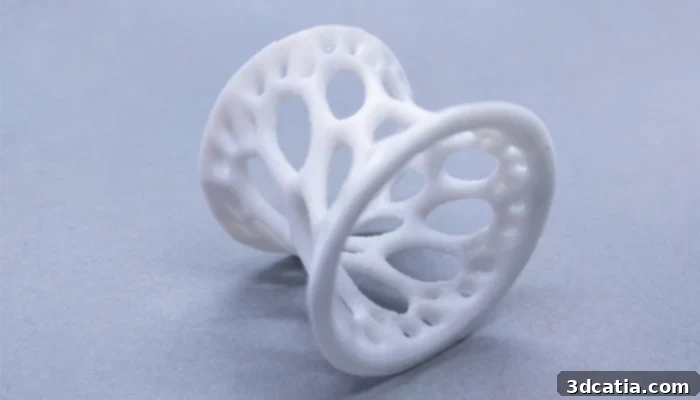
photo credits: Nanoe
Overcoming the Challenges in Ceramic Additive Manufacturing
While the advantages of ceramic additive manufacturing are compelling, the technology also presents several key challenges that must be addressed for widespread adoption. Foremost among these is the critical post-processing step of heat treatment, particularly the sintering phase. Sintering is essential to densify the “green” (unfired) ceramic part, transforming it from a fragile, porous structure into a strong, fully functional component. Oliver Greck precisely identifies this as a potential major obstacle: “As far as ceramics are concerned, the control of shrinkage during sintering is a key parameter of success. This influences the level of mechanical properties and will not spare additive manufacturing techniques which are inherently inhomogeneous since they are built up in successive layers. A company wishing to integrate ceramic additive manufacturing must take this sintering process into account; it is a critical point both in terms of material health and investment.”
The phenomenon of shrinkage during sintering is significant and highly material-dependent, often reaching 15-20% or even more. This shrinkage must be meticulously accounted for as early as the design phase of the part. This implies that the user needs to possess a deep understanding of how different ceramic materials behave during firing and apply this knowledge to pre-compensate for shrinkage in their designs. Therefore, 3D modeling plays an exceptionally important role in producing high-quality, dimensionally accurate ceramic parts. Advanced design for additive manufacturing (DfAM) techniques, including computational modeling and simulation, are increasingly being employed to predict and manage shrinkage, warpage, and potential defects.
Beyond sintering, successfully integrating ceramic AM requires a holistic approach to the entire production chain. Lino3D’s expert, Vagelis Mavropoulis, underscores this multifaceted requirement: “Understanding the capabilities of the technology and adapting it to the right application while opening up new possibilities that were impossible with traditional methods is essential. Of course, knowledge of all available materials and their properties is also an important factor. In addition, it is really important to understand that a new type of design approach is needed to get the most out of CAM. Integrating the technology itself is not so difficult.” This statement highlights that while the machines might be user-friendly, the intellectual capital required—in terms of material science, design optimization, and process control—is substantial. Furthermore, challenges extend to the development of consistent and high-quality ceramic feedstocks, managing residual stresses in printed parts, and ensuring surface finish requirements for critical applications. Addressing these challenges effectively will pave the way for broader adoption and innovation in ceramic additive manufacturing.
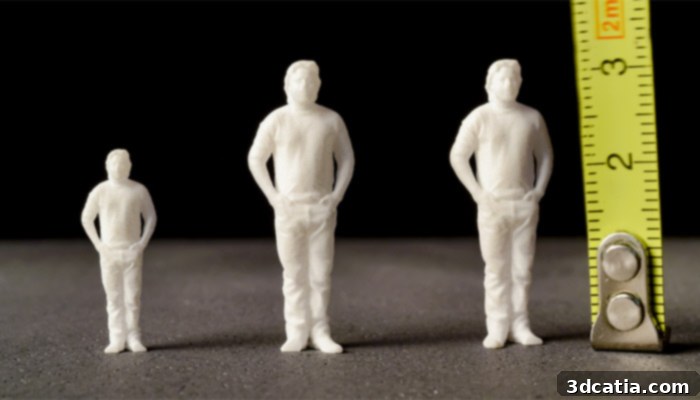
photo credits : Lino3D
Expert Advice for Embracing Ceramic Additive Manufacturing
The future of ceramic additive manufacturing is undoubtedly promising, particularly in specialized fields such as medical applications. Recent global health crises have starkly exposed vulnerabilities in our conventional supply chains and manufacturing systems. Many of these weaknesses could be partially mitigated, or even fully resolved, through the agile and localized production capabilities offered by 3D printing technologies. Olivier Greck emphasizes this point, noting: “Real opportunities exist in response to the growing requirements of product specifications that are pushing towards the use of ceramic materials and towards specific geometries for additive manufacturing. The acceleration of design cycles and the need for quality prototypes that are produced quickly and without investment in expensive forming tools also open up great prospects. Beyond this, in the medical field of bioceramic prostheses adapted to the unique morphology of the patient, the use of additive ceramic manufacturing is obvious.” The ability to create patient-specific implants and devices from biocompatible ceramics represents a monumental leap forward in personalized medicine, promising improved patient outcomes and reduced recovery times.
For those considering their entry into the world of ceramic 3D printing, Dr. Romain Faye offers practical advice regarding accessible solutions. He states: “Zetamix is an excellent solution to start in ceramic 3D printing because it is a low investment (10K euros). In addition, Zetamix is easy to handle and very versatile since it can be used for both plastic and metal.” This recommendation highlights the growing availability of more approachable and cost-effective entry points into the technology, democratizing access to ceramic AM for a broader range of businesses, from startups to established manufacturers looking to explore its potential without significant initial capital outlay.
A ceramic piece printed with Zetamix filament (photo credits: Nanoe)
Finally, Vagelis Mavropoulis provides invaluable strategic advice for organizations hesitant to invest in in-house systems immediately. He concludes: “Don’t hesitate to start with Service Bureaus in order to check the compatibility of the results and enable yourself to compare different solutions. Once the picture is clear, it is much simpler to make the move and purchase an appropriate in-house system.” Engaging with service bureaus allows companies to experiment with different ceramic AM processes, materials, and design approaches, gaining hands-on experience and validating application feasibility without the significant upfront investment and learning curve associated with acquiring and operating specialized equipment. This phased approach helps de-risk the adoption process, ensuring a more informed and successful transition to in-house capabilities when the time is right.
In summary, ceramic additive manufacturing represents a transformative force in modern industry. While it demands specialized knowledge and careful consideration of processes like sintering, its ability to produce intricate, high-performance ceramic parts with unprecedented efficiency and design freedom makes it an indispensable tool for sectors ranging from healthcare to aerospace. By leveraging expert advice and strategically approaching its integration, companies can unlock the full potential of this groundbreaking technology.
*Thumbnail photo credits: Nanoe
What are your thoughts on ceramic additive manufacturing and its potential? We invite you to share your insights in a comment below or join the conversation on our Facebook, Twitter and LinkedIn pages! For the latest updates in the world of 3D printing, sign up for our free weekly Newsletter here, delivered straight to your inbox!