
Revolutionizing Jaw Reconstruction: A Dutch Medical First with 3D Printed Titanium Jaws for Cancer Patients
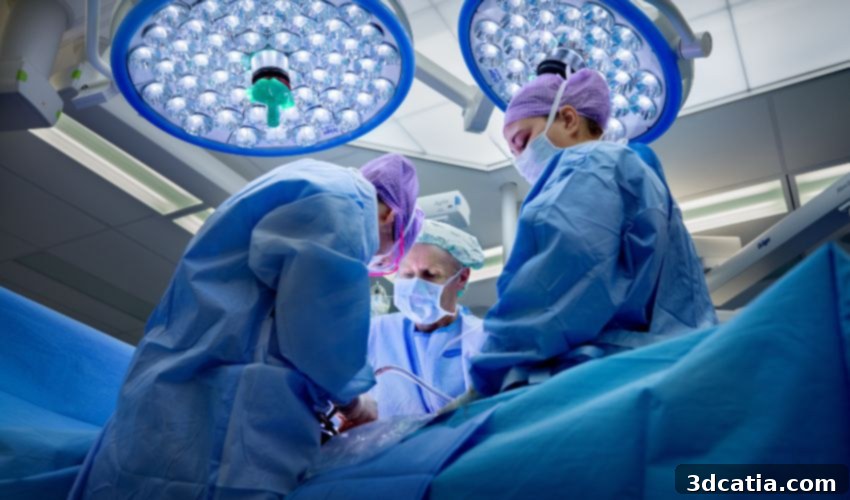
In a monumental leap forward for personalized medicine and reconstructive surgery, Dutch surgeons have successfully performed the first-ever transplant of a 3D-printed titanium jaw on a head and neck cancer patient. This challenging and innovative procedure is the culmination of extensive research conducted by the Netherlands Cancer Institute in collaboration with the Dutch company Mobius 3D Technology (M3DT). This pioneering achievement not only marks a significant milestone in medical history but also opens new avenues for patients suffering from devastating conditions requiring complex bone replacements.
When the term prosthetic comes to mind, most people envision devices that replace missing limbs, such as arms or legs. However, the need for prosthetic solutions extends far beyond these common applications, encompassing intricate replacements for less conventional body parts, particularly within the sensitive and complex regions of the head and neck. While the medical sector has made remarkable strides in developing various prosthetic limbs that have profoundly improved the lives of countless individuals, patients requiring more complex bone replacements, especially in the craniofacial area, have historically faced severely limited options. These traditional solutions often failed to provide the functional support and aesthetic outcomes they urgently needed, leading to significant distress and reduced quality of life.
The advent of advanced additive manufacturing, commonly known as 3D printing, has ushered in a new era of possibilities within healthcare. Researchers across numerous disciplines, particularly in the medical field, are now discovering novel treatment methodologies that were previously unimaginable. This transformative technology allows for the creation of patient-specific implants with unprecedented precision and customization. The recent successful transplant of a 3D-printed titanium jaw in the Netherlands exemplifies this progress, representing a groundbreaking moment as the first instance of such a prosthesis being implanted in a patient afflicted with head and neck cancer.
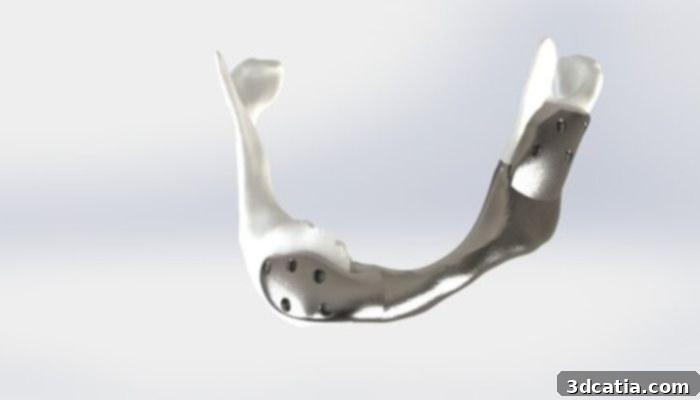
Model of the 3D printed titanium jaw (photo credits: Mobius 3D Technology)
Jaw cancer, a relatively rare yet aggressive form of head and neck cancer, is often categorized among oral cancers. While head and neck cancers account for approximately 4% of all cancer diagnoses annually in the United States, specific forms like jaw cancer typically receive less attention in broader cancer research studies due to their lower incidence. The progression of this disease frequently necessitates radical surgical intervention, where doctors are left with no choice but to remove a part of or, in severe cases, the entire lower jaw (mandible) of the patient. This resection leads to devastating consequences that extend far beyond the physical removal of bone. Patients are often left with severe functional impairments, including extreme difficulty in speaking, eating, and swallowing, coupled with significant facial disfigurement. Historically, the options for reconstructive surgery to replace the missing jaw bone have been extremely limited and often suboptimal. These traditional methods frequently failed to restore vital jaw functions, leaving patients in a profound state of despair, struggling with basic daily activities and enduring immense psychological distress.
Transplanting The 3D Printed Prothesis
The recent groundbreaking success in jaw reconstruction is the direct result of an intensive, four-year collaborative research endeavor involving numerous experts from the Netherlands Cancer Institute and the pioneering Dutch company Mobius 3D Technology (M3DT). This interdisciplinary partnership brought together oncologists, surgeons, radiologists, materials scientists, and additive manufacturing specialists to tackle one of medicine’s most complex challenges. To rigorously test and validate their advanced research findings, the team carefully selected a patient who had undergone extensive jaw removal due to cancer. The journey began with obtaining highly detailed 3D MRI and CT scans of the patient’s craniofacial region. These precise imaging data were then used to create a sophisticated digital model of the missing jaw parts, ensuring an exact anatomical fit that is unique to the individual patient. Following this meticulous digital design phase, the customized titanium prosthetic was brought to life using cutting-edge metal additive manufacturing techniques. This patient-specific implant was then meticulously transplanted into the patient’s head in a complex surgical procedure, marking a triumphant moment for both the research team and the patient.

The Netherlands Cancer Institute in Amsterdam (photo credits: Netherlands Cancer Institute)
What truly distinguishes this innovative 3D-printed alternative from previous jaw reconstruction procedures is its superior strength, unparalleled biocompatibility, and exact anatomical fit. Earlier methods of jaw reconstruction often presented significant limitations and complications. One common approach involved autologous bone grafting, typically harvesting a section of bone from elsewhere in the patient’s body, such as the fibula (a small bone from the lower leg). While this technique uses the patient’s own tissue, it often leads to donor site morbidity, prolonged recovery, and the challenge of perfectly shaping the harvested bone to match the complex curves of the mandible. The bone might not fit precisely, leading to suboptimal functional and aesthetic outcomes. Another traditional method involved the use of generic metal plates, which, while providing structural support, frequently suffered from poor integration with surrounding tissues and a lack of custom fit, potentially leading to loosening, infection, and discomfort over time.
In stark contrast, the bespoke 3D-printed titanium option offers a truly personalized solution. Fabricated directly from the patient’s CT and MRI scans, the implant perfectly mirrors the exact dimensions and contours of the resected bone, ensuring an impeccable fit within the defect area. This precision significantly reduces the risk of complications and vastly improves functional restoration. Titanium, known for its exceptional strength-to-weight ratio and excellent biocompatibility, integrates seamlessly with human bone and tissue, minimizing adverse reactions. Furthermore, the implant’s internal ‘mesh structure’ is a revolutionary design feature. This porous lattice not only reduces the overall weight of the prosthesis, making it feel more natural to the patient, but also crucially promotes osteointegration. This means that living bone cells can grow into and through the mesh, effectively fusing the implant with the patient’s existing skeletal structure. This organic integration enhances the long-term stability and durability of the implant, transforming it from a foreign body into an integral part of the patient’s anatomy.
The combination of precise fit, advanced material properties, and innovative structural design enables the patient to regain critical general functions such as talking, drinking, and eating with significantly improved ease and comfort. This restoration of fundamental daily activities dramatically enhances the patient’s quality of life, fostering a greater sense of normalcy and psychological well-being that was previously unattainable with conventional methods. The specialized and improved fastening technique further ensures the implant’s secure placement, contributing to its stability and functional success.
While the initial transplant has proven to be a resounding success, demonstrating the immense potential of this advanced medical technology, the dedicated team of scientists and clinicians is continuing their intensive research and development efforts. They are diligently collecting data, refining processes, and optimizing the application to ensure its safety and efficacy for a broader patient population. The expectation is that this groundbreaking 3D-printed jaw reconstruction will become more widely applicable and integrated into standard clinical practice by 2023 or 2024. This signifies a promising future where personalized, high-precision implants can transform the lives of countless individuals facing complex anatomical defects. This pioneering work lays the foundation for future innovations, not just in jaw reconstruction, but potentially for other intricate bone replacements throughout the human body. The full press release detailing this remarkable achievement can be accessed HERE for those interested in a deeper dive into the specifics.
What are your thoughts on this incredible medical breakthrough involving the 3D-printed titanium lower jaw? We encourage you to share your insights and comments below, or join the conversation on our LinkedIn, Facebook, and Twitter pages! Don’t forget to sign up for our free weekly Newsletter here to receive the latest 3D printing news directly in your inbox. You can also explore all our engaging videos and content on our YouTube channel.
*Cover Photo Credits: Netherlands Cancer Institute