
Revolutionizing Construction: Low-Carbon, Graphene-Enhanced Concrete for Sustainable 3D Printing
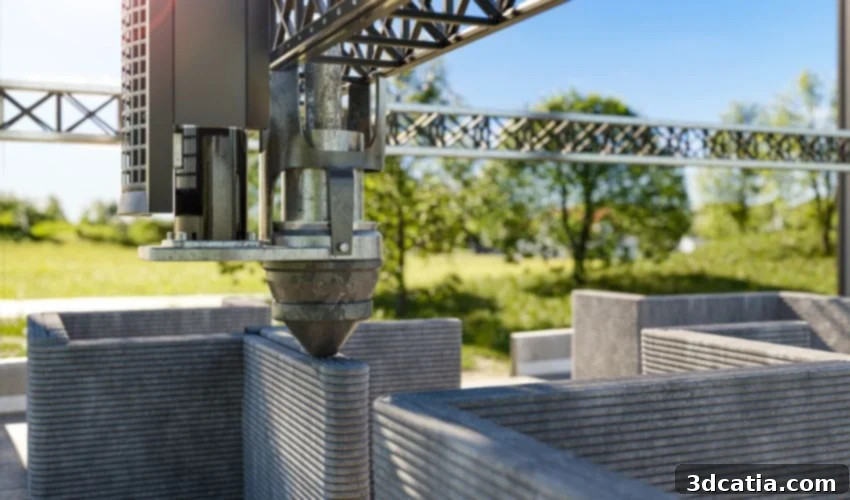
Concrete stands as a foundational material in modern construction, its versatility and strength making it indispensable for structures ranging from residential buildings to massive infrastructure projects. In recent years, its application has significantly expanded into the realm of additive manufacturing, particularly within the construction sector. This composite material, traditionally formed from aggregates like gravel, sand, and crushed rock bonded by fluid cement and gradually hardening, has seen considerable advancements in its printability. Standard concrete 3D printers typically operate on principles similar to Fused Deposition Modeling (FDM), extruding layers of material to build structures from the ground up. This method offers unprecedented design freedom, reduced waste, and accelerated construction timelines. However, the widespread use of conventional concrete comes with a significant environmental cost, primarily due to the vast carbon footprint associated with cement production. According to Statista, the manufacturing of cement—a key component of concrete—alone generated an astonishing 1.6 billion metric tons of carbon dioxide in 2022. This stark reality underscores the urgent need for more sustainable building materials and construction methods.
It is within this context of environmental urgency and technological innovation that a groundbreaking development emerges: researchers at the University of Virginia (UVA) have successfully engineered a novel concrete material specifically designed for 3D printing that boasts dramatically lower carbon emissions. This innovative printable concrete mixture retains all the desirable characteristics of traditional concrete—it’s strong, incredibly durable, and highly versatile—while offering a significantly greener alternative for the construction industry. The secret to this remarkable achievement lies in its unique composition, a meticulously crafted blend incorporating graphene, limestone, and calcined clay cement (LC2). This combination represents a leap forward in sustainable construction materials, promising to redefine how we approach building in an environmentally conscious era.

Osman Ozbulut, professor in the Department of Civil and Environmental Engineering at the University of Virginia, highlights the importance of sustainable materials. (Photo credits: Tom Daly via the University of Virginia)
The integration of graphene into this innovative concrete mixture is a particularly noteworthy aspect. Graphene, an allotrope of carbon, is renowned for its extraordinary properties, including exceptional strength, remarkable lightness, and high conductivity. These attributes make it an ideal reinforcing agent for materials, capable of significantly enhancing their mechanical performance even in small quantities. Osman Ozbulut, a distinguished professor in UVA’s Department of Civil and Environmental Engineering and a key figure in this research, elucidated the profound impact of this inclusion. He explained, “The addition of graphene to LC2 cement offers a unique opportunity to lower carbon emissions while maintaining the strength and flexibility required for 3D printed construction.” This statement encapsulates the dual benefit of their innovation: not only does it address the critical issue of carbon emissions in cement production, but it also ensures that the resulting material meets the stringent performance demands of modern construction, especially for the intricate and layer-by-layer nature of 3D printing. The inherent properties of graphene allow for a reduction in the overall amount of cement required, without compromising the structural integrity or durability of the final product, thereby directly contributing to a lower environmental footprint.
The comprehensive findings of this pioneering research were detailed in their study, aptly titled “Rheological, Mechanical, and Environmental Performance of Printable Graphene-Enhanced Cementitious Composites with Limestone and Calcined Clay.” This scholarly work represented an exhaustive exploration into the characteristics and potential of this novel low-carbon material. The research team, expertly led by visiting scholar Tuğba Baytak and UVA’s Tawfeeq Gdeh, meticulously examined three critical aspects of the material’s performance. First, they investigated its rheological properties, which are paramount for 3D printing. Rheology describes how a material flows and deforms, and for printable concrete, this translates to crucial factors like extrudability (how smoothly it can be pushed through a nozzle), pumpability (ease of transport), and buildability (its ability to retain shape once deposited without collapsing). Achieving the right rheological balance is essential for successful and precise layer-by-layer additive manufacturing. Second, the team assessed the material’s mechanical performance, including its compressive strength, flexural strength, and overall durability—parameters that determine its suitability for load-bearing applications in construction. Finally, and crucially, they conducted a thorough analysis of its environmental impacts, seeking to quantify the sustainability advantages of their graphene-enhanced LC2 mixture compared to traditional printable concrete formulations. This holistic approach ensured that the material was not only technically viable but also a genuinely sustainable innovation.
Understanding the Concrete’s Low Carbon Emissions Through Life Cycle Assessment
A cornerstone of this research was the comprehensive life cycle assessment (LCA) conducted to meticulously quantify and understand the material’s true environmental footprint. An LCA is an invaluable analytical tool that traces the entire energy usage and environmental impact associated with a product or material, from its raw material extraction and processing (cradle) through manufacturing, transportation, use, and ultimately, disposal or recycling (grave). This rigorous assessment provides a holistic view, revealing hidden environmental burdens that might not be apparent in a superficial analysis. For this project, the LCA was expertly completed by Zhangfan Jiang, a postdoctoral researcher within the Department of Civil and Environmental Engineering, working in close collaboration with Lisa Colosi Peterson, an environmental engineering professor also at the University of Virginia. Their findings were truly remarkable and presented a compelling case for the new material’s sustainability credentials. The two researchers discovered that the graphene-enhanced LC2 concrete could reduce greenhouse gas emissions by an impressive approximately 31% when compared to traditional printable concrete mixtures. This significant reduction is primarily attributed to the inherent lower energy requirements for producing calcined clay and limestone compared to conventional Portland cement, coupled with graphene’s ability to enhance material properties, potentially allowing for less overall material usage while maintaining superior performance.
“Being able to see the full environmental footprint of this new concrete was important,” Jiang emphasized, highlighting the necessity of a thorough, scientific approach to validate sustainability claims. “It not only exhibits better mechanical performance but also has a lower environmental impact, making 3D concrete construction technology more sustainable compared to traditional 3D printing methods with higher carbon emissions.” This statement underscores the dual advantages of the UVA team’s innovation: superior material performance combined with a substantially reduced ecological impact. Such advancements are crucial for driving the adoption of green building materials and practices, pushing the construction industry towards a more responsible and environmentally friendly future. By providing a viable, high-performance, and low-carbon alternative, this graphene-enhanced concrete helps to mitigate the substantial environmental challenges posed by conventional construction materials, paving the way for truly sustainable 3D printed structures.
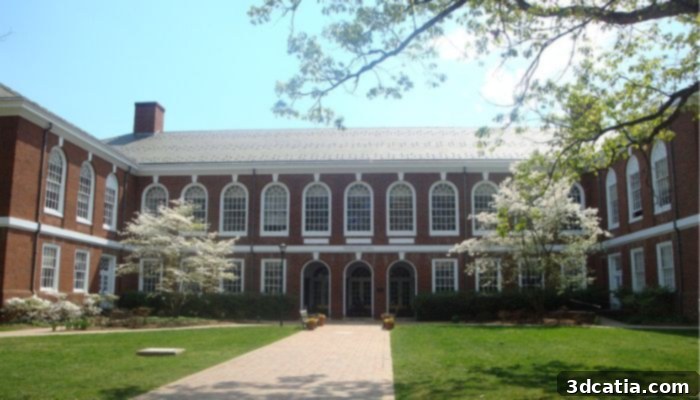
The University of Virginia’s School of Engineering and Applied Science: A hub for groundbreaking research and innovation in engineering and environmental sciences.
The collaborative nature of this project was another significant factor in its success and broad potential. Key collaborators included researchers at the Virginia Transportation Research Council (VTRC), whose involvement was instrumental in broadening the understanding of this material’s possible real-world applications. By working with VTRC, the UVA team gained invaluable insights into how this advanced concrete could be utilized in the demanding transportation industry, potentially transforming the construction and repair of roads, bridges, and other critical infrastructure. Professor Ozbulut further elaborated on this synergy, explaining, “The VTRC collaboration was essential in uncovering the fundamental properties of this new concrete, especially its performance under conditions relevant to transportation infrastructure.” This partnership not only validated the material’s robustness but also opened doors to a wider array of sustainable construction projects beyond traditional building envelopes.
Further underscoring the international scope and academic rigor of this research, Tugba Baytak, a doctoral researcher from Istanbul Technical University, played a pivotal role as part of the core research team. This international collaboration brought diverse perspectives and expertise to the project, enriching the research outcomes. The project also received crucial financial support from multiple esteemed institutions, including The Scientific and Technological Research Council of Turkey (TUBITAK) and funding from the University of Virginia’s highly competitive 3 Cavaliers Program. This multi-faceted support highlights the recognized importance and potential impact of their work. The culmination of these efforts, rigorous experimentation, and in-depth analysis was the publication of their comprehensive research in the prestigious Journal of Building Engineering in 2024. This publication in a peer-reviewed journal provides scientific validation and credibility to their findings, making the graphene-enhanced LC2 concrete a promising candidate for widespread adoption in sustainable 3D printing and construction globally. For those interested in delving deeper into the specifics of this breakthrough, UVA’s detailed article provides further insights and can be accessed here. This innovation marks a significant step towards a future where construction is not only efficient and structurally sound but also profoundly environmentally responsible.
This pioneering development of a strong, durable, and significantly low-carbon concrete for 3D printing represents a monumental stride towards more sustainable construction practices. By leveraging cutting-edge materials like graphene and optimizing cementitious blends, researchers at the University of Virginia have delivered a solution that addresses one of the construction industry’s most pressing environmental challenges: its substantial carbon footprint. This graphene-enhanced LC2 concrete offers not just a greener alternative but also a material with superior mechanical and rheological properties, making it an ideal choice for the intricate and innovative demands of additive manufacturing in construction. As the world continues to prioritize sustainability and seek out eco-friendly solutions, innovations like this will be crucial in shaping the future of building, driving us closer to a circular economy and significantly reducing the environmental impact of urban development. We are eager to hear your thoughts on this exciting advancement in sustainable 3D printing concrete technology! What do you think of this strong and low-carbon concrete? Let us know in a comment below or join the conversation on our LinkedIn, Facebook, and Twitter pages! Don’t forget to sign up for our free weekly newsletter here for the latest 3D printing news straight to your inbox! You can also find all our videos on our YouTube channel.