
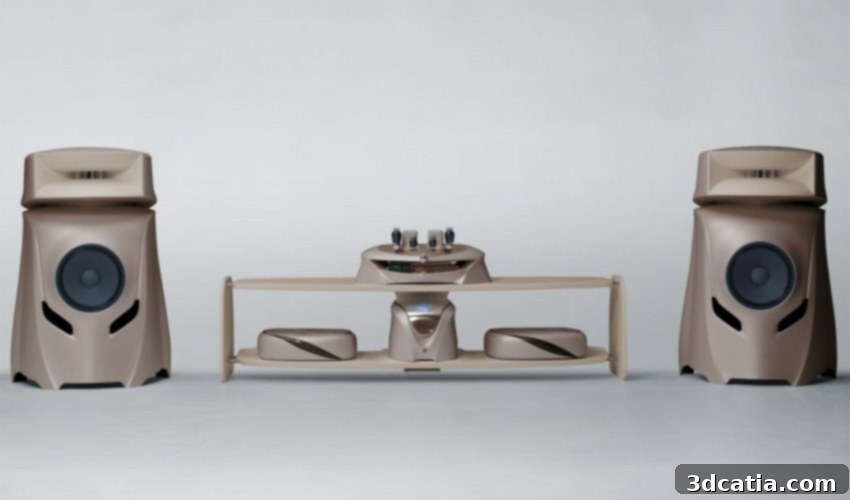
Revolutionizing High-Fidelity Audio: Askja Audio’s Visionary Approach with 3D Printing
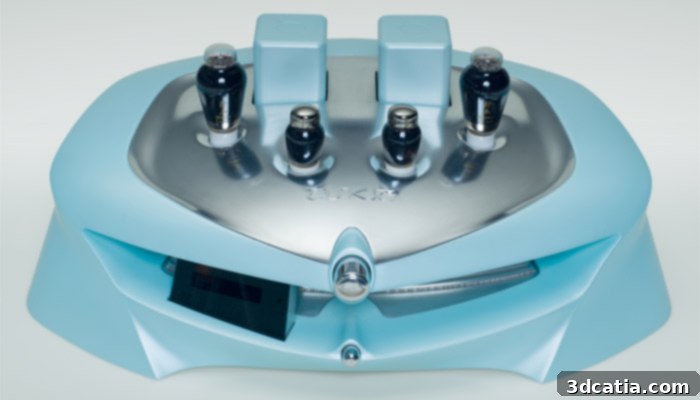
In 2014, the French startup Askja Audio emerged with a bold ambition: to deliver a truly revolutionary audio experience for discerning music lovers. At the heart of this innovation is the Askja Origin system, a meticulously engineered suite featuring numerous mechanical parts, including intricate electronics enclosures, all brought to life through advanced 3D printing technologies. Didier Kwak, the visionary founder of Askja Audio, conceived a large hybrid amplifier with a housing design so complex that conventional manufacturing methods simply couldn’t achieve it. This formidable challenge was triumphantly overcome by embracing the unparalleled freedom in geometric complexity and design offered by additive manufacturing. We recently had the opportunity to speak with Didier Kwak to delve deeper into the design philosophy behind his groundbreaking audio solution and to explore the profound connection between cutting-edge 3D technologies and the world of music.
Meet the Innovator: Didier Kwak, Founder of Askja Audio
Hello, my name is Didier Kwak. My professional journey spans three decades, primarily within the realms of cinema and advertising, with a strong focus on visual effects and imagery. For instance, I contributed to the design of the visual effects for Luc Besson’s iconic film, “The Fifth Element.” As an advertising director, my work often brought me into close contact with the production of soundtracks. It was during this period that I observed a disconcerting trend: while digital advancements significantly enhanced image quality, the quality of sound seemed to be in steady decline. This degradation was evident across various platforms, from personal music listening systems to professional monitoring auditoriums. This stark contrast ignited a passion within me to challenge the prevailing norms of audio production.
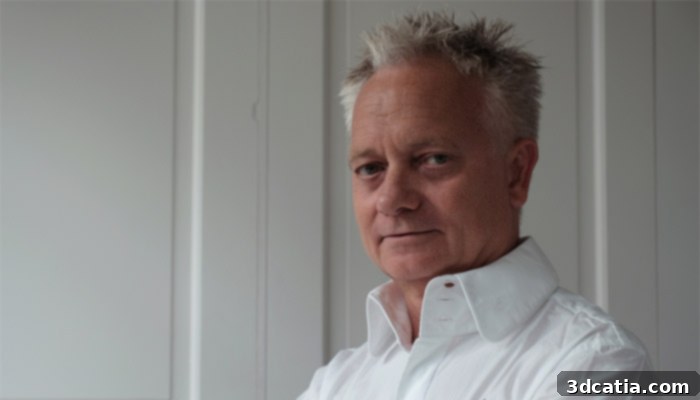
Didier Kwak, the driving force behind Askja Audio
The Genesis of Askja Origin: A Quest for Unadulterated Sound
My long-standing fascination with psychoacoustics – the study of how the human ear and brain perceive and interpret sound – fueled my desire to revolutionize audio reproduction. I became determined to design an audio system that stood in stark opposition to the prevailing trends of mass-market audio production. My objective was to create a system that prioritized realism and the absolute veracity of the emitted sound. This meant reproducing audio from conventional sources, such as CDs, but critically, without any compromise through compression or artificial enhancements. I envisioned a system that would allow listeners to experience music precisely as the artists intended, with every nuance and detail preserved, offering an unparalleled level of sonic authenticity and emotional engagement. This commitment to purity and fidelity became the bedrock of the Askja Origin project.
Embracing Additive Manufacturing: The Indispensable Role of 3D Printing in Askja Audio
My journey began with the construction of an initial prototype. This crucial first step allowed me to meticulously validate the electronics and electroacoustics of the system. However, this prototype, like those from our competitors, was built using conventional cubic, wooden, and metal enclosures. The overwhelmingly positive reception from audio professionals regarding the sound quality of this initial prototype spurred me on to fully realize my ambitious vision. It became clear that to truly push the boundaries of audio fidelity, I needed to integrate principles of fluid mechanics and aerodynamics into the design of both the speakers and the electronics housings. This innovative approach necessitated a departure from traditional manufacturing. To achieve this, I forged a strategic partnership with Swiss Fibertec, a renowned partner of the Sauber F1 Team. This collaboration was instrumental in leveraging their profound expertise in Formula 1 technology, particularly in fluid mechanics and the development of innovative composite materials. Their knowledge was critical for translating complex theoretical designs into tangible components.
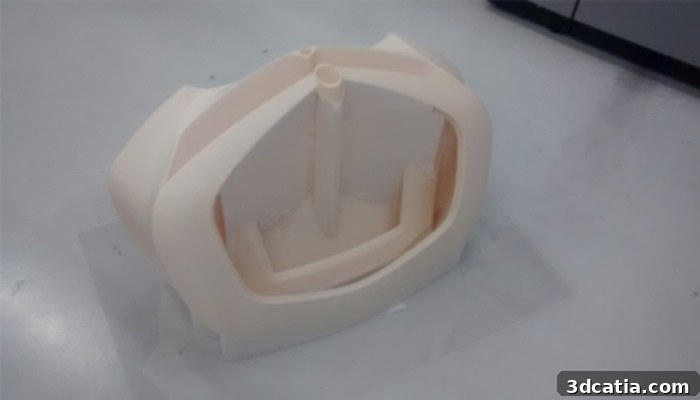
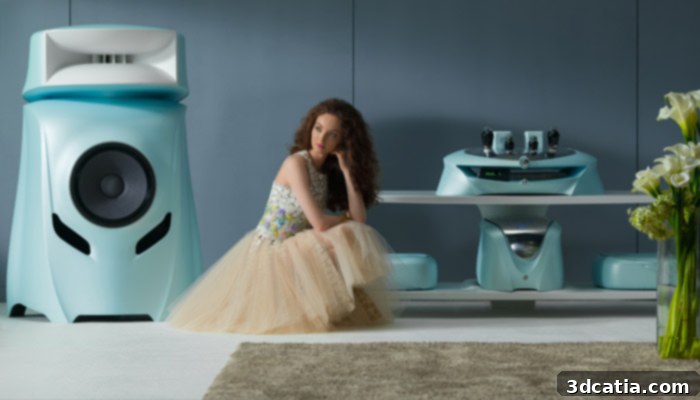
Askja Audio utilized 3D printing extensively to develop its innovative audio system, enabling complex geometries.
It was the pursuit of these intricate, aerodynamically optimized shapes that naturally led us to consider 3D printing. The realization of certain components using traditional tools would have been prohibitively expensive, incredibly time-consuming, or in some cases, simply impossible. A key design principle for Askja Audio was to maintain vibratory continuity in critical parts, meaning I absolutely wanted to avoid cutting components into multiple pieces that would then need to be joined. This continuous, seamless construction is vital for preserving sound integrity and minimizing unwanted resonances. The entire modeling process for these complex parts was carried out using Catia software, which provides precise control over various manufacturing tools, including digital printers. The inherent flexibility of 3D printing, or digital printing as we often refer to it, became a cornerstone of our manufacturing strategy. Unlike traditional mold-based production, digital printing doesn’t “freeze” a design file. This allows for unparalleled adaptability, enabling us to easily modify and refine designs to accommodate customization, both for internal electronics configurations and external aesthetic finishes. This level of responsiveness and bespoke craftsmanship would be unattainable with conventional molding techniques, solidifying 3D printing’s indispensable role in the Askja Origin system.
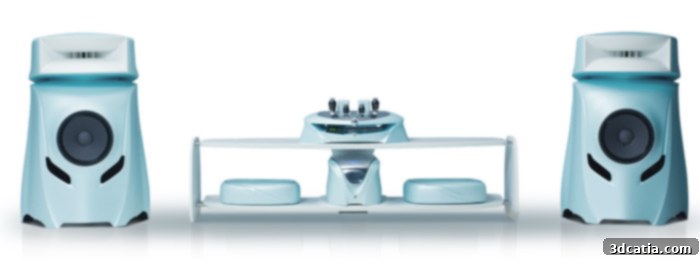
The sophisticated audio solution meticulously designed by Askja Audio, featuring 3D printed components.
Advanced 3D Technologies and Materials for Uncompromised Audio Quality
To bring our ambitious designs to fruition, I opted for the industrial-grade Fortus 900mc™ 3D printer from Stratasys. This formidable system is renowned for its capacity to produce exceptionally large parts with intricate geometries, or to efficiently print multiple components simultaneously. The choice of materials was equally critical to achieving the desired acoustic and structural properties. We primarily utilized ULTEM™ 9085 resin and ASA (Acrylonitrile Styrene Acrylate) materials. ULTEM™ 9085, a high-performance thermoplastic, was selected for its exceptional strength-to-weight ratio, high heat resistance, and excellent mechanical properties, which are crucial for the structural integrity and thermal stability of amplifier housings. ASA, on the other hand, offered superior UV resistance, aesthetic qualities, and robust mechanical performance, making it ideal for external enclosures that demand both durability and a premium finish. These materials, combined with the precision of the Fortus 900mc, allowed us to achieve the rigorous dimensional stability and robust build quality essential for a high-fidelity audio system like Askja Origin. The careful selection of both printer and materials underscores our commitment to manufacturing components that not only look innovative but also perform flawlessly under demanding acoustic conditions.
Overcoming Challenges in Additive Manufacturing for High-End Audio
The journey of pioneering a 3D printed audio system was not without its significant challenges. One of the primary hurdles we encountered was the meticulous pursuit of the best possible surface finish for our final parts. Achieving a smooth, refined surface is crucial not only for aesthetics but also for minimizing unwanted vibrations and ensuring acoustic purity. This required extensive experimentation with FDM (Fused Deposition Modeling) printing parameters. We conducted countless tests to determine the optimal orientation of each part within the print chamber, as well as the ideal nozzle size and layer height. These decisions often involved a delicate compromise, as optimizing for surface finish could increase print time and, consequently, manufacturing cost. Furthermore, some of the internal components of the speakers are incredibly intricate – so much so that they are proprietary and cannot be publicly demonstrated. These complex geometries presented unique difficulties during the printing process. We faced issues with material collapse within the printer, primarily due to the sheer mass of support structures required and localized heat accumulation at the core of these elaborate parts. Managing these factors was a continuous learning process. In short, achieving perfect focus and consistency wasn’t always straightforward. However, through persistent experimentation and iterative refinement, we have successfully developed a robust methodology, carefully tailored for each specific component, ensuring reliable and high-quality production.
The Harmonious Future: Intersecting 3D Printing and Music
From my perspective, the convergence of music and digital printing is not just a trend but an increasingly vital partnership that will deepen over time. This synergy becomes particularly potent when the imagination of inventors leads them to conceive complex mechanical parts that are otherwise impossible or impractical to manufacture using traditional means. The inherent flexibility of digital printing enables an extensive regime of iterative testing – a critical advantage in audio system development. Unlike many engineering disciplines where precise measurements might suffice, in high-fidelity audio, the ultimate judge of the result remains the human ear. Subjective auditory evaluation is paramount, and this often necessitates numerous physical prototypes and subtle design variations. Financing alternative tooling methods for such an extensive testing phase would be financially prohibitive, making 3D printing the only viable and cost-effective solution. It empowers designers to rapidly iterate, tweak, and refine components based on auditory feedback, accelerating innovation and allowing for radical departures from conventional designs. This ability to experiment freely with form and function will undoubtedly lead to unprecedented advancements in acoustic performance and aesthetic design within the audio industry, paving the way for truly bespoke and high-performing musical experiences.
A Final Invitation to Experience Askja Audio
To all fellow music enthusiasts and audiophiles, I extend a heartfelt invitation. I encourage you to personally experience the exceptional sound of the Askja system at our Villa Showroom located in Nice. Immerse yourself in an unparalleled auditory journey and discover the true potential of high-fidelity sound. For those unable to visit in person, please feel free to explore our official website HERE for more comprehensive information about our technology, design philosophy, and product offerings. We are confident that once you hear the Askja difference, you will understand the transformative power of our approach to audio reproduction.
What are your thoughts on Askja Audio’s innovative solution and their pioneering use of 3D printing in the high-fidelity audio sector? We’d love to hear your opinions! Please share your insights in a comment below, or engage with us on our Facebook and Twitter pages! Don’t forget to sign up for our free weekly Newsletter to receive all the latest news and developments in the world of 3D printing, delivered directly to your inbox!