
Revolutionizing Indoor Air Quality: How 3D Printing Powers FICEP S3’s AMS Mini for Advanced Air Sterilization
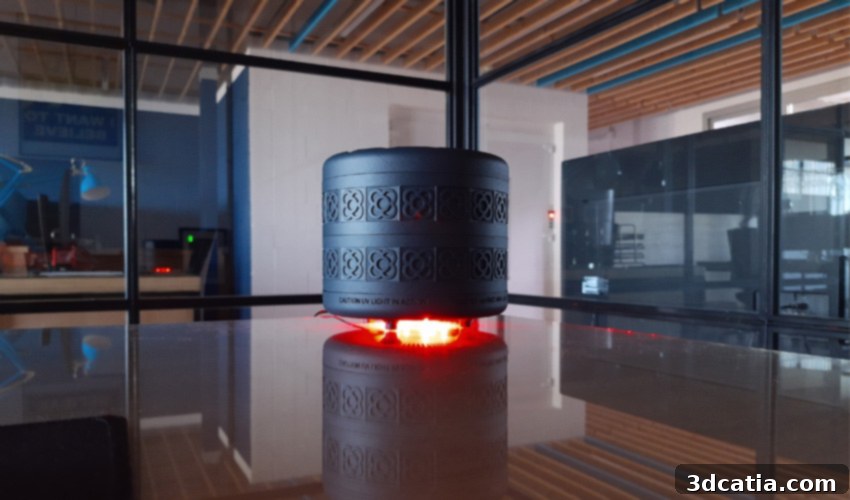
The global health landscape has undergone a dramatic transformation, prompting an urgent demand for innovative solutions to combat the rapid spread of airborne pathogens. In this critical period, industries worldwide have pivoted their expertise towards developing technologies that enhance public safety and mitigate health risks. A prime example of this proactive response is the Spanish industrial engineering firm, FICEP S3. Leveraging the unparalleled capabilities of additive manufacturing, FICEP S3 has engineered the AMS mini, a groundbreaking device designed for efficient air sterilization, meticulously crafted to eradicate bacteria, micro-organisms, and even airborne droplets potentially carrying viruses like COVID-19.
While other companies like Winsun have focused on 3D printed isolation units, FICEP S3’s AMS mini tackles the challenge of airborne transmission directly. Its compact and versatile design allows for seamless integration into a myriad of environments where clean air is paramount. From bustling hotels and modern office spaces to rigorous factory floors, critical laboratories, and even high-stakes hospital settings, the AMS mini offers a portable yet powerful solution for maintaining superior indoor air quality. This innovative device underscores the pivotal role of advanced manufacturing techniques in addressing contemporary public health challenges, providing a vital tool in the ongoing global effort to create safer, healthier indoor spaces.
FICEP S3: Engineering Innovation Through Advanced Manufacturing
FICEP S3 is a dynamic Spanish company forged by a collective of engineers, each boasting extensive experience within the demanding industrial sector. Their core mission revolves around pioneering inventive solutions and driving technological innovation by harnessing the most cutting-edge technologies available. The AMS mini is a testament to this ethos, showcasing their agility and commitment to societal needs. What makes the AMS mini particularly remarkable is its origin story: it was initially conceived as a modular air management system primarily designed for industrial paint drying applications. However, recognizing the urgent demands of the health crisis, FICEP S3 ingeniously adapted and miniaturized its proven technology, transforming it into a compact, highly effective air sterilizer.
The realization of the AMS mini project was significantly propelled by additive manufacturing, specifically utilizing HP Multi Jet Fusion technology. This choice of manufacturing process was not arbitrary; Multi Jet Fusion offers unparalleled design freedom, allowing for the creation of intricate internal geometries that would be impossible or prohibitively expensive with traditional methods. The material of choice for the AMS mini’s critical components was Nylon (PA12). PA12 is renowned for its exceptional mechanical properties, including high strength, rigidity, and resistance to chemicals and temperature fluctuations, making it ideal for a device operating with UV light and continuous airflow. This combination of advanced manufacturing and material selection ensured that the AMS mini could be rapidly developed, prototyped, and brought to market with the required performance and durability. Beyond the AMS mini, FICEP S3 continues its commitment to global health, actively collaborating with KUVA on another vital project: developing an accessible and affordable respirator specifically tailored to meet the critical needs of sub-Saharan countries, further demonstrating their dedication to impactful engineering solutions.
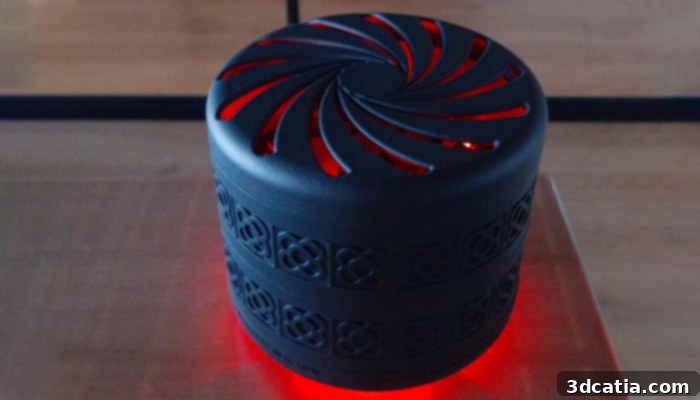
The AMS mini device is capable of cleaning the air
How AMS Mini Operates to Eliminate COVID-19 and Other Pathogens
The AMS mini’s potential to significantly curtail the spread of airborne diseases, including COVID-19, is rooted in its sophisticated operational mechanism. While direct transmission of viruses like coronavirus often occurs through larger respiratory droplets expelled during actions such as sneezing or coughing, scientific consensus, corroborated by organizations like the World Health Organization (WHO), indicates that under specific environmental conditions, smaller, aerosolized particles containing viral matter can linger in the air for extended periods. These aerosols, typically defined as particles less than 5 micrometers in diameter, are a major concern because they can remain suspended in the air for up to three hours or even longer, depending on factors such as ambient temperature and humidity. Their minute size also allows them to travel distances exceeding one meter, significantly increasing the risk of widespread indoor transmission in poorly ventilated spaces.
To effectively combat these airborne threats, the AMS mini incorporates a highly efficient sterilization process centered around UV-C germicidal light. This technology is a direct adaptation from the original paint-curing device, where UV light was used to cure specific types of paints and epoxies. In the AMS mini, this powerful UV-C light, operating within the 200-400 nanometer wavelength range, is precisely tuned for its ability to damage the DNA and RNA of viruses, bacteria, and other microorganisms, thereby rendering them inactive and unable to replicate. Unlike filters that merely trap particles, UV-C light actively neutralizes them at a molecular level.
Central to the AMS mini’s efficacy is its innovative cyclic air management system. Instead of simply passing air through once, this system is engineered to draw ambient indoor air into the unit and circulate it repeatedly, ensuring that the air remains within the UV-C exposure chamber for an optimal duration. This extended exposure time is crucial for guaranteeing that a sufficient dose of germicidal UV light reaches all airborne particles, maximizing the inactivation rate of pathogens. The design meticulously controls airflow dynamics, creating a turbulent yet controlled path that ensures thorough and uniform exposure to the UV-C radiation. Through this advanced method, FICEP S3 proudly asserts that the AMS mini can eliminate approximately 95% of airborne bacteria and viruses present in the environment, including the most concerning COVID-19 aerosols. The specific wavelength system designed, ranging from 200 to 400 nanometers, represents a carefully chosen spectrum known for its potent germicidal properties without compromising the overall efficiency and safety of the air sterilization process. Furthermore, as a closed system, the UV-C light is safely contained within the device, ensuring no direct exposure to occupants in the treated space.
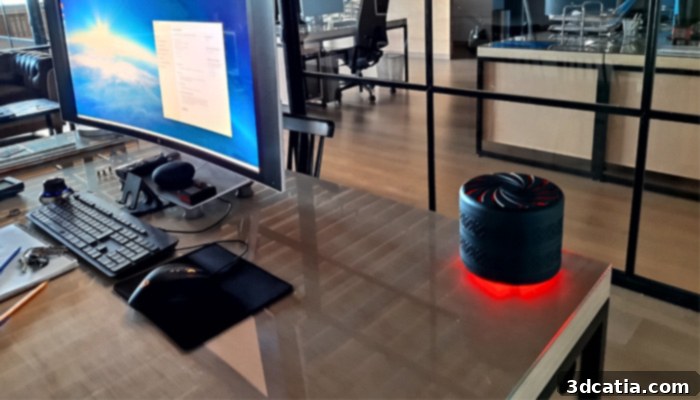
The device can be used in many environments
The Indispensable Role of 3D Printing in AMS Mini’s Design and Functionality
Additive manufacturing, more commonly known as 3D printing, was not merely a convenient option but an absolutely fundamental element in the conceptualization and production of the AMS mini. Several critical factors necessitated its adoption, primarily stemming from the device’s profoundly complex internal geometry. This intricate design is paramount to the AMS mini’s operational efficiency, particularly in how it manages airflow and integrates its sterilization components.
One of the most challenging aspects of the AMS mini’s design is the precise separation of its filtration stage from the core sterilization mechanism. Within this complex internal structure resides a specially engineered, fixed turbine. This turbine plays a crucial role in dictating the direction of rotation and the optimal angle of the air after it has undergone initial filtration. The interaction between this turbine, the inner wall of the device, and the outer structure—which ingeniously houses the conduits for the wiring of the upper stage—is meticulously calibrated. This geometry is not just for aesthetics; it is absolutely fundamental for correctly generating the specific speed flow and direction of rotation required to ensure maximum air-to-UV-C light exposure. Such a highly complex, organic, and functionally integrated internal structure, with its nuanced curves and precise channels, would be economically and practically impossible to achieve using traditional manufacturing methods like injection molding. Molds are inherently limited by their ability to create undercut geometries and require significant lead times and tooling costs for each design iteration, making them unsuitable for the AMS mini’s innovative core.
Beyond enabling complex functional designs, 3D printing offers another compelling advantage for the AMS mini: unparalleled personalization and adaptability. The ability to customize the device’s aesthetics and form factor means it can be tailored to seamlessly blend with the interior design and decoration of any given premises. This is crucial for commercial and public spaces where both functionality and visual appeal are important. Furthermore, 3D printing allows for rapid iteration and modification, meaning the AMS mini could potentially be adapted to different room sizes, specific air circulation requirements, or even incorporate new functionalities as technology evolves. This flexibility in design and production, facilitated by additive manufacturing, positions the AMS mini as a highly versatile solution capable of purifying the air in a wide array of spaces that currently face the heightened risk of harboring harmful aerosols containing pathogens like COVID-19 particles. The speed of production, cost-effectiveness for small to medium batch sizes, and the ability to manufacture on demand further underscore why 3D printing was the optimal choice for bringing such a critical device to fruition during a global health crisis. For more detailed information on FICEP S3 and their pioneering work, you can explore their official website HERE.
What are your thoughts on the FICEP S3 AMS mini as an advanced solution for purifying indoor air and mitigating the spread of airborne viruses like COVID-19? We invite you to share your insights and comments below, or join the conversation on our Facebook and Twitter pages! Don’t miss out on the latest advancements and news in the world of additive manufacturing – subscribe to our free weekly Newsletter to have all the essential updates delivered directly to your inbox!