
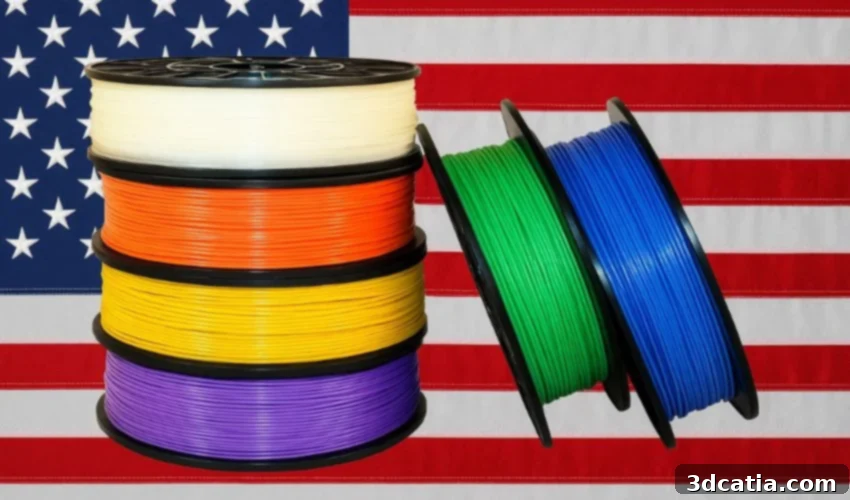
Leading the Charge: A Comprehensive Guide to USA 3D Printing Filament Manufacturers and Their Innovations
3D printing filament stands as the bedrock of fused deposition modeling (FDM) and other extrusion-based additive manufacturing processes. From hobbyists tinkering in their garages to engineers developing prototypes and manufacturers producing end-use parts, the selection of the appropriate filament is absolutely paramount for achieving robust, high-quality, and functionally sound prints. The material properties of a filament – encompassing factors like tensile strength, flexibility, impact resistance, and crucial heat deflection temperature – directly influence the success and integrity of any 3D printed object. Throughout our content, we have previously served as your guide through the intricate world of 3D printing filaments, offering essential insights on how to select the ideal filament for diverse project requirements. We’ve also provided best practices for proper storage and maintenance to prevent moisture-related print failures, and even identified some of the strongest filaments currently available on the market. Building on this foundational knowledge, it’s now time to shine a spotlight on the dynamic landscape of 3D printing filament manufacturers operating within the United States.
The United States boasts a vibrant and diverse ecosystem of 3D printing filament manufacturers, ranging from established industry giants to agile, innovative startups. Our extensive research has allowed us to map out a significant portion of these key players, providing a comprehensive overview of the domestic manufacturing scene. These American companies are at the forefront of producing an incredibly wide spectrum of materials, from the everyday utility filaments suitable for general prototyping and educational purposes to highly specialized engineering-grade materials engineered for the most demanding industrial applications. The innovation driven by these US-based manufacturers significantly contributes to the advancement and accessibility of additive manufacturing technology.
The Diverse Spectrum of Filaments from US Manufacturers
Most American filament manufacturers offer a foundational range of general-purpose options that are staples in the 3D printing community. These include the incredibly popular PLA (Polylactic Acid), known for its ease of printing, biodegradability, and wide array of colors. Another widely used material is PETG (Polyethylene Terephthalate Glycol), which offers a valuable balance between the ease of PLA and the durability of ABS, providing good strength, chemical resistance, and minimal warping. For applications requiring greater toughness and temperature resistance, ABS (Acrylonitrile Butadiene Styrene) remains a popular choice, though it often requires a heated build plate and good ventilation. Additionally, ASA (Acrylonitrile Styrene Acrylate) is gaining traction as an outdoor-friendly alternative to ABS, offering superior UV resistance and weatherability without sacrificing mechanical properties.
Beyond the Basics: Engineering-Grade and High-Performance Polymers
However, many US filament manufacturers go far beyond these standard offerings, venturing into the realm of engineering-grade and high-performance filaments designed for more rigorous and specialized applications. These advanced materials provide properties such as exceptional strength, enhanced heat resistance, chemical inertness, and superior durability. Examples include Nylon (Polyamide), valued for its incredible toughness, abrasion resistance, and flexibility, often used for gears, hinges, and functional prototypes. PCTG, a tougher and more temperature-resistant variant of PETG, offers improved clarity and impact strength. Furthermore, flexible materials like TPU (Thermoplastic Polyurethane) are produced for applications requiring elasticity, shock absorption, and rubber-like properties, such as phone cases, gaskets, and flexible components.
At the apex of material science in 3D printing, companies like 3DXTECH exemplify the commitment to innovation by creating high-performance filaments such as PEEK (Polyether Ether Ketone), PEKK (Polyether Ketone Ketone), TPI (Thermoplastic Polyimide), and PEI (Polyetherimide). These ultra-polymers are renowned for their exceptional mechanical strength, incredibly high temperature resistance (often exceeding 200°C service temperatures), and remarkable chemical stability, making them indispensable in critical sectors. Such advanced materials are frequently specified for use in highly demanding aerospace and automotive industries for lightweight structural components, medical devices requiring biocompatibility, and specialized industrial tooling where performance under extreme conditions is non-negotiable. The ability of US manufacturers to consistently produce these cutting-edge materials underscores their leadership in advanced additive manufacturing.
Innovation and Sustainability: Pushing the Boundaries of Filament
Beyond material properties, some American companies distinguish themselves through a strong focus on sustainability and groundbreaking material innovation. These manufacturers are not just creating better versions of existing filaments; they are reimagining what 3D printing materials can be. For example, Protopasta is a prime example of a company that offers unique composite filaments that blend traditional polymers with exotic additives. Their portfolio includes innovative PLA-based materials infused with actual iron, steel, copper, carbon fiber, and even coffee or magnetic particles. These specialty filaments open up new aesthetic possibilities, functional characteristics (like conductivity or magnetic properties), and opportunities for post-processing such as sanding, polishing, or even rusting metal-filled prints to achieve unique finishes. This level of material experimentation and diversification is a hallmark of the dynamic US filament manufacturing sector.
Sustainability is another growing area of focus for many US manufacturers. Recognizing the environmental impact of plastic production, several companies are investing in developing recycled filaments, made from post-industrial or post-consumer waste, without compromising print quality or material properties. Others are exploring bio-based alternatives beyond traditional PLA, leveraging renewable resources to create more environmentally friendly options. This commitment to innovation ensures that 3D printing remains a forward-thinking technology, not just in terms of what it can create, but also how it creates it, aligning with global efforts towards a more sustainable future. This concerted effort by US manufacturers to offer both high-performance and environmentally conscious materials provides a broader choice for consumers and industries alike, catering to a wide range of ethical and functional demands.
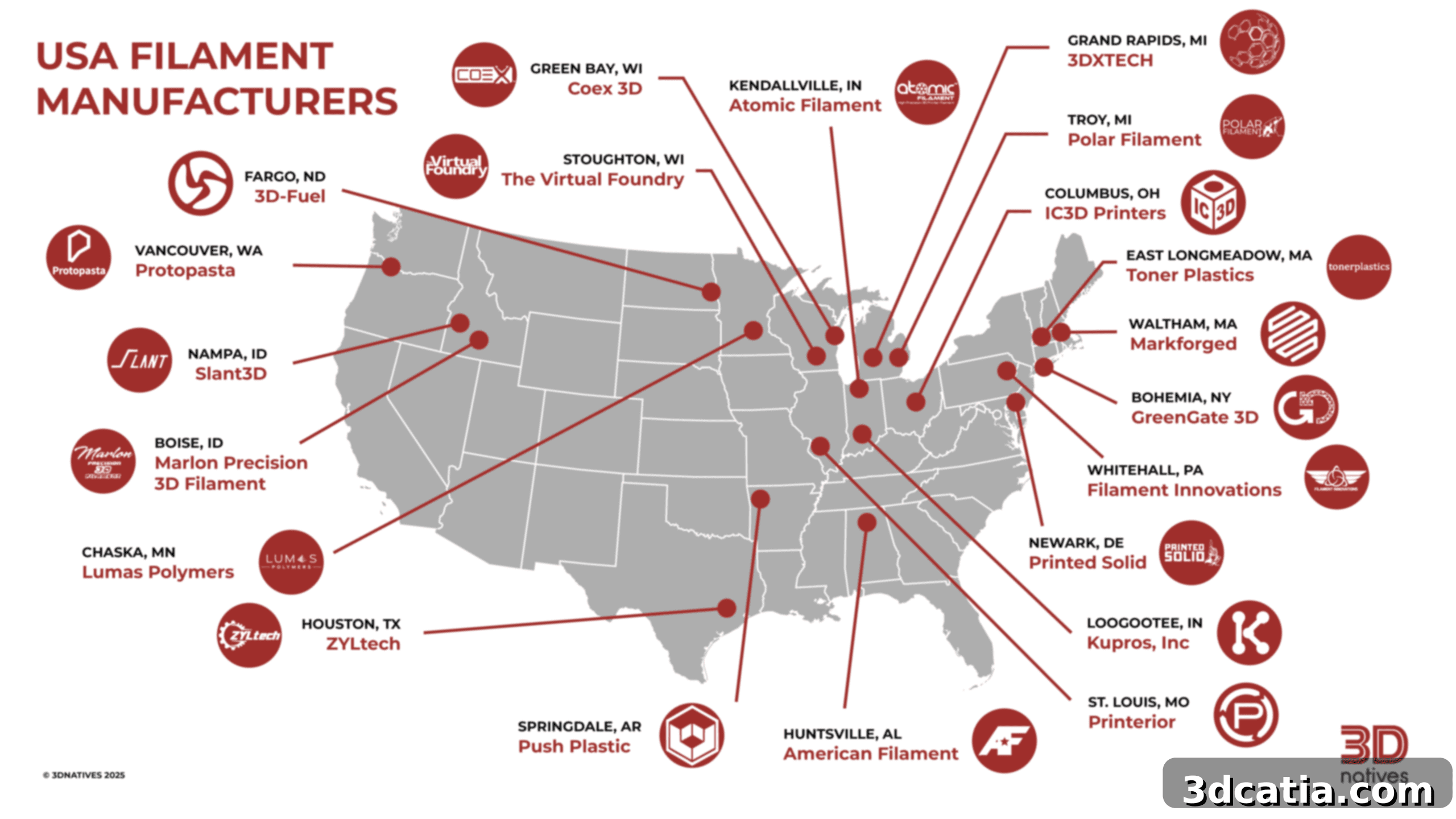
Image Credit: 3Dnatives
The Advantages of Sourcing from USA Filament Manufacturers
Opting for 3D printing filaments manufactured in the United States offers a multitude of benefits for consumers, businesses, and the wider additive manufacturing ecosystem. Firstly, buying US-made filaments often translates to superior quality control. American manufacturers typically adhere to stringent quality standards and employ advanced manufacturing processes, ensuring greater consistency in filament diameter, roundness, and material composition. This precision is critical for reliable printing, reducing nozzle clogging, inconsistent extrusion, and failed prints, ultimately saving time and material.
Secondly, local sourcing significantly improves supply chain reliability and responsiveness. In an increasingly globalized and sometimes unpredictable world, having a domestic supplier base reduces lead times, minimizes shipping costs, and mitigates risks associated with international logistics and geopolitical uncertainties. This is particularly crucial for businesses that rely on just-in-time inventory or require rapid prototyping capabilities. Furthermore, direct access to manufacturers means better technical support and customer service, allowing for quicker resolution of issues and deeper understanding of material capabilities and optimal printing parameters.
Finally, supporting US filament manufacturers contributes to local economies, fosters innovation within the country, and helps maintain a competitive edge in advanced manufacturing technologies. These companies often invest heavily in research and development, pushing the boundaries of material science and introducing novel solutions to meet evolving industry needs. Choosing American-made filaments is not just about purchasing a product; it’s about investing in a robust domestic industry that prioritizes quality, reliability, and innovation.
To explore a comprehensive visual representation of these leading American filament producers and download this invaluable map as a PDF resource, simply click HERE. This map serves as an excellent tool for identifying key players and understanding the geographical distribution of innovation in the US 3D printing filament market.
Engage with the 3D Printing Community
We are keen to hear your thoughts and experiences! Which of these prominent USA filament companies do you frequently use or recognize? Are there any innovative or noteworthy American manufacturers that we might have inadvertently overlooked in our comprehensive mapping? Please share your valuable insights and recommendations with our community by leaving a comment below, or by connecting with us on our vibrant social media platforms, including our LinkedIn and Facebook pages. Your input helps us to continually refine our resources and provide the most accurate and up-to-date information for the 3D printing industry.
Furthermore, to ensure you never miss out on the latest advancements, breaking news, and expert analyses from the world of additive manufacturing, don’t forget to sign up for our free weekly Newsletter. It’s the easiest way to get essential 3D printing news delivered directly to your inbox. You can also dive into a wealth of visual content, including tutorials, interviews, and technology showcases, by visiting and subscribing to our official YouTube channel. Stay informed, stay connected, and keep pushing the boundaries of what’s possible with 3D printing!