

Subtractive Manufacturing: Processes, Advantages, and Synergy with Additive Manufacturing
In the dynamic landscape of industrial production, two primary methodologies stand out: subtractive manufacturing and additive manufacturing. While 3D printing, a prominent form of additive manufacturing, continues to gain significant traction and innovation, subtractive manufacturing remains the cornerstone of many industries. Far from being obsolete, these traditional techniques, which involve meticulously removing material from a larger workpiece to achieve the desired shape, are widely deployed across sectors like aerospace, automotive, and metallurgy. This comprehensive guide will delve into the intricacies of subtractive manufacturing, exploring its diverse processes, highlighting its key advantages and disadvantages, and ultimately demonstrating how it can powerfully complement the rapidly evolving world of additive manufacturing.
Understanding subtractive manufacturing begins with recognizing its fundamental principle: transforming a raw block of material into a finished part by cutting, drilling, grinding, or eroding away unwanted sections. Just as additive manufacturing encompasses a variety of 3D printing processes, subtractive manufacturing boasts a wide array of methods, each suited for different materials and desired outcomes. One of the most prevalent terms associated with this field is “CNC machining,” an acronym for Computer Numerical Control. This advanced approach leverages digital programs to precisely control machine tools, enabling highly accurate and repeatable material removal. Techniques such as drilling, turning, milling, and boring fall under the umbrella of CNC machining, offering compatibility with a vast range of materials, from various plastics to robust metals. However, it’s important to note that not all subtractive manufacturing techniques are digitally controlled; some traditional and specialized cutting methods also play a vital role in modern industry, which we will also explore in detail.
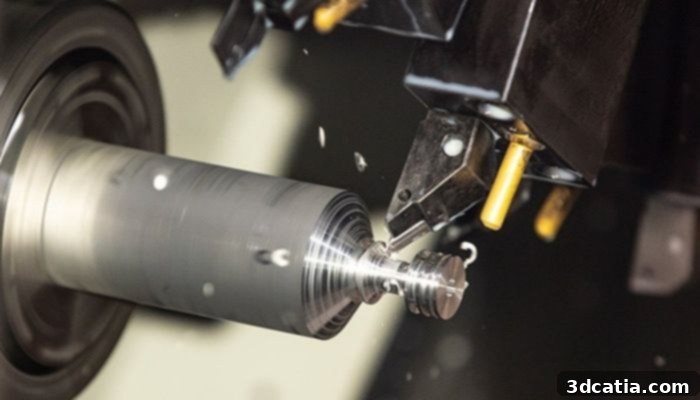
Photo Credits: Protolabs
Exploring CNC Machining Processes
CNC machining encompasses several core processes, each with unique capabilities. We begin with turning and boring, two closely related techniques fundamental to creating cylindrical parts. Both processes utilize a workpiece that rotates on an axis, while a stationary cutting tool removes material. The rotational energy of the part itself provides the necessary force for machining. These methods are ideal for manufacturing any component modeled by rotation, effectively transforming a 2D profile into a 3D object by replicating it infinitely along a central axis. Despite their distinct names, turning and boring share a common operational principle. The key difference lies in their application: turning focuses on shaping the external surface of a rotating workpiece, while boring is used to enlarge or refine internal diameters, creating precise holes or cavities. These versatile processes are compatible with an extensive range of materials, including various woods, metals, and certain plastics, making turning and boring machines indispensable in sectors such as automotive, aerospace, medical device manufacturing, and even decorative arts.
Next, we explore milling, another cornerstone of CNC machining. Renowned for its exceptional precision, its ability to create parts with intricate internal geometries, and its overall versatility, milling is a significant asset in many manufacturing workflows. This technique employs rotating multi-point cutting tools, known as milling cutters, which remove material by advancing into the workpiece. Unlike turning where the workpiece rotates, in milling, the cutting tool typically rotates while the workpiece is either stationary or moves along multiple axes, allowing for complex, multi-dimensional shaping. This means the cutter can move perpendicularly across a surface, removing material along its path to create slots, pockets, flat surfaces, and more. Milling is compatible with a vast array of materials, thanks to the availability of various interchangeable tools designed for specific tasks and material properties. However, this method does come with certain considerations. For instance, machining a complex part often requires multiple steps or operations, frequently necessitating regular tool changes, which can impact production time and cost.
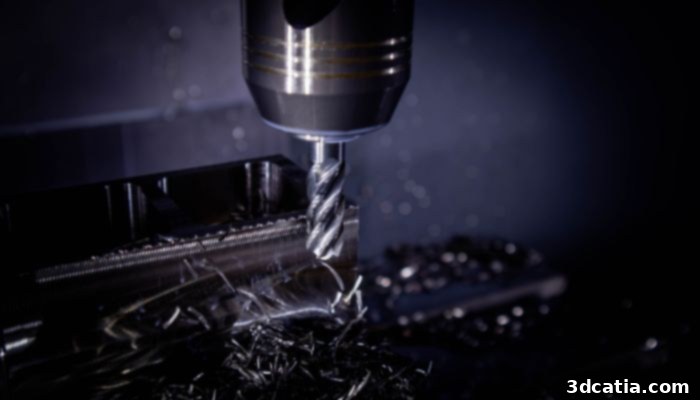
The milling process in action
While drilling and milling utilize similar tooling concepts, their applications are distinct. Drilling is specifically designed for creating round holes with a drill bit, primarily focused on penetrating a material. Milling, conversely, offers significantly greater manufacturing freedom, capable of producing holes, slots, and complex shapes of varying diameters and geometries, often larger than the tool itself. While drilling is limited to creating holes equal to the drill bit’s diameter, its efficiency for repetitive tasks is unmatched. When it comes to making several identical holes in quick succession, drilling is substantially faster than milling. Therefore, while milling provides extensive design flexibility for diverse forms, drilling remains the preferred and more efficient method for simple, repeated hole creation. It’s crucial to remember that CNC machining, with all its varied techniques, represents just one facet of subtractive manufacturing. Other cutting methods, which we will explore next, are also extensively employed across numerous industrial applications.
Diverse Cutting Techniques in Subtractive Manufacturing
Beyond CNC machining, a range of specialized cutting techniques further broadens the scope of subtractive manufacturing. Each method is tailored to specific material types, precision requirements, and production volumes. One such advanced technique is Electrical Discharge Machining, or EDM. This non-traditional machining method is particularly valued for its incredible precision and ability to work with electrically conductive materials, regardless of their hardness. EDM operates by generating electrical discharges (sparks) between an electrode and the workpiece, eroding material away. It manifests in three primary forms: wire EDM, which uses a thin wire as an electrode to cut intricate 2D and 3D shapes; sinker EDM (or ram EDM), which uses a pre-shaped electrode to create complex cavities; and rapid drilling EDM, a specialized variant that differs from conventional drilling by using an electrode to produce extremely thin, deep holes with exceptional accuracy. While these EDM processes are generally slower than conventional cutting methods, their unparalleled precision and capacity to machine complex geometries in hard-to-cut materials make them indispensable for critical applications.
Another widely adopted cutting technology is laser cutting. This method employs a highly focused, high-power laser beam, often several hundred watts strong, to precisely cut and engrave a wide variety of materials. Laser cutting offers remarkable speed and accuracy, capable of achieving tolerances as fine as plus or minus 20 microns for parts as small as 1 mm². Beyond cutting, laser machines are also adept at engraving intricate designs onto surfaces. Laser cutters primarily come in two forms: CO2 lasers, which are versatile for cutting non-metals like wood, plastics, and glass, and fiber lasers, specifically designed for efficiently cutting and engraving metals. Despite their numerous advantages, laser cutters do present certain challenges. The operation of these machines can release harmful fumes, necessitating robust ventilation systems to protect operators. Furthermore, since lasers cut by intense heat, the laser components themselves can overheat. This often requires additional cooling systems and machinery, adding to the operational complexity and footprint.
Finally, among the leading subtractive manufacturing processes, especially within cutting applications, we find water jet cutting. This innovative process leverages a high-pressure jet of water, often mixed with an abrasive material, directed at incredibly high velocity onto the workpiece surface. The immense force of this abrasive water jet causes the material to erode and separate, gradually forming the desired final shape. A powerful high-pressure compressor is essential to generate and sustain this forceful water stream. The characteristics of the jet, including pressure and abrasive type, combined with the properties of the material being cut, significantly influence the depth and speed of the cut. Water jet cutting is highly favored across various industries, including aerospace, automotive, and general mechanical engineering, due to its exceptional precision, remarkable versatility with a vast range of materials, and distinct environmental benefits. Unlike many other subtractive processes that generate chips, dust, or harmful smoke, water jet cutting produces minimal airborne waste; instead, the water jet effectively carries away any removed material, resulting in a cleaner and safer working environment.
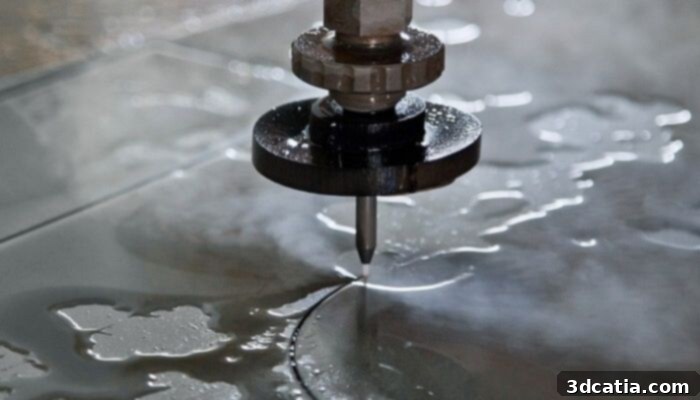
The water jet cutting process (photo credits: Fogepack Systèmes)
Subtractive vs. Additive Manufacturing: Advantages and Disadvantages
When comparing subtractive manufacturing with its additive counterpart, 3D printing, their respective strengths and weaknesses become apparent. One of the most significant advantages of subtractive manufacturing techniques is their inherent ability to deliver exceptional dimensional accuracy and surface finish. Unlike most 3D printing processes that rely on heating and cooling cycles, which can introduce thermal stresses and warpage leading to shrinkage, subtractive methods typically operate at or near room temperature. This minimizes the risk of material distortion, ensuring that parts maintain precise dimensions. However, achieving this high level of accuracy in subtractive manufacturing still requires careful environmental control. For instance, when machining a steel block, it’s often critical to allow the material to acclimatize in the machining environment for several days beforehand. Failure to do so can result in subtle dimensional changes (material “working”) influenced by temperature and humidity fluctuations, impacting the final part’s precision.
Another compelling advantage of subtractive manufacturing processes is their compatibility with a much wider and more diverse range of materials. While 3D printing often requires specific printers for different material types—for example, one for plastics, another for metals, and yet another for composites—a single subtractive machine can often process various metals, plastics, and even wood. This versatility simplifies equipment management and can reduce capital investment for operations that work with multiple material families. The strength, durability, and reliability of parts produced through subtractive methods are also frequently superior due to the use of solid, pre-formed material blocks, which typically have better mechanical properties than layered additive parts.
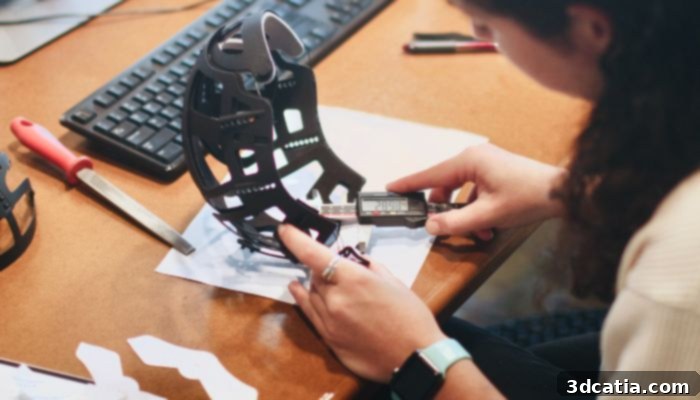
Subtractive manufacturing often offers superior dimensional accuracy
However, subtractive manufacturing processes also come with notable drawbacks. A primary concern is the substantial amount of material waste generated. In stark contrast to additive manufacturing, which builds parts layer by layer using only the necessary material, subtractive methods remove large quantities of material that often end up as chips, shavings, or dust. This waste not only represents lost material cost but also requires proper disposal and recycling. During machining, these byproducts must be continuously cleared to prevent interference with the cutting process. Furthermore, the manufacturing processes can generate harmful substances; for example, operating laser or EDM processes often releases noxious fumes that can be detrimental to operators’ health, necessitating stringent safety protocols and ventilation systems. This environmental and health impact is a significant consideration when choosing a manufacturing method.
In addition, subtractive manufacturing typically does not offer the same degree of design freedom as 3D printing. A part that can be printed in a single, complex operation via additive manufacturing might require multiple setups, different machines, and even be broken down into several simpler components for subsequent assembly if produced subtractively. This limitation stems from the need for tool access and the constraints imposed by cutting tool geometries. Consequently, achieving highly complex geometries, internal channels, or organic shapes can be considerably more challenging, or even impossible, with material removal processes. Additive manufacturing, by its nature, liberates designers from many of these constraints, allowing them to truly “design for function” without being limited by the manufacturing capabilities of traditional machine tools, fostering unparalleled creativity and innovation in product development.
How Subtractive and Additive Manufacturing Create Synergy
While subtractive and additive technologies are often framed as rivals, in practice, they possess distinct applications and, more often than not, work in powerful synergy. Historically, and particularly since its surge in popularity, 3D printing has been predominantly utilized for rapid prototyping. The inherent benefits of additive technologies—speed, cost-effectiveness for small batches, and the ability to produce multiple design iterations quickly—make them ideal for validating concepts, testing forms, and refining designs. Once a design’s shape, material specifications, and functional requirements are finalized through additive prototyping, subtractive manufacturing methods become the optimal choice for scaling up to mass production. Processes like laser cutting and water jet cutting excel at producing a large number of precise parts efficiently and rapidly. However, other subtractive methods, such as complex CNC machining, can be time-consuming due to the intricate programming required and the need for significant human oversight during setup and operation. Today, CNC machining is critically important in the production of high-precision components like injection molds, which themselves are used in formative manufacturing techniques.
Beyond initial production, the two manufacturing paradigms also complement each other in repair and lifecycle management. While traditional subtractive methods allow for certain repairs by removing damaged material and replacing it, 3D printing offers more innovative possibilities in this realm. A prime example is the directed energy deposition (DED) process, an advanced additive technique that can be used to repair expensive metal parts without necessitating their full replacement. DED technology can precisely add material to an existing, worn, or damaged component, effectively restoring its original form and function. This eliminates the need for complex assemblies or the costly and environmentally impactful replacement of large parts. More broadly, additive technologies enable the reproduction of faulty or time-worn components on-demand and in small batches, aligning perfectly with sustainability goals. Instead of discarding entire assemblies, users can selectively repair or replace individual parts, significantly minimizing waste and environmental footprint.
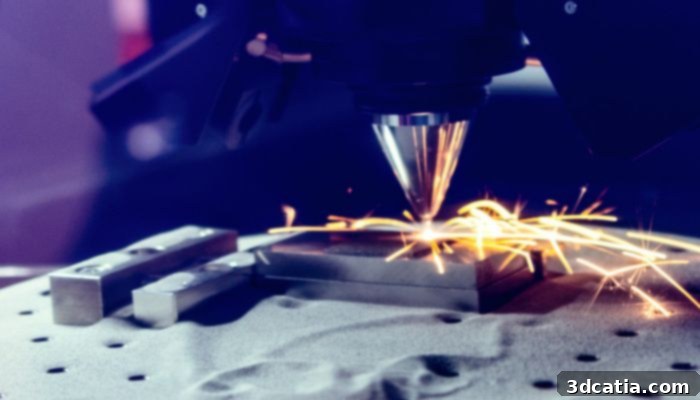
DED technology enables precise part repair (photo credits: AdvancedPowders)
Despite their inherent differences in methodology and processes, subtractive and additive manufacturing frequently work in tandem, creating a powerful symbiosis. Their respective characteristics make them highly complementary, enabling the rapid creation of incredibly precise parts, including complex designs once thought impossible to manufacture. To fully harness the combined power of these manufacturing techniques, various initiatives and consortium projects have emerged. An excellent example is organizations like Hybrid Advanced Manufacturing – Integrating Technologies, which aim to provide companies with the boundless design freedom offered by additive manufacturing alongside the exceptional precision and material strength of subtractive manufacturing. This integrated approach represents the future of industrial production, where the strengths of both worlds are leveraged to create superior products more efficiently and sustainably.
What are your thoughts on subtractive manufacturing’s role in modern industry? How do you envision its evolving relationship with additive manufacturing? Let us know in a comment below or connect with us on our LinkedIn, Facebook, and Twitter pages! Don’t forget to sign up for our free weekly Newsletter here, bringing the latest 3D printing news straight to your inbox! You can also find all our videos on our YouTube channel.
*Cover Photo Credits: Turcon