
AM3L: Revolutionizing Manufacturing with 3D Printed Porous Metamaterials
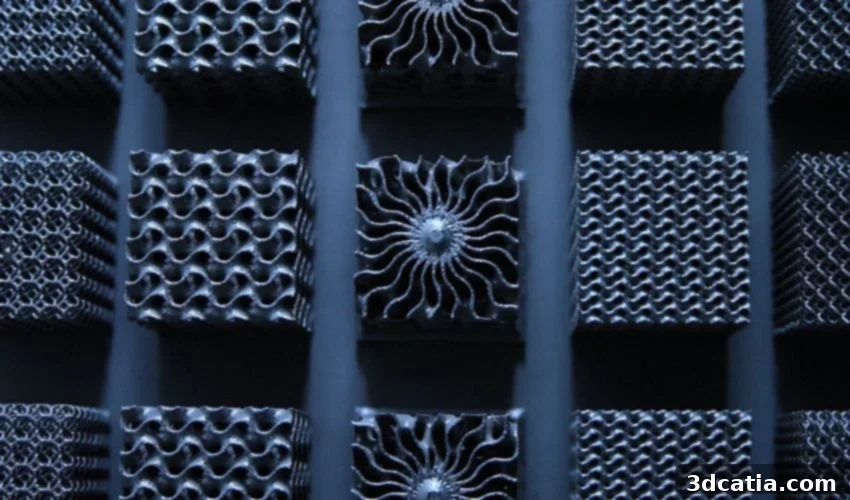
As the year concludes, we spotlight AM3L, an innovative startup emerging from the CEA (French Alternative Energies and Atomic Energy Commission). AM3L specializes in crafting porous metamaterials through advanced metal 3D printing techniques. The company’s core mission revolves around harnessing additive manufacturing to construct structures boasting meticulously customized, controlled, and verified architectures. Currently, AM3L offers two primary product lines: high-performance shock absorbers and functional filters, designed for demanding applications across various industries. By utilizing metal additive manufacturing, AM3L achieves unparalleled precision in controlling the porosity of each component, leveraging the controlled voids within to enhance functionality. The focus is not simply on material density but on the intricate porous nature of the structure itself. This unique approach enables AM3L to manipulate the internal architecture at the millimetric or sub-millimetric scale, unlocking a diverse range of functionalities within a single part, including enhanced rigidity, reinforcement capabilities, and tailored flexibility. We had the opportunity to speak with Timothée Delacroix, co-founder and CTO of AM3L, to delve deeper into the startup’s origins, daily operations, and future ambitions.
3DN Interview: An In-Depth Look at AM3L’s Innovative Approach
3DN: Could you introduce yourself and explain your connection to additive manufacturing?
Timothée Delacroix: I am Timothée Delacroix, co-founder and CTO of AM3L. My background is rooted in engineering, with a doctorate specializing in additive manufacturing. For nearly seven years, I’ve been deeply involved in laser powder bed fusion, a technology that has been the subject of several patents and scientific publications I’ve contributed to. My journey with metal additive manufacturing began at Safran, where I gained firsthand experience with the industrial challenges associated with this process. Subsequently, I pursued my PhD at CEA Paris-Saclay, contributing to the technological maturation of the process and, later, to the development of innovative 3D architected materials. Together with my colleague Hicham Maskrot, co-founder and President of AM3L, we received crucial support from the CEA to build upon the laboratory’s existing expertise, structure a comprehensive startup creation project, and bridge the critical gap between cutting-edge research, tangible demonstrators, and robust industrial solutions. Today, with our dedicated team, additive manufacturing serves as our primary tool, enabling us to operate at the intersection of design, material science, process optimization, and functional performance. We focus on tailoring materials, their porosity, and their internal architecture to achieve specific functionalities, such as absorbing impacts, filtering fluids, and managing heat flow with exceptional precision.

CTO Timothée Delacroix (left) with President Hicham Maskrot (right) of AM3L.
The Genesis of AM3L: Addressing Industry Needs with Innovation
3DN: What is AM3L? Why was the company created?
AM3L is a spin-off company originating from CEA Paris-Saclay, established in 2023. Our expertise lies in the design and manufacturing of porous metamaterials using metal 3D printing techniques. We specialize in creating custom-architected metal structures tailored for demanding sectors, including nuclear, defense, transportation, and energy industries. We are committed to delivering solutions that meet the rigorous requirements of these fields.
Under Hicham’s leadership, the core idea behind AM3L was to translate the extensive expertise within the laboratory into a dynamic organization capable of addressing specific needs and delivering fully functional parts ready for integration into existing systems. While much of the focus in metal additive manufacturing was on producing parts with maximum density, we deliberately adopted an alternative approach. We aimed to fully exploit the potential of porosity and architectural design to achieve superior performance. Our mission can be encapsulated as follows: to utilize the “controlled void” within metal parts as a strategic performance enhancer rather than a mere defect. The goal is not just to demonstrate the feasibility of this approach but to deliver parts that meet the stringent requirements of our target sectors in terms of performance, repeatability, and traceability. To accomplish this, we leverage the wealth of experience accumulated at the CEA in qualification, testing, and certification. This ensures that our metamaterials transcend the realm of simple demonstrators and become viable industrial solutions. This vision has become a reality with our first shock absorber, which received qualification from the Nuclear Safety Authority this year, marking a significant milestone for AM3L.
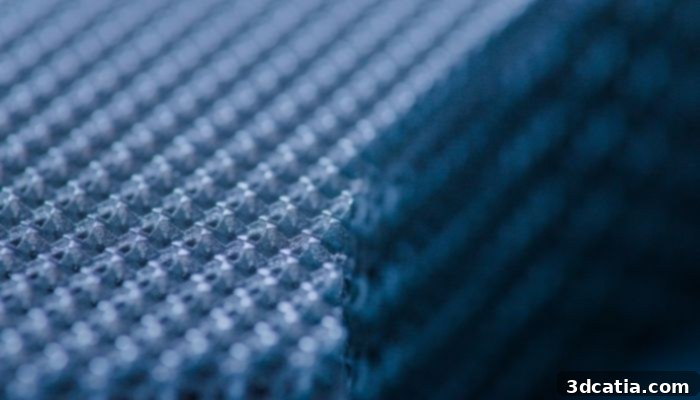
AM3L helps to produce custom architected metal structures.
Unveiling the Potential of 3D Architected Materials
3DN: What is a 3D architected material?
A 3D architected material represents a paradigm shift in material design, where the internal architecture is meticulously designed and controlled at the millimetric or sub-millimetric scale. This approach moves beyond relying on solid blocks or random porosity. In practice, instead of a simple solid metal cube, a portion or all of the material is replaced by a network of repeating cells (lattices, periodic structures, TPMS, etc.). The key is the precise control over patterns, cell sizes, strut or wall thicknesses, and spatial arrangement. With the same base material, we can achieve a spectrum of diverse behaviors. These range from highly deformable structures for efficient shock absorption to highly permeable designs with controlled pressure drops for fluid flow, or conversely, rigid and lightweight configurations for structural or tooling applications. The focus shifts from the material’s composition to how solid and void are strategically arranged in space, unlocking unprecedented design flexibility and functional performance. This allows for the creation of materials with tailored properties and performance characteristics.
Additive Manufacturing: The Key to Realizing Complex Architectures
3DN: Why do you use this type of material in additive manufacturing?
Additive manufacturing stands out as one of the few processes capable of producing these intricate internal architectures with a high degree of control in industrial materials. If additive manufacturing is solely employed to print solid blocks that could be manufactured through traditional methods like machining or casting, its true potential remains untapped. The real value of AM lies in its capacity to finely control the solid and void distribution within parts. This capability is fundamental to creating materials with precisely engineered properties and functionalities. By strategically managing the internal structure, we can create materials that are optimized for specific applications, pushing the boundaries of material science and engineering.
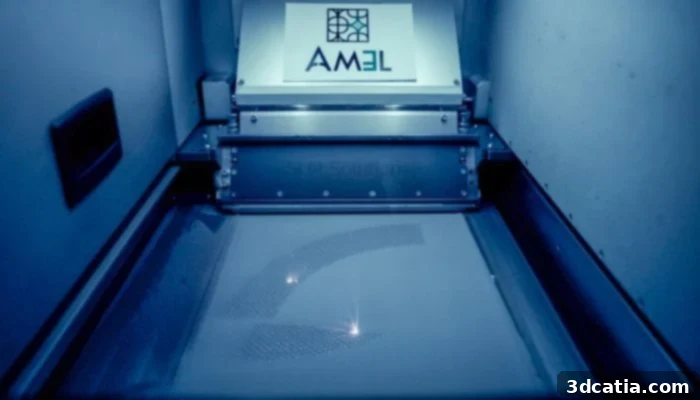
AM3L works with laser powder bed fusion machines.
The advantage of 3D architected materials in additive manufacturing also stems from the ability to combine multiple functions within a single component. One area can be optimized for energy absorption and impact protection, while another can be designed to facilitate fluid flow or heat exchange, and a third can provide rigidity to support mechanical loads. By precisely adjusting the local architecture, we can address diverse design challenges with a single part, thereby eliminating the need to stack multiple components, interfaces, and assemblies. This simplifies mechanics, minimizes operational complexity and associated risks, and facilitates easier qualification, as we are working with a single material, process, and part. Furthermore, this approach allows for optimization of the performance/mass/space trade-off. In numerous industries, weight and space are critical factors. Our metamaterials often allow for enhanced performance with reduced material usage and a smaller footprint, providing a competitive advantage in various applications.
Precision Manufacturing with Laser Powder Bed Fusion
3DN: What processes does AM3L use?
Currently, we exclusively utilize metal additive manufacturing, specifically laser powder bed fusion (LPBF), on industrial Nikon SLM Solutions machines, our valued partner. This process strikes the optimal balance between geometric resolution, mechanical properties, and repeatability, making it ideally suited for manufacturing our complex structures. The open software architecture of these machines grants us the ability to finely adjust virtually all manufacturing parameters and tailor the behavior of our metamaterials, even after the initial CAD geometry is finalized. This level of control is essential for achieving the desired performance characteristics in our products.
Ensuring Quality: A Comprehensive Approach
3DN: How do you control the quality of your materials?
Quality is paramount and is rigorously ensured throughout the entire value chain, encompassing design, process control, powder selection, part manufacturing, and test sample analysis. We have established an internal database that links design parameters, manufacturing settings, and resulting material properties. This database, coupled with design rules and sensitivity studies, enables us to identify robust process windows for each specific application. Simultaneously, we closely monitor the material and process, including powder characteristics, production parameters, and conducting metallurgical checks when necessary. We also systematically utilize dedicated samples or demonstrators tailored to the intended function, such as energy absorption or permeability. These samples undergo comprehensive testing and are compared against our reference database, ensuring seamless alignment between design, process, and real-world performance. This meticulous approach allows us to deliver solutions that are not only high-performing but also consistently reproducible, meeting the demanding needs of our clients.
Looking Ahead: AM3L’s Future Projects and Innovations
3DN: What are AM3L’s future projects?
In the realm of energy absorption, our primary objective is to build upon our initial qualified successes and expand our reach into other markets with similar protection requirements, particularly in the defense, rail, aerospace, and space sectors. We are also exploring the potential of “4D” dampers utilizing shape-memory alloys. These dampers feature recoverable structures that can return to their original geometry after impact, allowing for multi-cycle functionality. This technology holds immense promise for applications requiring repeated impact resistance and resilience.
Furthermore, we are actively developing a new generation of porous metal molds for packaging and bio-based materials. These architected tooling solutions enhance suction and fluid evacuation capabilities, minimize clogging, and aim to make sustainable packaging solutions a competitive alternative to traditional plastics. This initiative underscores our commitment to environmental responsibility and the development of sustainable manufacturing practices.
Finally, we are focusing on strengthening our digital tools by structuring our design-process-property database and enhancing our decision-support tools. This effort is geared towards streamlining the process from initial specification to an optimized metallic metamaterial solution. By leveraging advanced data analytics and simulation capabilities, we aim to accelerate the design cycle and deliver tailored solutions with increased efficiency.
Concluding Thoughts: Embracing the Potential of Controlled Voids
3DN: Any final words for our readers?
If your work involves systems where safety, compactness, or energy efficiency are critical considerations, you will likely reach a point where simply “adding solid material” is no longer sufficient. It’s important to consider that focusing on the organization of voids within parts can unlock design possibilities that conventional solutions cannot offer. Our mission at AM3L is not merely to “do additive manufacturing” for its own sake but to deliver functional, certifiable, architected metal parts that perform reliably in real-world conditions. If you are curious about whether this type of solution could be beneficial in your specific context, even without a fully formed idea of its implementation, we encourage you to reach out for a discussion. We are happy to explore the possibilities with you! You can visit our website HERE to learn more.
What are your thoughts on AM3L and its innovative approach? Feel free to share your comments below or engage with us on our LinkedIn or Facebook pages! Don’t forget to subscribe to our free weekly Newsletter to stay updated with the latest 3D printing news directly in your inbox. You can also find all our videos on our YouTube channel.
*All Photo Credits: AM3L