
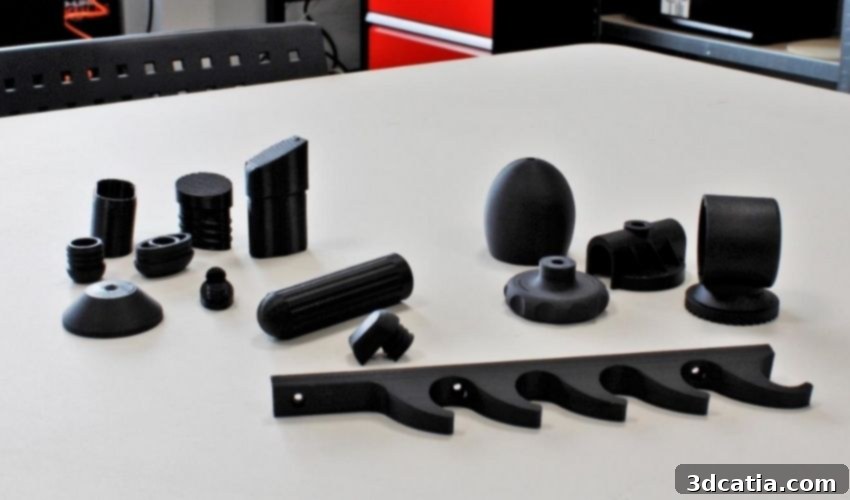
Siena Garden and Replique Pioneer Sustainable 3D Printed Spare Parts for Outdoor Furniture
In an age where sustainability is paramount, a common dilemma plagues consumers and contributes to environmental waste: a cherished piece of furniture breaks or wears down, but sourcing a replacement part from the original manufacturer proves impossible. This often leaves customers with no option but to discard the entire item and purchase a new one, a practice detrimental to both their finances and the planet. Recognizing this significant challenge, Siena Garden, a leading German company renowned for its high-quality garden tools and outdoor furniture, embarked on an innovative quest to find a viable, eco-conscious solution. Their pioneering initiative involves integrating spare parts produced via 3D printing directly into their after-sales service. To bring this ambitious vision to fruition, Siena Garden has partnered with Replique, a cutting-edge digital platform specializing in on-demand 3D-printed components. This strategic collaboration aims to significantly extend the functional lifespan of outdoor furniture by enabling customers to easily order and replace common wear-and-tear parts, such as joints, connectors, or protective foot caps, precisely when needed. This forward-thinking approach not only empowers customers to repair their furniture, offering substantial cost savings, but also establishes a truly environmentally friendly alternative to premature replacement, fostering a more circular economy.
Replique, a company born from the innovation hub of BASF incubator alums, was founded on the transformative principle of digitizing spare parts and making them available for on-demand production, ensuring accessibility anytime and anywhere globally. This revolutionary model eliminates the need for vast physical inventories, drastically reduces lead times, and minimizes waste associated with traditional manufacturing and distribution. Replique has already demonstrated its efficacy and scalability through a successful prior collaboration with home appliance giant Miele, where its digital inventory system facilitated the distribution of 3D-printed accessories. Building on this proven track record, Siena Garden is now leveraging the immense advantages of additive manufacturing for the production of essential spare parts for their extensive range of outdoor furniture, seamlessly integrating it into their comprehensive after-sales business strategy. This partnership underscores a growing trend in various industries to adopt 3D printing not just for prototyping, but as a core component of sustainable production and service delivery.
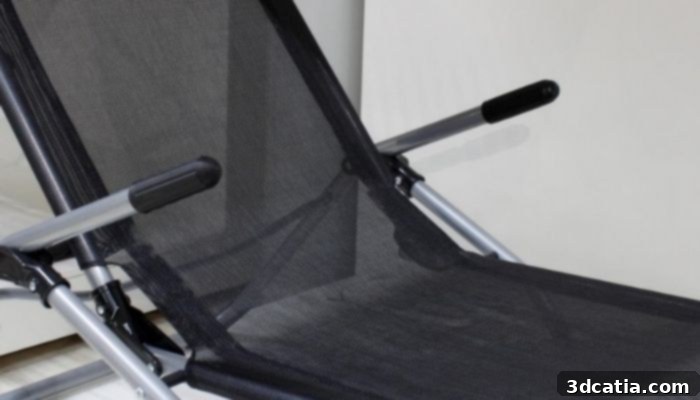
A new arm handle made of ASA can be 3D-printed if replacement is required. (Photo Credit: Siena Garden)
Revolutionizing Inventory Management with Digital Spare Parts
Siena Garden has long been recognized as a market leader in the supply of high-quality garden tools and exquisite outdoor furniture, catering to discerning customers who value durability and design. Beyond their commercial success, the company is deeply committed to corporate social responsibility, exemplified by its ambitious sustainability initiative, “mission less for more.” This initiative is not merely a slogan but a fundamental pillar of their corporate philosophy, integrating stringent environmental and social standards across all facets of their operations. Since July 2021, a pivotal aspect of these ongoing sustainability efforts has been the strategic implementation of 3D printing technology across various projects. As proudly stated on their official website, Siena Garden has already achieved significant milestones, including the successful production of the first 3D-printed spare part for garden furniture in collaboration with the digital hub münsterLAND. This initial success was instrumental in repairing a retailer’s exhibit, thereby significantly increasing its operational lifespan and demonstrating the practical applicability of additive manufacturing in extending product utility and reducing waste.
The innovative partnership between Siena Garden and Replique has already yielded tangible results, with an initial selection of 14 critical spare parts now readily available for on-demand ordering through the Siena Garden online shop. These parts are specifically identified as components most susceptible to wear and tear in outdoor furniture, encompassing essential items such as protective foot caps, various connecting parts, and intricate moving mechanisms. The availability of these parts addresses a long-standing customer need, providing a convenient and cost-effective solution for maintenance and repair. Replique plays a crucial, multi-faceted role in this collaborative ecosystem. Their expertise begins with the meticulous evaluation of suitable spare parts, identifying which components can most effectively benefit from additive manufacturing. Following identification, Replique undertakes the complex process of creating a precise digital twin for each part, based on original technical drawings or precise 3D scans. This digital twin serves as the blueprint for production. The moment a customer places an order, the part is swiftly additively manufactured by an approved provider within Replique’s extensive, distributed network of high-quality 3D printing facilities. A key consideration for outdoor furniture components is material durability. Therefore, a diverse range of high-performance polymers are utilized, specifically chosen for their suitability for outdoor applications, ensuring robust resistance to challenging environmental factors such as intense UV radiation and persistent moisture.
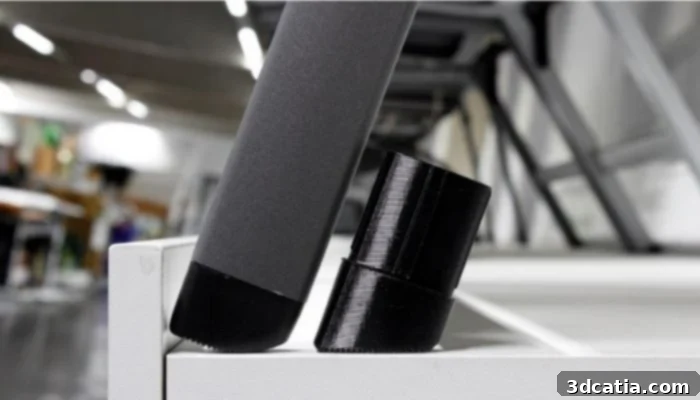
Foot cap “Fofana” made with the Forward AM filament “Ultrafuse® TPU 64D”.
The Broader Impact: Sustainability, Cost-Efficiency, and a Circular Economy
The collaboration between Siena Garden and Replique is more than just a logistical improvement; it represents a significant step towards a truly circular economy model within the consumer goods sector. By making 3D-printed spare parts readily available, both companies are actively combatting planned obsolescence and promoting a “right to repair” culture. This shift fundamentally alters the consumption cycle, moving away from a linear “take-make-dispose” approach to one that emphasizes resource efficiency, extended product utility, and waste reduction. For consumers, the benefits are immediately apparent: the ability to repair rather than replace entire furniture pieces translates into substantial financial savings. Furthermore, it fosters a deeper connection with their belongings, encouraging a sense of stewardship and reducing the environmental guilt associated with discarding functional items due to a single broken component. The convenience of ordering a part online and having it custom-made and delivered directly also enhances customer satisfaction and loyalty.
From an environmental perspective, the advantages of this on-demand 3D printing model are profound. Traditional spare parts logistics often involve large warehouses, complex global shipping networks, and the inherent waste of overproduction or eventual disposal of unsold stock. In contrast, digital inventory and additive manufacturing drastically reduce transportation emissions, minimize material waste through optimized production, and eliminate the need for vast storage facilities. Parts are only manufactured when there is a confirmed demand, ensuring a lean and efficient supply chain. Moreover, the use of specialized polymers like Ultrafuse® TPU 64D, as seen in the “Fofana” foot cap, ensures that these 3D-printed components meet the rigorous performance standards required for outdoor use, including resistance to weathering, abrasion, and degradation from environmental exposure. This focus on material science guarantees that the repaired furniture maintains its quality and longevity, further reinforcing the sustainability ethos of the initiative.
This innovative partnership also highlights the transformative potential of additive manufacturing across various industries. It demonstrates how 3D printing can move beyond niche applications and become a mainstream solution for critical aspects of product lifecycle management. By embracing this technology, Siena Garden is not only enhancing its customer service and sustainability profile but also setting a precedent for other furniture manufacturers to explore similar repair and maintenance solutions. Replique’s platform provides the digital backbone for this transition, enabling companies to unlock the full potential of on-demand, distributed manufacturing without the complexities of managing their own 3D printing infrastructure. As consumer awareness about environmental issues continues to grow, such initiatives will undoubtedly gain increasing importance, shaping the future of retail and manufacturing towards more responsible and resilient models.
What are your thoughts on Replique’s innovative on-demand spare parts solution and Siena Garden’s commitment to sustainability through 3D printing? We invite you to share your perspectives in a comment below or join the conversation on our Linkedin, Facebook, and Twitter pages! For the latest updates and breaking news in the world of 3D printing, don’t forget to sign up for our free weekly Newsletter here, delivered straight to your inbox. You can also explore all our insightful videos and demonstrations on our YouTube channel.
Cover Photo Credit: Siena Garden