
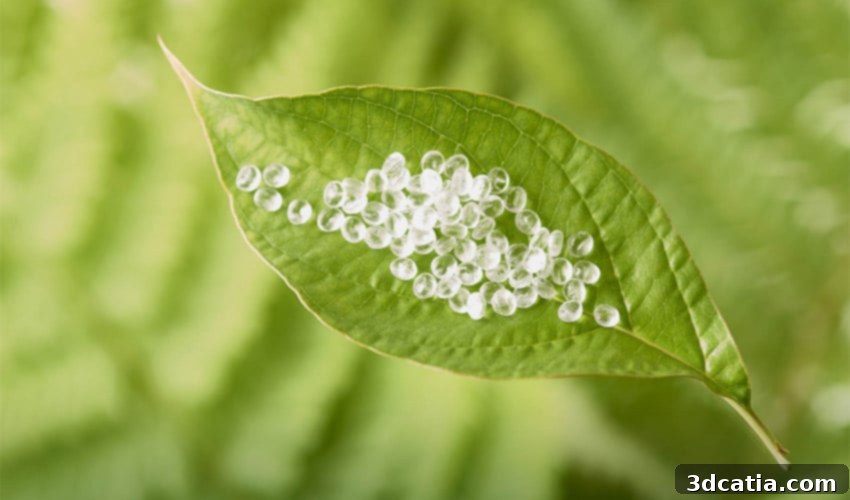
PLA Filament: Uncovering the Truth About Sustainability, Biodegradability, and 3D Printing Emissions
PLA (Polylactic Acid) has become the undisputed champion of 3D printing materials for FDM printers, and for good reason. Its ease of use makes it the go-to filament for hobbyists and professionals alike, establishing its reputation as an ideal choice for beginners. Beyond its printability, there’s a prevalent belief that PLA filament stands out as a more sustainable and safer alternative compared to other materials, granting it a significant advantage in the market. But how much truth lies behind these claims? Where do these assumptions originate, and just how sustainable is PLA in reality? To delve into these critical questions and separate fact from fiction, we engaged with leading experts in the field, seeking their informed opinions on this widely used material.
Our panel of experts includes Florent Port, the president of Francofil, a company renowned for developing and producing a diverse range of 3D printing filaments in Normandy, France. We also consulted with Nicolas Roux, CEO of Zimple 3D, who founded his company two years ago with a mission to simplify 3D printing through innovative solutions like air filter devices. Rounding out our expert insights is Jan-Peter Willie, co-founder of 3D4Makers, a Dutch filament manufacturer bringing many years of invaluable experience in plastic production to the discussion.
Our initial inquiry to these industry leaders naturally focused on the most common misunderstandings surrounding PLA filament. All three experts were in unanimous agreement on the biggest misconception. Florent Port succinctly explained, “It is biodegradable, which implies that it doesn’t matter if you throw it in nature or not.” Nicolas Roux further highlighted another common but inaccurate belief, stating, “PLA does not emit toxic emissions.” These statements immediately bring into question the true environmental profile of PLA. Is PLA truly sustainable, as many assume? To thoroughly investigate this material, we will meticulously examine its biodegradability, emissions, production processes, and other crucial aspects such as its recyclability.

Understanding PLA Production: From Corn to Filament
PLA, scientifically known as polylactic acid or polylactide, distinguishes itself by being derived from renewable, natural raw materials, primarily corn. The production process begins with the extraction of starch (glucose) from these plants. Enzymes are then introduced to convert this starch into dextrose. Subsequently, microorganisms ferment the dextrose into lactic acid, which is then polymerized to form polylactide. This polymerization process creates long-chained molecular structures whose properties bear a striking resemblance to those of traditional petroleum-based polymers.
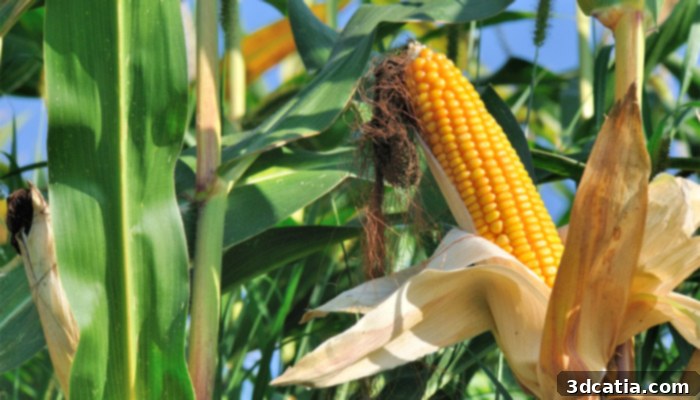
Photo Credits: gartenjournal.net
The fact that pure PLA is produced from renewable resources, rather than finite fossil fuels like ABS, is undeniably a positive aspect. This aligns with global efforts to reduce reliance on dwindling crude oil reserves. However, this production method raises a significant ethical question: Is it truly justifiable to produce plastic from food crops, especially given the continuous growth of the world population and the escalating demand for food? Jan-Peter Willie weighs in on this complex issue, stating, “There is much debate about the total carbon, fossil fuel and water usage in manufacturing bioplastics from natural materials and whether they are a negative impact to human food supply. To make 1 kg of PLA, the most common commercially available compostable plastic, 2.65 kg of corn is required. Since 270 million tonnes of plastic are made every year, replacing conventional plastic with corn-derived PLA would remove 715.5 million tonnes from the world’s food supply, at a time when global warming is reducing tropical farm productivity.” This highlights a critical dilemma: a large-scale shift to bioplastics derived from food crops could potentially create competition between agricultural land used for sustenance and that designated for plastic production.
Biodegradable vs. Compostable: Demystifying PLA’s Environmental Claims
The terms “biodegradable” and “compostable” are frequently encountered when discussing PLA, yet their distinctions are often misunderstood by consumers. Grasping the precise meaning of each is crucial for accurately assessing PLA’s environmental impact. Jan-Peter Willie clarifies this important difference: “Many people confuse ‘biodegradable’ with ‘compostable’. Broadly speaking, ‘biodegradable’ means that an object can be biologically broken down, while ‘compostable’ typically specifies that such process will result in compost.”
A ‘biodegradable’ material, by definition, can be broken down by biological processes under specific anaerobic or aerobic conditions. However, the term itself can be misleading, as virtually any material will eventually decompose in nature given enough time. Therefore, for biodegradability claims to be meaningful, the exact environmental conditions required for decomposition must be explicitly defined. Composting, in contrast, is a controlled, human-managed process. According to the European standard EN13432, a polymer or packaging is officially considered ‘compostable’ if, within a period of six months in an industrial composting facility, at least 90% of its mass is converted into carbon emissions by microorganisms. Additionally, any additives present must constitute a maximum of 1% of the initial mass and be entirely harmless. To summarize this distinction concisely, one could say: “All composting is always biodegradation, but not all biodegradation is composting.”
Is PLA Filament Truly Biodegradable in Practice?
The term “biodegradable” is a common marketing claim for PLA, often leading consumers to believe that PLA, like organic kitchen waste, will readily decompose in a domestic compost pile or when discarded in nature. This, however, is a significant misconception. While PLA can technically be described as biodegradable, its degradation requires very specific conditions. Florent Port elaborates, “Under the specific conditions of industrial composting, it is more appropriate to say in this case that it is a biodegradable polymer. Industrial composting conditions, i.e. controlled temperature and humidity in the presence of micro-organisms, are necessary for PLA to be truly degradable.” Jan-Peter Willie further clarifies, “PLA is compostable but only in an industrial composting plant.”
Under these tightly controlled industrial composting conditions, which typically involve temperatures above 55-70ºC, PLA can indeed biodegrade relatively quickly, usually within a few days to a few months. Nicolas Roux confirms this point, stating: “PLA can only be biologically degraded under industrial composting conditions.”

Processing of biowaste | Photo Credits: Federal Environment Agency
Unfortunately, the generalized use of the term “biodegradable” by manufacturers and distributors can be quite misleading for the end consumer when these crucial conditions are not explicitly defined. The Federal Environment Agency has also noted in its reports that such broadly communicated biodegradability can inadvertently lead to increased environmental pollution from micro-plastics if consumers are encouraged to dispose of these plastics in natural environments. In the wild, PLA takes a considerable amount of time – at least 80 years – to decompose. This means that if discarded in oceans or on land, it contributes not only to the accumulation of conventional petroleum-based plastics but also to significant environmental pollution from plastics and, crucially, microplastics. For these reasons, PLA should not be disposed of in nature, in home composters, or even in organic waste bins, just like other conventional plastics. This brings us to the next important question: what happens to PLA once it’s thrown away?
Can All Composting Plants Degrade PLA and Other Bioplastics?
The simple answer to this question is a resounding no. A comprehensive survey conducted by the German Environmental Aid (DUH), which analyzed nearly 1,000 German composting plants for bio waste and green waste, revealed a stark reality: an overwhelming 95% of these facilities are unable to compost bioplastics in accordance with established standards. Furthermore, 80% of these composting plants, which process German bio waste and green waste, identified bioplastics as an interfering substance in their operations. This data clearly demonstrates that while PLA theoretically possesses the capability for biological degradation, in practical terms, the necessary infrastructure for the effective biological degradation of PLA and other bioplastics is largely absent. This gap between theoretical potential and practical implementation poses a significant challenge for the sustainable disposal of PLA.
The Challenges of PLA Recycling
According to our three experts, PLA itself is technically a recyclable material. However, the practical application of PLA recycling faces substantial hurdles. Florent Port highlights the primary issue: “There is currently no official collection of PLA waste from 3D printing. In fact, the current plastic waste channels make it difficult to distinguish PLA from other polymers such as PET (water bottles), and the contamination of these materials with PLA affects recycling. Technically, PLA is therefore recyclable provided that the collection consists exclusively of PLA, without contamination by other plastics.” This statement underscores that while PLA could theoretically be recycled, the existing recycling infrastructure is not equipped to handle it effectively, largely due to collection difficulties and the risk of cross-contamination with other plastic types, which can compromise the quality and viability of recycled materials.
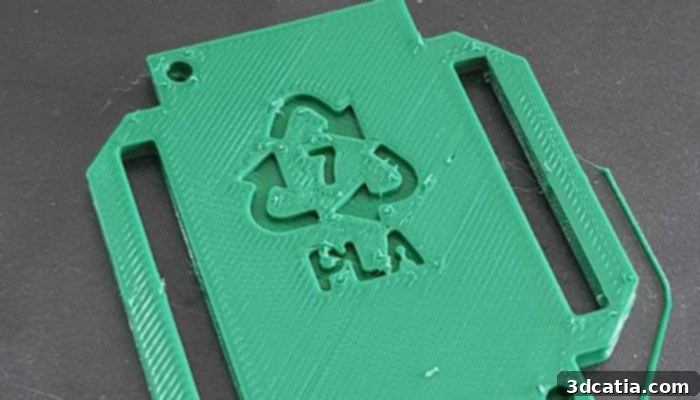
Photo Credits: RepRap Ltd.
Understanding PLA 3D Printing Emissions and Their Risks
A widespread misconception among 3D printer users is that the emissions released during PLA printing are entirely harmless. This belief often stems from the rather sweet and less pungent smell that PLA emits compared to the unpleasant plastic odor associated with petroleum-based ABS filaments. To clarify this crucial safety aspect, we spoke with Nicolas Roux, CEO of Zimple 3D, an expert in filament emissions. He revealed a more concerning reality: “Scientific studies have shown that PLA emits a significant amount of nanoparticles that can pass through the alveolar capillary barrier and contaminate the entire body through the blood.” This alveolar capillary barrier is a vital component of the lungs responsible for gas exchange, facilitating the absorption of oxygen and the release of carbon dioxide.
Roux further explains the composition and potential dangers of these emissions: “These particles are mainly lactide, but many other toxic particles can also be released as the filaments used are rarely 100% PLA and contain up to 40% additives. This is why tests are found that show that PLA emits styrene, chloromethyl and many other carcinogenic compounds known in the chemical industry.” A report from the Federal Environment Agency corroborates these findings, confirming exposure to particulate matter, nanoparticles, and Volatile Organic Compounds (VOCs) during extrusion-based 3D printing of PLA and other plastics like ABS. While ABS emissions are generally reported to be higher than PLA, the presence of these harmful substances during PLA printing is undeniable and warrants serious attention.
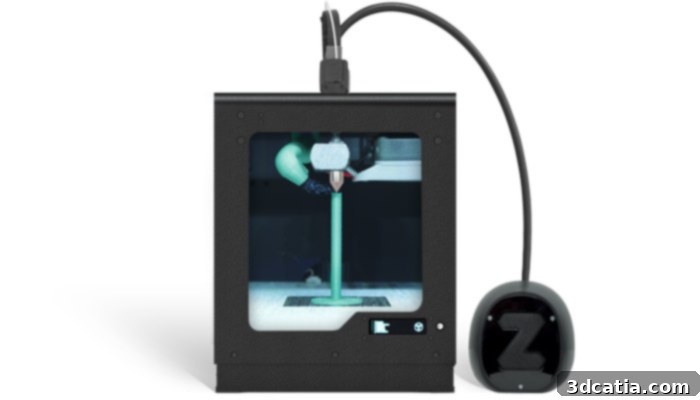
For example, a filter system can be used to protect against PLA emissions during printing | Photo Credits: Zimple3D
Assessing the Danger of 3D Printing Emissions and Mitigation
Understanding the exact hazard posed by these emissions is complex, as it varies significantly. Nicolas Roux clarifies, “In the absence of a compliant safety data sheet, the hazards vary widely from filament to filament, although they are present in all. The additives used and the manufacturing process of the filament have a significant impact on how dangerous the emissions are.” This underscores that even within PLA filaments, the specific formulation can influence the toxicity of airborne particles. It is therefore an established fact that during PLA printing, nanoparticles can uncontrollably disperse into the ambient air, potentially contaminating the user’s body. Given this risk, Roux emphasizes the importance of taking protective measures: “Therefore, it is necessary to protect oneself by limiting the risk.” He strongly recommends several safety protocols: never operate a 3D printer in close proximity for extended periods, ensure adequate ventilation in the printing area, and, whenever possible, utilize a dedicated filtering system to capture airborne particulates and VOCs.
Environmentally Friendlier Filaments: Are There Sustainable Alternatives to PLA?
The search for genuinely environmentally friendly 3D printing materials continues to be a priority for many. Florent Port offers a clear distinction: “Organic filaments are more environmentally friendly than those from fossil resources.” He emphasizes that the choice of additives plays a crucial role in a filament’s overall environmental profile. Companies like Francofil are actively producing PLA filaments that exclude chemical additives, further enhancing their sustainability. Many of their PLA filaments incorporate bio-based by-products, such as mussels, wheat, and coffee grounds, making them 100% bio-based. This innovative approach reduces reliance on virgin resources and utilizes waste streams, offering a more circular material solution.
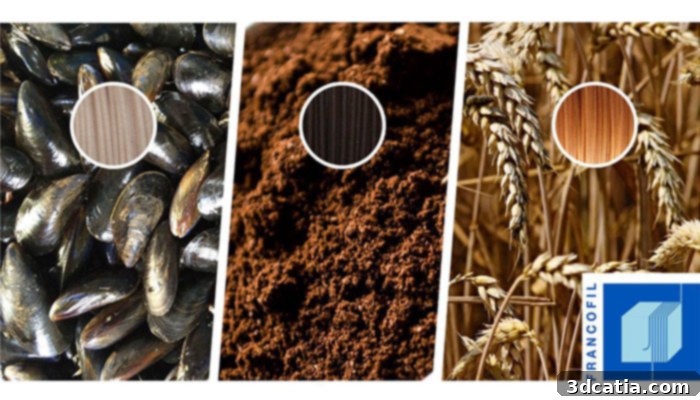
PLA filament with biobased additives | Photo Credits: Francofil
Nicolas Roux, however, expresses a more cautious view regarding truly sustainable alternatives to PLA filament. “Unfortunately, I don’t know of truly green and safe filaments that don’t emit particles or are capable of biodegrading themselves in the earth or in an ocean. In my opinion, the preference for filaments with compliant safety sheets from European manufacturers is a responsible attitude when choosing materials.” Jan-Peter Willie echoes this sentiment, specifically recommending European-sourced filaments: “At PLA, which comes from Asia, there are many suppliers who do not specify what is in their filaments.” This highlights the importance of transparency and robust safety standards in filament production.
Willie further notes the limited availability of certain natural plastic alternatives in filament form: “There are many plastics that are made from natural raw materials, but very rarely you see them as filament. It’s probably difficult to make a filament out of them or they’re bad to print.” Despite these challenges, innovation is ongoing. Companies like the Canadian start-up Genecis are actively developing novel polymers, such as PHAs (polyhydroxyalkanoates), which possess the remarkable ability to degrade in natural environments within approximately 12 months. Additionally, some manufacturers, including Nefilatek, are making significant strides by offering recycled filaments. While still plastic, utilizing recycled materials represents a considerably more sustainable option than producing new materials from scratch, thereby reducing waste and conserving resources.
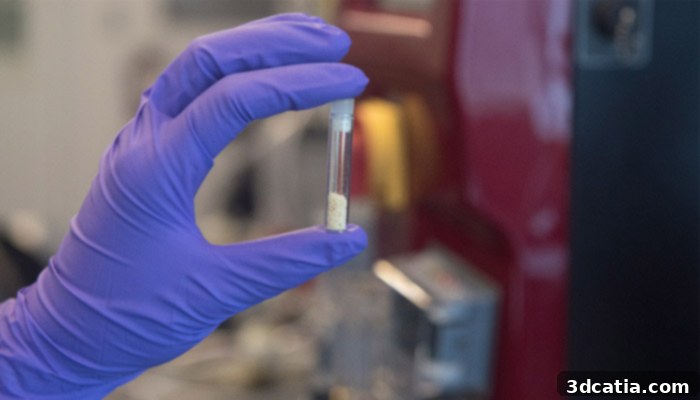
Genecis’ PHA plastic in its granular form before being refined and transformed into pellets | Photo Credits: Genecis
In conclusion, PLA is derived from renewable raw materials and demonstrates biodegradability under specific industrial composting conditions. However, the current lack of widespread infrastructure poses significant challenges to both the industrial composting and recycling of PLA. Furthermore, contrary to popular belief, PLA printing does release substances harmful to health, including nanoparticles and other toxic compounds, although typically to a lesser extent than materials like ABS. The core issue with PLA filaments often lies in the inaccurate or insufficiently defined communication of their properties, leading to consumer confusion and, in some instances, accusations of “greenwashing.”
Overall, it can be affirmed that PLA offers a degree of increased sustainability compared to plastics derived solely from fossil fuels, primarily due to its renewable origins and theoretical biodegradability. Nevertheless, it remains a plastic material that can contribute to environmental pollution in natural settings and oceans. Therefore, as with all plastics, responsible use and proper disposal through recycling whenever possible are paramount. Ultimately, informed choices and conscious consumption are key to minimizing our environmental footprint in the evolving landscape of 3D printing.
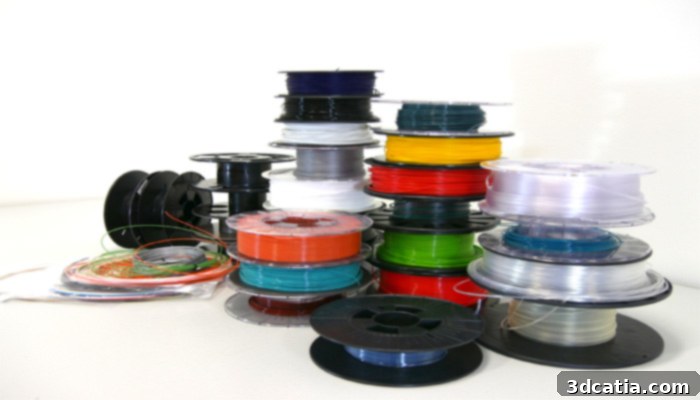
Using only what you really need is the best alternative | Photo Credits: Umeleon
Did you gain new insights into PLA filament and its environmental implications? Share your thoughts in a comment below or join the conversation on our Facebook and Twitter pages! Don’t forget to sign up for our free weekly Newsletter to receive all the latest news and updates in 3D printing directly in your inbox!