
Cubibot: Democratizing Desktop 3D Printing with Unprecedented Affordability and Compact Design
For far too long, the 3D printing industry has been perceived as an exclusive realm, dominated by corporate giants with deep pockets and advanced technological infrastructures, thereby creating significant barriers to entry for individuals and small businesses. This entrenched perception, however, is being dramatically challenged by innovative breakthroughs from unexpected corners. Enter the Cubibot printer, a groundbreaking device conceived and brought to life in San Diego by a visionary father-and-son team. Their creation is not just a product; it’s a powerful statement that shatters long-held misconceptions about accessibility and cost in additive manufacturing. The resounding success of their Kickstarter funding campaign vividly illustrates this disruption, where they impressively exceeded their initial $50,000 goal by tenfold, raising over $500,000. This phenomenal achievement signals a powerful shift in consumer demand and an undeniable appetite for more accessible 3D printing solutions.
What Makes the Cubibot Printer So Special and Disruptive?
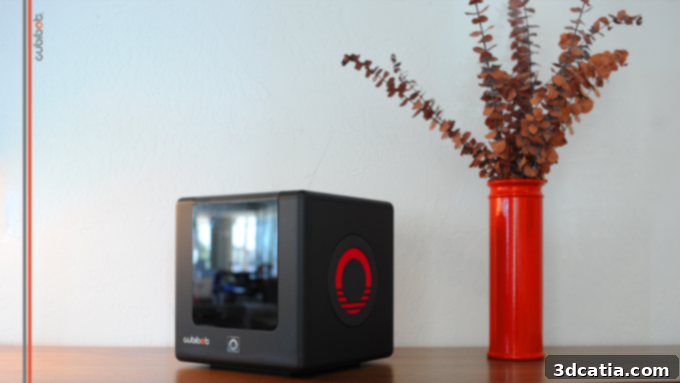
The Cubibot has quickly garnered significant attention, with many observers heralding it as “the world’s smallest 3D printer,” while others simply praise its remarkably compact form factor. Regardless of the superlative used, the concrete specifications speak volumes about its design philosophy: measuring a mere 10 x 10 x 10 inches, it boasts a respectable 5 x 5 x 5 inch print area. This diminutive footprint is genuinely revolutionary. To put its size into perspective, many traditional 3D printers, even those marketed for desktop use, often rival the dimensions of household appliances like ovens or microwaves, demanding substantial dedicated space. The Cubibot, in stark contrast, is a fully functional, high-performance 3D printer that can comfortably fit on the corner of an average desk, leaving ample room to spare. This unprecedented compactness makes it ideal for cramped dorm rooms, bustling home offices, small workshops, or even classrooms where space is always a premium, truly bringing the power of 3D printing to virtually any environment.
Beyond its remarkable size, another critical preconception that the Cubibot unequivocally shatters is the notion that 3D printers are inherently prohibitively expensive. While diligent followers of the 3D printer market have undoubtedly noticed a gradual decline in prices over recent years, the Cubibot pushes the boundaries of affordability even further, setting a new benchmark for consumer-grade devices. Upon its initial listing on Kickstarter, the most affordable early-bird deal made the printer accessible at an astonishing price point of just $149. This price isn’t merely competitive; it’s transformative. For the cost of a high-end video game or a few casual dining experiences, individuals can now acquire a sophisticated piece of manufacturing technology. This drastic reduction in cost significantly lowers the financial barrier, making 3D printing a viable and attractive option for a vast new demographic of hobbyists, students, educators, and budding entrepreneurs who previously viewed it as an unattainable luxury. Such affordability has the potential to truly democratize additive manufacturing, placing creative power directly into the hands of the masses.
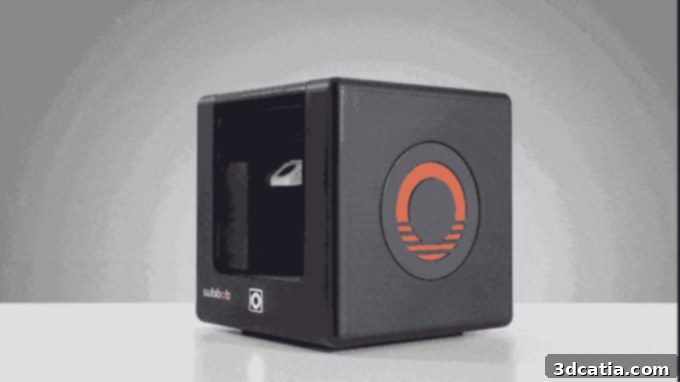
Cubibot LED video from their Kickstarter page
The advent of highly affordable and compact printers like the Cubibot effectively erodes one of the primary selling points that industrial 3D printing companies once held: the exclusive ability to produce 3D printed objects. With mini-printers now affordable enough to be a common household item in developed nations, the era of specialized industrial equipment being the sole gatekeeper to 3D production is rapidly fading. This leaves larger, more established companies primarily with their secondary defense: the assertion that “we are the only ones that can produce with the highest level of quality.” This claim has long been the cornerstone of their value proposition, justifying premium prices and specialized services. However, even this last bastion of exclusivity is now under direct assault by innovative newcomers.
But are these industrial giants truly the sole arbiters of high-quality 3D printing? The team behind Cubibot seems to vehemently disagree. On their meticulously detailed Kickstarter page, they go to great lengths to provide comprehensive comparisons of specifications, features, and additional functionalities their printer offers that are simply absent in many rival machines, even those at significantly higher price points. Furthermore, Cubibot makes an incredibly bold and provocative claim: that its print quality is on par with professional-grade 3D printers costing as much as $50,000. While such an audacious assertion cannot be definitively proven or disproven prior to the printer’s widespread release and independent third-party evaluations, its very existence forces a re-evaluation of what constitutes “high quality” in the 3D printing landscape. If the Cubibot can indeed deliver professional-grade results at a fraction of the cost, it will not only redefine consumer expectations but also pose a formidable challenge to the traditional hierarchy of the entire additive manufacturing sector, potentially catalyzing a new wave of innovation focused on performance per dollar rather than just raw industrial capability.
How Has the Cubibot Achieved Such a Combination of Performance and Affordability?
The Cubibot team openly shares insights into the rigorous design process and extensive experimentation that led to the creation of what they believe is the best printer in its class. Their foremost priority during development was unwavering quality. They emphasize that every single component, from the smallest screw to the most complex mechanism, was designed and optimized from the ground up, ensuring that no off-the-shelf compromises were made. This meticulous attention to detail is evident in several key features that directly contribute to its claimed performance. For instance, the printer incorporates a robust heated print bed capable of reaching temperatures up to 100°C, which is crucial for optimal adhesion and minimizing warping when working with materials like ABS. Complementing this, the nozzle can withstand temperatures up to 275°C, providing the versatility needed to print a wide array of advanced filaments. Furthermore, the Cubibot features an intelligent, self-levelling print bed, eliminating one of the most common frustrations for both novice and experienced users – manual bed calibration. This ensures a perfect first layer virtually every time, significantly enhancing ease of use and print success rates. At its core, the printer utilizes a customized Core XY gantry system, renowned for its speed, precision, and smooth motion, combined with an advanced extruder mechanism. This sophisticated synergy of components is the technical backbone that underpins Cubibot’s supposedly amazing print quality, allowing for fine detail and consistent results that belie its compact size and modest price point.
Beyond raw performance and structural integrity, the Cubibot team also champions the printer’s exceptional safety features, a critical aspect often overlooked in budget 3D printers, especially those intended for home or classroom use. They have achieved this enhanced safety through the integration of a sophisticated internal air filtration system. During the 3D printing process, certain filaments can release volatile organic compounds (VOCs) and ultrafine particles (UFPs) into the air. To mitigate these potential health concerns, any air that has been mixed with chemicals or particles from the printing process is drawn through a multi-stage filter system before being released back into the room. This system incorporates both HEPA (High-Efficiency Particulate Air) filters, highly effective at capturing microscopic particles, and activated carbon filters, designed to absorb and neutralize gaseous pollutants and odors. This dual-filtration mechanism significantly reduces the exposure to airborne irritants, making the Cubibot a much safer option for enclosed spaces and ensuring a healthier environment for users, particularly those with sensitivities or in educational settings.
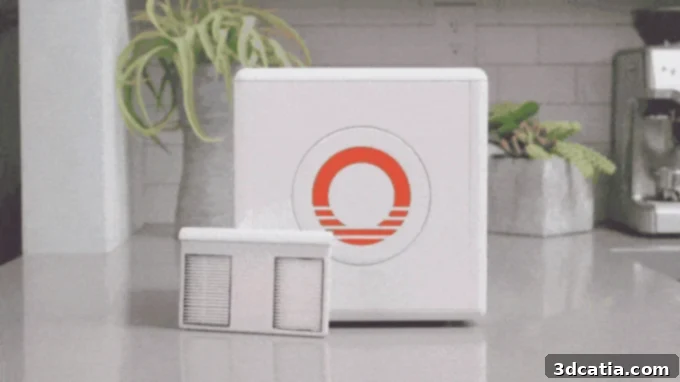
Demonstration of the Cubibot’s air filters
How Versatile and User-Friendly is the Cubibot?
For many potential users, versatility can be a make-or-break factor when choosing a 3D printer. Recognizing this, Cubibot has proactively developed its own line of high-quality filaments specifically optimized for use with their printer. They assert that these proprietary filaments are manufactured using the finest materials and benefit from advanced laser diameter control during production, ensuring consistent quality and optimal printing performance. The Cubibot boasts impressive material compatibility, capable of printing with popular filaments such as ABS, PLA, specialized Wood Filaments, durable Nylon, and a growing list of other advanced materials. This broad compatibility opens up a vast array of creative and functional possibilities for users, from crafting intricate decorative pieces with PLA and wood to producing robust, engineering-grade parts with ABS and nylon. While the Cubibot is designed to print with other brands of filaments, the team cautions that optimal results and consistent quality are best achieved with their own carefully engineered materials, ensuring users get the most out of their printer without unnecessary troubleshooting.
One of the Cubibot’s most compelling attributes is its commitment to being super simple and incredibly intuitive to operate, particularly designed for the modern user. Unlike many complex 3D printers that require specialized software, intricate calibration, and a steep learning curve, the Cubibot seamlessly integrates with the ubiquitous mobile phone. The entire printing process is streamlined: users simply download the dedicated Cubibot app, browse and select their desired 3D model (or upload their own), and with a single tap, press “print.” This mobile-first approach is a testament to Cubibot’s profound understanding of its target market. Their primary audience isn’t large industrial corporations or seasoned tech professionals who are accustomed to intricate software suites and complex assembly instructions. Instead, they are targeting everyday consumers who are less tech-savvy but possess a strong desire to bring their creative ideas to life or produce functional objects without the hassle. These individuals are not looking to become experts in 3D printer mechanics or software; they simply want an effortless way to “make cool things.” The mobile app experience perfectly caters to this demographic, removing friction and making 3D printing as straightforward as sending a text message or ordering a pizza.
This deep understanding of consumer needs and the brilliant execution of a compact, affordable, and incredibly simple printer are undoubtedly the core reasons for Cubibot’s phenomenal success. They have beautifully addressed a gaping need from a consumer group that has been eagerly awaiting a genuinely user-friendly and accessible 3D printing solution. As the additive manufacturing sector continues its rapid expansion and becomes increasingly competitive, I fully anticipate the emergence of a plethora of “Cubibot-esque” products entering the market within the next 24 months. These competitors will undoubtedly seek to emulate Cubibot’s winning formula of affordability, compactness, and ease of use. Whether the innovative approach of the Cubibot genuinely worries the established industrial printing companies remains to be seen. However, if the printer lives up to the remarkable claims made by its dedicated team – delivering professional-grade quality at a consumer price point – then we may very well be witnessing the dawn of a truly disruptive technology that will reshape the landscape of personal manufacturing and creative expression for years to come.
We briefly discussed the Cubibot in our ECO3D September edition; you can check it out here for more context. For those interested in learning more about this revolutionary device and its journey, you can visit the official Cubibot Kickstarter page here.
What are your thoughts on the Cubibot printer and its potential impact on the consumer 3D printing market? We encourage you to share your insights and opinions by leaving a comment below, or by engaging with us on our vibrant Facebook and Twitter pages! Don’t miss out on the latest advancements and news in the world of 3D printing; remember to sign up for our free weekly Newsletter, delivering all the essential updates directly to your inbox!