
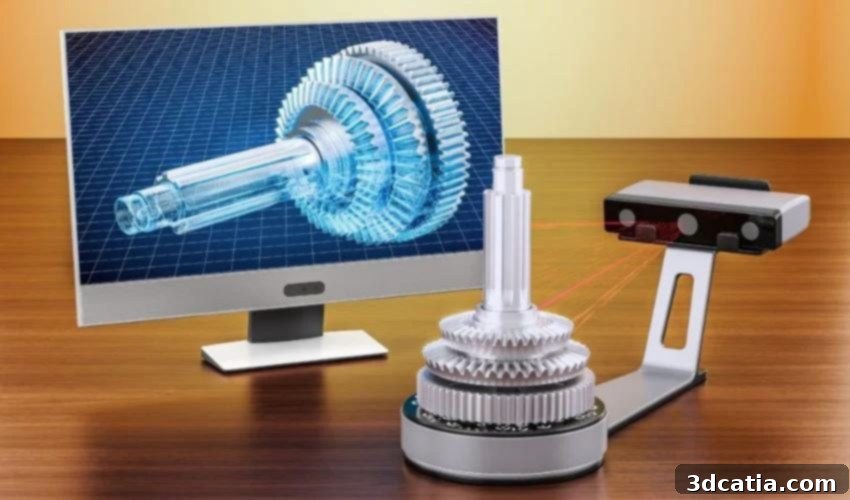
Unlocking Innovation: 10 Essential Benefits of 3D Scanning for Modern Industries and 3D Printing
3D scanning represents a revolutionary non-contact and non-destructive technology crucial for precisely capturing the shape, dimensions, and spatial data of real-world objects or intricate environments. By employing advanced lasers, cameras, and sophisticated algorithms, this technology meticulously collects highly detailed data that can then be seamlessly transformed into incredibly accurate digital 3D models. These high-fidelity models are indispensable across a vast spectrum of applications, from engineering and manufacturing to cultural heritage and medical fields. Before we dive into the specific, impactful uses where 3D scanning truly shines, particularly in synergy with 3D printing, let’s briefly explore the underlying mechanisms and workflow of the 3D scanning process itself.
The process of 3D scanning involves various cutting-edge technologies and specialized devices, which we will elaborate on further. Fundamentally, irrespective of the particular technology employed, a successful scan necessitates capturing data from multiple positions and diverse angles to ensure the creation of a truly comprehensive and complete digital model of the entire object. This raw data, often in the form of a dense point cloud, is then meticulously processed and refined by skilled CAD technicians. They convert these point clouds into refined 2D drawings or intricate 3D models, ready for diverse applications. These digital models serve a multitude of critical purposes, including in-depth analysis, precise design planning, rigorous inspection, secure archiving, and, significantly, as the blueprint for creating new physical objects, often through 3D printing. This demonstrates the remarkable versatility and indispensable role of 3D scanning. Let’s now delve deeper into the compelling reasons why you should seriously consider integrating 3D scanning into your operations and the myriad benefits it offers, especially when paired with additive manufacturing.
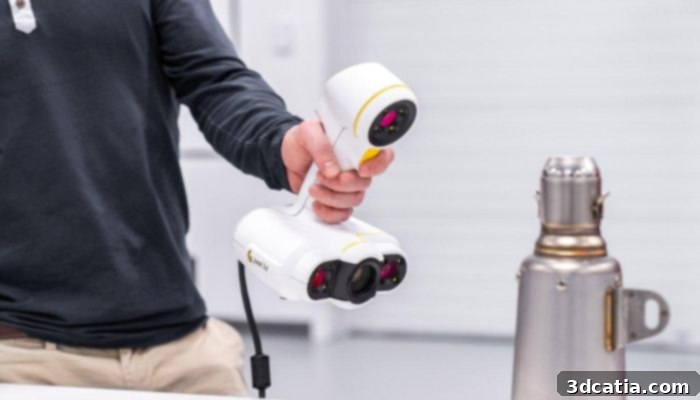
Photo Credits: Formlabs
#1: Diverse Versions for Every User and Application
3D scanners are sophisticated imaging devices designed to generate virtual 3D models from physical objects by precisely measuring their geometry and surface characteristics. The market offers a wide array of scanners, each leveraging distinct technologies to achieve this. Common methods include laser scanning, structured light scanning, and photogrammetry. Laser scanners, for instance, frequently utilize LiDAR (Light Detection and Ranging) technology, which emits pulsed laser light waves that reflect off objects. The time taken for these reflections to return allows the scanner to calculate distances and generate incredibly dense point clouds. Specialized software then interprets and classifies this data, transforming it into usable 3D models.
Structured light scanning operates by projecting a known pattern of light, such as lines or grids, onto an object. As this pattern hits the object’s surface, it deforms according to the object’s contours. Cameras then capture these distortions, and advanced algorithms calculate the object’s precise 3D shape. Photogrammetry, on the other hand, constructs 3D models by analyzing multiple overlapping 2D photographic images taken from various angles. Software identifies common features across the images to triangulate points in 3D space, creating a digital model. Beyond technological variations, 3D scanners come in diverse designs tailored to specific requirements and applications. These range from highly portable handheld scanners ideal for on-site work, compact desktop scanners perfect for small parts and detailed models, and specialized scanners for large-format objects like cars or buildings, to even accessible scanner apps for smartphones. This extensive market ensures that both hobbyists embarking on personal projects and professional users integrating 3D scanning into complex production workflows, such as additive manufacturing, can find a solution that perfectly meets their needs.

Photo Credits: Sculpteo
#2: Unparalleled Accuracy and Detail Capture
One of the most compelling advantages of 3D scanning is its capacity for precise and comprehensive data capture. Unlike traditional methods like words, blueprints, or even 2D sketches, 3D scan data provides an unparalleled depth of information about an object’s geometry, texture, and spatial relationships. While the inherent accuracy of this data is generally very high, it can be influenced by factors such as the scanner’s calibration, the specific technology employed, and environmental conditions. By performing scans from multiple strategic positions and angles, engineers and designers can collect exhaustive data, including intricate shapes, often hidden features, and fine surface details that would be impossible to capture manually. This meticulous data collection ensures the generation of accurate point cloud data, which is then refined into a highly precise 3D model. Such models are invaluable for rigorous analysis, meticulous (re)design, detailed visualization, and precise replication.
However, despite the inherent accuracy of the data acquisition, it remains crucial for users and CAD engineers to meticulously verify and, if necessary, refine the generated data model. This validation step is particularly vital when the obtained 3D model is intended for manufacturing new objects, especially if it will be used as the foundation for subsequent 3D printing. Thorough verification helps to prevent costly errors in the fabrication process, ensuring that the printed part perfectly matches the intended design and functional specifications. This meticulous approach to accuracy not only enhances the quality of the final product but also significantly reduces material waste and rework.
#3: Exceptional Efficiency and Rapid Data Acquisition
Beyond accuracy, 3D scanning offers substantial efficiency gains, contributing to a remarkably swift scanning process and rapid data acquisition. In stark contrast to conventional measurement technologies, which often rely on laborious coordinate measuring machines (CMMs) or imprecise hand tools, 3D scanning is significantly less tedious, far more comprehensive, and dramatically less time-consuming. In fact, an extraordinary wealth of information can be gathered in an astonishingly short period. For instance, a single, powerful laser scan can capture millions of high-resolution 3D data points in mere seconds, providing a complete digital representation almost instantaneously.
A significant advantage of this accelerated data collection is that all necessary information can typically be acquired during the initial scanning session. This eliminates the need for costly and time-consuming additional site visits, especially for large-scale or remote projects. This expedited process of generating precise 3D models significantly compresses project timelines, streamlines design and engineering cycles, and empowers teams to make quicker, more informed decisions. From rapid prototyping in product development to quick assessments in construction and infrastructure, the efficiency afforded by 3D scanning fundamentally transforms operational workflows, allowing businesses to bring products to market faster and respond to challenges with unprecedented agility.
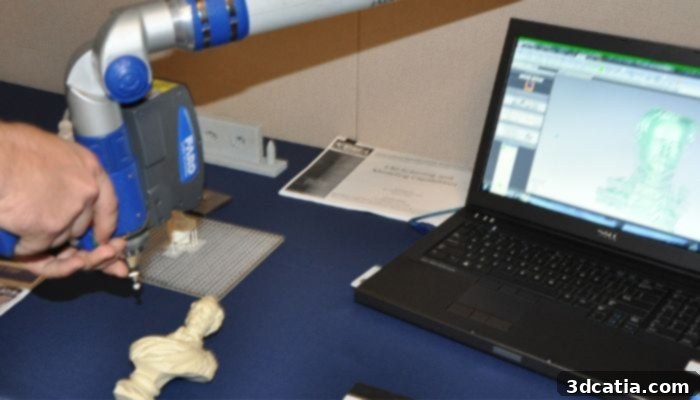
Photo Credits: 3DSpace
#4: Significant Cost Efficiency and Return on Investment
The adage “time is money” directly leads us to the substantial cost efficiencies offered by 3D scanning. The measurement process itself requires fewer iterations, demanding less labor and significantly less time compared to traditional methods. This inherent efficiency positions 3D scanning as a highly cost-effective alternative to other measurement technologies, serving as an excellent complement to the cost-saving capabilities of 3D printing. This financial advantage is particularly pronounced when 3D scanning is integrated into complex and potentially costly production workflows, such as industrial additive manufacturing, where even small savings can scale significantly across large operations.
The superior accuracy of 3D scanning, as mentioned previously, plays a pivotal role in reducing errors, mitigating conflicts, and minimizing the need for expensive rework during the design or construction phases, right from the project’s inception. By catching potential issues early, significant time and material costs are saved downstream. While it is true that professional-grade 3D scanning devices may involve a notable upfront purchase cost, this investment often yields substantial returns through improved efficiency, enhanced quality, and reduced overall expenses in the long run. Moreover, the market boasts a diverse range of scanners available at various price points, including more affordable options and even free scanner apps. These accessible tools have gained considerable popularity among architects, interior designers, and makers, democratizing access to powerful 3D data capture. Furthermore, the intuitive nature of operating most 3D scanners means they require minimal training, further reducing implementation costs and enhancing their accessibility and usability across diverse applications and user skill levels.
#5: Enhanced Security and Safety for People and Objects
A critical benefit of 3D scanning is the inherent security it provides through its non-contact data capture process. Since scanning occurs without direct physical interaction with the object, it offers several significant advantages. Firstly, it ensures the protection of valuable or delicate artifacts, which can be scanned for meticulous archiving, precise repair, or faithful replication without any risk of damage. This is particularly invaluable for museums, cultural heritage institutions, and conservators working with irreplaceable historical items.
Secondly, 3D scanning significantly contributes to the safety of workers. By employing remote scanning devices, often mounted on tripods or drones, operators can safely capture data from remote, difficult-to-access, or even dangerous environments. This capability is crucial in hazardous settings such as surveying chemical or nuclear plants, inspecting structural integrity in areas with unstable ground, or assessing damage in disaster zones. The ability to collect precise data from a safe distance minimizes human exposure to risks, ensuring both the integrity of the data and the well-being of personnel. This makes 3D scanning an indispensable tool for safety-conscious industries and situations requiring careful risk management.
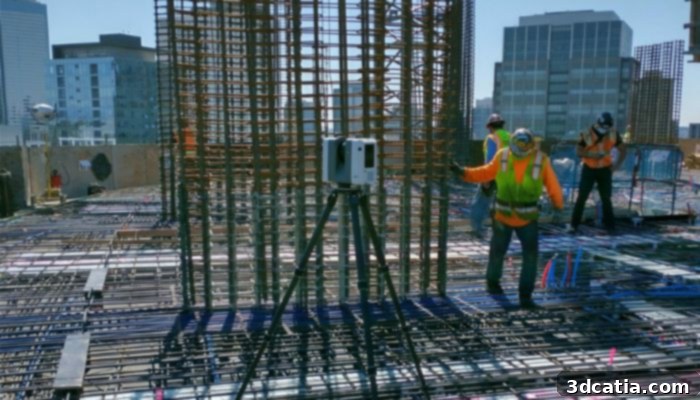
Photo Credits: Multiviste/Hexagon
#6: Comprehensive Quality Control and Inspection
3D scanning proves to be an indispensable tool for robust quality control and inspection across a myriad of situations and industries. Its application begins early in the product lifecycle, even during the initial production and prototyping phases. Portable 3D scanners allow engineers to swiftly and accurately identify the causes of design flaws or manufacturing deviations. By capturing the precise geometry of prototypes, they can be directly compared against the original CAD models, highlighting discrepancies that might lead to functional issues or failures. This proactive approach helps in iterating designs efficiently and preventing costly errors before full-scale production.
Furthermore, 3D scanning is exceptionally valuable for assessing the current status of components that have already been in use. This enables the determination of a part’s “as-built” or “as-worn” state, which can then be rigorously compared with its original “target state” or ideal design model. This comparative analysis is vital for predictive maintenance, ensuring parts are serviced or replaced precisely when needed, thereby upholding quality standards and extending the lifespan of machinery and products. Should a part undergo modifications or adaptations in a workshop, these changes can be quickly and accurately documented by simply scanning the altered component. This ensures that maintenance records are up-to-date and that future repairs or replacements are based on the actual, current configuration, minimizing guesswork and maximizing operational reliability.
#7: Versatile Digital Models for Documentation and Innovation
The applications of 3D scanning extend far beyond any single field, providing versatile digital models for a wide array of purposes. It proves exceptionally invaluable for meticulous documentation, allowing physical objects to be digitally archived and preserved with unparalleled accuracy. This archival data serves as a foundational resource for ongoing projects, future analyses, or for historical preservation, offering particular benefits to museums, art institutions, and archaeologists safeguarding priceless artifacts and valuable artworks. The digital nature of these models ensures their longevity and accessibility.
Moreover, the detailed scanned data greatly facilitates object reproduction and replication, enabling the creation of exact physical copies, often through 3D printing, for various needs. Increasingly, industrial sectors are leveraging scan data to create digital twins—virtual replicas of physical assets—which provide on-demand access to real-time performance data and geometric information. These digital twins can be seamlessly integrated with 3D printing processes, enabling sustainable objectives through localized, on-demand production and predictive maintenance. Additionally, comprehensive scan data is a cornerstone for successful reverse engineering efforts. It provides engineers with a detailed and accurate understanding of an existing component’s functions, geometry, and material distribution, which is crucial for precise replication, modification, or optimization when original design files are unavailable or lost.
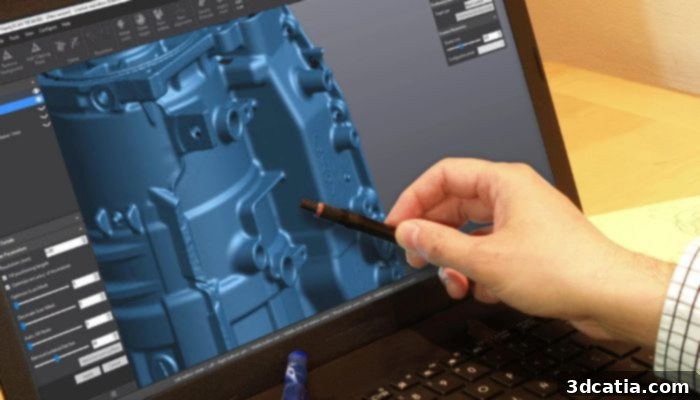
Photo Credits: Creaform3D
#8: Empowering Personalization and Customization
In both the specialized field of medicine and the expansive consumer goods sector, 3D scan data offers transformative possibilities for personalization and customization. Through advanced body scans, an individual’s unique measurements and anatomical data can be precisely recorded. This highly accurate personal information then serves as the foundation for manufacturing medical products specifically tailored to individual requirements, such as custom-fit orthoses, prostheses, specialized shoes, and insoles. This level of personalization dramatically improves comfort, functionality, and therapeutic outcomes for patients.
Another sector where personalization through 3D scanning is rapidly advancing is dentistry. Dental professionals are increasingly striving to offer highly customized implants, crowns, bridges, and other oral solutions. Many dental practices and laboratories are already integrating 3D printers into their workflows to fabricate these bespoke items. However, the success of such customization hinges entirely on obtaining incredibly precise data, which is expertly captured by dental scanners. This demand has led to the development of a specialized segment of dental scanners, including compact intraoral scanners that capture direct impressions inside the patient’s mouth, and laboratory scanners for models and impressions. The powerful combination of 3D scanning and 3D printing empowers dentists and orthodontists to rapidly and accurately generate perfectly custom-fit medical and aesthetic dental solutions, revolutionizing patient care.
The principle of customization is also gaining immense traction in the broader consumer goods sector, where it helps businesses attract new customers and differentiate themselves in a competitive market. The growing trend towards personalized consumer goods is heavily fueled by enabling technologies like 3D printing. When seamlessly combined with 3D scanning, this allows for the efficient creation of truly customized products, ranging from fashion accessories to personalized gadgets. These examples merely scratch the surface of how and where 3D scanning technology can be utilized—the list of its transformative applications is constantly expanding!
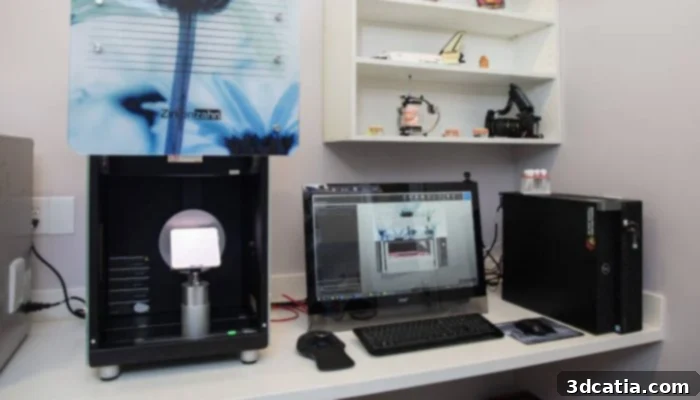
Photo Credits: Digital Dental Lab
#9: Improved Conception Phase and Accelerated Product Development
Beyond archiving and reproduction, 3D scans serve as an invaluable starting point for entirely new projects and significantly enhance the product development lifecycle. During the crucial design and conception phases, accurate scan data dramatically accelerates the creation of initial concepts and substantially reduces prototype design cycles. This efficiency often leads to a reduction in the number of physical prototypes produced, or in some cases, eliminates the need for them altogether. This not only minimizes material waste and associated costs but also promotes greater sustainability in both manufacturing and design processes. By digitizing existing objects or environments, businesses foster rapid innovation in product development, mitigate the risk of costly errors early on, and expedite their time to market. When integrated synergistically with 3D printing, these processes are further optimized, leveraging the inherent sustainability and rapid prototyping capabilities of additive manufacturing. This powerful combination allows for quick iterations, testing, and refinement, leading to superior products delivered faster.
#10: Seamless Compatibility and Integration with Other Technologies
Lastly, one of the paramount strengths of 3D scanning lies in its seamless compatibility and robust integration capabilities with an extensive array of other technologies. While its primary function is the precise generation of high-fidelity 3D data, this invaluable data can be effortlessly incorporated into a multitude of digital platforms and workflows. For instance, scan data serves as an ideal foundation for new projects within CAD (Computer-Aided Design) or BIM (Building Information Modeling) environments, enabling engineers and architects to design, analyze, and modify existing structures or components with unparalleled accuracy.
Moreover, the increasing sophistication of AR (Augmented Reality) and VR (Virtual Reality) technologies is heavily reliant on accurate scan data to create immersive and interactive digital experiences. These technologies are widely embraced across diverse industries such as entertainment, gaming, tourism, and even professional training, offering realistic simulations and enhanced visualization. Furthermore, 3D scan data plays a pivotal and often initiating role in advanced production workflows, particularly within additive manufacturing. By providing precise digital models of existing parts or desired designs, 3D scanning offers significant advantages in terms of time efficiency, cost reduction, accuracy, and versatility across a vast range of manufacturing applications. While 3D scanning often initiates a comprehensive workflow, it is crucial to recognize that it is not an isolated technology but rather a foundational component that integrates effectively, enhancing the capabilities and outputs of numerous other digital tools and processes, from design to final production.
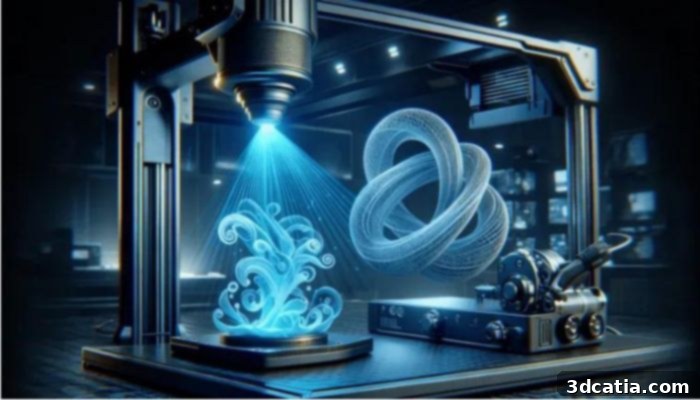
Photo Credits: 3Dprintjunction
Do you already have experience with using 3D scanning for 3D printing? Let us know in a comment below or on our LinkedIn, Facebook, and Twitter pages! Don’t forget to sign up for our free weekly newsletter here for the latest 3D printing news straight to your inbox! You can also find all our videos on our YouTube channel.
*Cover Photo Credits: Skywell