
Unveiling the Future: Top 3D Printing Innovations from RAPID + TCT 2025
RAPID + TCT 2025, North America’s premier event for additive manufacturing and industrial 3D printing, recently concluded its highly anticipated gathering, leaving attendees and the industry abuzz with groundbreaking innovations. While the physical doors may have closed, the impact of the technologies showcased continues to resonate, offering a glimpse into the future of manufacturing. For those who couldn’t be there, or for anyone wanting a comprehensive recap, we’ve compiled insights into some of the most compelling 3D printing innovations that stole the spotlight this year, including a dedicated video tour highlighting these advancements.
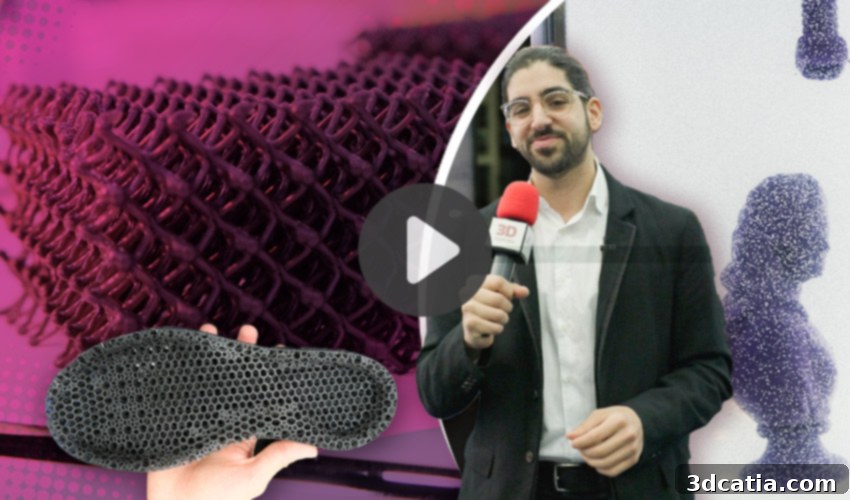
The additive manufacturing sector is characterized by relentless evolution, with innovation serving as its undeniable cornerstone. This dynamic environment is precisely why events like RAPID + TCT are circled on calendars months in advance by industry professionals globally. These gatherings aren’t merely opportunities to track the latest trends in industrial 3D printing; they are vital platforms for experiencing firsthand the cutting-edge innovations poised to redefine manufacturing processes and product development. From material science breakthroughs to advancements in software and hardware, RAPID + TCT provides an unparalleled view of where the industry is heading. To navigate this expansive landscape of new ideas, Filippos Voulpiotis, Managing Director of 3Dnatives, embarked on a comprehensive tour across the bustling show floor, carefully curating a selection of the most exciting and impactful technologies for our audience.
Transforming Workflows with Advanced Software Integration
One of the most significant themes at RAPID + TCT 2025 was the increasing emphasis on streamlining and automating the entire additive manufacturing workflow. Our first stop vividly demonstrated this with Toolkit3D, a company focused on a groundbreaking software integrator. In the complex world of 3D printing, processes often involve multiple, disparate software solutions for scanning, design, slicing, printing, and even post-processing. This fragmentation can lead to inefficiencies, data loss, and significant time expenditure as engineers navigate between different platforms. Toolkit3D addresses this critical challenge head-on by providing a unified ecosystem that seamlessly integrates all these software components.
Their innovation allows users to manage every stage of their additive manufacturing project from a single interface. By connecting scanning data directly to design software, optimizing print parameters, and even linking to automated post-processing solutions, Toolkit3D promises to dramatically reduce bottlenecks. The benefits are clear: designers can move from initial concept to final production significantly faster, with fewer manual interventions and a higher degree of precision. This level of automation is not just about speed; it’s about enabling a more agile, iterative design process and unlocking new levels of efficiency for industrial applications, ultimately shortening product development cycles and reducing manufacturing costs. This is a crucial step towards realizing the vision of fully automated additive manufacturing facilities.
Revolutionizing Material Processing: Gravity-Free 3D Printing
Innovation in materials and printing processes continues to push the boundaries of what’s possible with 3D printing. A truly fascinating demonstration came from Rapid Liquid Print (RLP), showcasing its unique “gravity-free” 3D printing technology. This innovative process leverages silicone extruded into a hydrogel bath, allowing for the creation of intricate, self-supporting geometries without the need for traditional support structures. The hydrogel acts as a temporary, dense medium that holds the uncured silicone in place, enabling the printer to build complex shapes in a fluid environment, defying the usual constraints of gravity.
The implications of RLP’s technology are profound. It opens up new possibilities for printing with soft, compliant materials like silicones and elastomers, which are challenging to process with conventional additive manufacturing methods due to their inherent flexibility and lack of self-support during curing. This “gravity-free” approach is particularly valuable for applications requiring highly elastic, flexible, or intricate parts, such as in soft robotics, medical devices (e.g., custom prosthetics, organ models), or even performance footwear. The ability to print rapidly and with complex internal structures directly translates to enhanced product functionality and entirely new design freedoms that were previously unachievable. RLP represents a significant leap forward in expanding the material palette and geometric complexity available to industrial 3D printing users.
Scaling Up Production: Large-Scale FDM for Industrial Applications
For industries requiring robust, large-format parts, JuggerBot 3D introduced an impressive solution with its P3-44 Astra. This large-scale FDM (Fused Deposition Modeling) 3D printer is specifically engineered for high-performance PVC production, addressing a critical need in various industrial sectors. Traditional FDM often struggles with scaling up effectively while maintaining precision and material integrity, especially with challenging engineering-grade thermoplastics like PVC. JuggerBot 3D has designed the P3-44 Astra to overcome these limitations, providing a reliable platform for manufacturing sizable components.
PVC is renowned for its durability, chemical resistance, and cost-effectiveness, making it an ideal material for applications in construction, automotive, and industrial tooling. The P3-44 Astra’s ability to print large parts from PVC with industrial-grade quality means that manufacturers can now rapidly prototype and produce end-use parts, jigs, fixtures, and even custom molds at a scale previously impractical with additive manufacturing. This machine signifies a growing trend towards industrializing large-format FDM, providing robust, reliable, and material-specific solutions that cater to the demanding requirements of heavy industry. Its presence at RAPID + TCT underscored the continuous drive to push FDM beyond prototyping into serious production capabilities.
High-Performance FDM: Challenging Market Leaders
The FDM market, particularly the prosumer and professional segments, has seen significant competition in recent years. Elegoo entered the fray with its new Centauri Carbon, an FDM 3D printer poised to challenge the dominance of established players like Bambu Lab. Elegoo’s offering is built around a trifecta of compelling attributes: speed, strength, and precision. The Centauri Carbon aims to deliver rapid print times without compromising on the structural integrity or dimensional accuracy of the printed parts.
This printer features advanced motion systems and optimized extrusion capabilities, allowing it to achieve impressive print speeds, which is a key differentiator in today’s fast-paced manufacturing environment. Furthermore, its design and material capabilities are geared towards producing parts with enhanced mechanical strength, likely through the use of carbon fiber-reinforced filaments and robust construction. The emphasis on precision ensures that complex geometries and fine details are rendered accurately, making it suitable for a wide range of engineering and product development applications. The Centauri Carbon represents Elegoo’s ambitious move to capture a larger share of the performance FDM market by offering a compelling balance of speed, durability, and accuracy, making advanced 3D printing more accessible to a broader professional audience.
Optimizing Material Performance: The Importance of Drying and Annealing
While advancements in printers and materials often capture the headlines, equally vital are the innovations in ancillary systems that optimize print quality and material performance. BigRep, a leader in large-scale additive manufacturing, unveiled its new Drycon drying and annealing system, highlighting the crucial role of proper filament management. For many engineering-grade filaments, especially hygroscopic ones, moisture absorption can severely degrade print quality, leading to bubbling, poor layer adhesion, and weakened parts. Similarly, annealing, a post-processing heat treatment, is essential for relieving internal stresses and enhancing the mechanical properties of certain printed plastics.
The Drycon system integrates both drying and annealing functionalities into a single, efficient unit. This ensures that filaments are maintained at optimal dryness prior to printing, preventing common print defects and maximizing material performance. Post-printing, the annealing function allows users to strengthen their parts, improve dimensional stability, and achieve better isotropic properties. For industrial users working with high-performance polymers in large-scale applications, the Drycon system offers a critical solution for ensuring consistent print quality, reducing material waste, and producing robust, reliable end-use parts. It underscores the industry’s maturation, where comprehensive solutions encompassing every stage of the 3D printing process are becoming indispensable.
The Enduring Value of RAPID + TCT for the Additive Manufacturing Ecosystem
RAPID + TCT 2025 was truly a year brimming with significant innovations, underscoring the relentless pace of development within additive manufacturing. From sophisticated software that streamlines entire workflows to revolutionary printing processes, robust large-scale hardware, high-performance desktop machines, and essential material treatment systems, the event offered something groundbreaking for every segment of the industry. The diversity of solutions, encompassing software, materials, and printers, reinforces the notion that 3D printing is not a single technology but a vast ecosystem of interconnected advancements, each contributing to its overall potential.
Events like RAPID + TCT are more than just trade shows; they are vital hubs where the future of manufacturing is forged. They provide invaluable platforms for knowledge exchange, networking among peers, and fostering collaborations that drive the industry forward. The insights gained and connections made at such gatherings are instrumental in accelerating the adoption of additive manufacturing across various sectors, from aerospace and automotive to healthcare and consumer goods. They inspire new ideas, validate emerging technologies, and ultimately, pave the way for real-world applications that were once confined to science fiction.
What are your thoughts on these incredible innovations showcased at RAPID + TCT 2025? Which particular technology captured your imagination the most? We’d love to hear your insights! Let us know in a comment below or join the conversation on our LinkedIn, Facebook, and Twitter pages! To stay ahead of the curve with all the latest developments in 3D printing, don’t forget to sign up for our free weekly Newsletter here, delivering the most pertinent news directly to your inbox. You can also explore all our in-depth video content and event highlights on our dedicated YouTube channel.