
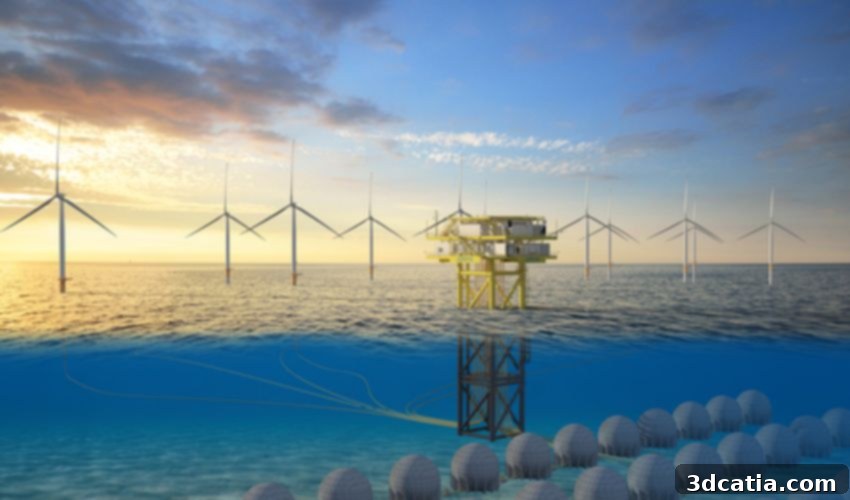
StEnSea: Revolutionizing Long-Duration Energy Storage with 3D Printed Subsea Pumped Hydro
As humanity confronts the escalating challenges of climate change and the urgent need to decarbonize our energy systems, the adoption of sustainable energy sources and advanced storage technologies has become paramount. The inherent intermittency of renewable energy sources like solar and wind power necessitates robust, long-duration energy storage solutions to ensure grid stability and reliability. It was precisely this critical need that spurred the inception of the Stored Energy in the Sea (StEnSea) project in 2012. This groundbreaking initiative, conceived by the renowned German Fraunhofer Institute and bolstered by the innovative contributions of Sperra and PLEUGER, aims to fundamentally transform long-duration energy storage. StEnSea achieves this by ingeniously adapting the well-established principles of pumped storage hydropower for dynamic subsea environments, further distinguished by its pioneering integration of advanced 3D printing technology for its core components.
The StEnSea project introduces a truly unique and highly efficient method for energy storage. Its operational cornerstone involves the strategic placement of hollow, meticulously 3D printed concrete spheres onto the seabed, typically at impressive depths ranging from 600 to 800 meters. These robust spheres are not merely passive structures; they are adaptable energy reservoirs designed for cyclical operation. The system capitalizes on fluctuations in electricity demand: when grid electricity demand is low, surplus renewable energy is utilized to power specially designed submersible pumps, engineered by PLEUGER. These powerful pumps efficiently empty the spheres of water, thus storing potential energy by creating a significant pressure differential between the inside and outside of the sphere. Conversely, during periods of peak electricity demand, the stored potential energy is released. Water is allowed to flow back into the spheres under the immense pressure of the deep sea, effectively turning the submersible pumps into highly efficient turbines that rapidly generate clean electricity back into the grid. This elegant process ensures that renewable energy is not wasted but is instead stored and dispatched precisely when it is most needed, enhancing grid reliability.
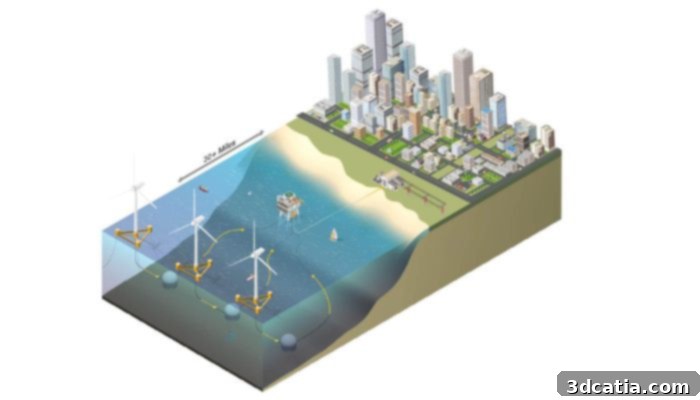
Image credits: Sperra.com
The StEnSea method fundamentally mirrors the operational principles of traditional pumped storage hydropower plants, yet it significantly enhances and adapts them for the unique advantages offered by the subsea environment. By harnessing the consistent and immense pressure of the deep ocean, the system achieves remarkable efficiency in both storing and releasing energy. This innovative subsea approach circumvents many of the geographical and environmental limitations associated with conventional land-based pumped hydro systems, which often require specific topographical features like mountains and valleys to create elevation differences. Beyond its operational ingenuity, StEnSea offers a compelling solution to the escalating demand for scalable, highly efficient long-duration energy storage. Its seamless compatibility with intermittent renewable energy sources positions it as a vital technology for reducing global reliance on volatile fossil fuels, mitigating greenhouse gas emissions, and crucially, stabilizing power grids that are increasingly integrating higher percentages of renewables. This stabilization is key to preventing blackouts and ensuring a constant supply of electricity.
The global potential for deploying this innovative subsea energy storage technology is vast and geographically diverse. According to a comprehensive Geographic Information System (GIS) analysis of coastal marine areas worldwide, numerous optimal locations have been identified. These promising sites include extensive stretches off the coasts of nations such as Norway, Portugal, the populous US East and West Coasts, the expansive coastline of Brazil, and the strategically located shores of Japan. These regions are characterized by appropriate ocean depths and proximity to potential renewable energy generation sites or major consumption centers. Furthermore, the adaptability of this technology extends beyond oceanic environments; deep natural or even artificial lakes could also serve as viable hosts for StEnSea systems, further broadening its global deployment potential and offering flexibility for landlocked regions with suitable water bodies. This widespread applicability underscores StEnSea’s capacity to become a truly global solution for energy storage.
International Investments Fueling Subsea Energy Storage Innovation
The profound potential of the StEnSea project has garnered significant international recognition and substantial financial backing from leading governments. Both the United States and German governments have demonstrated their commitment to this transformative technology through considerable investments. The U.S. Department of Energy Water Power Technologies Office (WPTO) has generously awarded the project $4 million, underscoring America’s strategic interest in advancing cutting-edge water-based energy solutions. Concurrently, the German Ministry for Economic Affairs and Climate Action (BMWK) has committed an impressive €3.7 million, reflecting Germany’s dedication to sustainable innovation and climate leadership. This robust international collaboration is not merely a financial transaction; it is a powerful testament to the StEnSea project’s perceived ability to deliver a profound and global impact on the future of sustainable energy. Such cross-border support accelerates research, development, and eventual commercialization, demonstrating a shared vision for a cleaner energy future.
Anton Schneerson, the visionary CEO of Pleuger Industries, eloquently articulated the critical importance of the StEnSea project in the broader context of global energy transformation. He stated, “The global energy transition demands transformative, scalable solutions, and Pleuger is leading the way. Our ‘Stored Energy in the Sea’ project aligns perfectly with our strategy to expand significantly in the renewables sector, continuously advancing ocean-based technology that promises to redefine the landscape of sustainable energy.” This quote highlights Pleuger’s strategic pivot towards sustainable solutions and their recognition of the ocean’s untapped potential for energy storage. Their deep expertise in submersible pumping technologies is foundational to the StEnSea system’s success.
From its inception in 2012, PLEUGER’s role has been indispensable. They specially designed and engineered a robust underwater pump specifically for the StEnSea prototype, capable of operating reliably under the immense pressures of the deep sea. This initial prototype phase proved the concept’s viability. Now, thanks to the recent influx of significant international funding and strengthened partnerships, the project is poised for a major leap forward. The next phase will see the development and deployment of a larger, more powerful 10-meter prototype. This advanced unit will be capable of generating an impressive 0.5 MW of power at depths exceeding 600 meters, serving as a crucial stepping stone towards full-scale commercialization and demonstrating the technology’s readiness for significant energy contributions.
Unveiling the Mechanics: How Subsea Energy Storage Works
The core functionality of the StEnSea system revolves around its specialized submersible pumps, which are far from conventional. What sets these pumps apart is their bespoke design and engineering, allowing them to not only operate flawlessly but also reliably generate and store energy under the most extreme pressures and within the relentlessly harsh environments of the deep ocean. These pumps must withstand corrosive saltwater, immense hydrostatic pressure, and operate efficiently for prolonged periods, a testament to advanced material science and hydraulic engineering. Their dual function, seamlessly transitioning between pumping water out for storage and acting as turbines for generation, is central to the system’s elegance and efficiency.
Dr. Bernhard Ernst, Senior Project Manager at Fraunhofer IEE, further elaborated on the strategic advantages of the subsea approach, drawing a clear distinction from its land-based counterparts. He noted, “Pumped storage power plants are particularly suitable for storing electricity for several hours to a few days. However, their expansion potential is severely limited worldwide due to geographical and environmental constraints. Therefore, we are transferring their functional principle to the seabed – the natural and ecological restrictions are far lower there. In addition, the acceptance of the citizens is likely to be significantly higher.” This insight underscores a critical challenge in traditional energy infrastructure development: finding suitable sites that are both topographically ideal and environmentally acceptable, which often leads to community resistance. The deep ocean offers an expansive, largely unutilized, and less environmentally sensitive “real estate” for large-scale energy storage, minimizing surface impact and visual pollution.
By strategically creating energy storage infrastructure underwater, engineers skillfully bypass a myriad of complex challenges typically associated with land-based construction projects. These include contentious issues such as significant environmental impact assessments, potential conflicts over land use and property rights, and lengthy permitting processes. Moreover, this innovative subsea solution presents a compelling alternative to conventional battery storage systems, which often rely on critical raw materials such as lithium, cobalt, and nickel that are finite, geographically concentrated, and subject to volatile supply chains and ethical concerns. The StEnSea system, predominantly utilizing concrete, offers a more sustainable and resource-independent approach. The sheer scale of its potential is staggering; preliminary estimates suggest that this sustainable solution could offer a net technical potential of an astounding 7.5 terawatts (TW) and 75 terawatt-hours (TWh) within U.S. waters alone, highlighting its capacity to contribute massively to future energy security and sustainability.
Sperra, headquartered in Colorado, stands at the forefront of this renewable energy revolution, dedicating its expertise to crafting sustainable energy solutions through automated construction methodologies. The company plays a pivotal role in the StEnSea project by developing the specialized 3D printed concrete products, specifically the large, hollow spheres that form the project’s core storage units. Sperra’s innovative embrace of 3D printing technology significantly contributes to lower manufacturing costs and accelerated production schedules. In stark contrast, conventional concrete construction is notoriously labor-intensive, involving multiple time-consuming and costly steps such as formwork assembly, precise concrete casting, and subsequent formwork removal. Sperra’s advanced automated 3D printing processes eliminate many of these complex stages, allowing for faster fabrication while maintaining an exceptionally high standard of quality and precision, essential for structures designed to operate under immense deep-sea pressures. This manufacturing efficiency is a key enabler for the widespread, cost-effective deployment of StEnSea technology. To delve deeper into the fascinating details of the StEnSea project and its ongoing developments, interested readers can explore more information here.
What are your thoughts on the transformative potential of subsea energy storage and its role in accelerating the global energy transition? We invite you to share your insights and engage with our community by leaving a comment below or by connecting with us on our vibrant social media platforms, including LinkedIn, Facebook, and Twitter pages! Don’t miss out on the latest advancements and breaking news in the world of additive manufacturing; make sure to sign up for our free weekly newsletter here, delivering the freshest 3D printing news directly to your inbox! Additionally, you can discover all our insightful videos and compelling content on our dedicated YouTube channel, offering a visual journey into the innovations shaping our future.