
Revolutionizing Virus Research: How 3D Printing and MetShape’s LMM Technology Advance Medical Science
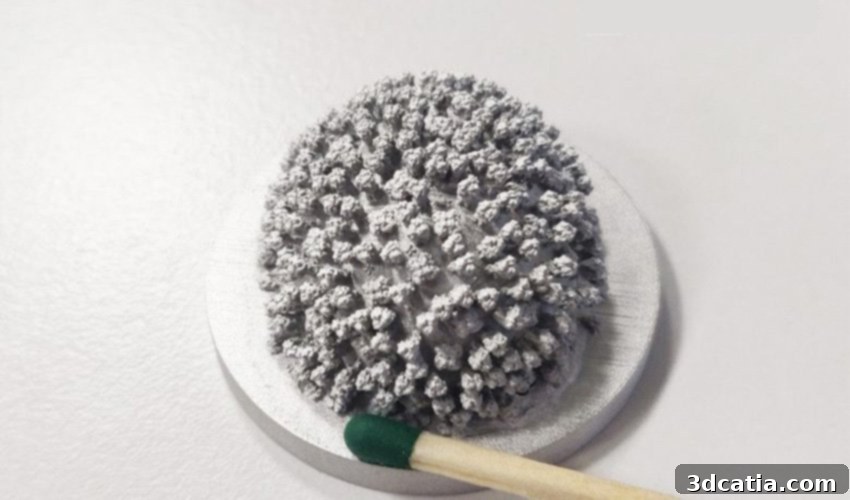
Additive manufacturing, commonly known as 3D printing, has transcended its origins as a prototyping tool to become a pivotal technology across an ever-growing array of industries. Its disruptive potential is particularly evident within the medical and healthcare sectors, where it has already ushered in a new era of innovation, delivering tangible benefits for both patients and healthcare providers. From custom-fitted prostheses and life-saving implants to the cutting-edge frontier of biological cell tissue engineering, 3D printing offers unparalleled precision and customization. This transformative capability is continuously pushing the boundaries of what’s possible in healthcare. A prime example of this advanced application is the recent achievement by MetShape, a specialized 3D printing service provider renowned for its expertise in producing small and micro metal components. MetShape has successfully fabricated a high-precision virus model, a feat that would have been virtually impossible to achieve with other conventional metal additive manufacturing processes. This intricate model was commissioned by CIC nanoGUNE, a leading research institution, with the critical objective of deepening our understanding of how viruses spread and their complex transmission mechanisms, thereby contributing significantly to global public health efforts.
The relentless pursuit of effective strategies to combat viruses remains a central pillar of medical research worldwide, and for good reason. Viruses represent a unique and formidable challenge to human health, primarily due to their intrinsic biological characteristics. They are notoriously difficult to treat effectively, as specific antiviral medications are scarce, and their insidious ability to hijack host cells for replication often leads to extensive cellular damage and systemic illness. The recent global COVID-19 pandemic starkly highlighted the immense difficulties inherent in managing and containing viral outbreaks on a large scale. Beyond such dramatic global crises, even seemingly less threatening pathogens like influenza (the common flu) can pose significant health risks. For instance, according to CDC estimates, the 2019-2021 influenza seasons still accounted for approximately 35 million cases and 20,000 deaths in the United States alone, numbers that, while lower than some preceding years, underscore the continuous threat. In light of these persistent challenges, the medical community is constantly seeking innovative tools and methodologies to enhance our defensive capabilities against viral infections. It is within this critical context that MetShape envisions 3D printing as a revolutionary new instrument, offering unprecedented precision and versatility in the ongoing battle against viruses.
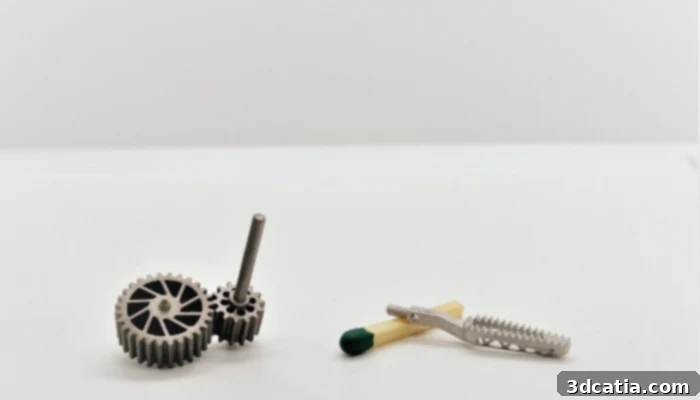
Examples of micro-parts printed using the technology from MetShape (photo credits: MetShape)
How 3D Printing Fuels Advanced Virus Research
The scientific community’s urgent need to understand viral dynamics has prompted specialized research initiatives globally. One such pioneering institution is CIC nanoGUNE, a cutting-edge research center nestled in the vibrant Spanish Basque Country. NanoGUNE has dedicated a significant portion of its research efforts to address the fundamental question of how 3D printing can be leveraged to fight viruses more effectively. Funded by the Basque government’s Ministry of Industry, Trade and Tourism, nanoGUNE’s mission extends beyond fundamental research, actively fostering collaboration with other premier research laboratories and industrial partners to accelerate scientific discovery and technological translation. To meticulously unravel the intricate transmission mechanisms of highly pathogenic viruses, such as SARS-CoV-2 and influenza, CIC nanoGUNE employs sophisticated experimental setups that utilize centimeter-scale water/virus models. These models are crucial for detailed aeration and de-aeration studies, which are fundamental to understanding how viruses are transported through the air. Viruses are known to be transmitted via aerosols – minuscule solid or liquid airborne particles – which can remain suspended in the air for varying durations and distances, posing significant public health risks.
Researchers at nanoGUNE are particularly interested in developing and utilizing highly detailed microscale virus models. These models allow for an unprecedented visualization of the virus’s surface area and the precise enumeration of its characteristic “spikes,” which are critical for viral entry into host cells. By accurately depicting these features, scientists can conduct in-depth studies on how viruses behave when suspended in air, how they interact with airborne moisture, and how their surface properties influence their stability and infectivity. However, achieving the required level of scientific fidelity for these studies presents a significant engineering challenge. The centimeter-scale models employed must incorporate capillaries smaller than 1 mm. This stringent requirement is not arbitrary; it is essential to minimize the distorting effects of gravity on the experimental results, ensuring that the observed fluid dynamics and particle behavior accurately represent microscale phenomena. Unfortunately, this extreme level of precision for micro-parts simply cannot be attained using conventional 3D printing methods, such as binder jetting or the selective laser melting (SLM) process, which lack the fine resolution necessary for such delicate structures. Recognizing this critical technological gap, CIC nanoGUNE strategically partnered with MetShape, entrusting them with the task of producing the exquisitely precise virus model at an impressive magnification scale of 250,000:1, thereby enabling groundbreaking research previously out of reach.
MetShape’s LMM Technology: The Key to Unprecedented Precision
To meet nanoGUNE’s exceptionally demanding specifications, MetShape deployed its proprietary and patented Lithography-based Metal Manufacturing (LMM) process. LMM stands at the forefront of additive manufacturing technologies, representing a highly specialized, sinter-based approach specifically engineered for the production of incredibly high-precision, intricate micro- and nano-metal components. Unlike other metal AM techniques, LMM excels in fabricating parts with exquisite detail, superior surface finish, and exceptional material properties, making it perfectly suited for advanced scientific research and medical applications where accuracy is paramount. The LMM process begins with a photopolymer resin highly loaded with fine metal powder. This mixture is then selectively exposed to UV light, solidifying layers according to a digital 3D model. After printing, the “green” part undergoes a debinding step to remove the polymer binder, followed by a high-temperature sintering process that consolidates the metal particles into a dense, fully metallic component. A significant advantage of LMM, and a testament to its inherent precision, is that the finished virus model, boasting a diameter of 30 mm, was delivered to nanoGUNE after successful printing, debinding, and sintering steps, requiring no additional post-processing. This streamlined production not only speaks to the efficiency of the LMM process but also ensures that the intricate details and critical dimensions of the model are preserved without degradation.

In comparison: on the left a polymer model, on the right the metal model from MetShape
The Advantage of Metal: Enhanced Research Fidelity
The choice of metal for the virus model, facilitated by MetShape’s LMM technology, was not merely a matter of material preference; it was a critical decision driven by scientific necessity and yielded significantly superior experimental outcomes. When subjected to wetting experiments – studies that involve observing how water spreads and interacts with the model’s surface – the metal model consistently demonstrated better, more accurate results compared to a comparable polymer model. This improved performance is attributed to the distinct surface properties of metal, which can more realistically mimic the complex physicochemical interactions that occur on actual virus surfaces in environmental conditions. The precise nature of the metal surface, combined with its inherent material characteristics, allows for a more faithful representation of how aerosols and moisture would interact with a real virus, thereby providing nanoGUNE’s researchers with invaluable data crucial for their aeration and de-aeration studies. This higher fidelity is paramount for drawing meaningful conclusions about virus transmission and developing effective mitigation strategies.
The success of this collaborative project has been met with enthusiastic approval from nanoGUNE. Prof. Alexander Bittner, a leading researcher at the institution, expressed his satisfaction and optimism regarding the breakthrough: “Thanks to the model printed by MetShape, we can now carry out our experiments on the wetting and dewetting of water on viruses and thus achieve a new milestone in the research of virus aerosols. With the new possibilities through innovative manufacturing technologies, we are taking a big step closer to our long-term goal of protecting as many people as possible from virus infections.” This statement underscores the profound impact that advanced additive manufacturing can have on fundamental scientific research, directly contributing to our understanding of pressing global health issues. The ability to create such detailed and accurate physical models opens up new avenues for exploring complex biological phenomena, which were previously limited by manufacturing constraints. This innovation by MetShape is not just a technological achievement; it is a catalyst for medical progress, bringing the scientific community closer to developing more robust prevention and control measures against viral diseases. You can find out more about this specific project and MetShape’s work HERE.
The Future of Medical 3D Printing and Virus Combat
This pioneering project by MetShape and CIC nanoGUNE serves as a powerful testament to the ever-expanding capabilities of 3D printing in the medical domain. Beyond facilitating fundamental research into virus transmission, the underlying LMM technology holds immense potential for a myriad of other applications. Imagine custom micro-implants designed with unprecedented precision for targeted drug delivery, or highly detailed diagnostic tools that can analyze biological samples at a cellular or even subcellular level. The ability to produce intricate metal micro-components with such accuracy can revolutionize fields like microfluidics, biomedical sensing, and even the development of advanced medical robotics. This ongoing evolution of additive manufacturing will undoubtedly continue to accelerate discovery, improve patient outcomes, and provide new solutions to some of humanity’s most persistent health challenges. As researchers continue to push the boundaries of what’s possible with materials and manufacturing processes, we can expect to see an even greater integration of 3D printing into every facet of medical science, ushering in an era of personalized and highly effective healthcare interventions.
What other groundbreaking applications of 3D printing in the medical field have you encountered? How do you envision the future impact of this high-precision 3D printed virus model on global health? We invite you to share your thoughts and insights by leaving a comment below, or by engaging with us on our social media channels: LinkedIn, Facebook, and Twitter! To stay abreast of the very latest developments and innovations in the world of additive manufacturing, don’t forget to subscribe to our free weekly Newsletter here, delivering the most important 3D printing news directly to your inbox! Additionally, you can explore all our insightful videos and content on our YouTube channel.