
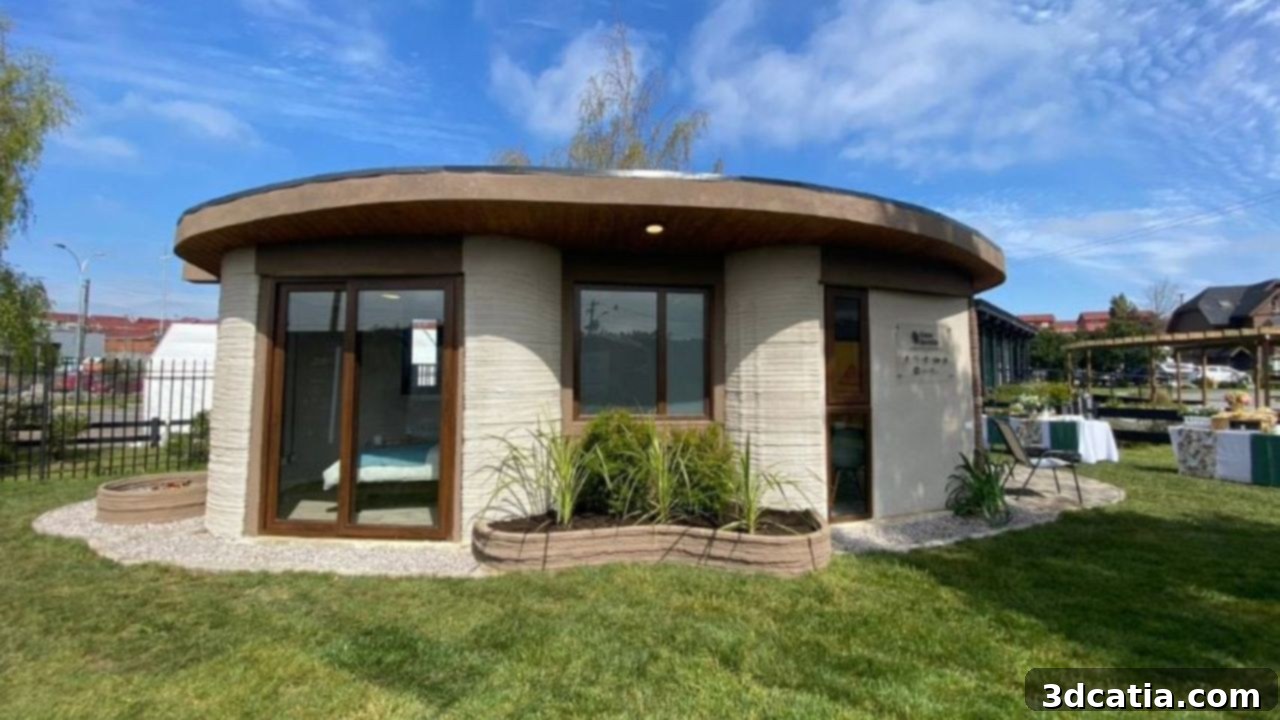
Pioneering Sustainable Housing: Chile Unveils Its First 3D Printed House, Casa Semilla
In a truly historic milestone for the construction sector in Chile, the nation has proudly inaugurated its very first 3D printed house. Located in the Biobío region, this groundbreaking project, aptly named Casa Semilla (Seed House), represents a monumental leap forward in the adoption of cutting-edge technologies for housing development. At its core, the initiative harnesses the power of 3D concrete printing, positioning Chile at the forefront of innovative and sustainable building practices in Latin America. This transformative endeavor is the fruit of a robust collaboration between the esteemed Universidad del Bío-Bío and the National Agency for Research and Development (ANID), which provided crucial funding to bring this vision to life. Casa Semilla is more than just a structure; it’s a beacon of hope and a tangible solution in the ongoing quest to address Chile’s pressing housing challenges, demonstrating how advanced manufacturing can revolutionize the way we build.
The housing situation in Chile has become an increasingly critical issue, impacting hundreds of thousands of citizens across the country. Data released by the Ministry of Housing and Urbanism at the close of 2023 paints a stark picture: Chile faces a quantitative housing deficit of 554,046 homes. This staggering figure means that over half a million households reside in “unrecoverable housing or overcrowded nuclei,” highlighting a deep-seated and widespread problem. This challenging situation is further exacerbated by a confluence of factors, including the escalating costs of traditional construction materials and labor, coupled with the growing scarcity of available land suitable for development. The deficit isn’t merely a matter of needing more houses; it underscores a profound demand for innovative and efficient solutions that can accelerate construction timelines and significantly reduce costs, making homeownership more accessible and sustainable. In light of these formidable challenges, technologies like 3D concrete printing are emerging as a highly promising and viable answer, offering a revolutionary pathway to substantially diminish the housing gap and create more resilient communities.
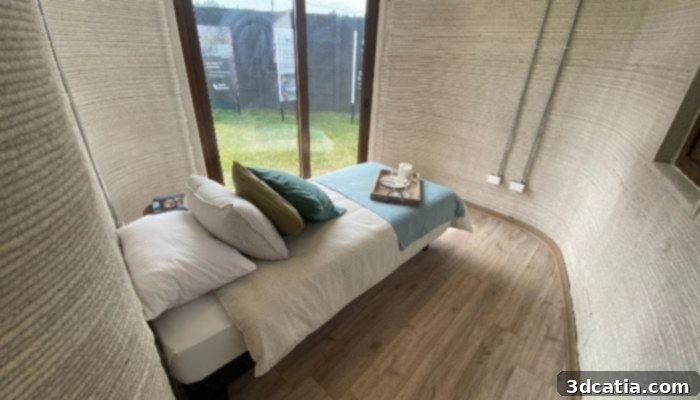
Photo credits: Ahora Biobío
Revolutionizing Construction: Key Innovations of the Casa Semilla Project
The construction of the structural walls for Casa Semilla was achieved in an astonishingly short period, requiring only 29 hours of continuous 3D printing. Following this rapid printing phase, an additional two days were dedicated to the installation of other essential components and finishing touches. This significantly reduced construction timeline represents a monumental breakthrough in efficiency, starkly contrasting with the weeks or even months typically required for traditional building methods. Such speed not only reinforces the commercial viability of 3D concrete printing for future housing projects but also demonstrates its potential for rapid disaster relief housing and accelerated urban development. The architectural design of Casa Semilla thoughtfully incorporates principles of the circular economy and carbon neutrality, positioning it as an exemplary model of sustainability within the modern construction landscape. This includes considerations for material sourcing, waste reduction, and long-term energy efficiency. Furthermore, given Chile’s well-known seismic activity and its remarkably diverse geography, the house has been meticulously engineered to be seismic-resistant and to possess optimal thermal properties. These robust design features ensure that the Casa Semilla can be safely and comfortably installed in virtually any region of Chile, offering resilience and adaptability in a country prone to natural phenomena and varied climates. This comprehensive approach to design and construction underlines a holistic commitment to innovation, safety, and environmental responsibility, setting a new benchmark for additive manufacturing in housing.
A pivotal factor in achieving this remarkable technological advancement is the Atenea-UBB industrial printer, which stands as the most sophisticated and advanced machine of its kind in all of Latin America. This state-of-the-art equipment, working in tandem with a KUKA KR120 industrial robot, forms the backbone of the project’s additive manufacturing capabilities. Both the Atenea-UBB printer and the KUKA robot were acquired and integrated thanks to significant funding provided by ANID, demonstrating a strategic national investment in innovative infrastructure. This powerful combination of industrial-grade machinery has not only facilitated the precise and rapid construction of Casa Semilla but has also been instrumental in the creation of a diverse range of 3D printed structures. From intricate street furniture designed for urban spaces to robust, full-scale columns and walls intended for larger buildings, the technology has proven its versatility and scalability. This capacity for broad application underscores the transformative potential of 3D concrete printing beyond just residential homes, opening avenues for various infrastructural and architectural projects that require speed, precision, and durability.
This groundbreaking type of additive construction technology, passionately championed and meticulously developed by academics from the Universidad del Bío-Bío’s Faculty of Architecture, Construction, and Design, has been instrumental in firmly establishing Chile’s position at the vanguard of additive construction across the Latin American region. The unwavering commitment and expertise of the university’s research team have driven this technological leap, showcasing how academic innovation can directly translate into tangible, impactful solutions for national challenges. Even prior to the completion of Casa Semilla, the dedicated team had already demonstrated its formidable capabilities. In 2023, they successfully printed a 2.20-meter-high surveillance booth, a project that not only highlighted their technical proficiency but also served as a robust proof of concept for constructing functional, full-scale structures using 3D printing. This earlier achievement provided invaluable experience and confidence, laying the groundwork for more ambitious undertakings like Casa Semilla. It unequivocally demonstrated the team’s readiness and expertise to tackle a diverse array of projects, ranging from modest utility structures to complex residential buildings, further solidifying Chile’s leadership in this rapidly evolving field.
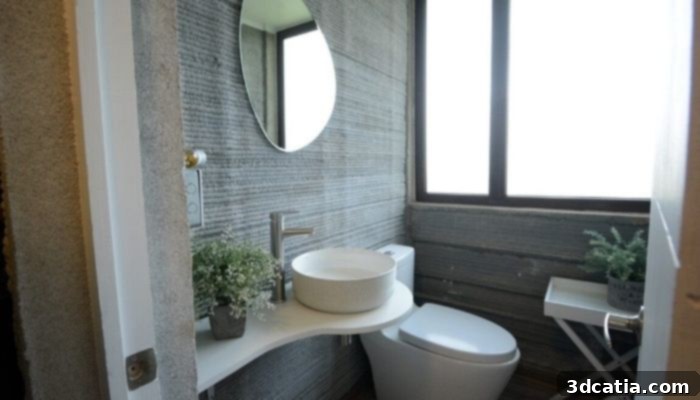
Photo credits: BioBío Chile
Fostering Progress: Innovation and Collaborative Synergy in Action
Benito Umaña, the esteemed Rector of the Universidad del Bío-Bío, passionately articulated that Casa Semilla is far more than just a house; it represents the culmination of extensive years of rigorous research, dedicated effort, and profoundly impactful interdisciplinary collaboration. He proudly declared, “we have all the capabilities to develop this type of project and contribute to the development of the region and the country, as we could contribute to the reduction of the housing gaps that exist today.” This statement powerfully underscores the university’s profound commitment to leveraging its academic prowess and technological infrastructure to address critical societal needs. The project also served as an invaluable hands-on learning opportunity, actively involving both undergraduate and graduate students who gained practical experience in pioneering construction techniques. Furthermore, the success of Casa Semilla was significantly bolstered by vital collaboration with key private sector companies, including Cementos Bío Bío, SIKA-Chile, and Ventanas Tehmco. These strategic partnerships unequivocally demonstrate the immense potential and tangible benefits that arise when university-led research initiatives forge strong synergies with the private industrial sector, fostering a dynamic ecosystem of innovation and practical application that drives national development.
The Seed House, or Casa Semilla, transcends the definition of a mere prototype; it offers a compelling and tangible glimpse into the future of construction, not just for Chile but globally. To maximize its educational and transformative impact, the house will be open to the public for an entire year. This extended exhibition period serves a crucial objective: to provide a unique and accessible space where the practical, real-world applications and profound implications of 3D printing in the housing sector can be thoroughly explored and understood by a broad audience. Through this initiative, a greater number of people, including students, professionals, and policymakers, will have the unprecedented opportunity to engage directly with this innovative technology. They will witness firsthand how it promises to fundamentally transform and optimize the construction landscape in Chile, offering solutions that are faster, more sustainable, and potentially more affordable than traditional methods. This public engagement is vital for fostering acceptance, inspiring future research, and ultimately accelerating the widespread adoption of additive construction methods across the nation.
Beyond its immediate implications, Casa Semilla represents a significant step towards a more sustainable and equitable future. By proving the viability and efficiency of 3D concrete printing, Chile is paving the way for scalable solutions to its housing crisis. This project could inspire other nations facing similar challenges to explore and invest in additive manufacturing for housing. The lessons learned from Casa Semilla, from material science to robotic operation and architectural design, will contribute valuable knowledge to the global community of additive construction. It is a testament to the power of collaboration between academia, government, and industry, demonstrating how collective effort can lead to groundbreaking innovations that address some of society’s most pressing needs. The potential for cost reduction, accelerated timelines, and enhanced structural integrity offered by 3D printing could redefine urban planning and rural development, making high-quality, resilient homes accessible to more people. This initiative is not just about building houses; it’s about building a better future for Chilean communities and setting a precedent for global innovation in construction.
What are your thoughts on Chile’s pioneering 3D printed house, Casa Semilla, and its potential to reshape the construction industry? Let us know your perspective in a comment below or join the conversation on our LinkedIn, Facebook, and Twitter pages! Don’t forget to sign up for our free weekly newsletter here to receive the latest 3D printing news and innovations straight to your inbox! You can also find all our compelling videos and documentaries on our YouTube channel.
*Cover Photo Credits: Ahora Biobío