
Tethon 3D: Driving Innovation in Ceramic 3D Printing Materials and Solutions
When delving into the world of vat photopolymerization and the advanced resins it utilizes, one might often ponder the origins of these crucial materials. While a familiar brand name might grace the label, there’s a significant chance that the actual development and formulation of that resin originated from a specialized manufacturer—a company dedicated to the intricate science of material innovation. Tethon 3D stands as a prime example of such a pioneer. This Nebraska-based entity is a leading ceramic additive manufacturing company, renowned for its development of high-performance composite resins and complementary hardware. Their core focus lies squarely on material development, pushing the boundaries of what’s possible in advanced manufacturing.
The name “Tethon” itself carries a profound significance, derived from the Native American Omaha tribe’s word for “white buffalo.” In Omaha Native culture, the white buffalo symbolizes immense strength, extraordinary rarity, and a deep connection to the earth. This powerful symbolism is intentionally mirrored in Tethon 3D’s mission and identity, evident in their recognizable white buffalo logo. The company strives to produce cutting-edge ceramic 3D printing technology and materials that embody these very qualities – strength, uniqueness, and a fundamental link to groundbreaking applications in various industries. They are not merely creating products; they are crafting solutions that are robust, highly specialized, and deeply impactful.
A visit to the Tethon 3D offices offers a compelling glimpse into their extensive research and development capabilities. The facility showcases an impressive array of 3D printers from several well-known brands, including Stratasys, Formlabs, and Nano Dimension, alongside Tethon 3D’s own proprietary machine, the Bison 1000. This diverse collection of hardware isn’t merely for display; it underscores the company’s multifaceted role in the additive manufacturing ecosystem. The sophisticated lab at Tethon 3D specializes in creating custom resins, which are then resold under the brand names of major industry players like Stratasys and Fortify. Beyond these commercial partnerships, Tethon 3D also develops highly specialized materials for critical research labs, as well as for government and military projects, demonstrating their commitment to both commercial and strategic advancements in ceramic additive manufacturing. While rooted in Omaha, Nebraska, the company’s influence extends globally, with a robust network of clients and partners spanning the US, Asia, and Europe. Since its establishment in 2014, Tethon 3D has successfully provided innovative solutions for ceramic additive manufacturing to over 1,700 customers in more than 40 countries, cementing its position as a key player in the global market for advanced materials.
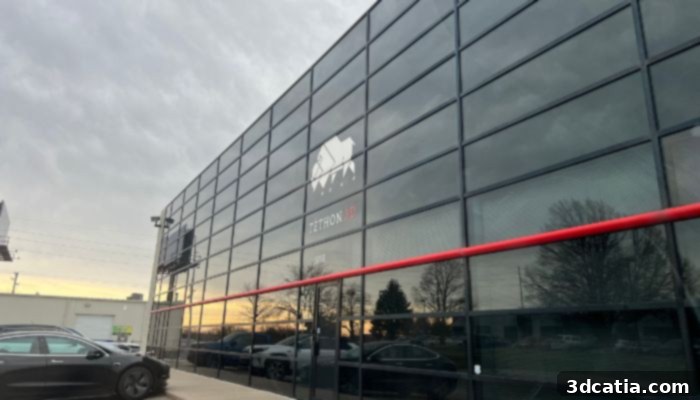
Tethon 3D’s office in Omaha, Nebraska (Photo Credits Julia Steiner)
The genesis of Tethon 3D is a testament to entrepreneurial vision and a keen understanding of unmet market needs. The company was co-founded by husband and wife team Karen and Jim Linder, both of whom brought valuable medical backgrounds to their venture. Their journey into ceramic 3D printing began unexpectedly one evening when they attended a lecture by a Bowling Green State University (BGSU) professor who was conducting pioneering research in the field of ceramic 3D printing. The Linders were immediately struck by the potential for 3D printed ceramics to revolutionize medical applications, envisioning everything from biocompatible implants to advanced surgical tools. Coincidentally, the professor was actively seeking a pathway to commercialize his groundbreaking research while still maintaining his academic role. Karen and Jim, seasoned entrepreneurs, had previously founded several successful companies and had a track record of supporting over thirty startup ventures through their angel investment company, Linseed Capital. This wealth of experience in business development and investment positioned them perfectly to act. They entered into negotiations with BGSU, successfully acquiring the intellectual property for the invention and subsequently founding Tethon 3D. From its very inception, the company was strategically established as a materials-focused enterprise, recognizing that the true bottleneck in advanced additive manufacturing often lay in the availability and performance of specialized materials, particularly ceramics.
Initially, Tethon 3D’s offerings were concentrated on binder jetting powders, binders, and comprehensive 3D printing services. However, the company demonstrated strategic agility by adapting to evolving market demands. As CEO Trent Allen explained, around 2016, with the rising popularity of desktop resin 3D printers like Autodesk’s Ember and Formlabs, the Tethon 3D team identified a critical shift. They realized that the resin market presented fewer barriers to entry and immense growth potential, especially for specialized materials. This pivotal insight led them to strategically expand their focus into the development of advanced ceramic resins, a move that would define their future. Today, UV-curable resins and proprietary hardware constitute their primary product lines. The company excels in the intricate processes of mixing and compounding various raw materials to formulate their unique, high-performance resins. While Tethon 3D does not produce the raw ceramic materials themselves, they have cultivated strong, long-standing relationships with top-tier suppliers. These trusted partners provide high-performance ceramics such as alumina and zirconia, ensuring that Tethon 3D’s foundational materials meet stringent quality standards for strength, durability, and production readiness. This meticulous approach to material sourcing is crucial for developing resins capable of producing robust, functional ceramic parts.
Genesis: A Foundation for Innovation with Base Resins
Among Tethon 3D’s most acclaimed offerings is their innovative line of Genesis resins. These are not merely finished products but meticulously engineered base resins designed to serve as an ideal starting point for researchers, engineers, and innovators looking to create highly customized materials. The Genesis line empowers users with unparalleled flexibility: these base resins can be seamlessly mixed with a wide array of powders, including various metals, pigments, and other specialized additives, to precisely meet specific application requirements. This allows for the creation of bespoke printable resins tailored for unique mechanical, thermal, or aesthetic properties. The resulting custom formulations can then be utilized for both cutting-edge research and the production of final, functional parts. This means that once a user successfully achieves their desired material formula, they can consistently replicate and utilize it for large-scale production, moving seamlessly from experimentation to manufacturing. This capability significantly reduces development time and costs for advanced projects.
Tethon 3D’s commitment to providing materials designed specifically for experimentation and customization deeply resonates with the inherent nature of the 3D printing community, where research and development teams comprise a substantial portion of the technology’s user base. The ability to fine-tune material properties is often the key to unlocking new applications and overcoming existing limitations in additive manufacturing. As CEO Trent Allen remarked, “It is really rewarding to see people take the research to the next level,” underscoring the company’s pride in facilitating groundbreaking discoveries. The versatility of Genesis resins translates into an impressive range of possible applications, demonstrating their broad utility across diverse industrial sectors. These include critical uses in automotive manufacturing for lightweight yet strong components, aerospace for high-temperature and performance parts, dentistry for advanced biocompatible prosthetics, biotech for intricate medical devices and scaffolds, and jewelry for unique, custom designs that require precision and aesthetic appeal. This expansive applicability highlights the transformative potential of Tethon 3D’s material science innovations.
Bison 1000: Bridging the Gap in Desktop Ceramic 3D Printing
While Tethon 3D’s primary strategic focus remains rooted in advanced material development, the team recognized a significant void in the market for suitable hardware. This realization led them to develop their own proprietary 3D printer, the Bison 1000, in collaboration with the esteemed South Korean brand Carima. Around 2020, the time of the printer’s release, the landscape of desktop 3D printing for ceramics was remarkably sparse. There were virtually no dedicated desktop ceramic 3D printers available, and many of the existing DLP (Digital Light Processing) printers on the market were designed predominantly for plastic-based resins, proving inadequate for the specific demands of ceramic materials. This presented a considerable hurdle for researchers and small-scale manufacturers looking to experiment with or produce ceramic parts. Previously, Autodesk’s Ember 3D printer, introduced in 2014 and discontinued in 2017, had gained popularity as a desktop DLP solution, but its unavailability left a critical gap. Tethon 3D identified this problem as an opportunity they were uniquely positioned to solve, leveraging their deep understanding of ceramic materials to design a printer specifically optimized for them.
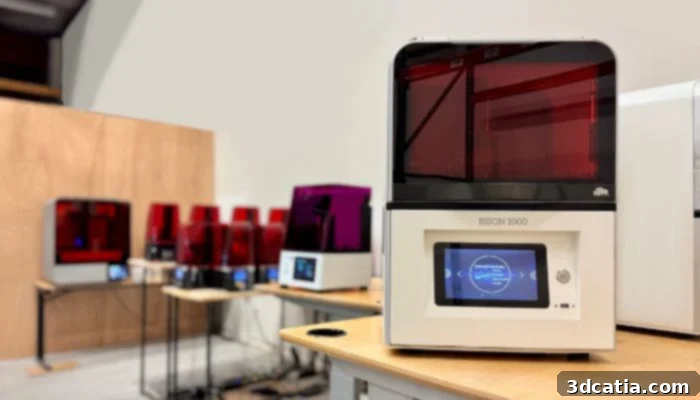
The Bison 1000 3D Printer (Photo Credits: Tethon 3D)
The motivation behind the Bison 1000 was clear. As Trent Allen explained, “There were a lot of companies sending us powders to develop materials, and we were limited by machines that were locked down.” Many commercially available printers offered limited control over crucial printing parameters, hindering comprehensive material development. He continued, “So, we really wanted to develop a machine that was the best for material development and our team, and that’s what ended up as the Bison 1000.” This philosophy of empowering material innovation drove its design. The Bison 1000 DLP printer boasts fully adjustable settings, allowing users to precisely control dosage, exposure times, and light intensities. This granular level of control is absolutely essential for rigorous material research and development, making it an ideal tool for government agencies, military research facilities, and high-level academic labs engaged in advanced material science. Its open architecture and customizable parameters set it apart from typical consumer or even many industrial printers. Since the successful unveiling of the Bison 1000, Tethon 3D has continued to innovate its hardware portfolio, subsequently releasing three new 3D printer models. These newer iterations are designed with an even greater focus on optimizing workflows and capabilities specifically for high-volume ceramic part production, further solidifying Tethon 3D’s commitment to comprehensive solutions in additive manufacturing.
Tethon 3D Going Forward: Vision and Future Horizons
Looking ahead, Tethon 3D has ambitious plans for expansion and innovation. One of the key areas the company aims to significantly impact in the coming years is dental implants and restorative dentistry. Currently, while 3D printing is utilized for composite crowns, these often suffer from limited strength, typically serving only as temporary solutions. As Trent Allen elaborated, “Today, people are 3D printing composite crowns, but they’re generally pretty weak. They’re used generally for temporary crowns, and we believe our materials will eventually be a good option for permanent crowns.” He expressed strong confidence that Tethon 3D is on the verge of developing a ceramic material perfectly optimized for this demanding application, offering the strength and biocompatibility required for long-term use. While their dental materials have successfully passed crucial cytotoxicity testing, a significant hurdle remains: navigating the rigorous FDA approval process. “All of our dental materials have passed cytotoxicity testing, but we would still need to go through the FDA process. That’s going to be the biggest slowdown,” Allen acknowledged, highlighting the complex regulatory landscape in medical additive manufacturing.
However, charting a clear strategic direction is not always straightforward for a company dealing with such versatile materials. Karen Linder, co-founder, candidly articulated one of the primary challenges: “Ceramics are everywhere. As a company, it is almost distracting—it is hard to focus sometimes when a lot of different industries need material.” This ubiquitous nature of ceramics means Tethon 3D’s materials have found applications across an astonishingly diverse range of projects. Their innovative materials have been utilized in demanding environments such as NASA experiments, cutting-edge research labs at prestigious institutions like Harvard and MIT, and even beyond our planet. “We’ve had our material on the International Space Station as well as underwater,” Karen proudly added. She further cited a notable example: “MIT did a really nice research study using our material for a satellite sensor,” showcasing the high-performance and reliability of their ceramic formulations in extreme conditions. This broad applicability, while a testament to their materials’ quality, necessitates careful strategic planning to prioritize market segments and maximize impact.
In keeping with the dynamic rhythm of the additive manufacturing industry, Tethon 3D is poised for continued growth and innovation. They plan to strategically expand their hardware platforms, focusing on developing solutions that are increasingly geared towards robust, high-throughput production environments rather than solely research and prototyping. As additive manufacturing continues its widespread adoption across an ever-growing spectrum of industries, the demand for highly customized, application-specific materials will inevitably surge. Companies like Tethon 3D, with their profound expertise in material science and their agile approach to innovation, are uniquely positioned to answer this call, providing the foundational materials and integrated solutions that will drive the next generation of industrial 3D printing. Their commitment to material development, coupled with strategic hardware advancements, positions them at the forefront of the ceramic additive manufacturing revolution, enabling engineers and designers to unlock new possibilities previously unattainable with traditional manufacturing methods.
What are your thoughts on Tethon 3D’s pioneering mission and their impact on ceramic additive manufacturing? We invite you to share your insights in a comment below or join the conversation on our LinkedIn, Facebook, and Twitter pages! For the latest breaking news and developments in the world of 3D printing, don’t forget to sign up for our free weekly Newsletter here, delivered straight to your inbox. You can also explore all our engaging videos and content on our YouTube channel.
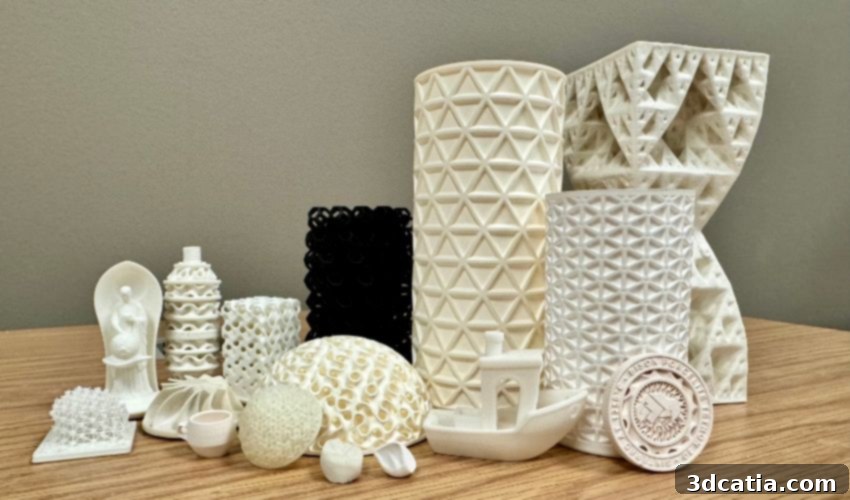
*Cover Photo: A collection of intricately 3D printed ceramic objects, showcasing the precision and versatility of Tethon 3D’s materials. (Photo credit: Tethon 3D)