
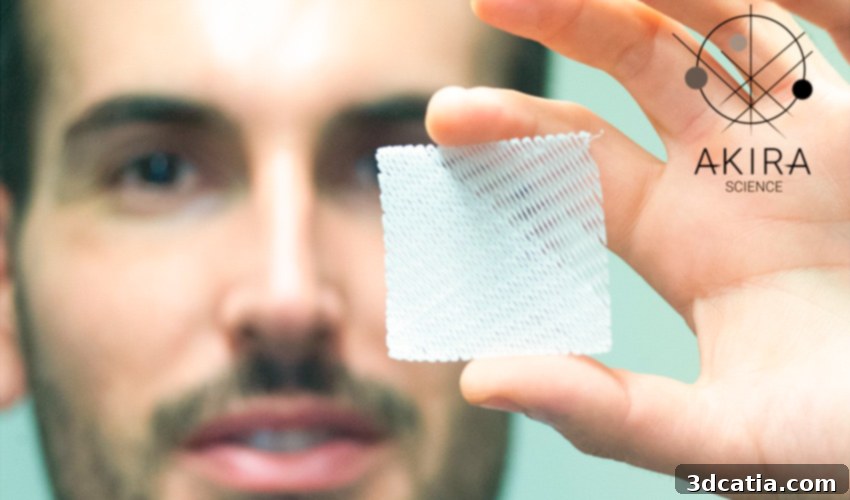
Revolutionizing Regenerative Medicine: Akira Science Pioneers 3D Printed Bioabsorbable Implants
The landscape of healthcare is undergoing a profound transformation, largely driven by the advancements in 3D printing technology. This innovative field is rapidly expanding its footprint, offering unprecedented solutions in areas requiring high levels of customization and precision. From bespoke medical devices to advanced materials, 3D printing is reshaping the design and production paradigms within the healthcare sector. Notably, its potential in tissue engineering and regenerative medicine is immense, paving the way for groundbreaking therapeutic applications. One such pioneer in this space is Akira Science, a Swedish company that is skillfully harnessing this technology to develop innovative medical solutions. Specifically, Akira Science has engineered advanced 3D printed bioabsorbable polymeric structures designed to facilitate and enhance tissue regeneration across a spectrum of medical applications. To delve deeper into their revolutionary approach and the transformative impact of additive manufacturing in medicine, we recently engaged in a conversation with the Akira Science team.
3DN: Could you introduce yourself and elaborate on your journey with 3D printing?
My name is Álvaro Morales, and I am the CEO of Akira Science. My profound interest in 3D printing was first ignited in 2016 during my Chemical Engineering degree at UPV. It was within the Materials Science module, under the inspiring tutelage of Professor Guillermo Vilariño, that I truly discovered my passion. Professor Vilariño’s enthusiasm and innovative teaching methods, particularly in tissue engineering, steered my career trajectory. This pivotal experience led me to dedicate my professional path towards mastering 3D printing and developing advanced polymeric materials specifically for biomedical applications. This initial spark was crucial, setting the foundation for my subsequent academic and entrepreneurial endeavors.
Driven by this newfound motivation, I pursued a master’s degree at the prestigious KTH Royal Institute of Technology in Sweden. During this period, I deeply immersed myself in the application of biodegradable polymers through a project called PrintKnit. This initiative was specifically focused on the creation of sophisticated 3D scaffolds designed for soft tissue regeneration. This invaluable experience not only solidified my vision for integrating 3D printing into practical, real-world clinical solutions but also marked the conceptual genesis of Akira Science. It was here that the idea of bridging cutting-edge technology with critical medical needs truly began to take shape.
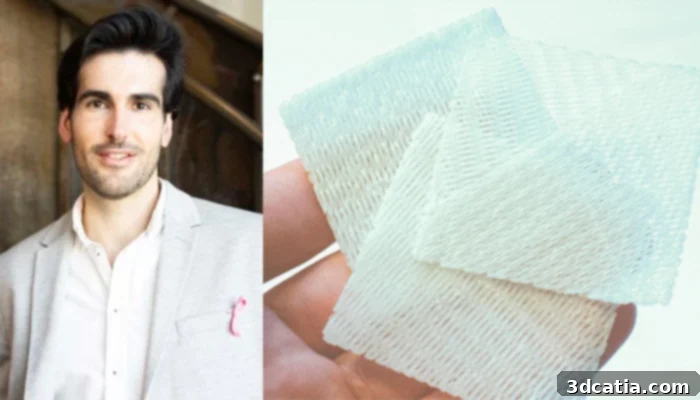
On the left, Alvaro Morales, CEO of Akira Sciences
Upon completing my master’s degree, I seized the opportunity for a summer internship within the same department. This period proved immensely productive, allowing me to significantly optimize the production process for scaffolds using medical-grade materials, which ultimately culminated in my first scientific publication. Following this transformative year of intensive learning and practical application, a critical juncture emerged: should I pursue a PhD or transition directly into the professional world? I opted to explore the industrial facet of 3D printing, an decision that led me to Germany, where I spent two and a half years working within the research and development department at EnvisionTEC.
This stage of my career was undeniably crucial and deeply enriching. It provided me with a comprehensive training experience and the invaluable opportunity to collaborate and learn from a diverse group of highly skilled colleagues across various disciplines, including mechanical, electrical, and software engineering. My primary focus during this tenure was the development and advancement of DLP (Digital Light Processing) and cDLM (continuous Digital Light Manufacturing) technologies. I actively participated in large-scale projects, partnering with esteemed companies such as Henkel, BASF, and Cartier. Furthermore, the onset of the COVID-19 pandemic presented a unique and pressing challenge: optimizing and securing FDA approval for the 3D printing of medical swabs. This experience was incredibly enriching, offering me deeper insights into the complex world of bioprinting, especially through my collaboration with the Bioplotter team.
Despite these significant professional advancements and achievements, a persistent drive to continue my research and spearhead my own long-term project remained. This pivotal opportunity materialized in October 2020. My master’s supervisor, Professor Anna Finne Wistrand, informed me of a compelling PhD offer at the newly established AM4Life Competence Centre. This PhD program was a collaborative effort with the biopharmaceutical company Cytiva, focused on developing 3D printing compatible materials specifically for bioprocessing and post-processing. A key objective was to enhance the antibacterial properties of post-printing polypropylene SLS (Selective Laser Sintering) components. Simultaneously, my inherent passion for entrepreneurship, coupled with the exciting prospect of further developing Akira Science, motivated me to pursue both my PhD and the growth of Akira in parallel, a demanding yet rewarding endeavor.
Today, as the CEO of Akira Science, I channel this extensive and diverse experience into the development of advanced biodegradable implants. These implants are meticulously designed to facilitate tissue regeneration following complex oncological surgeries, such as breast reconstruction. This innovative approach signifies a profound paradigm shift in reconstructive surgery, driven by the judicious application of our innovative 3D printing materials and sophisticated techniques, ultimately aiming to significantly improve patient outcomes and quality of life.

Akira Science is dedicated to the development of 3D printed tissues
3DN: What is Akira Science, and what was the inspiration behind founding the company?
Akira Science originated as an innovative spin-off from the esteemed Fibre and Polymer Technology Department at KTH Royal Institute of Technology. Its foundation was deeply rooted in the groundbreaking PrintKnit project, expertly led by Professor Anna Finne-Wistrand. When I joined the research group as a master’s student, I was immediately struck by the highly interdisciplinary nature of the team. It comprised organic chemists, biologists, computer scientists, and biomedical engineers – a truly ideal combination. This diverse expertise allowed us to develop a comprehensive know-how, spanning everything from the intricate synthesis of novel biomaterials to the precision of the printing process and the bespoke customization of implant designs. What made this project particularly compelling was its genesis: it arose directly from a clear clinical urgency and compelling evidence highlighting a significant lack of innovation in new biomaterials within the medical field.
Regrettably, for the past three decades, surgeons have largely been confined to using the same biodegradable materials, leading to a noticeable stagnation in medical material innovation. Our core objective at Akira Science was to fundamentally alter this paradigm. We embarked on developing an extensive library of a diverse range of degradable polymers. This was coupled with the advancement of sophisticated printing technology and an emphasis on intelligent implant design, all meticulously crafted to meet the stringent requirements necessary for successful soft tissue regeneration. Our key criteria included: i) achieving mechanical properties (specifically stiffness) that closely mimic adipose tissue found in the breast; ii) ensuring material stability under high-temperature processing and during sterilization techniques; and iii) designing a material that degrades at a rate precisely synchronized with the regeneration of natural tissue, thereby allowing for optimal proliferation and expansion of stem cells and their subsequent specialization into adipocytes within a timeframe of 9 to 12 months. And indeed, we successfully achieved these ambitious goals.
Towards the culmination of the PrintKnit project, and after rigorously validating these promising results at the preclinical level, the university’s technology transfer center, KTH Innovation, provided invaluable assistance. They helped us formulate a strategic approach for managing our intellectual properties, a process that ultimately led to the drafting of our first patent. On a personal note, my lifelong dream, ever since childhood, was to establish my own company. Although I initially joined the project as a student, through dedication and belief in our work, I eventually acquired the majority of the company’s shares. In fact, I actively participated in all of KTH Innovation’s entrepreneurship programs, an effort that culminated in my acceptance into the prestigious DeepTech Incubate at STING, an accelerator globally recognized as one of the best start-up incubation programs.
The reality, however, was that many of my esteemed colleagues, while brilliant, did not share the same intense motivation for product development or entrepreneurial pursuits. They opted to continue their careers within the scientific realm or in larger, more established companies. My unwavering desire, profound passion, and above all, my steadfast belief in the robust science underpinning Akira Science, have compelled me to continue this journey. I am resolute; I will not rest until our innovative implants are routinely available in every hospital, transforming patient care globally.
3DN: Could you describe your method for 3D printing tissue, and what specific benefits have you observed with this technology?
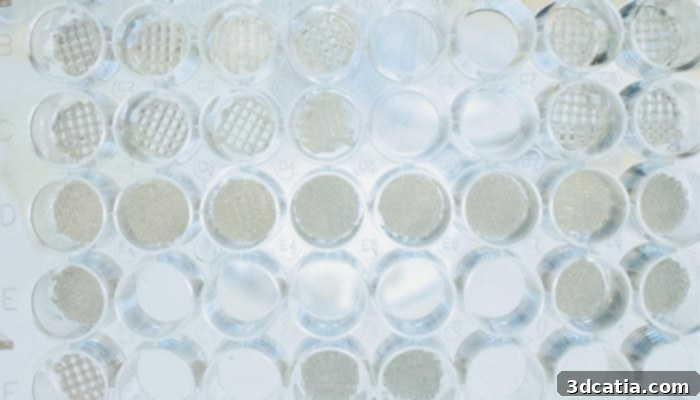
Our innovative approach centers on the utilization of an acellular scaffold. This means that, crucially, our implants do not incorporate any growth factors or any type of stem cells. A primary requirement articulated by the clinical community was the development of a material that is as inert as possible. This inertness is vital to prevent any form of rejection by the patient’s body and, equally important, to avoid any potential for cancer recurrence. Instead, our implant functions as a supportive matrix, providing an optimal environment for the existing cells within the breast tissue to adhere, proliferate, and ultimately promote natural tissue regeneration. Our chosen printing method is based on filament printing, which necessitates working under precisely controlled and specific environmental conditions to ensure optimal outcomes.
To achieve this, I dedicated considerable effort to optimizing both the extrusion and the printing processes. This meticulous optimization was essential to meet the rigorous requirements imposed by our intricate implant design. Our implant itself features an interconnected mesh structure, characterized by a high degree of porosity. This specific design is critical as it facilitates the efficient diffusion of cells and supports homogeneous tissue growth throughout the scaffold. The synergistic combination of our unique biomaterial, our refined printing process, and the intelligent design of our implants positions Akira Science as a truly distinctive company within the industry, possessing incredible potential for a broad spectrum of other applications within the challenging field of soft tissue regeneration.
The significant benefits we have observed are multi-faceted. Our robust platform is designed to empower both researchers and healthcare professionals, actively contributing to the advancement and implementation of a profound paradigm shift in patient care. Beyond directly aiding patients, our technology profoundly simplifies breast reconstruction surgeries. By streamlining these complex procedures, we anticipate a remarkable reduction of up to 30% in operating time. Furthermore, hospitals stand to gain substantial resource savings, potentially up to 50%. It’s important to consider that in Europe, the average waiting time for breast reconstruction surgery can extend to approximately two years. This lengthy delay is primarily attributed to the inherent complexity of the surgery, which often necessitates the coordinated involvement of both plastic surgeons and general surgeons (oncologists) for comprehensive treatment planning. With AkiMed™ implants, much of this complexity becomes unnecessary. The procedure is simplified to merely opening and positioning the implant immediately after the tumor removal, thereby dramatically reducing the burden on patients and healthcare systems alike.
3DN: Can you tell us more about your AkiMed™ breast implants? How many women have benefited from these advances?
Currently, AkiMed™ implants are in the crucial preclinical phase of development. This signifies that our innovative implants are undergoing rigorous testing and validation within carefully selected animal models. This essential stage ensures their safety and efficacy before they can progress to human clinical trials. While AkiMed™ implants have not yet been utilized in women, the preclinical results garnered thus far are exceptionally promising. These studies consistently demonstrate excellent biocompatibility, indicating the material is well-tolerated by the body, and robust efficacy in promoting adipose tissue regeneration.
Our overarching vision is that once the subsequent clinical phases are successfully completed and all necessary regulatory approvals are meticulously obtained, AkiMed™ implants will emerge as a truly revolutionary new option. This will directly benefit thousands of women who undergo breast-conserving surgery following a cancer diagnosis. These advanced implants are poised to not only significantly simplify the intricate surgical procedure by substantially reducing the number of operations typically required but also to dramatically improve both recovery times and the critical cosmetic outcomes for patients. This represents a significant leap forward in reconstructive surgery, offering hope and enhanced quality of life.
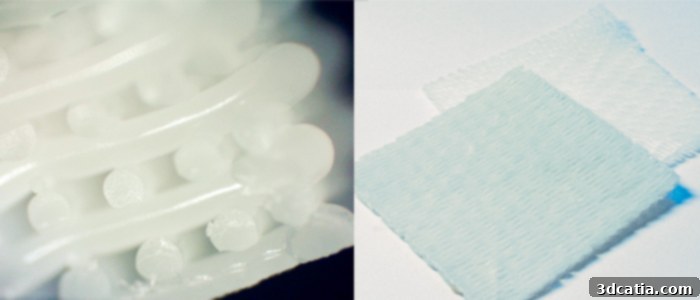
Thanks to 3D technology, they are able to reduce operating time and resources.
3DN: In your opinion, is 3D printing the definitive tool for the future of medicine?
Without a doubt, 3D printing is unequivocally transforming the future of medicine. Its unparalleled capacity to create highly customized solutions is revolutionizing the treatment of a multitude of diseases and conditions. This encompasses everything from patient-specific implants and advanced prosthetics to the pioneering field of bioprinted tissues. This technology is not merely an improvement; it is a fundamental shift in how we approach medical interventions.
At Akira Science, our strategic focus has been on the development of sophisticated biodegradable implants. These implants are meticulously engineered to naturally facilitate soft tissue regeneration. This innovative application of 3D printing technology offers tangible benefits: it not only significantly reduces surgical time, leading to more efficient operations, but also lowers overall hospital costs, making advanced treatments more accessible. Crucially, it dramatically improves clinical outcomes for patients, offering more natural and effective healing processes. As we continue to advance our understanding of biocompatibility and seamlessly integrate 3D printing with cutting-edge biomaterials, we envision immense potential. This extends its application far beyond our current focus, into complex reconstructive surgeries, comprehensive organ regeneration, and the exciting frontier of truly personalized medicine, where treatments are tailored precisely to each individual’s unique biological needs.
I would like to add a personal reflection on my journey. I have been exceptionally fortunate to witness firsthand the accelerating convergence of 3D printing and direct patient care. My PhD research at the AM4Life Competence Centre has provided a unique vantage point, where over 30 universities, companies, and hospitals collaboratively work side-by-side. This integrated approach aims to implement 3D printing across the entire spectrum of medical care, from early prevention and screening protocols all the way through to the final, complex surgical procedures. This collaborative ecosystem truly exemplifies the transformative power of additive manufacturing in medicine.
3DN: Do you have any final words for our readers?
I want to underscore a fundamental principle: innovation in medicine must always prioritize the patient. Its ultimate purpose is to enhance their quality of life through the provision of advanced, personalized, and highly effective solutions. At Akira Science, we are firm believers that the future of healthcare lies at the intersection of personalization and truly transformative innovation. This means seamlessly integrating cutting-edge science and sophisticated technology to directly address real, unmet medical needs. We cordially invite our readers to follow our journey, to learn more about our advancements, and to actively become a part of this profound revolution unfolding in regenerative medicine.
Furthermore, we are deeply convinced that sustained success in this intricate field hinges on robust collaboration across diverse disciplines. In this collaborative environment, every voice is invaluable, and every unique perspective adds significant value. We champion an integrative technology – one that not only optimizes existing treatments but also boldly redefines the very standards of medical care. The future of medicine is not a distant concept; it is being meticulously built today. By working together, we possess the collective power to drive this progress forward and shape a healthier tomorrow! You can learn more about our pioneering work HERE.
What are your thoughts on Akira Science’s innovative contributions to regenerative medicine? We encourage you to share your insights in a comment below or engage with us on our LinkedIn, Facebook, and Twitter pages! Don’t forget to sign up for our free weekly Newsletter here to receive the latest 3D printing news straight to your inbox! You can also find all our compelling videos and demonstrations on our YouTube channel.
*All Photo Credits: Akira Science