
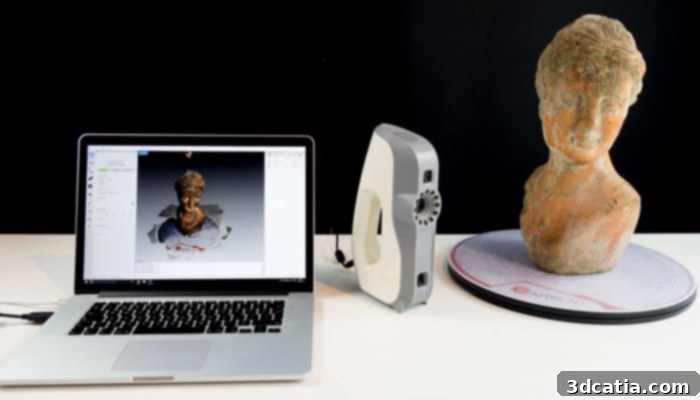
3D Printing: Revolutionizing Cultural Heritage, Preservation, and Accessible Education
In an era defined by technological innovation, 3D printing stands out as a transformative force, reshaping our interaction with art, history, and cultural heritage. This groundbreaking technology is enabling unprecedented initiatives, from the meticulous recreation of complex historical artifacts and the development of entirely new artistic expressions, to significantly broadening public education and ensuring the enduring preservation of invaluable relics. Imagine a direct, tangible engagement with the past that was previously unimaginable – 3D printing makes this a reality. By virtually and physically recreating damaged or lost monuments, we actively safeguard their heritage, forging a concrete link between contemporary society and ancient civilizations.
This profound impact is eloquently articulated by leading experts from the Harvard Semitic Museum. They highlight that “modern digital 3D visualization makes possible the full-scale virtual reconstruction of ancient architectural remains which survive today only as damaged or partially preserved ruins. Using digital animation, adding color and lighting effects, it is possible to show how these sites and monuments changed through time, from their original construction and ancient use to their eventual abandonment and destruction.” This perspective underscores not just the capacity for static reproduction but the dynamic ability to illustrate the lifecycle of historical sites, providing a richer, more contextual understanding of our shared human story. Furthermore, a seminal report from 2014, authored by a team of Austrian researchers and titled “3D Printing for Cultural Heritage,” strongly supports this trend, emphasizing how 3D technologies are indispensable for integrating a novel sensory dimension into museum experiences, thereby enriching visitor engagement profoundly.
Digital Preservation: Replicating and Reconstructing Lost History
The preservation of historical artifacts is an endeavor that demands utmost care and precision. Even with the most advanced traditional methods, the process remains inherently challenging and often risks further damage to delicate objects. However, 3D technology offers a revolutionary approach, allowing us to capture and preserve artifacts with unparalleled accuracy, sometimes without even the need to physically touch or disturb the original object. Beyond mere preservation, this technology empowers us to meticulously replicate pieces that have been lost to time or destruction, effectively bringing them back into existence for future generations.
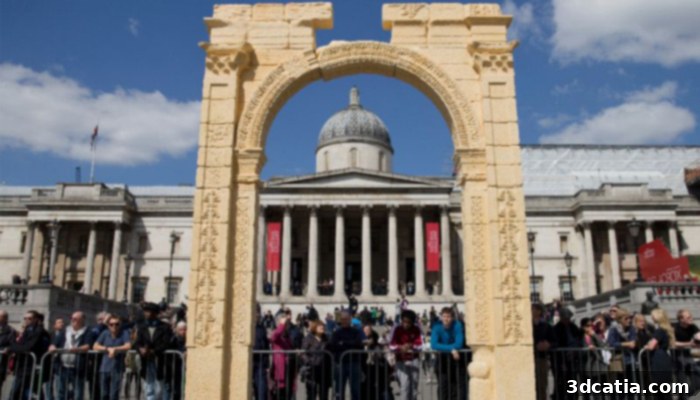
Reconstructed Palmyra Arch in Trafalgar Square
A poignant and powerful demonstration of 3D printing’s capabilities comes from the ancient city of Palmyra in Syria. During its siege by ISIS, many irreplaceable cultural artifacts suffered destruction or severe damage. In a remarkable act of cultural defiance and restoration, 3D printing has been instrumental in resurrecting these invaluable collections. By producing highly accurate 3D replicas, the unique culture and heritage of Palmyra are being preserved for posterity. A prime example is the stunning 3D printed Arch of Palmyra, which was prominently erected in London’s Trafalgar Square in 2016. This towering 6-meter reconstruction, weighing an impressive 11 tonnes, served as a powerful symbol against terrorism and a testament to the resilience of human heritage. The arch was painstakingly recreated from mere 2D photographs of the original structure. Italian company Tor Art spearheaded this monumental effort, utilizing two advanced robots developed by RobotMill to fabricate the various stone blocks. These blocks were then meticulously assembled not only in London but also in New York and Dubai, making this symbol of resilience accessible to a global audience and reinforcing the idea of a shared human history.
Bringing Ancestors to Life: The Lady of Cao and Forensic Reconstruction
Beyond monuments, 3D printing is also transforming our understanding of individual historical figures, essentially “bringing back” our ancestors in a visually compelling way. A remarkable illustration of this can be found in Peru, where an interdisciplinary team successfully reconstructed the facial features of “The Lady of Cao,” the first known female ruler of the Moche civilization. Scientists unearthed some of the well-preserved remains of the Lady of Cao in 2006. Leveraging cutting-edge technology, specifically Faro Technologies’ 3D virtual reality scanner, they were able to meticulously scan her mummified body. This process generated a precise 3D digital image, which was then used to 3D print a physical replica of her form. The complex task of 3D printing the replica took an intensive 10 months, employing an iPro 8000 SLA 3D printer from 3D Systems, a testament to the detailed work involved.
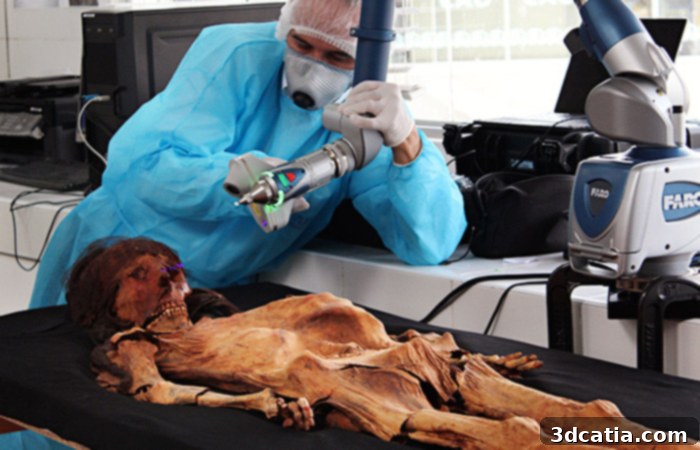
3D scanning the Lady of Cao
Milagros Arquiñigo from the Fundación Wise eloquently described the collaborative effort: they assembled “an international team of experts made up of archaeologists, anthropologists, forensic scientists, dentists and 3D technology engineers, to build a 3D digital model of the mummy, print a 3D replica and, using specialized software and anthropology techniques forensic, perform the facial reconstruction that would reveal to the world, for the first time, the face of The Lady of Cao.” This extraordinary project not only showcased the immense potential of 3D scanning and printing in archaeological research but also provided humanity with a tangible connection to a powerful ancient leader, allowing a glimpse into her identity and the civilization she ruled. It bridges thousands of years, making history profoundly personal and accessible.
Restoring Damaged Artifacts: A Glimpse into the Past for Tomorrow
The ravages of history, whether through conflict, natural disaster, or neglect, have often led to the partial or complete loss of invaluable cultural artifacts. The French Revolution, for instance, saw the destruction or theft of countless items from Versailles, including personal effects of France’s last reigning monarchs. In a remarkable initiative, the Victoria & Albert Museum in London, in collaboration with historians and conservators, embarked on a project to recreate a chair once owned by Marie Antoinette. This complex restoration blended traditional craftsmanship with cutting-edge 3D technologies, including molds, 3D scanning, and innovative reverse 3D printing techniques. The process involved meticulously scanning the remaining parts of the chair to identify and digitally reconstruct the missing components. These digitally recreated parts were then “reverse 3D printed,” meaning the 3D printer produced the inverse or the exact missing pieces. Molds were subsequently created from these highly accurate 3D printed components, allowing new parts to be cast in a stable, non-chemical material. Finally, these newly cast elements were expertly toned and gilded to perfectly match the original chair’s aesthetic, seamlessly integrating new with old. This project not only brought a significant piece of history back to its original grandeur but also demonstrated how 3D printing can facilitate ethical and precise restoration, ensuring that such treasures are preserved in their most complete form for future generations to study and appreciate.
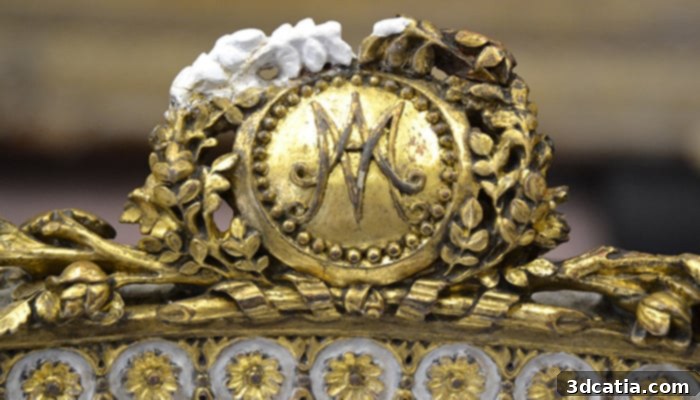
The 3D model made to fit the chair
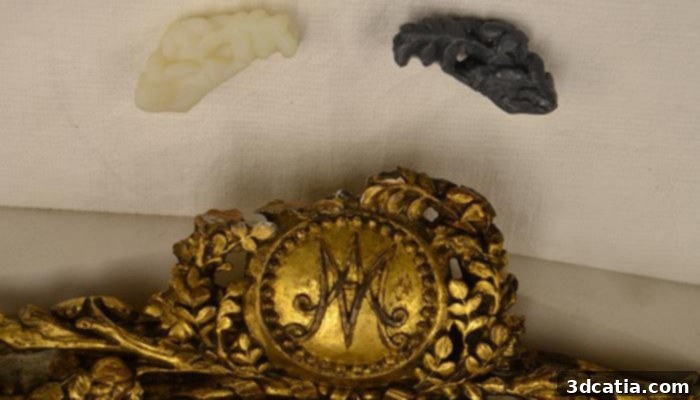
The model was copied from the intact side of the chair
Democratizing History: 3D Printing for Enhanced Education and Accessibility
One of the most far-reaching applications of 3D printing in the cultural sector is its ability to democratize access to history and art, vastly enhancing educational opportunities. The British Museum, a venerable institution, has been at the forefront of this movement, regularly 3D printing a significant number of its artifacts each year. Since 2014, the museum has made over 4,700 detailed 3D models of its collections accessible online, empowering individuals worldwide to download and 3D print these artifacts directly from their homes. This initiative fundamentally changes how people interact with ancient history, moving from passive viewing to active engagement. The museum collaborated with Sketchfab to upload these sophisticated 3D models, employing a technique called photogrammetry. This method involves capturing numerous photos of an object from various angles in a strategic pattern, which are then stitched together to create an incredibly accurate and detailed 3D digital model. These versatile models can then be utilized for a multitude of purposes, including 3D printing physical replicas or creating immersive virtual reality experiences. Further extending its reach, the British Museum partnered with the English 3D printing company ThinkSee3D to offer high-quality replicas for sale in the museum shop. Iconic replicas such as the Statue of Roy and the Statue of Antinous are now available for £200 and £250 respectively, making previously inaccessible artifacts tangible and collectible for enthusiasts and educators.
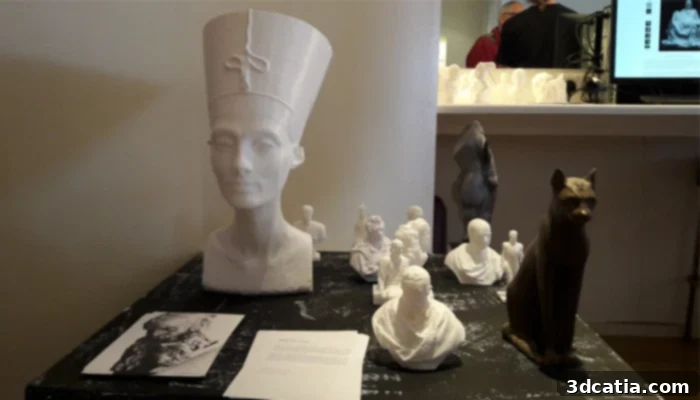
3D technologies involved in creating these reproductions
While the British Museum has pioneered many aspects of this movement, countless other projects share the same ambitious goal of making art and history universally accessible. A notable example is ‘Scan The World,’ an inspiring project initiated by MyMiniFactory in 2014. Its mission is to bring global art to the masses by creating an open-source library of 3D printable cultural artifacts. This extensive collection now boasts 3D models of sculptures from some of the world’s most prestigious institutions, including the Getty Center, The Louvre, and the Vatican. Cumulatively, the printing hours dedicated to reproducing these famous sculptures exceed an astonishing 21,000 hours, signifying a monumental contribution to accessibility across various domains such as education, preservation, and public engagement. These initiatives collectively underscore how 3D technologies are breaking down geographical and financial barriers, allowing anyone, anywhere, to interact with the world’s cultural treasures.
Beyond Sight: Multisensory Museum Experiences with 3D Printing
Another profound trend driven by 3D printing is the transformation of museum experiences, particularly by opening the world of artifacts to touch. For centuries, museums have largely operated under a “look, don’t touch” policy, limiting interaction primarily to visual observation. This long-standing tradition is now being reversed, thanks to the capabilities of 3D printing, which creates entirely new opportunities for museum patrons, especially those with visual impairments. A compelling example of this innovative approach can be found at the Belvedere Museum in Vienna, where they have created a remarkable 3D printed rendition of Gustav Klimt’s iconic painting, ‘The Kiss.’ This pioneering project emerged from the EU’s ‘Access to Museums for Blind and Visually Impaired People’ (AMBAVis) initiative, designed to foster inclusivity in cultural institutions. By converting the two-dimensional painting into an ‘interactive tactile relief,’ the museum now allows visitors to truly engage with the artwork in an intimate and unprecedented manner.
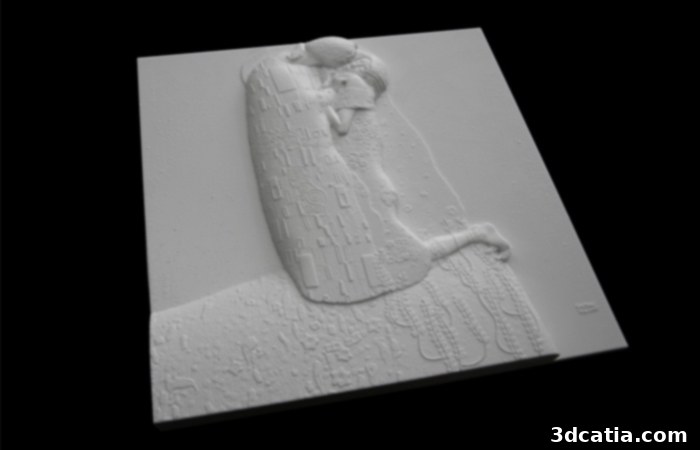
3D version of ‘The Kiss’
This innovative 42cm x 42cm tactile painting incorporates unique finger tracking technology. When visitors touch specific parts of the artwork, integrated sensors trigger corresponding audio information, providing a rich, descriptive narrative about the painting’s elements, techniques, and historical context. Through this ingenious combination of haptic and auditory feedback, visitors are treated to a truly multisensory experience, where the art literally “talks” to them, explaining its different aspects. This ground-breaking approach, leveraging both touch and sound, empowers blind and visually impaired visitors to fully participate in and appreciate the museum experience, bringing history and art alive for everyone, regardless of their visual abilities. Consequently, 3D printing is fostering a deeper, more inclusive relationship between museum visitors and exhibits, dissolving traditional barriers and creating profoundly engaging cultural encounters.
The Future of Cultural Heritage: Bridging Past and Present with Additive Manufacturing
The diverse examples presented herein vividly demonstrate the multifaceted ways 3D technologies are profoundly assisting in the reproduction, restoration, and education of vast audiences about history. The synergistic application of 3D modeling, digitization, and additive manufacturing is irrevocably transforming how we perceive and access the past. Whether access to museums is hindered by geographical distance, limited financial resources, time constraints, or more significantly, by physical disabilities, the innovative digital tools now available to cultural institutions are ensuring that history remains universally accessible. This represents a powerful convergence of the physical and digital worlds, systematically dismantling barriers across the globe. By making artifacts tangible, viewable, and interactable in unprecedented ways, 3D printing and scanning technologies are progressively opening up the world of cultural heritage, one meticulously reproduced artifact and one inclusively designed museum experience at a time.
Have an opinion on how 3D printing is shaping our connection to history? We’d love to hear from you! Let us know in a comment below or join the conversation on our Facebook and Twitter pages! Don’t miss out on the latest advancements in additive manufacturing—sign up for our free weekly Newsletter here and get the most current 3D printing news delivered straight to your inbox!