
In-Flight 3D Printing: Revolutionizing Military Logistics and Combat Readiness Aboard Black Hawks
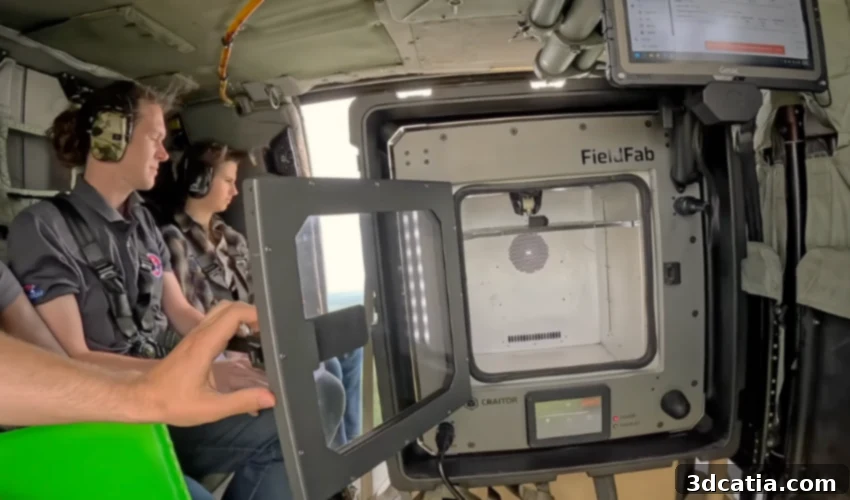
The landscape of military innovation has taken a monumental leap forward, spearheaded by the Indiana Army National Guard. In a groundbreaking technological first, they have successfully demonstrated the capability of 3D printing aboard a UH-60 Black Hawk helicopter while in flight. This extraordinary achievement marks a significant milestone in the defense sector’s ongoing shift towards advanced additive manufacturing techniques, promising to redefine operational readiness and supply chain logistics for military forces globally.
The pioneering exercise utilized the cutting-edge FieldFab Expeditionary 3D Printer, an innovative system developed by Craitor Inc. This specialized printer is engineered with the extreme challenges of aerial environments in mind, designed to withstand intense air turbulence, fluctuating temperatures, and the inherent physical stresses of flight. During the mission, the system proved its robustness by producing crucial components for unmanned aerial systems (UAS) – often referred to as drones – even as the Black Hawk helicopter executed complex tactical maneuvers. This real-time, in-situ fabrication capability presents an unprecedented level of adaptability for military operations, allowing for immediate repairs, custom parts creation, and enhanced mission flexibility.
Ensuring the seamless operation of the printer in such a demanding environment required an equally advanced power solution. This was provided by Sentient Industries’ METEOR Quiet Tactical Power solution, a portable and highly reliable energy source specifically built for rugged field conditions. The successful integration of this power system was critical, guaranteeing that the 3D printer operated without interruption throughout the entire flight. The ability to maintain precise additive manufacturing processes under these volatile conditions underscores the significant advancements in the portability, durability, and overall reliability of this transformative technology. This integration demonstrates a comprehensive approach to expeditionary manufacturing, where every component, from the printer to its power source, is optimized for peak performance in the most challenging operational theaters.
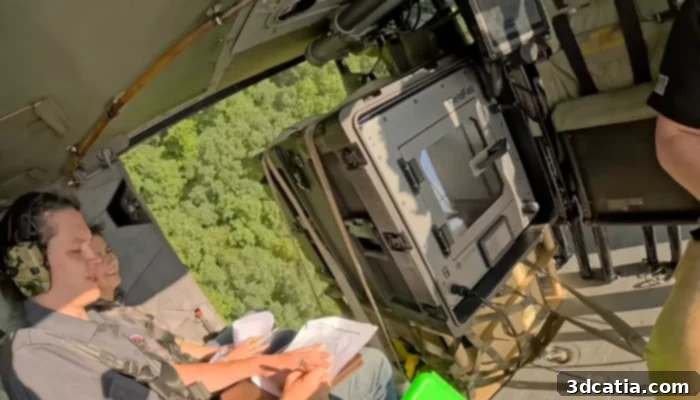
Military leaders have emphatically stated that this trial represents far more than a mere technological novelty. It signals a profound paradigm shift in how forces can sustain their operations in contested or remote environments. Traditional supply chains, while essential, are often characterized by inherent vulnerabilities and significant delays. Units frequently face prolonged waiting periods for replacement parts, specialized equipment, or crucial tools, which can severely impede missions or compromise operational timelines. The advent of in-flight 3D printing dramatically reduces this dependency on external logistics, opening up a new era of real-time, on-demand problem-solving. Imagine a scenario where a critical component for a reconnaissance drone is damaged during a mission; instead of waiting days or weeks for a replacement, a new part can be fabricated within hours or even minutes, directly on board the support aircraft. This empowers soldiers to carry advanced production capabilities with them, ensuring unparalleled rapid adaptability and self-sufficiency in dynamic and often unpredictable operational landscapes.
Eric Shnell, the chief executive officer of Craitor Inc., articulated the broader implications of this breakthrough, stating, “This demonstration is about more than printing parts in the air; it’s about transforming how the military can sustain combat power.” He further elaborated that the revolutionary ability to fabricate precise, mission-critical components on demand directly translates into significantly reduced downtime for equipment, a substantial boost in operational readiness, and an unmatched level of flexibility during complex missions. For military personnel operating in challenging battlefield scenarios, this means the capacity to adapt instantaneously to evolving needs, unforeseen equipment failures, or new strategic requirements without the critical delay of waiting for traditional supply lines to catch up. This shift from a ‘wait and receive’ model to an ‘assess and produce’ model is truly transformative, offering a tactical advantage that was previously unattainable.
Lieutenant Colonel Matthew Limeberry, commander of the Rapid Assessment of Prototype Technology Readiness Task Force, emphasized that this is merely the inaugural step in a much larger journey. “We are moving promising technologies out of the lab and into the hands of soldiers,” he remarked, highlighting the strategic imperative to accelerate the deployment of cutting-edge solutions. He underscored that innovations like airborne 3D printing possess the potential to fundamentally redefine the parameters of what is possible in combat support and overall military strategy. The unequivocal success of this test serves as a powerful testament to the speed and efficiency with which commercially developed technologies can be adapted, refined, and integrated for defense applications, thereby granting the U.S. military unprecedented levels of agility and operational effectiveness. This initiative not only addresses immediate logistical challenges but also lays the groundwork for future advancements in autonomous repair systems and highly distributed manufacturing capabilities across various military branches.
The implications of this breakthrough extend beyond immediate battlefield applications. It signifies a broader commitment within the Department of Defense to embrace expeditionary manufacturing and digital logistics. By integrating advanced additive manufacturing directly into operational platforms like the Black Hawk, the military is moving towards a future where forward-deployed units can become self-sufficient manufacturing hubs. This reduces their vulnerability to supply chain disruptions, a critical advantage in an increasingly complex global security environment. Furthermore, the ability to rapidly iterate and customize parts in the field fosters innovation at the tactical level, allowing troops to develop tailored solutions for unique challenges they encounter, rather than relying on pre-fabricated, one-size-fits-all components. This also paves the way for advanced material research to create even more durable, lighter, and more functional parts that can be printed on demand, expanding the potential applications of airborne additive manufacturing even further.
This landmark achievement by the Indiana Army National Guard and its partners marks a pivotal moment in defense technology. By successfully demonstrating in-flight 3D printing aboard a UH-60 Black Hawk, they have not only validated the robustness of expeditionary additive manufacturing but also unveiled a future where military forces are more agile, resilient, and responsive than ever before. The transformation of supply chains, the enhancement of combat power, and the acceleration of technology deployment from lab to field are tangible benefits that will undoubtedly shape military operations for decades to come, ensuring readiness in an ever-evolving global landscape.
What are your thoughts on this incredible development and its potential impact on military operations and logistics? We invite you to share your insights in a comment below, or engage with us on our LinkedIn or Facebook pages! Don’t miss out on the latest advancements in additive manufacturing – sign up for our free weekly Newsletter to receive all the crucial 3D printing news directly in your inbox. For a visual deep dive, explore all our videos on our dedicated YouTube channel. To delve deeper into 3D printing news within the aerospace and defense sectors, be sure to visit our specialized page HERE.
*All Photo Credits: Media Magik Entertainment