

GE Additive Fuels Future of Manufacturing with Global 3D Printing Education Program
In a monumental stride towards empowering the next generation of innovators and engineers, GE Additive has launched its ambitious Additive Education Program (AEP), a global initiative designed to integrate cutting-edge 3D printing technology into educational institutions. This program will see GE Additive supplying 3D printers to over 400 schools and universities worldwide, directly impacting more than 180,000 students. The goal is to establish a robust foundation for additive manufacturing education, ensuring that students gain practical experience with this transformative technology from an early stage in their academic careers, thereby streamlining its adoption and driving future innovation in design and production.
General Electric’s commitment to additive manufacturing is profound and well-documented. The industrial giant has already invested substantial capital into the research, development, and scaling of this revolutionary technology, solidifying its position as a leader in the field. Recent announcements, such as an investment exceeding €100 million in the expansion of Concept Laser, underscore GE’s strategic vision for additive manufacturing as a cornerstone of industrial progress. The Additive Education Program represents a natural extension of this commitment, focusing on cultivating a skilled workforce and a culture of innovation through educational outreach. By providing state-of-the-art equipment to primary, secondary, and tertiary institutions, GE is actively fostering a talent pipeline that is essential for the sustained growth and evolution of additive technologies.
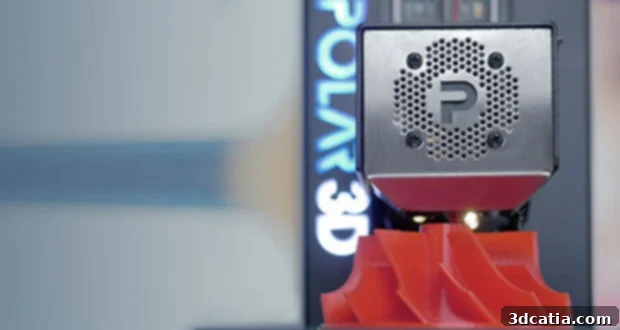
The comprehensive package offered to primary and secondary schools is meticulously designed to provide an engaging and accessible introduction to 3D printing. Each institution will receive two Polar Cloud-enabled polymer printers, specifically a Polar 3D printer and an XYZprinting printer. The integration with Polar Cloud is particularly significant, as it facilitates collaborative learning environments and remote management, making 3D printing projects more accessible and manageable for educators and students alike. Beyond the hardware, the package includes Polar 3D’s innovative STEAMtrax curriculum, accompanied by a two-year license. This curriculum is vital for integrating Science, Technology, Engineering, Arts, and Mathematics (STEAM) principles with hands-on 3D printing projects, encouraging creative problem-solving and critical thinking. To ensure immediate and sustained use, schools will also receive six rolls of filament for each printer and a “Tinkering with Turbines” module kit from STEAMtrax, providing a tangible project to kickstart their additive learning journey. The global reach of this program is evident in the diverse array of countries selected to receive these packages, including the United States, Canada, China, Germany, India, Spain, and the United Kingdom, highlighting GE’s commitment to worldwide educational advancement.
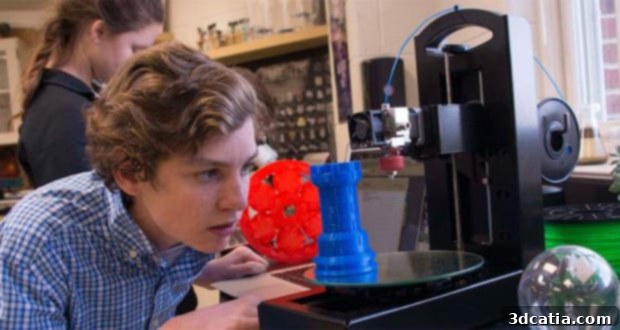
Students will have access to Polar3D printers, fostering hands-on learning and innovative design.
GE established its Additive Education Program in January with a significant financial commitment of $10 million globally over the next five years. This investment is strategically allocated to support the development of future talent in additive manufacturing at various educational levels. A substantial portion, $8 million, has been earmarked for advanced metal 3D printers destined for colleges and universities, reflecting the need for high-level research and industrial application skills in higher education. The remaining $2 million is dedicated to equipping primary and secondary schools with desktop polymer printers, emphasizing the importance of foundational learning and early exposure to digital fabrication techniques. This two-tiered approach ensures that students, whether just beginning their journey in STEM or pursuing advanced engineering degrees, have access to appropriate tools and resources that align with their educational needs and future career paths in additive manufacturing.
Mohammad Ehteshami, Vice President of GE Additive, articulated the program’s vision, stating, “Additive manufacturing and 3D printing are revolutionizing the way we think about designing and manufacturing products. We want a pipeline of engineering talent that has additive in their DNA. This education program is our way of supporting that goal.” Ehteshami’s statement highlights the profound shift that additive technologies bring to traditional manufacturing paradigms. The objective is not merely to train individuals to operate machines, but to foster an inherent understanding of additive design principles, material science, and manufacturing workflows. This deeper comprehension, described as having “additive in their DNA,” is crucial for developing engineers who can truly harness the full potential of 3D printing to create more efficient, complex, and customized products, thereby propelling the industry forward.

The integration of 3D printing into school curricula is rapidly evolving from a niche concept to a widespread educational phenomenon. Educators and industry stakeholders alike recognize the immense potential of this technology not only for rapid prototyping and production but also as a powerful pedagogical tool. Its growing popularity in classrooms stems from its ability to transform abstract concepts into tangible objects, thereby enhancing learning outcomes in STEM fields. By engaging with 3D printing at a young age, students develop crucial skills in design thinking, problem-solving, digital literacy, and collaboration. This early exposure helps to cultivate a generation that can push the boundaries of creative design and innovative manufacturing. Countries like China and India have already demonstrated foresight by establishing specialized schools dedicated solely to 3D printing, underscoring a global recognition of its strategic importance in shaping the future workforce and industrial landscape.
GE’s Additive Education Program has garnered significant interest since its inception, with over 250 schools and universities applying for the opportunity to receive advanced 3D printing technology. A dedicated team of specialists at GE is meticulously evaluating each application to make the final selections, ensuring that the printers are placed in institutions where they can have the greatest impact. To date, eight prestigious schools have been chosen to receive the highly sophisticated 100R metal printing machine, an industrial-grade printer with a substantial retail value of approximately $250,000 each. These institutions include Auburn University, Boston University, Iowa State University, North Carolina State University, Ohio State University, University of Cincinnati, University of New South Wales, and the U.S. Naval Academy. The selection of these leading universities underscores GE’s commitment to fostering high-level research and development in metal additive manufacturing, preparing students for advanced roles in aerospace, medical, and other high-tech industries.
The rollout of these advanced 3D printers to the selected schools is planned for later this year, marking a significant milestone in the program’s initial phase. Furthermore, GE’s commitment extends beyond this initial distribution, with plans to provide additional printers to more facilities each year over the next four years. This sustained effort demonstrates GE Additive’s long-term vision for fostering additive manufacturing talent and its dedication to building a global network of educational excellence. For institutions interested in participating in this transformative program, the next wave of applications is scheduled to open in the first quarter of 2018, with the chosen schools subsequently announced on the official GE Additive website. This transparent and ongoing process ensures broad access and continued growth of the Additive Education Program.
For more detailed information and comprehensive insights into GE’s Additive Education Program, interested parties are encouraged to review their official press release, which can be found here.
What are your thoughts on GE’s pioneering Additive Education Program? Do you believe initiatives like this are crucial for shaping the future of manufacturing and engineering education? If you represent an educational institution, are you considering applying for this incredible opportunity in the future? We welcome your insights and opinions. Please share your comments below or engage with us on our Facebook and Twitter pages. Don’t miss out on the latest advancements and news in the world of 3D printing; sign up for our free weekly newsletter to get all the updates delivered directly to your inbox!