
Unlocking Metal Aesthetics and Enhanced Functionality for Plastic 3D Prints: The Metalizz MétalFOG® Solution
The landscape of manufacturing has been dramatically reshaped by the advent of 3D printing, with metal additive manufacturing emerging as a particularly strong trend. This innovative technology has seen remarkable growth, with industry reports, such as the Wohlers Report 2018, indicating a substantial increase in sales of metal additive manufacturing solutions. For instance, 1,768 units were sold in 2017, a significant leap from 983 in 2016, representing an impressive 80% rise. This surge is driven by the desire for complex geometries, lightweighting capabilities, and high-performance parts. However, despite its numerous advantages, metal 3D printing remains a considerable investment, often accompanied by high material costs, specialized machinery, and complex post-processing requirements, making it a significant barrier for many companies looking to adopt it.
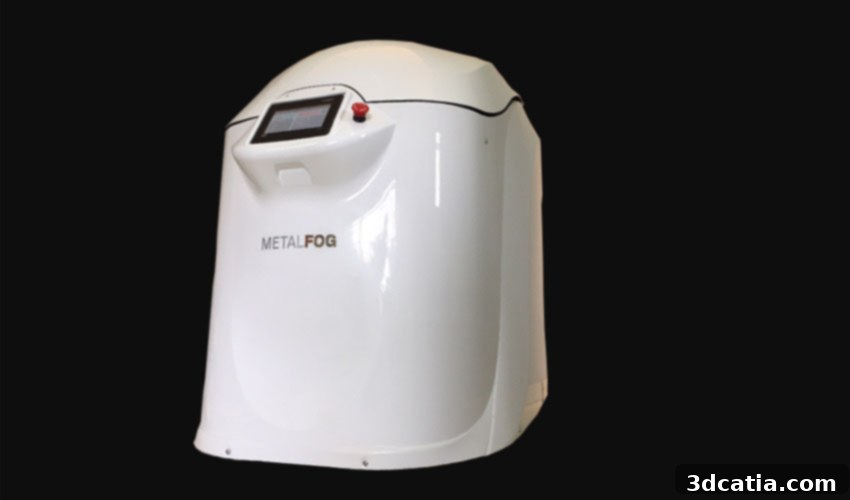
In response to these cost and accessibility challenges, the French company Metalizz has introduced an ingenious and cost-effective alternative: the MétalFOG® pre-metallization machine. This relatively compact solution offers a chemical pre-metallization process for plastic parts, designed to be adaptable to virtually any working environment. By enabling plastic components to achieve a metallic finish and enhanced properties, MétalFOG® opens up new possibilities for manufacturers, designers, and engineers who seek the benefits of metal without the prohibitive expenses associated with direct metal additive manufacturing.
The Expanding Landscape of Metal Additive Manufacturing and Its Barriers
Metal additive manufacturing (AM), often referred to as metal 3D printing, has indeed revolutionized how complex parts are conceived and produced. Technologies like Selective Laser Melting (SLM) and Direct Metal Laser Sintering (DMLS) allow for the creation of intricate designs previously impossible with traditional methods, offering benefits such as reduced weight, optimized material usage, and enhanced mechanical properties for critical applications in aerospace, automotive, and medical fields. The growth figures underscore the industry’s confidence in its potential to transform product development and supply chains.
However, the journey into metal AM is not without its hurdles. The initial investment required for metal 3D printers can range from hundreds of thousands to millions of dollars. Furthermore, the specialized metal powders used in these processes are significantly more expensive than their plastic counterparts. Beyond the machine and material costs, the operational expenses include inert gas environments, stringent safety protocols, and often extensive post-processing steps like heat treatment, support removal, and surface finishing, all of which demand specialized equipment and skilled labor. These cumulative costs position metal 3D printing as a premium solution, often out of reach for small to medium-sized enterprises (SMEs) or for applications where purely aesthetic or non-critical functional metallic finishes are desired.
Why Metallize Plastics? Unveiling Diverse Benefits
The practice of metallizing plastics has gained increasing traction due to the multitude of benefits it offers, transforming ordinary plastic parts into components with superior characteristics. Primarily, applying a metallic coating to plastic components provides an additional layer of protection and structural enhancement. Once a plastic part receives an electrolytic deposit following pre-metallization, it gains significantly greater strength, becoming more resistant to wear and impact. Crucially, this metallic layer also provides protection against heat and corrosion, extending the lifespan and performance of parts in challenging environments where bare plastic would quickly degrade.
Beyond functional improvements, metallization serves a vital aesthetic purpose. The ability to impart a metallic luster to plastic, often combined with various organic finishes like colored varnishes, creates premium visual appeal. This is particularly important in sectors such as perfumery, luxury goods, and automotive interiors, where the colored metal finish is an essential element of brand identity and perceived quality. Moreover, metallized plastics can also offer electromagnetic interference (EMI) shielding capabilities and improve electrical conductivity, broadening their applicability in electronics. Recognizing this significant market opportunity, Metalizz launched in February 2017 as a spin-off from the reputable companies Chemconsult and Corima Technologies, leveraging their combined expertise in chemistry and industrial processes. Their MétalFOG® solution is perfectly positioned as a complementary technology to additive manufacturing, enabling 3D printed plastic parts to tap into a wider range of applications previously dominated by metal.
The MetalFog machine is equipped with a touchscreen to facilitate its use
MétalFOG®: A Revolutionary Post-Processing Solution
The MétalFOG® system stands as an innovative post-processing machine engineered to deposit a precise, thin layer of metal onto plastic parts. This is achieved through a controlled spraying process, creating a uniform metallic coating that can range in thickness from 0.5 to 5 micrometers, depending on the desired application and processing time. Its “ready-to-use” design ensures ease of integration into existing manufacturing workflows. A key advantage of MétalFOG® is its versatility in handling a broad spectrum of polymers, including high-performance materials like PEEK (Polyether Ether Ketone), engineering plastics such as PA (Polyamide), PET (Polyethylene Terephthalate), PPS (Polyphenylene Sulfide), and commonly used plastics like PE (Polyethylene) and PVC (Polyvinyl Chloride), as well as composite materials like Alumide (an aluminum-filled polyamide). This wide compatibility ensures that various 3D printing technologies, from FDM to SLS, can benefit from its metallization capabilities.
In terms of capacity, the MétalFOG® machine is capable of processing parts that fit within a virtual cylinder with a maximum diameter of 200 mm and a height of 300 mm. This generous processing volume allows for the metallization of a wide range of components, from intricate small parts to larger prototypes or end-use products. Beyond its aesthetic and protective qualities, this autonomous post-processing machine is also designed to render plastic parts electrically conductive. While it is important to note that these parts are not primarily intended for advanced electromagnetic shielding applications, their newfound conductivity makes them suitable for purposes such as electrostatic discharge (ESD) protection, grounding applications, or enabling simple electrical pathways within plastic assemblies. This dual capability—imparting both metallic aesthetics and basic electrical functionality—makes MétalFOG® a versatile tool for product developers.
Industry Insights: Addressing the Cost-Performance Gap
Philippe Sapet, General Manager of Metalizz, eloquently summarizes the company’s vision: “The additive manufacturing revolution and the increasingly frequent use of composite and polymer materials gives designers, artists, and research departments immense possibilities in producing parts directly out of the machine. Most parts are made of thermoplastic and thermo-hard. Metallic prints remain for the moment a minority because of their high costs.” This statement highlights a fundamental challenge in the current AM landscape: while plastic 3D printing offers unparalleled design freedom and accessibility, it often falls short when metallic properties or aesthetics are required. The high barrier to entry for metal 3D printing means that many innovative designs remain limited by the inherent properties of plastics.
Metalizz’s MétalFOG® directly addresses this gap. As Sapet further explains, “That’s why we offer manufacturers an autonomous machine that can metalize parts in a simple and automated way with a small footprint.” This focus on autonomy, simplicity, automation, and a compact design is critical. It means that companies can integrate advanced metallic finishes into their production lines without needing extensive factory space, specialized personnel for complex chemical processes, or a massive capital outlay. By providing a practical and affordable solution to enhance plastic parts with metallic attributes, MétalFOG® empowers a wider range of manufacturers to push the boundaries of design and functionality, making sophisticated finishing techniques accessible to industries that might otherwise find them prohibitive.
Golf balls unfinished / Metallic / Metallic + gold finish
Automation at its Core: Simplifying the Metallization Process
One of the most compelling features of the MétalFOG® system is its fully automated post-processing capability. Unlike conventional chemical metallization techniques, such as electroplating, which typically demand specialized skills, extensive training, and often involve handling hazardous chemicals in controlled environments, Metalizz’s machine dramatically simplifies the entire procedure. Traditional methods often require a deep understanding of chemical baths, precise timing, and careful monitoring to ensure consistent results, presenting significant operational overheads and safety concerns for businesses.
The MétalFOG® process, in stark contrast, is designed for user-friendliness and efficiency. Once the machine is connected and the plastic part is loaded, the automation takes over. The process involves a preparatory step where the plastic surface is “sensitized” by an autocatalytic precursor. This sensitization essentially primes the plastic, making it receptive to the subsequent metallic coating. Following this, the machine reduces a metal salt directly onto the sensitized surface of the part through a precise spraying action. This innovative approach eliminates the need for complex multi-stage chemical baths and reduces the reliance on highly skilled operators, thereby lowering labor costs and enhancing process consistency. This streamlined post-processing step makes it remarkably easy for anyone looking to modify and enhance the features, characteristics, or aesthetic appeal of their 3D printed parts, democratizing access to advanced metallic finishes.
Expanding Horizons: Ideal Applications for MétalFOG®
The simplicity and effectiveness of the MétalFOG® system make it an ideal solution for a diverse array of industries and applications. For the jewelry and watchmaking sectors, it offers an unprecedented opportunity to create intricate, lightweight prototypes and custom pieces with luxurious metallic finishes without the expense or weight of solid metal. Designers can rapidly iterate on designs, apply gold, silver, or other metallic appearances to their plastic models, and even produce small-batch bespoke items efficiently. This capability significantly reduces the time and cost associated with product development in these highly aesthetic-driven markets.
Furthermore, MétalFOG® is perfectly suited for fablabs and design offices, which are often at the forefront of innovation and rapid prototyping. These environments thrive on accessibility and versatility, and the MétalFOG® machine provides both. It allows engineers and artists in these settings to quickly transform their plastic 3D prints into metallic-looking functional or aesthetic components, facilitating faster design validation and opening up new creative avenues. Beyond these core applications, the technology holds immense potential for other sectors. In consumer electronics, metallized plastic parts could be used for premium device casings or internal components requiring basic conductivity. In the automotive industry, interior trim pieces and aesthetic elements could gain a metallic look while maintaining the lightweight advantages of plastic. Even in certain medical device applications (where direct patient contact or specific biocompatibility is not required), the aesthetic and protective benefits of metallized plastics could be valuable for housings or non-critical components. The ability to enhance plastic parts with metal’s appeal and some of its functional benefits makes MétalFOG® a truly transformative tool.
Efficiency and Sustainability: The MétalFOG® Advantage
Operational efficiency is another cornerstone of the MétalFOG® system. The treatment cycle is remarkably fast, typically lasting between 5 to 10 minutes, depending on the part’s size and complexity. This rapid processing time allows for high throughput, enabling manufacturers to quickly metallize batches of parts and integrate this step seamlessly into their production schedules without significant bottlenecks. Such efficiency is crucial for meeting demand in fast-paced industries and for enhancing overall manufacturing productivity.
In addition to speed, Metalizz has prioritized environmental responsibility. The machine produces approximately 1 to 2.5 liters of effluents per part, varying with the part’s dimensions and intricacy. Recognizing the importance of sustainable practices, the French company emphasizes that it has developed methods to collect and reprocess these effluents. This commitment to recycling and minimizing waste not only provides a more ecological approach to metallization but also helps companies comply with environmental regulations and reduce their operational costs associated with waste disposal. The MétalFOG® machine is already available for sale, demonstrating Metalizz’s readiness to bring this innovative and responsible technology to the global market, allowing businesses to immediately leverage its benefits.
Connect with Metalizz
For those interested in discovering this groundbreaking technology firsthand, Metalizz frequently participates in leading industry events. For example, the team has previously showcased their solutions at significant expos like 3D Print Lyon, connecting with professionals and enthusiasts from across the additive manufacturing spectrum.
To delve deeper into the capabilities of the MétalFOG® machine and explore its potential applications for your specific needs, we encourage you to visit their official website. You can also gain a visual understanding of the process and its benefits by watching the video demonstration below:
What are your thoughts on the Metalizz post-processing machine and its potential to transform plastic 3D printed parts? Share your insights and join the conversation by leaving a comment below or connecting with us on our Facebook and Twitter pages! Don’t forget to sign up for our free weekly Newsletter to receive all the latest news and innovations in 3D printing directly in your inbox!