
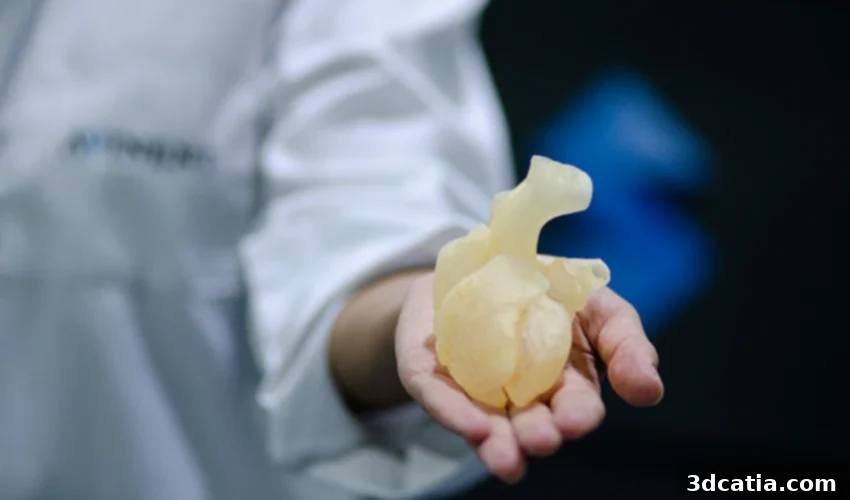
AVINENT: Pioneering Patient-Specific Medical Devices Through Advanced 3D Printing
For over six decades, AVINENT has been a formidable presence in the demanding automotive and aeronautics sectors, demonstrating a consistent commitment to engineering excellence and precision. Recognizing the immense potential for applying its robust manufacturing expertise to healthcare, the Spanish company made a strategic pivot in 2006, establishing its dedicated medical division focused on developing innovative implant solutions. This bold move marked the beginning of AVINENT’s transformative journey into patient-centric medicine.
Just six years later, in 2012, AVINENT further solidified its commitment to innovation by integrating additive manufacturing into its core design and production processes. This pivotal decision enabled the company to unlock unprecedented levels of customization for its medical devices, moving beyond standardized solutions to truly tailor-made implants. By embracing advanced 3D technologies, AVINENT has positioned itself at the forefront of what many believe is the inevitable future of tailor-made medicine.
We recently had the opportunity to speak with Albert Giral, the accomplished Managing Director of AVINENT Implant System. In our insightful discussion, Mr. Giral shared his perspectives on the evolving challenges within the medical sector and highlighted the transformative opportunities that 3D printing presents for delivering superior patient outcomes and driving technological advancement in healthcare. His insights underscore AVINENT’s role as a key innovator in the personalized medicine landscape.
3DN: Can you tell us more about AVINENT and its developments in the medical sector?
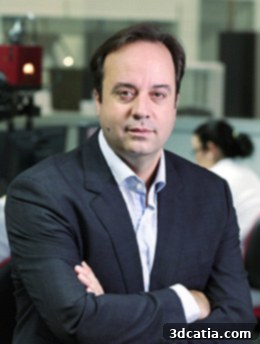
Albert Giral, Managing Director
At AVINENT, our fundamental mission is to be both developers and manufacturers of high-quality, innovative medical devices. Our core business is deeply rooted in dental and medical care, where we strive to offer a comprehensive suite of solutions. This ranges from cutting-edge implantology, which forms the bedrock of modern dental restoration, to the intricate reconstruction of highly customized implants specifically designed for cranio-maxillofacial (CMF) applications. The complexity and precision required in CMF solutions demand a level of personalization that traditional manufacturing often struggles to provide.
In recent years, a significant portion of our research and development efforts has been directed towards pioneering new customized products, which we refer to as Patient Specific Implants. This area represents a crucial frontier in personalized medicine, allowing us to create devices that are perfectly adapted to the unique anatomical requirements of each individual patient. Our research intensively focuses on advancing this type of rehabilitation, ensuring that every implant delivers optimal fit, function, and aesthetic outcomes.
Simultaneously, and with an unwavering commitment, we continue to relentlessly improve everything related to conventional dental implants and advanced CAD/CAM rehabilitation. This involves continuous innovation in materials, design methodologies, and manufacturing processes to ensure that our standard offerings remain at the pinnacle of quality and effectiveness. The synergy between our patient-specific innovation and ongoing enhancement of established dental solutions allows us to cater to a broad spectrum of clinical needs, solidifying AVINENT’s reputation as a leader in both traditional and advanced medical device manufacturing. Our goal is always to push the boundaries of what’s possible, ensuring better health outcomes for patients worldwide.
3DN: Why did you decide to integrate additive manufacturing into your development processes?
Our journey with additive manufacturing began remarkably early, making us one of the pioneers in this space. We integrated 3D printing into our operations almost from the inception of our medical division, about 13 years ago. Even then, we recognized the burgeoning potential of this technology. We were actively working with 3D printing and had a front-row seat to its rapid evolution, particularly observing the immense opportunities it presented within the dental sector. The ability to create complex geometries and customize on demand quickly became indispensable for us.
The simple truth is that we fundamentally need 3D printing because a significant proportion of our products are, by nature, fully customized. In areas like cranio-maxillofacial reconstruction and patient-specific dental implants, a one-size-fits-all approach is simply inadequate. Traditional manufacturing methods often struggle with the intricacies and cost-effectiveness of producing unique, highly complex parts for each patient. Additive manufacturing, however, excels at this, allowing us unparalleled design freedom and production efficiency for individualized solutions.
Over the years, we have meticulously capitalized on this deep knowledge of additive manufacturing to not only refine existing products but also to strategically create entirely new product lines. We understand that there isn’t a single “magic bullet” 3D technology; instead, there are many types of 3D technologies, each with its own strengths and suited for different manufacturing methods and materials. Through extensive research, development, and practical application, we have cultivated a sophisticated understanding of which specific 3D printing technology is best utilized for each unique medical application, ensuring optimal performance, biocompatibility, and structural integrity.
This accumulated know-how and expertise proved invaluable. It enabled us to swiftly and confidently launch our comprehensive range of customized CMF (cranio-maxillofacial) medical solutions. The immediate and overwhelming success of these products in the market was a direct testament to the power of additive manufacturing and our ability to leverage it effectively. It allowed us to rapidly meet a critical unmet need in personalized surgical solutions, truly transforming patient care in this specialized field.
3DN: What are the benefits of integrating 3D technologies?
The paramount benefit of integrating 3D technologies, for us and for the medical field at large, is the ability to consistently offer truly patient-centered solutions. This approach moves beyond the limitations of mass-produced, standardized devices, enabling us to design and manufacture implants that are perfectly tailored to the unique anatomy, pathology, and specific needs of each individual patient. This level of personalization significantly enhances treatment efficacy and overall patient well-being.
The technology itself has been evolving for a considerable time, and our philosophy is to utilize it intelligently and strategically. This means not just adopting 3D printing, but optimizing its application to ensure that our customers – surgeons, dentists, and ultimately, patients – can derive the maximum benefit from these advanced solutions. This intelligent application directly translates into superior treatment outcomes, characterized by improved fit, reduced surgical time, faster recovery periods, and a higher degree of comfort for the patient post-procedure.
Ultimately, every innovation we pursue, every device we develop, and every process we refine is done with our patients at the forefront of our minds. This patient-first philosophy is the driving force behind everything we do. It motivates us daily to explore new frontiers, to overcome technological challenges, and to continuously create new opportunities for improving the quality of life for individuals needing medical and dental interventions. By providing solutions that are precisely designed for each person, we contribute to a future where medical care is not just effective, but truly personal and humane.

Cranio-maxillofacial implant | Credits: AVINENT
3DN: Where do you see AVINENT in the coming years?
Looking ahead, we recognize an inherent obligation to proactively identify and harness new possibilities presented by 3D printing technology. The landscape of medical innovation is constantly shifting, and staying at the vanguard requires foresight and continuous investment in research. One particularly exciting area where we are intensely focused is bioprinting. We are actively participating in cutting-edge research projects related to bioprinting, striving to develop increasingly responsible and advanced solutions for healthcare professionals. This involves exploring the potential for printing living tissues and organs, which could revolutionize regenerative medicine and patient care in profound ways.
We acknowledge that we are still in the early stages of this technological revolution. Predicting the exact trajectory and scale of changes that 3D printing, especially bioprinting, will bring in the coming years is challenging. The pace of innovation is rapid, and regulatory frameworks are still evolving to keep up. However, what is certain is our unwavering commitment to being at the forefront. AVINENT will absolutely be there, ready to embrace and leverage any technological advancement that demonstrates the potential to significantly improve patients’ quality of life. This includes not only direct implant solutions but also advancements in surgical planning, customized instruments, and novel therapeutic approaches made possible by additive manufacturing.
Our vision extends beyond simply manufacturing; it encompasses a broader commitment to advancing medical science and delivering impactful innovations that truly make a difference in people’s lives. We envision AVINENT continuing to lead through research, strategic partnerships, and a relentless pursuit of excellence, ensuring that the benefits of personalized, high-precision medicine are accessible to all who need them.
3DN: In your opinion, how important is additive manufacturing in the medical sector?
In my opinion, additive manufacturing is not just important; it is profoundly transformative and increasingly indispensable in the medical sector. The core value of this technology becomes evident whenever there is a critical need for highly personalized products and services, and health care is certainly no exception to this fundamental principle. In fact, medical applications are arguably where the benefits of customization are most impactful, directly influencing a patient’s health and recovery.
We are in an era where we must actively capture this new knowledge and technological capability, and then apply it ingeniously to continuously improve medical treatment. Additive manufacturing facilitates this by allowing for the creation of implants, prosthetics, and surgical guides that are perfectly matched to individual patient anatomies, leading to better surgical outcomes, reduced complications, and faster rehabilitation. This shift from generic to bespoke solutions is a monumental step forward.
Beyond individual devices, we believe additive manufacturing has the power to fundamentally transform the way we operate across the entire healthcare ecosystem. This includes how we work in hospitals, how medical centers deliver care, and how medical professionals approach patient treatment. It enables a more collaborative and integrated approach, where detailed patient data can be translated into physical tools and implants with unprecedented speed and precision.
Our aspiration is to foster a holistic view of each patient’s treatment journey. This means moving beyond isolated interventions to consider the full scope of a patient’s needs, from diagnosis and surgical planning to post-operative recovery and long-term care. Additive manufacturing empowers us to achieve this by providing the tools for highly precise, adaptive, and personalized care at every stage. It is through these customized solutions that we can achieve genuine satisfaction, both for healthcare providers in delivering optimal care and for patients in experiencing improved health and quality of life. The future of healthcare is undeniably personalized, and additive manufacturing is the engine driving this revolution.
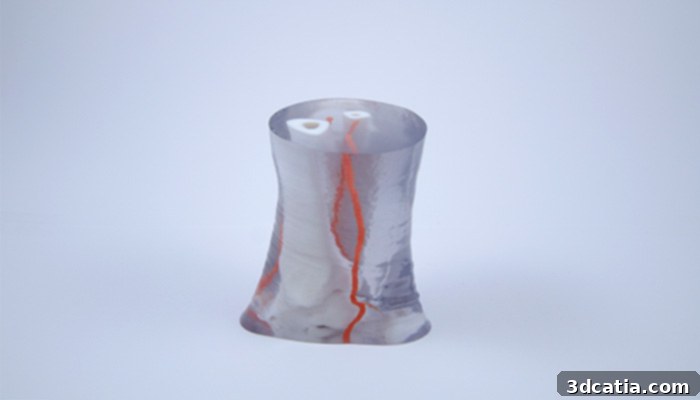
Credits: AVINENT
3DN: Any last words for our readers?
As we’ve discussed, technology, especially in the realm of additive manufacturing and medical devices, is advancing at an incredibly rapid pace. This velocity of innovation often presents a significant challenge: bringing our cutting-edge solutions to market with the same speed. The journey from groundbreaking research to clinically viable and widely available products can be complex, involving rigorous testing, regulatory approvals, and extensive professional training.
Our guiding philosophy at AVINENT is deeply rooted in fostering strong cooperation with major institutions, leading universities, research centers, and clinical partners. This collaborative approach is absolutely essential to streamline the development and commercialization process. By working closely with these key stakeholders, we can accelerate the translation of scientific discovery into practical medical solutions, ensuring that our clients – the medical professionals and their patients – can rapidly benefit from all the advantages offered by customized medical solutions. These partnerships allow us to leverage collective expertise, share resources, and navigate the complexities of innovation more effectively.
Our utmost priority remains the constant exploration of the technological frontier. This isn’t just about keeping pace; it’s about actively pushing the boundaries of what’s possible in medical technology. We are committed to extending these advanced solutions to those who place their trust in AVINENT and to patients who critically need these new, highly effective treatments. Our commitment is to continuous innovation, ensuring that personalized medicine becomes the standard, not the exception. For those interested in delving deeper into our latest developments and comprehensive range of solutions, we invite you to find more information on our official website HERE. We believe in transparency and providing access to the wealth of knowledge and products we offer.
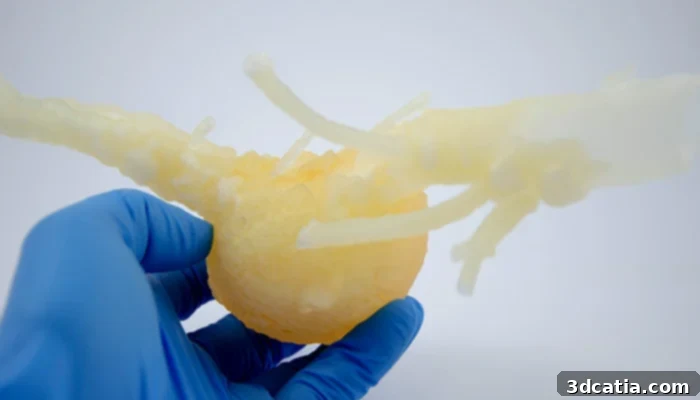
Credits: AVINENT
We hope this detailed look into AVINENT’s innovative medical solutions has provided valuable insights. What are your thoughts on the impact of 3D printing in personalized medicine? Let us know in a comment below or connect with us on our Facebook and Twitter pages if you found this interview useful! Don’t forget to sign up for our free weekly Newsletter, delivering all the latest news and advancements in 3D printing straight to your inbox!