
Innovative Hospitality: How 3D Printing is Redefining El Cosmico in Marfa, Texas
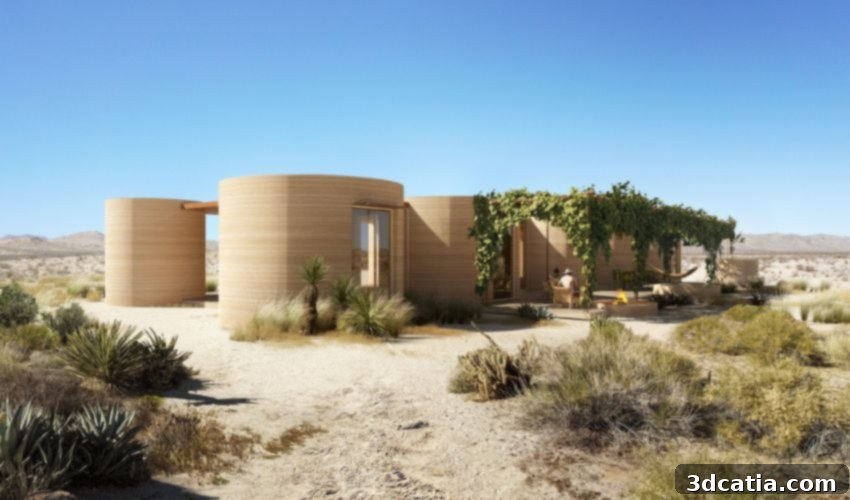
The realms of art, design, and architecture are perpetually evolving, driven by visionaries who dare to push conventional boundaries and embrace cutting-edge technologies. In recent years, 3D printing has emerged as a transformative force, enabling creators from fashion designers to architects to produce truly unique, bespoke pieces that captivate and inspire. This innovative technology allows for fabrication methods previously unimaginable, moving beyond the limitations of traditional construction. A compelling example of this revolution in action is the Sunday Homes project: the planned 3D-printed refabrication and relocation of the iconic El Cosmico hotel, nestled in the high plains desert of Marfa, Texas.
This ambitious undertaking brings together an impressive consortium of experts. Liz Lambert, a renowned hospitality impresario known for her distinctive boutique properties, is collaborating with Texas-based ICON, a leader celebrated for its groundbreaking advanced 3D printing construction projects, including pioneering lunar habitat development. Complementing their expertise is the globally acclaimed architecture group BIG (Bjarke Ingels Group), known for its innovative and context-sensitive designs. Additionally, home construction firm Lennar is involved, lending its extensive experience to the project. This formidable collaboration aims to relocate El Cosmico to a sprawling 62-acre site, where 3D printing technology will be harnessed to construct an array of unique structures, including domes, vaults, and bespoke homes, all while embodying the spirit of the original establishment.
El Cosmico, in its current iteration, is more than just a hotel; it’s an offbeat, nomadic escape that proudly markets itself as “an exodus from a world of urgency.” This ethos of tranquility and connection to nature deeply informs the new design for the relocation. The architectural vision draws profound inspiration from the vast, awe-inspiring landscape of the high plains desert and its seamless fusion with the endless sky. Innovative features, such as thoughtfully integrated skylights, will be built directly into the robust 3D-printed walls, allowing natural light to flood the interiors and offering guests direct views of the celestial expanse. The collection of residences will comprise two-, three-, and four-bedroom buildings, with sizes ranging from a comfortable 1,200 square feet to a spacious 2,200 square feet. These unique 3D-printed homes are anticipated to be ready for reservations by Summer this year, marking a new chapter for experiential hospitality.
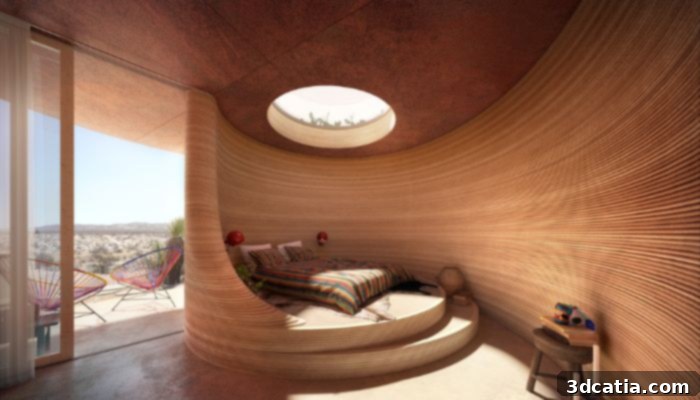
The interior of the 3D printed hotels will include a skylight.
Bjarke Ingels, Founder & Creative Director of BIG, shared his enthusiasm for the project, stating, “Our collaboration with El Cosmico and ICON has allowed us to pursue the formal and material possibilities of cutting edge 3D-printed construction untethered by the traditional limitations of a conventional site or client.” He further elaborated on the design philosophy, adding, “Organic shapes, Euclidian circular geometries and a color palette born from the local terroir makes El Cosmico feel as if literally erected from the site it stands on.” This sentiment underscores how 3D printing empowers architects to create designs that are not only structurally innovative but also deeply resonant with their natural surroundings. Jason Ballard, CEO of ICON, highlighted the vast potential of additive manufacturing in architecture: “The truly unique and divergent architectures made possible by 3D printing are really just beginning. One of the great joys of ICON is putting our technology into the hands of great creatives and seeing what possibilities emerge.” These statements reflect a shared vision of pushing architectural and construction boundaries, fostering a new era of design possibilities through technological advancement.
The Power of 3D Printing in Construction: Speed, Sustainability, and Savings
The decision to employ 3D printing for the El Cosmico project is a testament to the myriad advantages this technology offers over conventional building methods. Concrete extrusion 3D printing, the technique utilized by ICON, involves precisely depositing layers of specialized concrete mix to build structures from the ground up. This process is inherently more efficient, significantly reducing construction timelines compared to traditional brick-and-mortar or timber-frame construction. The automated nature of 3D printing also allows for greater accuracy and consistency, minimizing human error and ensuring structural integrity.
Beyond speed, 3D printed construction offers compelling environmental benefits. The precise deposition of material drastically reduces construction waste, a significant concern in the traditional building industry. By optimizing material usage, the process inherently becomes more sustainable. Furthermore, the ability to create complex geometries and integrated features, like the skylights in El Cosmico’s walls, often translates into more energy-efficient designs. Domes and vaults, for example, are inherently strong and can be designed to optimize thermal performance, reducing heating and cooling demands over the lifespan of the building. These efficiencies contribute to substantial cost savings, not only during the construction phase through reduced labor and material waste but also throughout the building’s operational life.
Beyond Hospitality: Addressing the Global Housing Crisis with 3D Printing
The vision behind this pioneering 3D printed hotel project extends far beyond luxury hospitality. The collaborators are also keen to explore and assess the viability of 3D printing for constructing affordable housing within Marfa and potentially other communities. This ambition places the El Cosmico relocation within a broader global movement that sees 3D printing as a crucial tool in tackling the persistent challenge of housing shortages and affordability. Indeed, initiatives to produce homes using this innovative method are gaining traction worldwide, demonstrating its universal applicability and potential impact. From ambitious projects in the UK and the USA, to vital efforts in Kenya and South Africa, 3D printing is being deployed to construct durable, cost-effective, and rapidly deployable homes for underserved populations. These projects universally report faster completion times, minimal material waste, and significant cost savings when compared to traditional construction techniques, making them a game-changer for humanitarian and development efforts. ICON, as a leader in this field, continues to push these boundaries, as further details on their work can be found on their website HERE.

The collaborators on the project (L- R: Jason Ballard of ICON, Liz Lambert, Bjarke Ingels of BIG)
The Future of Architectural Innovation and Sustainable Living
The El Cosmico relocation project stands as a monumental landmark in the evolution of both hospitality and construction. It vividly demonstrates how technological innovation can be seamlessly integrated with artistic vision to create structures that are not only functional and efficient but also deeply evocative and inspiring. By embracing 3D printing, the project pushes the boundaries of what is architecturally possible, enabling designs that are intimately connected to their environment and offer guests a truly unparalleled experience.
Furthermore, its exploration into affordable housing solutions highlights the broader societal impact of this technology. As populations grow and urban centers expand, the need for sustainable, rapid, and cost-effective housing solutions becomes increasingly critical. 3D printing offers a scalable answer to these complex challenges, promising to make quality housing accessible to more people around the globe. The El Cosmico project, therefore, is not just about building a hotel; it’s about pioneering new ways of living, designing, and constructing that will undoubtedly shape the future of our built environment for generations to come. It serves as a powerful reminder that when creativity meets cutting-edge technology, the possibilities are limitless.
What are your thoughts on this groundbreaking 3D printed hotel project and its potential impact on the industry? Do you believe this represents a significant shift in how we approach construction and hospitality? We invite you to share your perspectives in a comment below or join the conversation on our LinkedIn, Facebook, and Twitter pages! Don’t forget to sign up for our free weekly Newsletter here to receive the latest 3D printing news straight to your inbox! You can also find all our compelling videos on our YouTube channel for more insights into additive manufacturing innovations.
*All photos credit: ICON/BIG