
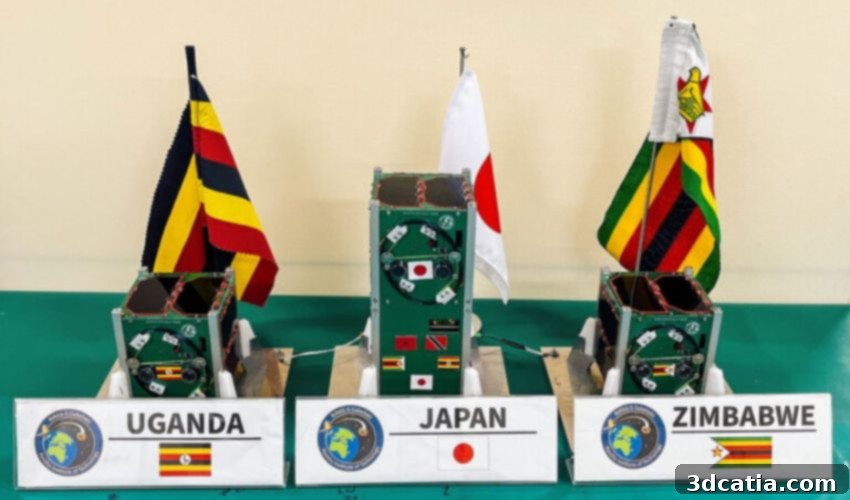
Uganda Pioneers Space Bioprinting with PearlAfricaSat-1: A New Frontier for Microgravity Tissue Engineering
The vast expanse of space, once seen as solely a domain for rockets and telescopes, is rapidly becoming a laboratory for advanced manufacturing and biotechnology. Indeed, 3D printing is no stranger to the cosmos, and now, a groundbreaking development is poised to redefine its role: microgravity bioprinting. In a significant leap for scientific exploration and national innovation, Uganda has proudly launched its first-ever satellite, the PearlAfricaSat-1. This pioneering mission carries a state-of-the-art facility dedicated to 3D bioprinting in the unique environment of space.
This initiative marks a pivotal moment, enabling Uganda to harness the unparalleled advantages of microgravity – a state of near weightlessness – to create complex human tissues. On Earth, the sheer force of gravity poses a significant challenge to bioprinting intricate structures, particularly those requiring delicate scaffolding like blood vessels. These vital supports often succumb to their own weight, leading to collapse and hindering the formation of viable tissue. In the microgravity environment of space, however, this impediment is eliminated, opening up unprecedented opportunities for developing more robust and functional biological constructs. With the successful launch of PearlAfricaSat-1, Uganda not only establishes a presence in the competitive realm of space exploration but also joins a select group of nations at the forefront of advanced 3D bioprinting research.
The Unrivaled Advantages of Microgravity for Bioprinting
The concept of bioprinting in space is not merely a scientific novelty; it represents a strategic solution to some of the most persistent challenges faced by tissue engineers on Earth. Terrestrial bioprinting relies heavily on bio-inks, which are typically composed of living cells suspended in a hydrogel or similar scaffold material. While significant progress has been made, creating complex, three-dimensional tissue structures with integrated vascular networks remains notoriously difficult. The primary antagonist in this endeavor is gravity.
Imagine attempting to build a multi-story structure where the foundations and subsequent floors are prone to collapsing under their own weight before they can fully solidify. This is a crude analogy for the challenges of bioprinting intricate tissues like organs or vascular grafts on Earth. The delicate cellular structures and supporting scaffolds, especially those designed to mimic the intricate branching of blood vessels, are highly susceptible to deformation or collapse before they can gain sufficient structural integrity. This limitation severely constrains the size, complexity, and ultimately, the functionality of the tissues that can be bioprinted for research, drug testing, or eventual transplantation.
In the microgravity environment of space, however, these gravitational constraints vanish. Without the constant downward pull, bio-inks can be extruded and assembled into complex shapes without the risk of slumping or collapsing. This allows for the creation of far more intricate and anatomically accurate tissue architectures, including elaborate vascular networks that are crucial for nutrient and oxygen delivery within any viable organ. The absence of convection currents in microgravity also provides a more stable environment for cell growth and differentiation, potentially leading to more uniform and higher-quality tissue constructs. This unique advantage positions space as an invaluable laboratory for developing next-generation bioprinted tissues and organs, pushing the boundaries of what’s possible in regenerative medicine.
A Collaborative Leap: Uganda, Kyutech, and the Birds Satellite Project
The successful launch of the PearlAfricaSat-1 is a testament to the power of international collaboration and a shared vision for scientific advancement. The mission was made possible through a strategic partnership between Uganda and the esteemed Kyushu Institute of Technology (Kyutech) in Japan. This collaboration saw three dedicated engineers from Kyutech play an instrumental role, undertaking the exhaustive processes of designing, building, testing, and finally overseeing the launch of the satellite. This hands-on involvement not only ensured the technical success of the mission but also facilitated invaluable knowledge transfer and capacity building for Uganda’s emerging space sector.
The PearlAfricaSat-1 launch (NASA).
Onboard PearlAfricaSat-1, the centerpiece of its bioprinting capabilities is the BioFabrication Facility (BFF). This cutting-edge bioprinter is the brainchild of Redwire, a company at the forefront of developing advanced manufacturing solutions for space. John Vellinger, a representative from Redwire, enthusiastically describes the BFF as “game-changing.” He underscores its profound potential, highlighting the “significant implications for the future of human health and patient care on Earth.” The BFF represents a monumental step forward, bringing the promise of advanced bioprinted tissues closer to reality for both astronauts in space and patients awaiting life-saving treatments on our planet.
Uganda’s PearlAfricaSat-1, along with Zimbabwe’s Zimsat-1, launched concurrently as part of the broader Birds Satellite Project. This innovative international initiative, strongly supported by Japan, plays a crucial role in empowering non-spacefaring nations to engage in significant space activities. By providing the framework and technical assistance, the Birds Project enables countries that traditionally lack extensive space infrastructure to participate directly in satellite design, construction, and deployment. This democratizes access to space, fostering global collaboration, scientific advancement, and technological independence for participating nations.
On-Orbit Experiments and the Broader Impact on Science and Society
Having successfully reached the International Space Station (ISS), the PearlAfricaSat-1 is now poised to embark on its critical mission. A primary focus of its bioprinting facility will be to aid in the printing of ovary tissue. This specific experiment aims to meticulously study how the function of complex biological tissues is affected by the unique conditions of weightlessness. Such research is vital not only for understanding human adaptation to long-duration space travel but also for advancing our knowledge of reproductive health and potential therapeutic interventions on Earth. The insights gained from studying tissue viability and function in microgravity could pave the way for novel treatments for infertility and other related conditions.
Beyond its pioneering bioprinting capabilities, PearlAfricaSat-1 will also contribute to a range of other essential scientific investigations. These include crucial earth observation tasks such as detailed weather forecasting and sophisticated disaster prevention monitoring. These non-bioprinting applications highlight the multi-faceted nature of modern satellite missions, where a single platform can serve diverse scientific, environmental, and societal needs. The data collected will be invaluable for Uganda’s national development, improving agricultural planning, enhancing early warning systems for natural disasters, and ultimately bolstering the resilience of communities.
The Evolving Landscape of 3D Bioprinting: From Earth to Orbit
It is important to remember that 3D bioprinting, while now extending its reach into space, is not an entirely new technology. For decades, researchers on Earth have diligently emphasized its transformative benefits across various fields of biological science and medicine. One of its earliest and most significant advantages lies in cell structure research. By automating the precise deposition of cells and biomaterials, bioprinting offers a sophisticated alternative to manual pipetting methods, which are inherently susceptible to human error and variability. This automation ensures greater consistency, reproducibility, and precision in experimental setups, accelerating the pace of discovery in cellular biology.
However, the true excitement surrounding 3D bioprinting stems from its staggering potential in regenerative medicine. The technology holds the promise of creating functional human tissues and even entire organs that could revolutionize patient care. Imagine a future where a patient in need of a kidney transplant doesn’t have to wait for a donor, but instead receives a bioprinted organ perfectly matched to their immunological profile. Beyond transplantation, bioprinted tissues provide invaluable platforms for more accurate drug testing and personalized medicine. By using patient-specific cells to create ‘organ-on-a-chip’ models, researchers can test the efficacy and toxicity of new pharmaceutical compounds in a way that better mimics human physiology, reducing reliance on animal testing and improving drug development success rates. Furthermore, 3D bioprinting is proving to be an indispensable tool in cancer research, allowing scientists to create more realistic tumor microenvironments to study disease progression and evaluate novel therapies.
The Uganda PearlAfricaSat-1 project signifies a momentous convergence of these terrestrial advancements with the boundless opportunities of space. By bringing 3D bioprinting into microgravity, Uganda is not only enhancing the technology’s capabilities but also showcasing how a nation can leverage cutting-edge science for profound national benefit. This pioneering step marks Uganda’s dual entry into the global space industry and the forefront of advanced biotechnology, promising to unlock new avenues for medical innovation, economic growth, and global recognition. For those interested in following the broader progress of such remarkable initiatives, regular updates are often shared, for instance, through the Bird Project’s LinkedIn posts, which can be found HERE.
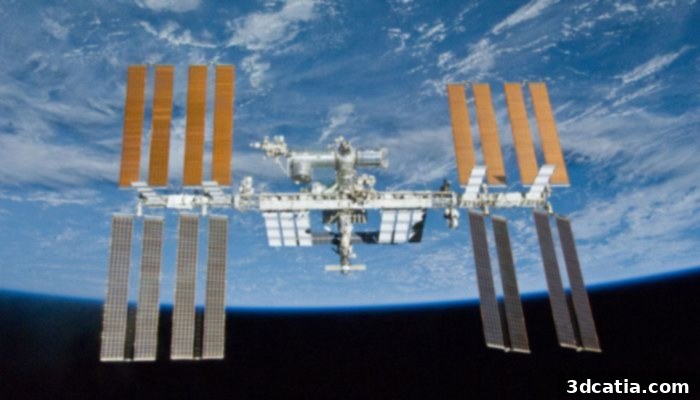
The International Space Station now hosts the satellite
What are your thoughts on this monumental project and Uganda’s role in advancing space bioprinting? Were you aware of the incredible potential of 3D bioprinting in the unique environment of space? We encourage you to share your insights and comments below, or engage with us on ourLinkedIn,Facebook, andTwitter pages! Don’t miss out on the latest advancements in additive manufacturing by signing up for our free weeklyNewsletter here, delivering the freshest 3D printing news directly to your inbox! You can also explore our extensive video library on ourYouTube channel for more fascinating content.
*Cover photo credit: Bird Project