
Top 5 Additive Manufacturing Innovations: From Formnext 2024 to On-Demand F1 Parts and Classroom 3D Printing
Welcome to our exclusive weekly roundup, where we delve into the most impactful and exciting developments in additive manufacturing. This week’s selection of the Top 5 videos brings you a diverse range of innovations, showcasing the dynamic evolution of 3D printing technology across various sectors. From eagerly anticipating the world’s largest additive manufacturing event, Formnext 2024, to exploring cutting-edge applications in automotive, construction, defense, and education, we cover the spectrum of how 3D printing is reshaping industries. Join us as we explore how a leading car shop is leveraging 3D printing for Formula 1 racing, witness the groundbreaking first 3D printed home in Chile, understand SPEE3D’s revolutionary mobile manufacturing units for military applications, and discover MakerBot’s latest classroom-friendly 3D printer. Prepare to be inspired by the transformative power of additive manufacturing as we highlight these incredible advancements. Happy watching!
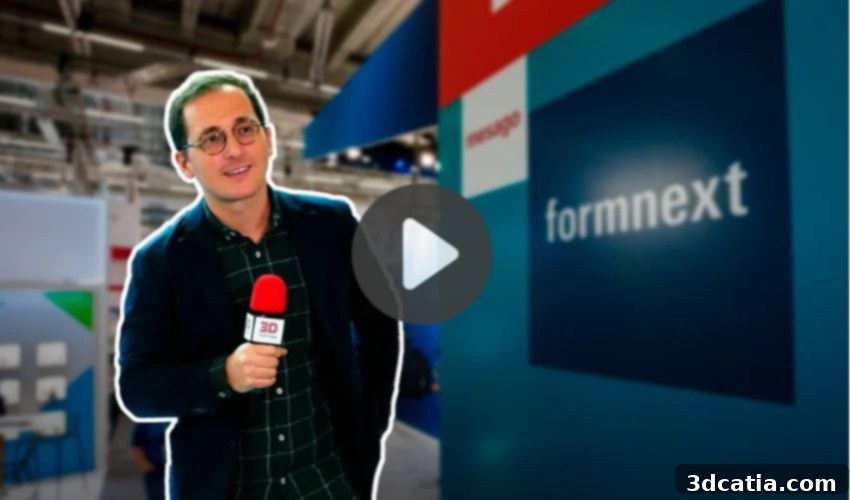
Top 1: Experience Formnext 2024 with 3Dnatives – Your Ultimate Guide to Additive Manufacturing’s Premier Event!
The anticipation is building for Formnext 2024, the undisputed global benchmark for additive manufacturing and industrial 3D printing. Scheduled to take place in Frankfurt, Germany, from November 19th to the 22nd, this event promises to be a hub of innovation, networking, and industry insights. As the largest gathering of its kind, Formnext annually brings together key players, innovators, and enthusiasts from across the additive manufacturing ecosystem, showcasing the latest technologies, materials, software, and applications. For professionals and businesses looking to stay ahead of the curve, it’s an indispensable opportunity to witness groundbreaking product launches, explore emerging trends, and forge valuable partnerships. From cutting-edge metal 3D printing solutions to advanced polymer systems, and from sophisticated post-processing techniques to integrated digital workflows, Formnext covers every facet of the industry.
This year, 3Dnatives is thrilled to enhance your Formnext experience with unparalleled exclusive coverage. Our team will be live on the scene, providing real-time updates through a comprehensive suite of content including engaging video reports, vibrant social media updates, and in-depth articles. We are committed to ensuring you’re fully informed about every significant announcement, every revolutionary product release, and every pivotal technological advancement that emerges from the show floor. Whether you’re interested in the future of medical 3D printing, aerospace applications, or consumer product design, our coverage will bring the essence of Formnext directly to you. Don’t miss out on vital industry intelligence; make sure to follow along with our dedicated updates. For all the essential details, including exhibitor lists, event schedules, and exclusive pre-show insights, visit our special Formnext landing page. Get ready to immerse yourself in the future of manufacturing!
Top 2: Revolutionizing Motorsport: How 3D Printing Powers Formula 1 Car Parts
The integration of 3D printing into the automotive industry is no longer a niche application; it’s a rapidly expanding trend that’s fundamentally changing how vehicles are designed, prototyped, and manufactured. We’ve consistently observed 3D printing being increasingly incorporated into car production, enabling manufacturers to create lightweight, complex, and high-performance components. A recent highlight in this evolving landscape saw Ferrari unveiling their use of 3D printed parts for their new F80 supercar, underscoring the technology’s critical role in pushing the boundaries of automotive engineering.
This featured video offers an exclusive tour inside a Formula 1 Trim Shop, providing a fascinating glimpse into how a top-tier racing team is harnessing additive manufacturing to gain a crucial competitive edge. F1 racing demands unparalleled precision, speed of iteration, and the ability to produce highly specialized, often bespoke, components rapidly. The video reveals that this innovative team recently made a significant investment, exceeding £90,000, in state-of-the-art 3D printers from renowned brands such as Bambu Lab and Formlabs. These advanced machines are not just for prototyping; they are being utilized to create functional, on-demand parts for their cutting-edge F1 cars. The benefits are multifaceted: rapid design adjustments, production of complex geometries that are impossible with traditional manufacturing, significant weight reduction for enhanced performance, and the ability to repair or replace parts quickly during a grueling race season.
By integrating additive manufacturing directly into their workshop, the team can respond to evolving aerodynamic needs, develop custom tools, and produce final-use components with unprecedented agility. This drastically reduces lead times, optimizes supply chain logistics, and allows for continuous innovation throughout the season. The materials used range from high-strength polymers and composites for aerodynamic components and interior trim to advanced metals for critical engine or chassis parts, all chosen to meet the extreme demands of Formula 1. Watch this insightful video to truly understand how this dynamic team is embedding 3D printing into their operations, demonstrating how additive manufacturing is not just a tool but a strategic asset in the relentless pursuit of speed and victory in motorsport.
Top 3: Constructing the Future: The First 3D Printed House in Chile Paves the Way for Affordable Housing
The construction industry is experiencing a monumental shift, with construction 3D printing emerging as a transformative technology globally. Its potential to revolutionize building processes, reduce costs, and accelerate construction timelines is being realized in various corners of the world, and now, this groundbreaking innovation has proudly made its way to Chile. This marks a significant milestone for Latin America, demonstrating the region’s increasing embrace of advanced manufacturing techniques to address pressing societal needs.
A pioneering team from the University of Biobío has successfully completed what they proudly claim to be the first 3D printed home in Latin America. This remarkable structure, affectionately named the “seed house,” serves as a vital prototype strategically located in Concepcion, Chile. The project highlights the incredible efficiency and speed that 3D printing brings to construction. Astonishingly, the foundational walls of the house were erected in a mere 29 hours, and the entire structure was assembled and completed within just two days. This rapid construction pace is a testament to the power of automated additive manufacturing, significantly reducing the labor and time typically required for traditional building methods.
The implications of this project for Chile, and indeed for other regions facing similar challenges, are profound. 3D printing homes may prove to be a highly effective and scalable solution for addressing critical housing demands, particularly in areas grappling with housing shortages, affordability issues, or the need for rapid post-disaster reconstruction. This “seed house” initiative represents a crucial step in that direction, demonstrating not only the technical feasibility but also the immense potential for creating sustainable, cost-efficient, and accessible housing options. Beyond residential applications, construction 3D printing can also be deployed for emergency shelters, infrastructure projects, and custom architectural designs, opening up new possibilities for urban development and design flexibility. Watch the video to witness this impressive feat of engineering and learn how Chile is stepping into the future of sustainable and efficient building practices.
Top 4: SPEE3D’s Expeditionary Manufacturing Unit (EMU): Bringing Metal 3D Printing to the Front Lines
In a world where rapid deployment and on-demand capabilities are increasingly vital, especially for defense forces, SPEE3D has introduced a game-changing innovation: the Expeditionary Manufacturing Unit (EMU). This revolutionary mobile metal 3D printing solution is specifically engineered to bring the power of additive manufacturing directly to the field, transforming logistics and readiness for military and other remote industrial operations. SPEE3D is renowned for its Cold Spray Additive Manufacturing (CSAM) technology, which allows for extremely fast printing of metal parts by accelerating metal powder onto a substrate at supersonic speeds.
What truly sets the EMU apart is its unparalleled mobility and rugged design. Unlike traditional industrial 3D printers that require stable, controlled environments, the EMU is built to thrive in the most challenging conditions. It can withstand a broad spectrum of extreme high and low temperatures, endure diverse weather environments, and operate efficiently in remote or austere locations where conventional supply chains are often unreliable or non-existent. This capability means that critical spare parts, custom tools, or essential components can be manufactured on-site, precisely when and where they are needed, drastically reducing downtime for vehicles, equipment, and machinery.
The strategic advantages of the EMU for defense forces are immense. It enhances operational readiness by minimizing dependence on external supply chains, cuts down logistical burdens, and provides an immediate solution for repairing or replacing essential metal parts in challenging environments. This agility ensures that units can maintain mission effectiveness without lengthy delays. In this insightful video, Steve Camilleri, SPEE3D’s Chief Technology Officer and Co-Founder, personally introduces the Expeditionary Manufacturing Unit, explaining its innovative features and elucidating how it stands out from his company’s other groundbreaking products. He details the specific design considerations that went into making the EMU robust and truly expeditionary, capable of operating effectively even in the most demanding combat zones or remote industrial sites. Discover how SPEE3D is redefining on-field manufacturing and enhancing strategic capabilities with this cutting-edge mobile metal 3D printing system.
Top 5: Empowering Education: Introducing the New MakerBot Sketch Sprint for Classrooms
The integration of 3D printing into educational curricula is becoming increasingly vital for fostering STEM skills, encouraging creativity, and preparing students for the future workforce. Recognizing this need, MakerBot, a leading name in desktop 3D printing, has just announced the release of its latest innovation: the MakerBot Sketch Sprint. This new 3D printer is specifically designed for the classroom, offering a robust, safe, and intuitive platform for students and educators to explore the vast possibilities of additive manufacturing.
The MakerBot Sketch Sprint is engineered with the unique requirements of a learning environment firmly in mind. It boasts a fully enclosed build chamber, a critical safety feature that protects young users from hot components and moving parts, while also ensuring a consistent printing environment for reliable results. Its quiet operation is another significant advantage, minimizing distractions in busy classrooms and allowing for seamless integration into daily lessons without disrupting learning. Furthermore, its impressive speed means that more students can complete projects within class time, accelerating the learning process and maximizing printer utilization.
Beyond core performance, the Sketch Sprint incorporates thoughtful features designed specifically for school settings. A secure lock-code system ensures that only authorized personnel can operate the printer, preventing tampering and maintaining print integrity. Moreover, an integrated air filter enhances safety by capturing ultra-fine particles and VOCs, contributing to a healthier classroom atmosphere. This comprehensive approach to safety and usability makes the MakerBot Sketch Sprint an optimal tool for introducing students to design thinking, iterative prototyping, and the practical applications of 3D printing. It empowers educators to deliver hands-on, project-based learning experiences that ignite curiosity and develop critical problem-solving skills, preparing students for careers in engineering, design, and beyond. Take a look at the product video to delve deeper into its features and understand how it can transform your classroom into a hub of innovation:
This week’s roundup truly highlights the incredible breadth and ongoing innovation within the additive manufacturing landscape. From the global stage of Formnext 2024 driving industry standards, to the high-stakes world of Formula 1 leveraging bespoke 3D printed parts for peak performance, and the transformative potential of construction 3D printing addressing housing challenges in Chile, the applications are boundless. We’ve also seen how expeditionary metal 3D printing solutions like SPEE3D’s EMU are enhancing defense capabilities, and how accessible, safe 3D printers like the MakerBot Sketch Sprint are empowering the next generation of innovators in classrooms worldwide. The additive manufacturing sector continues to advance at a rapid pace, promising even more exciting developments in the near future.
What aspect of Formnext are you most looking forward to, or which of these additive manufacturing innovations captured your attention the most? We invite you to share your thoughts and insights! Let us know in a comment below or join the conversation on our LinkedIn, Facebook, and Twitter pages! Don’t forget to sign up for our free weekly Newsletter here to receive the latest 3D printing news, exclusive features, and market analysis delivered straight to your inbox! You can also find all our compelling video content and more in-depth reports on our dedicated YouTube channel. Stay connected with 3Dnatives for all your additive manufacturing updates!