
The New Raw’s Second Nature: Transforming Ghost Fishing Nets into Art with Sustainable 3D Printing
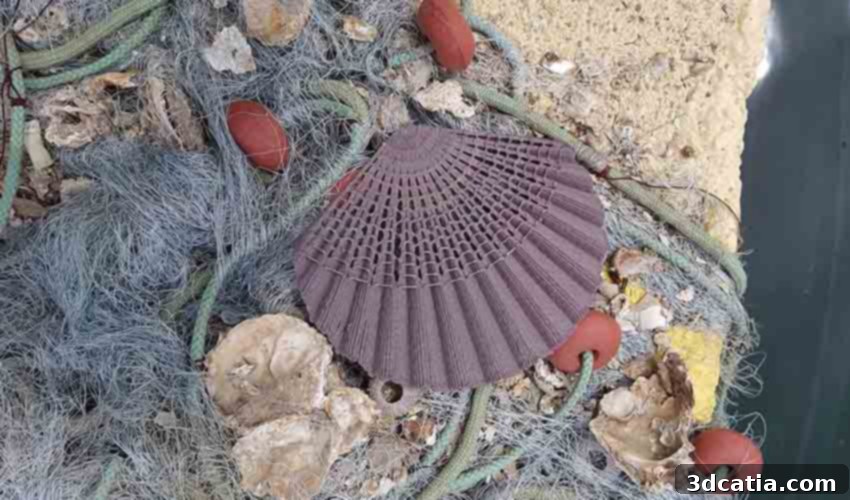
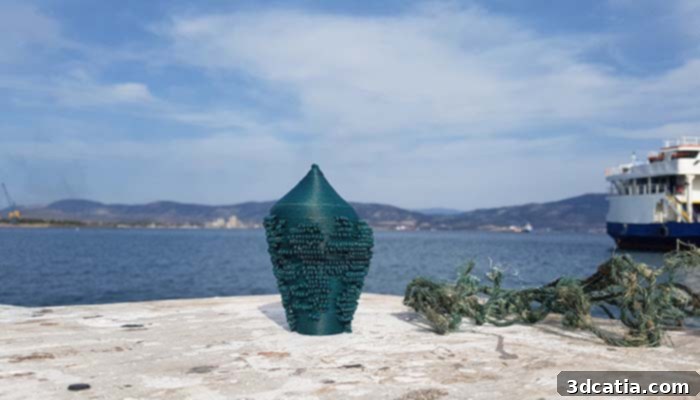
In an inspiring fusion of cutting-edge technology and profound environmental consciousness, The New Raw has unveiled its latest groundbreaking initiative: “Second Nature.” This ambitious project directly confronts the urgent global crisis of plastic pollution, particularly focusing on the devastating impact of abandoned fishing nets, often referred to as ghost nets. These silent killers wreak havoc on marine ecosystems, posing significant challenges to wildlife preservation. The New Raw, a renowned research and design studio, consistently leverages 3D printing technologies to champion environmental causes, demonstrating a steadfast commitment to sustainability through additive manufacturing. Their previous successes, such as “Print Your City” and the innovative Zero Waste Lab, stand as testament to their pioneering spirit in transforming plastic waste into valuable resources. With “Second Nature,” the studio once again pushes the boundaries, meticulously transforming these insidious ghost nets into a captivating series of digitally crafted seashells and various other objects, breathing new life into what was once deadly debris.
Photography: Marily Konstantinopoulou, Javier Sirvent | The New Raw
The devastating impact of plastic on our oceans is a crisis that transcends geographical boundaries, yet its severity is often overlooked by those in urban environments. Panos Sakkas and Foteini Setaki, the visionary founders of The New Raw, eloquently articulated this concern, stating, “Plastic is a major contributor to the pollution of the seas. However, living in urban regions, we tend to forget about our dependence on the sea, which is crucial to our food and oxygen supply. With Second Nature, we want to give plastic a second life.” Their words underscore a fundamental truth: the health of our oceans is intrinsically linked to human survival. The project’s genesis saw its debut in Greece, a nation with a profound maritime heritage. Here, local fishermen and divers, acting as frontline environmental stewards, embarked on perilous dives to meticulously collect the discarded synthetic fishing nets from the seabed. These derelict nets, hauntingly known as ghost nets, pose an existential threat to marine life. They continue to passively fish, indiscriminately trapping and entangling fish, crustaceans, sea turtles, dolphins, and countless other living creatures as long as they remain submerged, effectively becoming perpetual death traps in the ocean’s depths. The scale of this problem is staggering; it is estimated that hundreds of thousands of tons of fishing gear are lost or abandoned in our oceans each year, persisting for centuries and breaking down into harmful microplastics.
The Transformative Power of 3D Printing in Marine Conservation
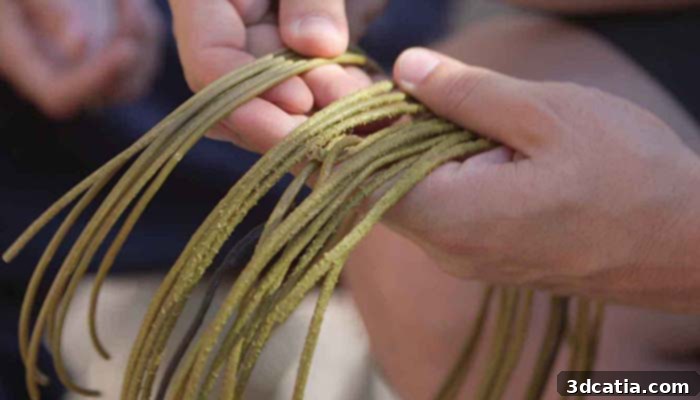
The New Raw’s approach to confronting marine plastic pollution is not merely about cleanup; it’s about pioneering a truly circular economy. In the picturesque small Greek village of Galaxidi, strategically chosen for its proximity to marine communities and plastic sources, The New Raw established a mobile 3D printing and recycling lab. This innovative, self-contained unit was specifically designed to transform marine plastic waste, including the collected ghost nets, into a valuable raw material. This on-site processing capability drastically reduces the carbon footprint associated with transportation and allows for immediate transformation. The journey from discarded net to functional or artistic object is a meticulous one, beginning with careful classification. The designers painstakingly categorized the collected ghost nets and other marine plastics according to their different material types, distinguishing between nets, ropes, floaters, and weights. This crucial initial step ensures material consistency and purity, which is vital for the subsequent manufacturing processes. Following classification, the segregated materials underwent mechanical recycling: they were thoroughly cleaned, shredded in industrial grinders, and then extruded into vibrant, textured filaments. These custom-made filaments, imbued with the colors and textures derived directly from the recycled marine plastic, then served as the fundamental building blocks for the 3D printing process. This closed-loop system not only diverts waste from the ocean but also creates a tangible, economically viable product, demonstrating a powerful model for sustainable development.
Photography: Marily Konstantinopoulou, Javier Sirvent | The New Raw
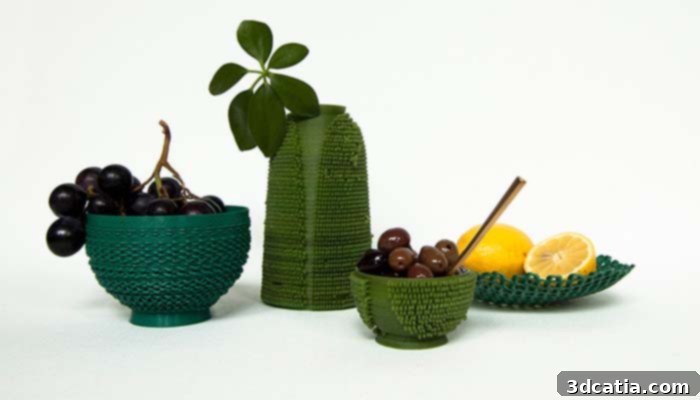
The aesthetic dimension of “Second Nature” is as compelling as its ecological mission. The project meticulously studied five edible species of Mediterranean seashells, species currently under protection due to historical intensive fishing practices. These included the elegant Mitra Zonata, the distinctive Pecten Jacobeaus, the majestic Pinna Nobilis, the unique Strombus Persicus, and the formidable Tonna Galea. These natural wonders, themselves symbols of marine biodiversity and vulnerability, served as the profound inspiration for the intricate, textured surfaces of the 3D printed objects. By mirroring the organic forms and tactile qualities of these precious shells, The New Raw imbues each recycled plastic creation with a poignant narrative—a celebration of the life they are helping to protect and a stark reminder of what is at stake. This design choice is not merely artistic; it’s a powerful communicative tool. It connects the origin of the material (ocean waste) with the future of marine life, transforming a problem into a beautiful, tangible solution. Each object becomes a miniature monument to conservation, showcasing the vast design and manufacturing opportunities that emerge when recycled plastic is viewed not as waste, but as a versatile resource for sustainable innovation. Furthermore, the use of 3D printing allows for unparalleled customization and complexity in design, enabling the creation of unique, intricate textures that would be challenging or impossible with traditional manufacturing methods. This elevates the reclaimed material into high-value design pieces.
Photography: Marily Konstantinopoulou, Javier Sirvent | The New Raw
“Second Nature” is more than just a project; it is an ongoing research endeavor, constantly evolving and expanding its scope. This summer, The New Raw plans to unveil a new collection of objects, promising to further showcase the boundless design and manufacturing possibilities that emerge from creatively utilizing recycled plastic. This continuous development highlights their commitment not just to a single cleanup effort, but to fostering a sustainable ecosystem of innovation that can be scaled and replicated globally. The project’s success lies not only in the physical transformation of waste but also in its ability to raise global awareness about the insidious threat of ghost nets and the broader plastic pollution crisis. It serves as a compelling proof-of-concept, demonstrating that discarded materials can be given a meaningful “second life” and contribute to a healthier planet. By engaging local communities, promoting sustainable practices, and embracing cutting-edge technology, The New Raw is setting a powerful example for how design and innovation can address some of the most pressing environmental challenges of our time. Their vision transcends mere recycling; it’s about fundamentally changing our relationship with materials and inspiring a collective responsibility towards our natural world. Through “Second Nature,” they are not just cleaning up the past; they are designing a more sustainable future.
You can find more information on The New Raw’s website HERE, where they provide in-depth details about their philosophy, projects, and the impact of their work.
What are your thoughts on this innovative initiative from The New Raw? We invite you to share your perspective in a comment below or join the conversation on our Facebook and Twitter pages! Don’t miss out on the latest advancements in additive manufacturing and sustainable design; sign up for our free weekly Newsletter to get all the news in 3D printing delivered straight to your inbox!