
MX3D’s Arc Bike II: The Future of Cycling Forged with 3D Printed Aluminum and WAAM Technology
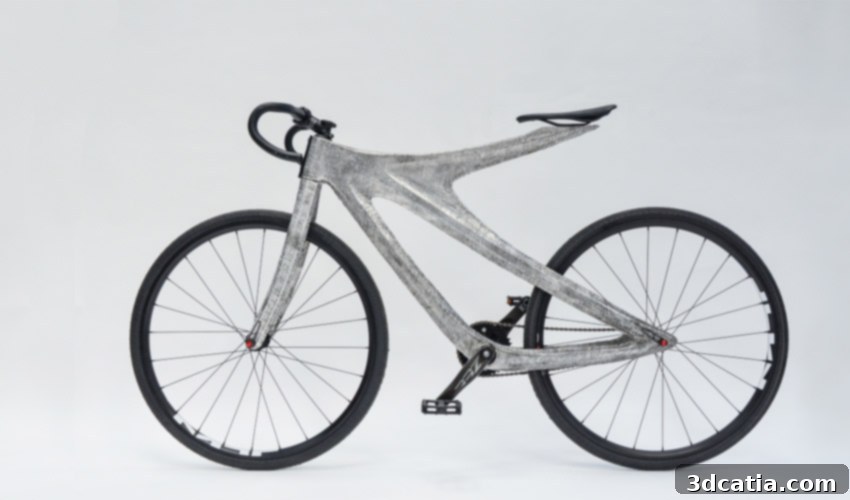
MX3D, the innovative Dutch company globally recognized for its groundbreaking 3D printed steel bridge, has once again pushed the boundaries of additive manufacturing with the introduction of its Arc Bike II. This is not merely another bicycle; it represents a significant leap forward in design, material science, and manufacturing processes, boasting a sophisticated 3D printed aluminum frame that is set to captivate and inspire. Designed with a clear focus on achieving an exceptionally lightweight structure and offering unparalleled customization possibilities, the Arc Bike II was brought to life in an astonishing 24 hours using Wire Arc Additive Manufacturing (WAAM) technology. This advanced manufacturing technique shares foundational principles with Directed Energy Deposition (DED) and has proven to be remarkably effective for high-performance metal additive manufacturing applications, paving the way for a new generation of bespoke products.
A Legacy of Innovation: From Steel to Lightweight Aluminum
The journey to the Arc Bike II began several years ago, showcasing MX3D’s continuous commitment to pioneering large-scale metal 3D printing. In 2016, a collaborative effort between MX3D and a talented team of students from Delft University of Technology resulted in the creation of the Arc Bicycle. This earlier iteration featured a robust 3D printed steel frame, which, at a mere 12 kilograms, was considered an impressive feat for its time. However, with the Arc Bike II, the Dutch company strategically pivoted towards aluminum. This choice was not arbitrary; aluminum, renowned for being approximately half the weight of steel, presents substantial advantages for bicycle manufacturing, including improved handling, enhanced rider comfort, and greater ease of processing in additive manufacturing. The versatility of MX3D’s proprietary 3D printing technology, capable of processing a diverse range of metals, allowed the company to explore and validate aluminum as an optimal material for its next-generation bicycle, further demonstrating their expertise in material science and engineering.
Unveiling the Arc Bike II: Design, Customization, and Performance
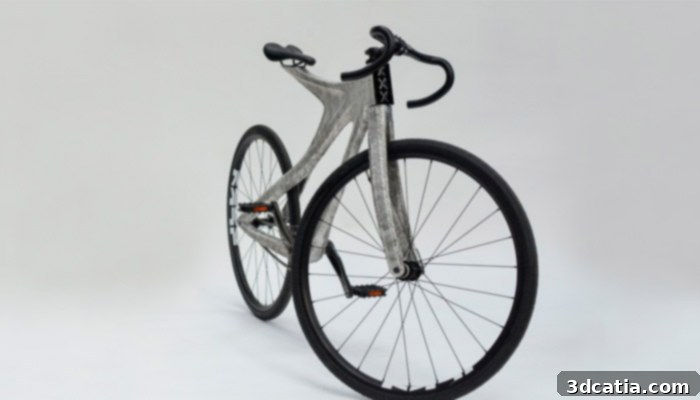
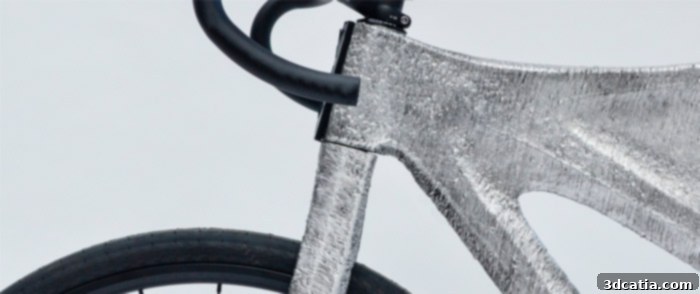
The Arc Bike II isn’t just a technological marvel; it’s also a testament to thoughtful design. The aesthetic is both functional and futuristic, characterized by organic, flowing lines that are a direct result of the additive manufacturing process. Beyond its striking appearance, the core philosophy behind the Arc Bike II revolves around rider-centric customization. Unlike mass-produced bicycles, each Arc Bike II frame can be tailored to the specific biomechanics and preferences of its rider, promising an unparalleled riding experience. This level of personalization, combined with the inherent strength and lightness of the 3D printed aluminum, positions the Arc Bike II as a premium offering in the evolving world of high-performance cycling. The ability to modify frame geometry, tube thickness, and structural integrity based on individual needs represents a paradigm shift from traditional manufacturing limitations, offering cyclists truly bespoke machines.
The Power of WAAM: Rapid Metal Fabrication in Action
Central to the Arc Bike II’s rapid production and structural integrity is the Wire Arc Additive Manufacturing (WAAM) technology. To fully appreciate its significance, it’s essential to understand its mechanics. WAAM utilizes an industrial robot equipped with a multi-axis arm to precisely deposit metal material, layer by intricate layer, through an arc welding process. This robotic precision allows for highly controlled deposition, typically ranging from 1 to 3 kilograms of material per hour. MX3D’s skilled teams proudly announced that the aluminum bicycle frame was successfully printed in an impressive 24 hours. While this rapid fabrication time for the raw frame is remarkable, it’s important to acknowledge that the complete manufacturing process involves crucial subsequent steps. The duration required for essential post-processing activities—such as support structure removal, surface finishing to ensure smoothness and aesthetic appeal, and heat treatments to enhance material properties—as well as the meticulous assembly of other critical components like wheels, saddles, handlebars, and drivetrains, adds to the overall production timeline. These post-printing stages are vital for ensuring the bike’s performance, durability, and safety, transforming a raw 3D print into a rideable, high-quality bicycle.
Generative Design: Tailoring the Ride to Perfection
The innovative design of the Arc Bike II is not merely a product of human creativity but also a sophisticated application of artificial intelligence through generative design software. This cutting-edge approach allows engineers to define performance parameters, material properties, manufacturing constraints, and desired rider ergonomics. The software then autonomously explores thousands, if not millions, of design variations, optimizing for factors such as weight reduction, strength-to-weight ratio, stiffness, and rider fit. The result is an organically structured bike frame whose proportions are perfectly adapted to the individual rider, ensuring optimal power transfer, comfort, and control. Once the ideal design is computationally generated, it is translated by MX3D’s proprietary 3D software into precise instructions for the WAAM robot. This process mirrors the function of slicer software in traditional FDM 3D printing, converting a complex 3D model into executable code for the additive manufacturing machinery. Furthermore, MX3D revealed a clever manufacturing detail: the frame of the Arc Bike II was 3D printed in two distinct parts. These sections were subsequently welded together with extreme precision, a technique that not only facilitates the printing process but also allows for greater design flexibility and the creation of larger or more intricate geometries that might be challenging to print as a single, monolithic piece. This modular approach highlights MX3D’s ingenuity in overcoming the limitations of current additive manufacturing build volumes.
The Evolving Landscape of 3D Printed Bicycles and MX3D’s Vision
The introduction of the Arc Bike II marks a pivotal moment in the cycling industry, underscoring the increasing viability and innovation driven by additive manufacturing. This remarkable bicycle is now available for pre-order, inviting enthusiasts and early adopters to experience a new frontier in personalized cycling. It joins a select, yet growing, cadre of 3D printed bicycle solutions emerging in the market. One notable example is AREVO’s bikes, which leverage advanced carbon fiber composites and continuous fiber 3D printing to create exceptionally strong and lightweight frames. The emergence of such diverse approaches, whether utilizing metal WAAM or composite additive manufacturing, highlights a vibrant competitive landscape where innovation flourishes, ultimately benefiting consumers with more specialized, higher-performance products. MX3D’s commitment extends beyond simply manufacturing bikes; it’s about showcasing the immense potential of large-scale, robotically controlled additive manufacturing to transform various industries. Their iconic 3D printed bridge in Amsterdam serves as a monumental proof of concept for their technology’s capability to create complex, functional structures on an unprecedented scale. The Arc Bike II, while smaller in scale, demonstrates the same underlying principles of precision, material optimization, and design freedom, applied to a consumer product. This dual focus on infrastructure and consumer goods cements MX3D’s position at the forefront of the global additive manufacturing movement, driving advancements that inspire both industrial and personal applications.
Experience the Innovation: Further Details and Community Engagement
For those eager to delve deeper into the technical specifications, design philosophy, and ordering process for the Arc Bike II, comprehensive information is readily available on the official MX3D website, accessible HERE. This platform provides a detailed look into the engineering prowess and creative vision behind this groundbreaking bicycle. As the world of 3D printing continues to evolve at a rapid pace, MX3D’s Arc Bike II stands as a beacon of what is possible when advanced robotics, innovative materials, and sophisticated design software converge. It challenges conventional manufacturing paradigms and offers a glimpse into a future where custom-built, high-performance products are more accessible and sustainable.
We invite you, our valued readers, to share your thoughts and perspectives on the Arc Bike II. What aspects of this 3D printed aluminum bicycle do you find most compelling? Do you believe custom 3D printed bikes represent the future of cycling? Please let us know your opinions in a comment below, or engage with us and the wider additive manufacturing community on our Facebook and Twitter pages! Don’t miss out on the latest advancements and breaking news in the exciting world of 3D printing; remember to sign up for our free weekly Newsletter, delivering all the essential updates directly to your inbox!