
3D Printing Pushes Boundaries: Maclean Brothers Row the Pacific with Custom Additive Manufacturing
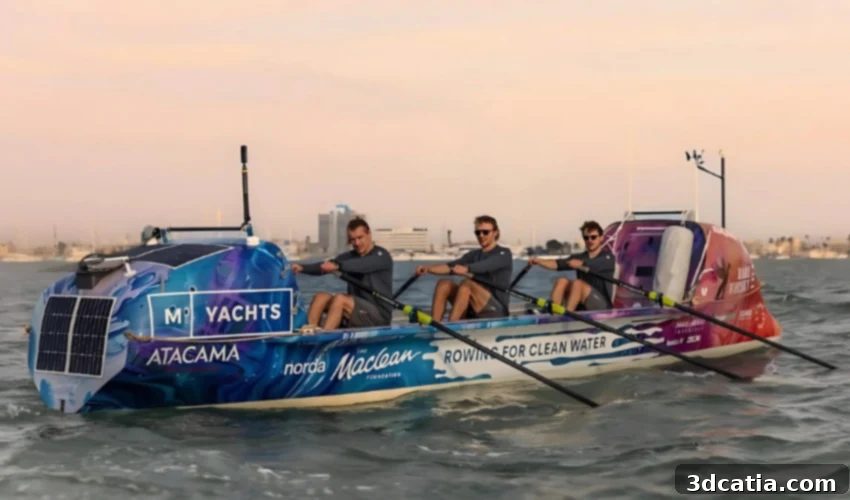
Innovation knows no bounds, and for three Scottish brothers, Ewan, Jamie, and Lachlan Maclean, it’s propelling them across the vast expanse of the Pacific Ocean. Their monumental challenge is not just a testament to human endurance but also a groundbreaking showcase of how advanced additive manufacturing, specifically 3D printing, is transforming even the most extreme environments. These intrepid brothers are currently nearing the triumphant conclusion of an arduous 9,000-mile (approximately 14,500 km) journey, rowing across the Pacific in a custom-engineered carbon fiber boat. What sets their vessel apart is the integration of over 40 bespoke components, meticulously crafted using a Formlabs Form 4 3D printer.
Their ambitious goal extends beyond personal achievement. The Maclean brothers aim to set a new world record for the fastest unsupported three-man Pacific crossing, a feat that demands unparalleled physical and mental resilience. Simultaneously, their incredible voyage serves a profound humanitarian purpose: raising a significant £1 million to fund vital clean water projects in Madagascar. This dual objective highlights the power of combining cutting-edge technology with a commitment to global well-being, demonstrating that innovative solutions can drive both exploration and philanthropy, while also proving the robust capabilities of 3D printing technology in the most challenging conditions.
Emily-Rose: A Carbon Fiber Marvel Enhanced by Additive Manufacturing
The vessel carrying the Maclean brothers across the Pacific is named Emily-Rose, a marvel of modern marine engineering designed with additive manufacturing at its very heart. Co-designed in collaboration with the renowned Ocean Rowing Company, Emily-Rose boasts a hull constructed from Formula One-grade carbon fiber – a material chosen for its exceptional strength-to-weight ratio, crucial for an unsupported journey of this magnitude. This lightweight yet incredibly strong material forms the foundation of a boat built for speed and durability. However, it’s the seamless integration of custom 3D printed parts that truly elevates Emily-Rose’s performance, functionality, and the overall crew experience.
Custom-Engineered for Peak Performance and Endurance at Sea
The Maclean brothers harnessed the precision and versatility of 3D printing to produce a range of mission-critical components that would have been complex, costly, or time-consuming to create using traditional manufacturing methods. Among the most vital are the ergonomic rowing seats, custom-designed to optimize performance and comfort over thousands of miles. Recognizing that every small gain contributes to overall success on an ocean crossing, the team utilized advanced 3D body scans of each rower. This allowed for the creation of perfectly contoured seats that precisely support the individual rowers’ bodies, minimize pressure points, and significantly enhance stroke efficiency. On such a long and demanding journey, where rowers spend countless hours in the same arduous position, these customized seats are absolutely indispensable for preventing injury, reducing cumulative fatigue, and enabling them to maintain peak physical output day after day.
Beyond the crucial seating, 3D printing played a pivotal role in other essential areas of the boat’s outfitting. Durable and space-efficient sleeping platforms were also 3D printed, providing secure and comfortable resting spaces within the compact confines of the boat’s cabins. Given the unpredictable and often violent nature of ocean conditions, where the boat can be tossed by immense waves, the stability and security of equipment are paramount. Consequently, robust, weather-resistant mounts for the boat’s sophisticated navigation and communications systems were also custom-fabricated using 3D printing technology. These custom-fit mounts ensure that critical electronics, essential for safety and record-keeping, remain securely in place and fully operational, regardless of fierce waves, gale-force winds, or prolonged exposure to saltwater spray. Each part is engineered to integrate perfectly, maximizing efficiency and minimizing potential failure points.
Ewan Maclean succinctly emphasized the strategic importance of these innovative solutions, stating, “Ocean rowing is a sport of marginal gains. If we can make the rowing position slightly more efficient or keep equipment more stable, it saves us time and energy every single day.” This philosophy underpins the entire design process of Emily-Rose, where every custom-printed component contributes to a cumulative advantage that can indeed make the critical difference between success and failure on a challenging 9,000-mile journey across one of the world’s most unforgiving oceans.
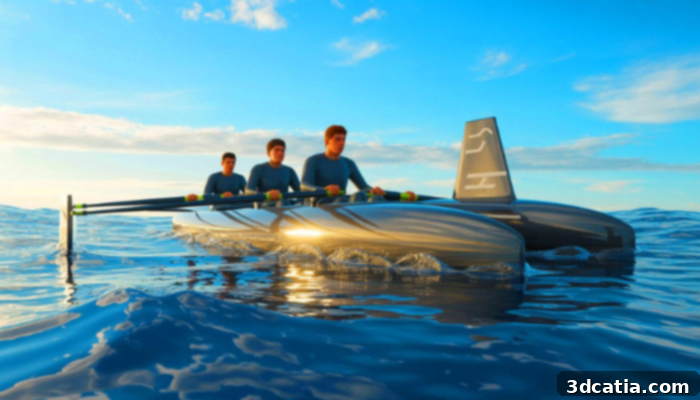
A 3D mockup design of the Emily-Rose boat, showcasing the integration of advanced materials and custom 3D printed components. (Credit: Maclean Foundation)
Durability in the Harshest Environments: Engineered Resins at Sea
To ensure the longevity and unwavering reliability of their 3D printed parts, the Maclean team meticulously utilized Formlabs’ latest engineering resins. These advanced materials are specifically formulated to deliver exceptional strength, superior durability, and remarkable resistance to environmental stressors, effectively rivaling the robust properties of traditional production materials. This capability was absolutely crucial for components exposed to the relentless rigors of the open ocean, where environmental factors like intense UV radiation, corrosive saltwater, and constant mechanical stress can rapidly degrade conventional materials. Many of the final adjustments and bespoke additions to Emily-Rose were made possible precisely by the inherent adaptability and material science advancements offered by additive manufacturing.
For instance, the team ingeniously designed and 3D printed a specialized gimbal mechanism for their Jetboil stove. A gimbal is an indispensable device on a rocking boat, specifically engineered to keep the stove level despite the boat’s motion, thereby preventing dangerous spills and ensuring safe, stable operation during crucial meal preparation. Traditional solutions for such a mechanism might be bulky, heavy, or difficult to integrate seamlessly into a small vessel; however, 3D printing allowed for a lightweight, custom-fitted, and highly effective design that perfectly met their unique requirements. Furthermore, a specialized UV and salt-resistant fixture was created for their vital satellite dish. This specific part is absolutely critical for maintaining continuous communication and navigation capabilities throughout the entire voyage, providing a lifeline to shore and essential weather updates. These particular 3D printed prototypes and final parts are meticulously engineered to withstand prolonged exposure to intense, unfiltered sunlight, continuous mechanical stress from waves and boat movement, and the severely corrosive effects of saltwater – conditions that would quickly compromise and degrade many conventional plastics and metals over the course of a 9,000-mile journey.
Ewan Maclean reiterated the profound significance of this technological leap in marine engineering: “Ocean conditions are one of the harshest environments for any material. The fact we can print, fit and rely on these parts at sea is a big shift in how we think about outfitting boats.” This powerful statement underscores the paradigm shift that accessible desktop 3D printing, combined with high-performance engineering resins, is bringing to marine exploration, high-performance sports, and other demanding applications. It fundamentally opens up new possibilities for rapid prototyping, efficient on-demand part replacement in remote locations, and the creation of highly customized, durable solutions in the most challenging and extreme settings imaginable.
The Power of Desktop 3D Printing: Agility, Customization, and In-House Control
A fundamental and truly transformative advantage in the Maclean brothers’ innovative approach was the strategic adoption and masterful use of desktop-scale 3D printing, particularly with the Formlabs Form 4. This powerful capability granted the brothers unprecedented agility and control, enabling them to iterate designs in real-time. Instead of facing the often prohibitive delays, high costs, and logistical complexities associated with outsourcing manufacturing to external suppliers, they maintained complete, end-to-end control over the entire production process. This started from the initial conceptualization and detailed digital design, extended through the physical production of parts, and culminated in the final installation on Emily-Rose. This level of in-house autonomy proved to be invaluable, particularly for a bespoke project requiring such precise customization, rapid adaptation, and absolute reliability under extreme pressure.
The ability to custom-fit each part was paramount, a critical factor for success in an expedition of this nature. Every single component, whether it was a meticulously designed ergonomic rowing seat or a robust navigation system mount, was specifically tailored to the unique dimensions and demanding requirements of both the Emily-Rose boat and its three-man crew. This ensures not only optimal functionality and maximum comfort but also significantly enhanced safety – elements that are absolutely non-negotiable for a journey of this extreme nature, where failure of a single part could have catastrophic consequences. The iterative design process, facilitated by rapid 3D prototyping, meant that new ideas or necessary modifications could be quickly conceived, designed digitally, prototyped physically, tested rigorously for fit and function, and then refined repeatedly until absolute perfection was achieved. For instance, a minor but critical adjustment to a mounting bracket could be designed, printed, and installed within a matter of hours, rather than weeks or even months if traditional manufacturing processes were employed, significantly accelerating the boat’s outfitting phase and allowing for optimal fine-tuning.
Ultimately, the unparalleled flexibility offered by advanced 3D printing solutions allowed the brothers to respond swiftly and effectively to new insights, unforeseen challenges encountered during construction, or necessary modifications that only became apparent during testing. This rapid prototyping and refinement capability meant that crucial parts of the boat could be continually optimized without incurring significant delays or budget overruns, ensuring Emily-Rose was perfectly prepared and equipped for the monumental Pacific crossing. It truly highlights how accessible, powerful, and indispensable modern Formlabs 3D printers, like the Form 4, have become for complex engineering tasks far beyond traditional manufacturing environments, empowering innovators to bring their most ambitious visions to life.
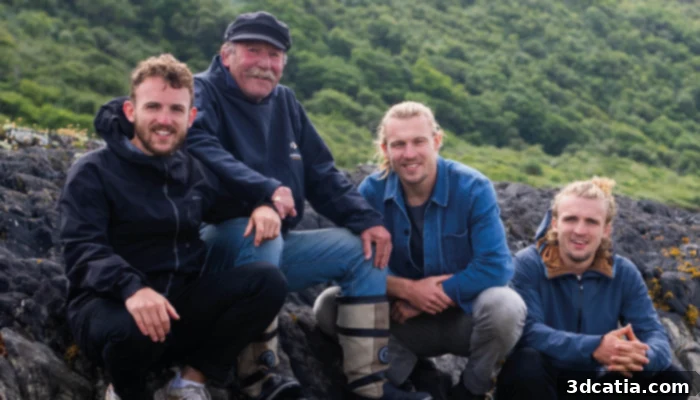
The Maclean Brothers: Ewan, Jamie, and Lachlan, whose foundation drives their humanitarian mission. (Credit: Maclean Foundation)
Beyond the Horizon: A Humanitarian Mission for Clean Water in Madagascar
While Emily-Rose stands as a compelling and innovative showcase for the advanced capabilities of additive manufacturing in the most extreme conditions, the profound and inspiring purpose behind the Maclean brothers’ extraordinary journey is unequivocally humanitarian. Through their dedicated charitable organization, the Maclean Foundation, they are collaborating with invaluable local partners in Madagascar to establish and ensure long-term, sustainable access to safe drinking water. This vital mission directly addresses one of the most fundamental human needs and aims to bring about transformative, lasting change in vulnerable communities that desperately lack this basic resource.
The severity of the water crisis in regions like the Ambohimanarina municipality in Madagascar is stark and deeply concerning. Currently, a distressing statistic reveals that only a mere 14% of its residents have consistent access to clean, potable drinking water. This profound lack of access to safe water leads to widespread and preventable health issues, including waterborne diseases, significantly impacts children’s education due to illness and time spent fetching water, and severely hinders overall economic development within these communities. The substantial funds meticulously raised from this arduous Pacific crossing project will be directly channeled into constructing essential boreholes and developing comprehensive, resilient water systems. These infrastructures are designed not just as temporary fixes but as robust, long-term solutions intended to permanently alter this challenging reality, providing communities with a reliable and sustainable source of clean water for generations to come. The Maclean Foundation’s unwavering commitment ensures that the legacy of their epic row will be felt far beyond the finish line, impacting thousands of lives with the gift of health and opportunity.
A Legacy of Endurance and Innovation: Previous Records and Future Impact of 3D Printing
The Maclean brothers are certainly no strangers to monumental ocean challenges, having already etched their names in maritime history. In 2020, they previously set a world record for the fastest Atlantic crossing, completing that demanding journey in an impressive 35 days. This prior achievement firmly established their credentials not just as elite ocean rowers but also as individuals driven by an exceptional spirit of adventure, unwavering determination, and a profound commitment to pushing the boundaries of human capability. Their current Pacific mission, however, is significantly longer, approximately 2.5 times the distance, and inherently more demanding, presenting an even greater test of their physical endurance, mental fortitude, and the reliability of their equipment. Crucially, this journey also serves as a vital, real-world test case for the robustness and reliability of industrial 3D printing and advanced engineered materials, demonstrating unequivocally how additive manufacturing can deliver high-performance parts that are utterly dependable and mission-critical in the most extreme and unforgiving environments on Earth.
This pioneering journey highlights the rapidly evolving and expanding role of 3D printing innovations. It’s no longer just a technology relegated to rapid prototyping in a laboratory setting; it is now proving its invaluable worth in real-world, life-critical applications where performance and reliability are paramount. The invaluable lessons learned from Emily-Rose’s performance – from the meticulously custom ergonomic seats that prevent injury and optimize power transfer, to the durable mounts and gimbals that secure vital equipment against the relentless ocean – will undoubtedly inform future developments in marine engineering, advanced expedition outfitting, and even broader industrial sectors requiring resilient, highly customizable components for harsh operating conditions. The Maclean brothers are not merely rowing across an ocean; they are symbolically sailing into a new era of engineering possibilities, proving that when unwavering human ambition meets ingenious technological innovation, the seemingly impossible becomes achievable, and the positive impact can resonate globally, driving both technological advancement and significant social good.
What are your thoughts on utilizing custom 3D printed parts for such a challenging, 9,000-mile ocean crossing? Share your insights and perspectives in the comments section below, or engage with us on our LinkedIn and Facebook pages! Don’t miss out on the latest advancements in additive manufacturing – sign up for our free weekly Newsletter here to get the freshest 3D printing news delivered directly to your inbox. You can also explore all our insightful videos on our YouTube channel. If your interests lie in more 3D printing news in the transportation sector, we invite you to visit our dedicated page HERE for comprehensive coverage and updates on how additive manufacturing is shaping the future of mobility.
*All Photo Credits: Maclean Brothers / Maclean Foundation