
Lazer Sport’s 3D Printed KinetiCore Helmets: Revolutionizing Cyclist Safety & Design with Additive Manufacturing
The cycling industry is witnessing a transformative era, driven significantly by the advancements in 3D printing technology. This innovative manufacturing method is no longer a niche concept but a pivotal force shaping the future of cycling gear, from more ergonomic saddles and enhanced bike comfort to fully customizable bicycles like those pioneered by INTENSE and Aston Martin. This week marks a significant milestone in this evolution, as Lazer Sport NV, a leading European cycling helmet manufacturer, has proudly announced the development of a groundbreaking lineup of 3D printed bicycle helmets featuring their revolutionary KinetiCore technology. This move not only underscores Lazer Sport’s commitment to innovation but also sets a new benchmark for cyclist safety, comfort, and environmental responsibility.
Lazer Sport is at the forefront of this innovation, introducing a new generation of bicycle helmets meticulously engineered to drastically improve cyclist comfort and safety while simultaneously minimizing its ecological footprint. To achieve these ambitious goals, the company has strategically embraced the comprehensive capabilities of the Siemens Xcelerator industrial software suite. This pivotal decision is designed to bolster the launch and ongoing development of KinetiCore, a proprietary technology developed by Lazer Sport to specifically mitigate rotational impact forces – a critical factor in many cycling-related head injuries. In the unfortunate event of a fall where the skull undergoes direct or oblique impact, the brain is subjected to both linear acceleration and dangerous rotational forces. KinetiCore protection, distinguished by its unique and integrated deformation zones, actively endeavors to minimize the repercussions of both linear and rotational forces during such impacts. These specialized components, intricately crafted to deform upon impact, strategically redirect energy away from the brain, offering a superior level of protection. Lazer Sport’s primary aim is to deliver comprehensive impact protection for all cyclists, whether they are navigating bustling city streets, conquering challenging mountain trails, or embarking on leisurely weekend rides across varied terrain.
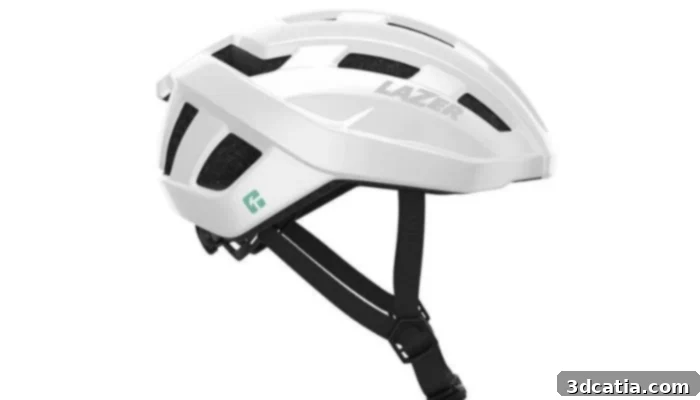
Photo Credits: Lazer Sport
The Science Behind KinetiCore: Advanced Rotational Impact Protection
Understanding the biomechanics of head injuries is crucial to appreciating the significance of KinetiCore. Traditional helmet designs primarily focus on absorbing linear impacts, which occur when the head hits a surface straight on. However, many real-world crashes involve oblique impacts, causing the head to rotate violently. This rotational motion can lead to severe brain injuries, including concussions and more serious traumatic brain injuries, as the brain twists within the skull. KinetiCore directly addresses this challenge by integrating crumple zones within the helmet’s EPS foam liner. Unlike traditional designs, these innovative structures are designed to deform and pivot in a controlled manner upon impact, effectively dissipating both direct and rotational energy. This groundbreaking approach ensures that the forces transmitted to the brain are significantly reduced, offering a new frontier in cyclist safety. The design flexibility afforded by 3D printing has been instrumental in creating these complex, precisely engineered deformation zones, which would be exceedingly difficult, if not impossible, to achieve with conventional manufacturing techniques.
3D Printing and Digital Simulation: Accelerating Innovation in Helmet Design
The development of the KinetiCore technology was meticulously facilitated by the integrated capabilities of Siemens Xcelerator, a comprehensive and integrated portfolio of software and services from Siemens Digital Industries Software. This powerful suite is renowned for its wide array of 3D printing solutions, fostering synergistic partnerships across the additive manufacturing industry. Lazer Sport leveraged Siemens’ NX™ software extensively for the intricate product design and manufacturing processes, complementing it with Simcenter™ 3D software for sophisticated digital simulation and rigorous verification. This strategic combination allowed the KinetiCore development team to revolutionize their design and testing workflow.
Employing advanced CAD (Computer-Aided Design) programs, the team conducted an enormous volume of simulations to accurately foresee and analyze the strength and performance of the helmet under various realistic impact scenarios. This digital-first approach significantly expedited the entire development process and proved immensely more cost-effective than traditional methods. By iteratively testing countless virtual models, Lazer Sport avoided the protracted timelines and prohibitive expenses associated with manufacturing and physically testing numerous prototypes. This paradigm shift in development allowed for unparalleled design complexity and optimization, ensuring that every iteration brought them closer to their ultimate safety and performance goals. Emiel Spreeuwers, Product Designer at Lazer Sport, succinctly articulated the transformative impact of this approach:
“The development of KinetiCore required a huge amount of design changes and simulations. We chose the Siemens Xcelerator portfolio for its wide range of applications and the ability to seamlessly connect 3D design with 3D printing for prototyping and digital simulation. With Siemens’ NX we were able to create more complex designs for our helmets and molds and simulate them. This allowed for greater design complexity, enhanced freedom, and faster time to market.”
Beyond Safety: Enhanced Comfort, Performance, and Sustainability
The advantages of KinetiCore technology extend far beyond its superior safety features. Thanks to the precise control offered by 3D printing and advanced design software, helmets incorporating KinetiCore are up to an impressive 23% lighter than previous comparable models. This significant weight reduction directly translates into enhanced cyclist comfort, reducing neck strain and fatigue on longer rides, and improving overall performance. Furthermore, the innovative design facilitated by this technology allows for an astounding 12% greater cooling efficiency. This is achieved through strategically placed and meticulously engineered vents that effectively channel cool air to the rear of the helmet while expelling hot air, significantly improving rider comfort, especially in warmer climates or during intense exertion.
Lazer Sport’s commitment to sustainability is also deeply embedded in the KinetiCore philosophy. The new helmets are made with less plastic compared to earlier comparable models, a direct result of design optimization and the additive manufacturing process which can produce complex structures with minimal material waste. This focus on optimal performance, coupled with environmentally friendly materials and a move towards potentially more self-sufficient production models, aligns with global efforts to reduce ecological impact. By the end of 2024, KinetiCore technology is slated for integration into an extensive range of 20 different Lazer Sport helmet models, making these advanced bicycle helmets accessible to a wide spectrum of cycling enthusiasts and offering an immense improvement in safety, comfort, and design across the board.
The Future of Cycling Safety is 3D Printed
The introduction of Lazer Sport’s KinetiCore helmets represents a pivotal moment in the evolution of cycling safety. By harnessing the power of 3D printing and sophisticated digital simulation tools like Siemens Xcelerator, Lazer Sport has not only elevated the standards of head protection but has also demonstrated the immense potential for innovation in sports equipment design. The ability to create lightweight, highly ventilated, and exceptionally protective helmets with a reduced environmental footprint showcases a holistic approach to product development. This is more than just a new helmet; it’s a testament to how cutting-edge technology can be leveraged to make cycling a safer, more comfortable, and more sustainable activity for everyone. The seamless integration of advanced materials, intelligent design, and additive manufacturing processes sets a compelling precedent for the entire industry, encouraging further exploration into how these technologies can continue to push the boundaries of what’s possible in athlete protection and performance.
What are your thoughts on Lazer Sport’s innovative 3D printed bicycle helmets and the KinetiCore technology? We invite you to share your insights in a comment below or join the conversation on our LinkedIn, Facebook, and Twitter pages! Don’t miss out on the latest 3D printing news – sign up for our free weekly newsletter here to get updates delivered straight to your inbox. You can also explore all our videos and more content on our YouTube channel.
*Cover Photo Credits: Freepik