
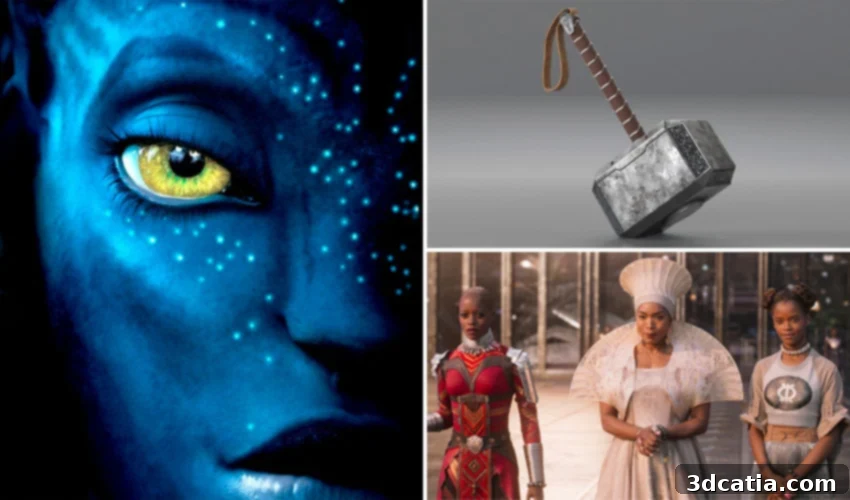
How 3D Printing is Revolutionizing Filmmaking: Crafting Cinematic Magic from Props to Prosthetics
Special effects have long been the backbone of cinematic spectacle, captivating audiences and transporting them to extraordinary worlds. In today’s dynamic film industry, additive manufacturing, commonly known as 3D printing, has emerged as a groundbreaking technology, fundamentally changing how these visual wonders are brought to life. From the intricate characters of animated features to the formidable costumes of Marvel blockbusters and the breathtaking sets of Avatar, 3D technologies are now indispensable tools on diverse film sets worldwide. This innovative approach allows filmmakers to materialize highly detailed costumes, essential props, unique design prototypes, and a myriad of other objects with unprecedented precision and efficiency. The integration of 3D printing significantly enhances the overall realism, creative scope, and production timelines of films, pushing the boundaries of what’s possible on screen. To illustrate this transformative impact, we’ve compiled a collection of the most awe-inspiring and captivating applications of 3D printing across the movie industry.
The Art of Stop-Motion: LAIKA Studios and Missing Link
LAIKA Studios, renowned for its mastery of stop-motion animation, elevated its craft with the release of the animated film “Missing Link” in April 2020. This ambitious project showcased the incredible synergy between traditional animation techniques and advanced additive manufacturing. Collaborating closely with Stratasys, LAIKA utilized cutting-edge PolyJet 3D printing technology to produce an astonishing array of puppets that embodied the film’s diverse characters. PolyJet’s unique capability allowed for the creation of parts with intricate details, vibrant colors, and varying textures, faithfully reproducing the subtle expressions and nuanced emotions of each character. The sheer scale of this undertaking was remarkable: over 300,000 individual parts were 3D printed, covering everything from the characters’ countless facial expressions to intricate set pieces. This extensive use of 3D printing enabled LAIKA to achieve an unprecedented level of fluidity and detail in their animation, resulting in a truly amazing and immersive cinematic experience. The ability to rapidly produce thousands of slightly varied facial expressions dramatically reduced the time and labor traditionally associated with stop-motion animation, allowing animators to focus on performance and storytelling.
Hela’s Intricate Headpiece from Thor: Ragnarok
For Marvel aficionados, Hela, the Goddess of Death and Thor’s formidable half-sister, is an unforgettable antagonist from “Thor: Ragnarok.” Her iconic appearance is largely defined by her majestic and menacing headpiece, a true marvel of costume design. Creating such an intricate and visually striking accessory posed significant challenges for traditional manufacturing methods. To achieve the desired level of detail and structural integrity, Hela’s headpiece was meticulously 3D printed. The process began with a precise 3D scan of actress Cate Blanchett’s head, ensuring a custom, perfectly fitting piece. Selective Laser Sintering (SLS) technology was employed, utilizing a composite powder reinforced with carbon fibers. This particular material choice was crucial, offering an optimal balance of lightweight design – essential for an actor to wear comfortably during long shoots – and remarkable stability, allowing the headpiece to maintain its complex shape throughout filming. According to its creators at Ironhead Studio, the helmet weighs approximately 4 lbs (1.8 kg) and was printed in several interlocking parts. This modular approach enabled easier assembly, painting, and fitting, meeting Marvel’s exacting creative and practical requirements for a character as pivotal as Hela. The result was a stunning, imposing headpiece that perfectly encapsulated the Goddess of Death’s power and presence.
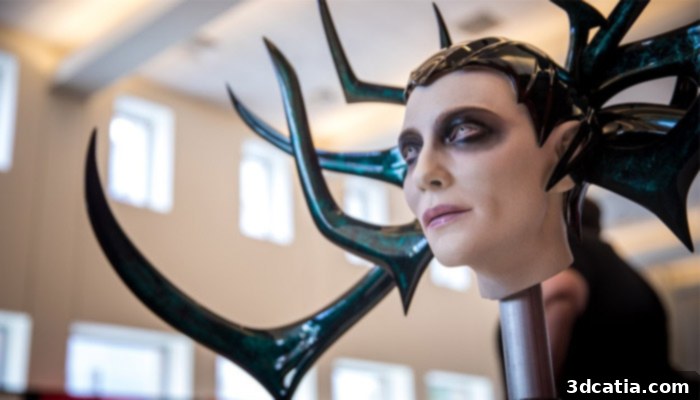
Photo Credits: Ironhead Studio
Additive Manufacturing Across the Marvel Cinematic Universe: Thor Saga
Hela’s costume is far from the only instance of 3D printing gracing the screen in Marvel’s iconic films. The Marvel Cinematic Universe (MCU) has consistently embraced additive manufacturing for a wide array of props, costumes, and even set dressing, demonstrating its versatility and efficiency. In the recent “Thor: Love and Thunder,” eagle-eyed viewers might have spotted a Formlabs Form 3+ 3D printer prominently featured within Jane Foster’s laboratory. This subtle product placement highlights the increasingly ubiquitous nature of 3D printing in scientific and advanced settings, mirroring its real-world integration. Going back further, in “Thor: The Dark World,” the creation of Thor’s legendary hammer, Mjölnir, was a testament to the power of binder jetting technology. On a Voxeljet printer, polymer powders were fused to craft the highly detailed prop. This advanced printing technique allowed for an astonishing level of intricacy on the final hammer, capturing every rune and battle-worn detail that makes Mjölnir instantly recognizable. The ability to produce such high-fidelity replicas with structural integrity and visual accuracy ensures that even the most iconic props maintain their magical allure on screen, while also offering practical benefits for production, such as creating multiple versions for various stunts or close-up shots.
Guardians of the Galaxy: Custom Costumes and Props
The vibrant and imaginative universe of the “Guardians of the Galaxy” franchise provided fertile ground for the application of 3D printing, especially for its distinctive costumes and weaponry. In the first “Guardians of the Galaxy” film, renowned prop specialists FBFX Ltd turned to 3D printing to realize key elements of the characters’ iconic looks. Most notably, they created Star-Lord’s recognizable mask and the formidable armor costume for the Kree warrior Korath. This project marked a significant milestone for FBFX Ltd, as it was the very first time their team produced a fully 3D printed costume that was worn in a major motion picture. To achieve the complex geometries and material properties required, the team utilized an Objet500 Connex printer. This advanced machine, leveraging Stratasys’ PolyJet technology, is capable of combining multiple colors and materials within a single print, offering unparalleled design freedom and reducing assembly time. Beyond FBFX Ltd, another acclaimed UK-based props team, Prop Shop, also contributed to the “Guardians of the Galaxy” films. They extensively used 3D printing to manufacture some of the franchise’s unique and intricate weapons, as well as various components for the Guardians’ spaceship, the Milano. The precision and customization offered by 3D printing were crucial in bringing these imaginative designs from concept to screen, ensuring every detail contributed to the film’s rich aesthetic and narrative.
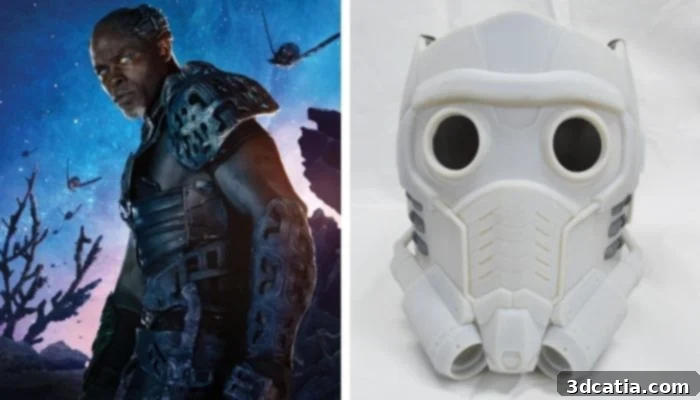
Korath’s armor and Star Lord’s mask before painting and other detailing (photo credits: Marvel)
Black Panther and the Evolving Role of 3D Printing in the MCU
As the preceding examples clearly illustrate, Marvel Studios stands as a pioneering force in the integration of 3D printing into the realm of cinematic production. The studio has adeptly recognized additive manufacturing’s unparalleled ability to create highly customized models and components, a critical advantage within the often-tight deadlines and demanding creative visions of the film industry. A prime example of this was seen in the 2018 blockbuster “Black Panther,” where 3D printing was instrumental in bringing Queen Ramonda’s extraordinary and visually stunning costume to life. These intricate garments, rich in cultural symbolism and complex design, would have been exceedingly difficult, if not impossible, to achieve with traditional tailoring alone. The technology allowed for the creation of precise patterns and structural elements that formed the foundation of her regal attire. In the highly anticipated sequel, “Wakanda Forever,” 3D printing once again took center stage, showcasing even more intricate and meticulously crafted costumes. Renowned designer Julia Koerner, celebrated for her groundbreaking work that seamlessly blends architecture, advanced 3D technology, and avant-garde fashion design, was the mastermind behind these visually stunning outfits. Her innovative use of additive manufacturing pushed the boundaries of costume design, creating pieces that were both aesthetically breathtaking and functionally robust. These instances profoundly highlight the incredible potential and increasingly vital role of additive manufacturing within the entire Marvel Cinematic Universe (MCU), enabling unprecedented levels of detail, customization, and creative expression.
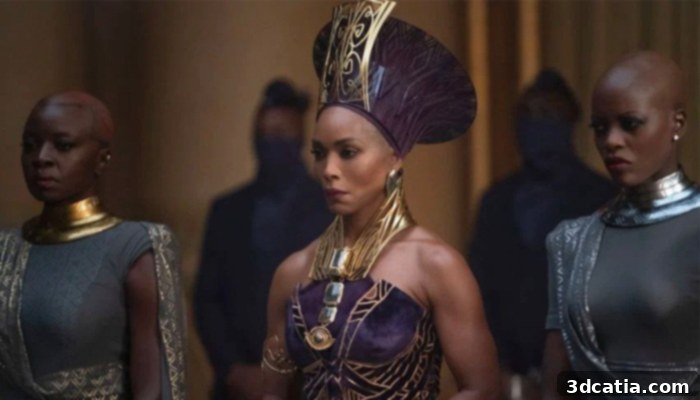
Iron Man’s 3D Printed Suit: From Screen to Reality
Continuing our exploration of 3D printed applications within Marvel movies, we arrive at one of the most iconic and recognizable pieces of cinematic armor: Iron Man’s suit. Contrary to what many might assume, the elaborate armor worn by Robert Downey Jr. as Tony Stark was not engineered by Stark himself but by the American special effects studio Legacy Effects. This acclaimed studio specializes in a wide range of practical effects, including creature design, prosthetic makeup, animatronics, and the creation of elaborate special suits. To meet the demanding production schedules and budgetary constraints, Legacy Effects extensively utilized additive manufacturing and other 3D technologies. These methods proved invaluable for several reasons: they significantly saved time in the design and fabrication stages, reduced overall costs compared to traditional sculpting and molding, and, perhaps most crucially, facilitated rapid prototyping. The ability to quickly iterate and test design prototypes for the armor allowed for continuous refinement, ensuring both aesthetic perfection and practical functionality for the actor. Furthermore, 3D printing was essential for producing spare parts and interchangeable components, a common necessity for complex movie props. Beyond the professional film industry, the impact of Iron Man’s suit has resonated deeply within the Maker community. It’s truly amazing to witness the countless self-created, 3D-printed Iron Man suits developed by enthusiasts, many of which astonishingly replicate the intricate details and overall appearance of the original cinematic armor, showcasing the democratizing power of 3D printing.
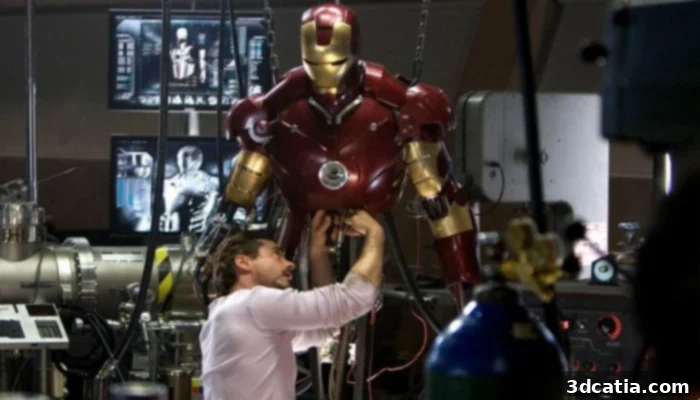
Iron Man’s armor, a testament to 3D printing’s capabilities in film
The Demogorgon Creature from Stranger Things
Since its explosive debut in the summer of 2016, the American Netflix series “Stranger Things” has captivated global audiences with its compelling blend of science fiction, horror, and 80s nostalgia. Directed by the visionary Duffer Brothers, the series introduces viewers to a world where supernatural entities lurk just beneath the surface of reality. Among the most terrifying and iconic of these fantastic creatures is the Demogorgon, a predatory monster from the Upside Down. The chilling realism of the Demogorgon was significantly enhanced by the innovative use of 3D printing in its design and fabrication. California-based design studio Aaron Sims Creative, renowned for its work on creature design for film and television, took on the challenge of bringing the Demogorgon to life. To achieve the creature’s complex anatomy and menacing features, the studio leveraged its array of four Formlabs 3D printers. These printers were instrumental in individually fabricating the 20 distinct parts that comprise the creature’s physical model, which stands approximately 50 cm tall. The ability of Formlabs’ printers to produce highly detailed and structurally sound components allowed the designers to iterate quickly, refine the creature’s terrifying aesthetic, and ensure that every aspect contributed to its on-screen presence. This application underscores how 3D printing facilitates the creation of elaborate practical effects, complementing CGI to deliver truly impactful monster designs.
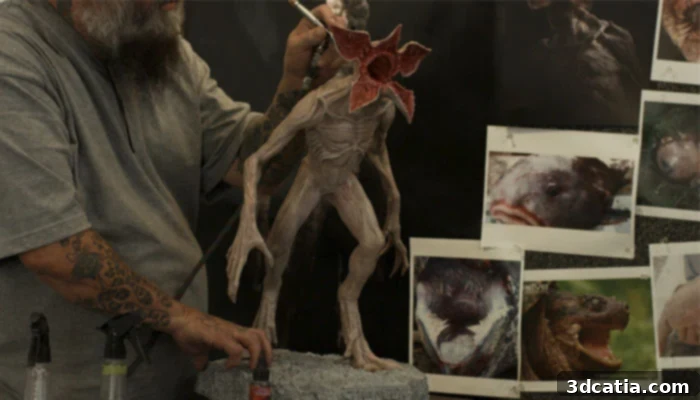
The final version of the Demogorgon, brought to life with 3D printing
A 3D Printer in Ocean’s 8: The Heist and the Replica
The star-studded heist film “Ocean’s 8,” a captivating spin-off of the “Ocean’s” saga, showcased not only a cunning plot but also a fascinating, albeit subtle, nod to additive manufacturing. If you’ve seen the movie, you might have missed a crucial detail: the team of sophisticated spies resorts to 3D printing to replicate valuable jewelry and costume pieces for their elaborate scheme. In a pivotal scene, a MakerBot Replicator Z18 3D printer is visible in the background, diligently creating a flawless replica of a priceless Cartier diamond necklace. The fictional replica is so convincing that it even manages to fool characters like Anne Hathaway’s Daphne Kluger into believing it’s the authentic article. While this cinematic portrayal impressively highlights the growing prominence of 3D printing, it also sparked a lively debate among viewers and tech enthusiasts. Many doubted whether a desktop-grade machine like the MakerBot Replicator Z18 could genuinely achieve such a perfect final quality and finish, indistinguishable from real, high-value jewelry. Regardless of the technical accuracy of that specific scene, the inclusion of a 3D printer in a major Hollywood blockbuster signifies the technology’s rising profile and its perceived capability to create highly convincing replicas. It speaks volumes about the increasing mainstream awareness of 3D printing and its potential applications, both legitimate and illicit, as portrayed in the magic of cinema. Who are we to doubt the creative license and storytelling power of filmmakers?

The diamond necklace replica, a key plot device made possible by 3D printing in Ocean’s 8
James Bond and the 3D Printed Aston Martin DB5
Even for those not deeply immersed in the world of cinema, the name Agent 007, James Bond, evokes immediate recognition. The legendary Bond film series, a cultural phenomenon since the 1960s, boasts a rich history of action, espionage, and iconic gadgets. For the production of the 2012 sequel “Skyfall,” the filmmakers embraced modern technology, integrating 3D printing into their prop-making process. Recognizing the irreplaceable value and prohibitively high cost of using an original Aston Martin DB5 for intense action sequences, the production team required reliable “stunt doubles” that could withstand cinematic destruction, including bursting into flames. To fulfill this critical need, Propshop Modelmakers Ltd, a company renowned for its expertise in creating film props, commissioned Voxeljet AG to produce three meticulously detailed Aston Martin DB5 models. The German 3D printing manufacturer utilized its industrial large-format VX1000 3D printer, employing binder jetting technology. This method allowed for the creation of incredibly precise and dimensionally accurate vehicle models, which ultimately looked confusingly similar to the original luxury car. The ability to rapidly produce multiple, identical, high-fidelity replicas at a fraction of the cost and risk of using actual vintage vehicles was a game-changer for the film’s spectacular action sequences, allowing for more elaborate and daring stunts without compromising authenticity. This use case perfectly exemplifies how 3D printing can be leveraged for both practical efficiency and stunning visual realism in high-budget productions.
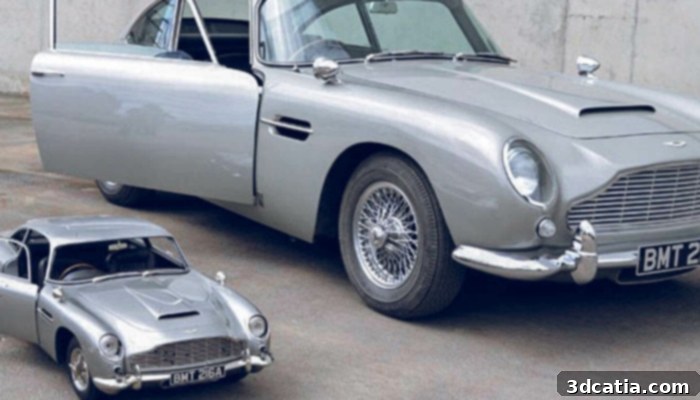
The 3D printed Aston Martin DB5 models for James Bond’s “Skyfall”
Chase Me: A Labor of Love in Stop-Motion
“Chase Me” is a visually captivating short film by French director Gilles-Alexandre Deschaud, a testament to the dedication and innovative spirit in independent animation. The film unfolds the ethereal journey of a young girl through a mystical forest, brought to life through the intricate art of time-lapse animation. This labor-intensive technique necessitated the production of an astounding number of physical parts – over 2500 individual pieces had to be precisely printed. For the entirety of the project, Deschaud exclusively relied on the Form 1+ 3D printer, which operates using the Stereolithography (SLA) process. SLA technology was chosen for its ability to produce highly detailed and smooth parts, crucial for the nuanced expressions and movements of the stop-motion puppets. Each 3D printed puppet boasted a remarkable resolution of 100 microns, ensuring crisp details and seamless transitions. The sheer scale of the animation process is staggering: it took approximately one week to create a mere four-second sequence of the film. In total, Director Deschaud dedicated two arduous years to bringing “Chase Me” to fruition, highlighting the profound commitment and patience required for such a sophisticated stop-motion project. This film stands as a brilliant example of how even independent filmmakers can leverage advanced 3D printing to achieve their artistic visions, pushing the boundaries of what is possible in animated storytelling.
Recreating Dinosaurs With 3D Printing for Jurassic Park
Dinosaurs, creatures of a bygone era, may have vanished from our planet millions of years ago, but their awe-inspiring presence continues to be resurrected through the marvels of 3D technology. This innovative approach allows paleontologists and dedicated dinosaur enthusiasts to meticulously replicate various features of these magnificent beasts, bringing them back to vivid, tangible life. One of the earliest, and perhaps most memorable, cinematic applications of this concept was playfully depicted by the character Billy Brennan in “Jurassic Park 3.” In the film, he ingeniously 3D printed a replica of a Spinosaurus’s resonance chamber, demonstrating an imaginative way to recreate the creature’s distinctive sounds.
Several years later, the “Jurassic Park” franchise fully embraced 3D printing for the production of “Jurassic World.” For this installment, additive manufacturing was extensively used to create the detailed skulls of the prehistoric creatures, ensuring scientific accuracy and cinematic impact. The technology allowed for complex anatomical structures to be replicated with precision, providing a solid foundation for the visual effects team. The commitment to realism continued in “Jurassic World: Fallen Kingdom,” where 3D printing played an even more expansive role. Four full-scale dinosaur replicas were meticulously crafted using 3D printing, standing as imposing physical representations alongside other creatures brought to life through processes like CNC milling. These life-sized models were crucial for on-set practical effects, providing actors with tangible references and enhancing the interaction between humans and dinosaurs. The versatility of 3D printing, enabling everything from small anatomical parts to massive, detailed replicas, underscores its invaluable contribution to the enduring appeal of the “Jurassic Park” saga and its ability to transport audiences into a world where dinosaurs roam once more.
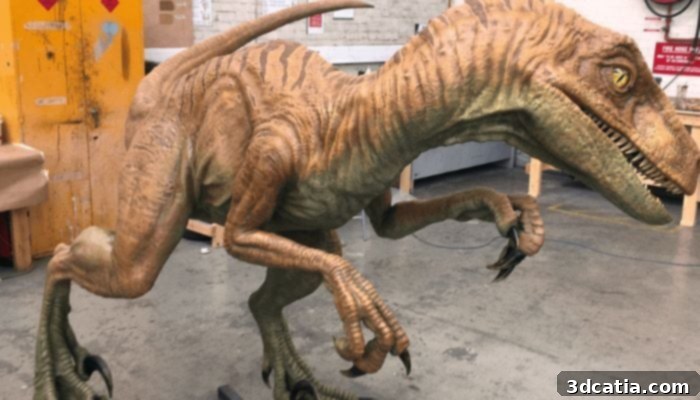
One of the four 3D printed dinosaurs made for Jurassic World (photo credits: Builder)
3D Printing in the Whimsical World of Kubo and the Two Strings
“Kubo and the Two Strings,” another magnificent production from LAIKA Studios directed by Travis Knight, enchanted family audiences upon its release in 2016. This animated film is a masterclass in the intricate art of stop-motion, a technique profoundly enhanced and revolutionized by the strategic application of 3D printing. The film’s distinctive visual style and the nuanced performances of its characters were made possible by using 3D printing to create the puppets’ limbs and, most notably, an astonishing range of facial expressions. For the main character, Kubo, a 22 cm puppet, an astounding total of 23,000 unique faces were individually 3D printed. Each of these faces captured a slightly different expression or mouth shape, allowing for the subtle, fluid animation that defines LAIKA’s work. Through clever design and additional manual manipulation during the animation process, these 23,000 physical faces could be combined and interchanged to generate an incredible 48 million different potential facial movements for Kubo. This unprecedented level of expressive capability transformed the storytelling, imbuing the puppet with a depth of emotion previously unattainable in stop-motion. The use of 3D printing here didn’t just simplify production; it unlocked new artistic possibilities, demonstrating how technology can serve to elevate traditional art forms to new, breathtaking heights of detail and narrative impact.
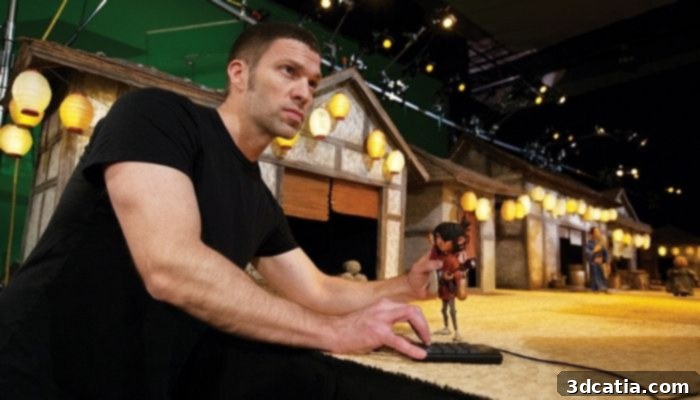
A film shot in stop motion with the help of 3D printed figurines and facial expressions
Pinocchio, the Marionette from Guillermo del Toro’s Animated Film
Another compelling and critically acclaimed example of 3D printing’s profound impact on the world of cinema is beautifully showcased in Guillermo del Toro’s latest animated masterpiece, “Pinocchio.” This darker, more nuanced retelling of the classic tale relied heavily on innovative techniques to bring its unique stop-motion characters to life. The intricate creation of the titular marionette, Pinocchio, was entrusted to Laser Prototype Europe Ltd (LPE), a highly reputable company located in East Belfast, United Kingdom, known for housing the oldest rapid prototyping service office in the entire British and Irish region. LPE was tasked with the formidable challenge of not only capturing precise, intricate details in each individual part of the marionette but also ensuring their seamless assembly to create a fully articulated and mobile puppet. To achieve this, LPE utilized advanced high-resolution metal 3D printing technology, employing either Direct Metal Laser Sintering (DMLS) or Selective Laser Sintering (SLS), though the specific technique was not publicly disclosed. The precision offered by these metal additive manufacturing processes was crucial for creating durable, lightweight, and incredibly detailed components for the puppet’s internal mechanisms and external features. With meticulous attention to craftsmanship, LPE successfully printed and assembled these complex pieces, culminating in an awe-inspiring final product. This metal 3D printed Pinocchio captivated audiences in the film, proving that additive manufacturing can imbue traditional animation with unparalleled levels of detail, functionality, and artistic integrity.
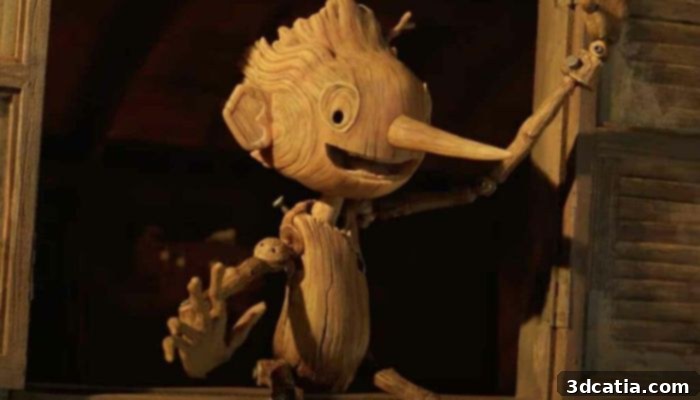
3D Printed Dentures in ‘Renfield’: A Dracula Transformation
The highly anticipated movie “Renfield,” which premiered in mid-April, offered audiences a fresh and darkly comedic take on the Dracula mythos, starring Nicolas Cage as the iconic vampire count. An intriguing and essential aspect of Cage’s mesmerizing portrayal was the sophisticated incorporation of 3D printed dentures. This particular application brilliantly showcases the intersection of advanced dental technology and cinematic magic, highlighting how 3D printing can be used for highly personalized and realistic prosthetics.
To create Dracula’s signature fangs and overall dental aesthetic, a skilled dental technician first employed digital scans of Nicolas Cage’s actual teeth. This digital data served as the foundation for designing custom dentures that were then precisely 3D printed. The use of 3D printing ensured an exact and comfortable fit for the actor, which is paramount for maintaining character immersion and delivering lines naturally. Furthermore, this method allowed for intricate detailing and an organic appearance, enabling Cage to convincingly embody the ancient, predatory character of Dracula without discomfort or visual compromise. This innovative application underscores the rapidly growing role of 3D printing in the film industry, particularly in the realm of character prosthetics. It facilitates the creation of intricate and lifelike custom pieces, significantly enhancing the cinematic experience by allowing actors to fully transform into their roles. The integration of 3D printed dentures in “Renfield” exemplifies the expanding possibilities of additive manufacturing in both dentistry and movie production, revolutionizing the field of prosthetics and character design by offering unparalleled customization and realism.
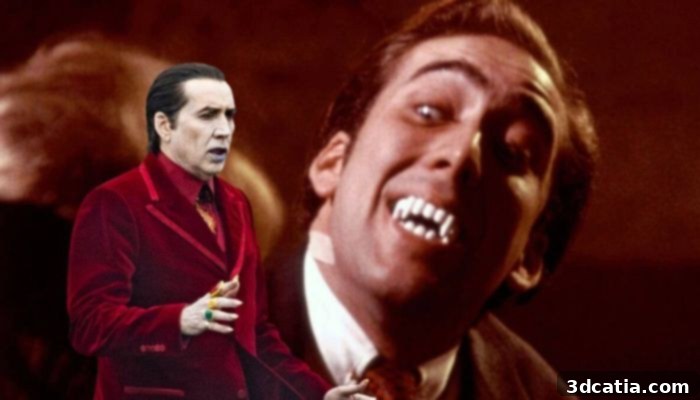
Photo credits: Universal
3D Printed Props in HBO Series ‘Raised by Wolves – A New Humanity’
The critically acclaimed HBO series “Raised by Wolves – A New Humanity,” known for its visually stunning and complex dystopian world, made extensive use of 3D printing to create its distinctive props. The producers collaborated with Dreamsmith Studio, a company renowned for its specialized expertise in prop manufacturing. While additive manufacturing had already proven beneficial during the first season, its role became even more integral and expansive for the production of the second season. The Dreamsmith team primarily leveraged the large-format Form 3L stereolithography printer, utilizing SLA technology with a diverse range of resins. This approach offered a multitude of significant advantages: the Form 3L printer was lauded for its reliability, its exceptional capability to capture intricate details, and its user-friendly interface. This allowed Dreamsmith to rapidly bring complex conceptual designs to life with minimal trial and error, freeing up the team to focus more on creative problem-solving and artistic refinement. One particularly impactful application was the creation of lifelike silicone replacements for actors, significantly reducing the need for direct on-set interaction with potentially dangerous or uncomfortable elements. Additionally, 3D printing facilitated the production of elaborate masks and complex forms that would have been exceptionally challenging and time-consuming to achieve through traditional prop-making methods. Dreamsmith reported substantial time and cost savings due to the efficiency and precision of 3D printing. Another unforeseen but crucial benefit was the ability to scan actors’ faces remotely from anywhere in the world, streamlining pre-production workflows and adapting to logistical challenges, showcasing the technology’s flexibility and global reach.
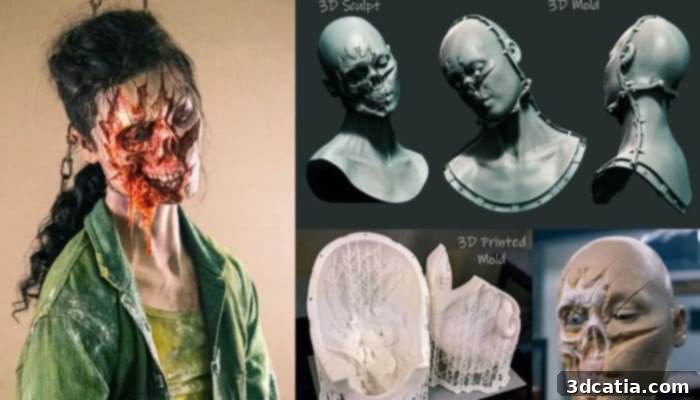
Thanks to the Form 3L printer, the suspended body of Decima was realized through 3D printing. (Photo credits: Formlabs)
Star Wars – Iconic Lightsabers and Armor Created through 3D Printing
It might come as a surprise to many fans that some of the most iconic and visually distinctive props from the beloved “Star Wars” universe are brought to life with the assistance of 3D printers. The legendary lightsabers, the elegant weapons of a more civilized age, are among the items now crafted using advanced additive manufacturing. Thanks to the sophisticated technology provided by manufacturer Markforged, specialized companies like Thingergy Inc. possess the capability to produce high-quality, durable film props with remarkable speed and precision. Beyond their work on the glowing blades, Thingergy has also played a pivotal role in developing the formidable armor worn by Moff Gideon in the hit Disney+ series “Star Wars: The Mandalorian.” Their expertise extends even further, having been enlisted for four different “Star Wars” shows, contributing significantly to the visual continuity and authentic feel of the sprawling saga. As one of the most sought-after prop houses in the industry, Thingergy’s contributions are not limited to the galaxy far, far away. Their versatile skills and reliance on 3D printing have also enabled them to contribute to the creation of incredibly detailed creatures and monsters for other popular series, including “Stranger Things” (further elaborating on the Demogorgon, for instance), “Umbrella Academy,” and numerous other films and television productions, solidifying 3D printing’s status as a cornerstone of modern cinematic prop design and fabrication.
3D Printing Used to Create Costumes for Avatar 2: The Way of Water
In the highly anticipated and visually groundbreaking production of “Avatar 2: The Way of Water,” the second installment in James Cameron’s ambitious “Avatar” saga, 3D printing played a role in the creation of some of the film’s extraordinary costumes. While the specific rationale for utilizing additive manufacturing was not extensively detailed by the filmmakers, its inclusion underscores the technology’s growing relevance in designing and producing complex, otherworldly attire. Neither director James Cameron nor esteemed costume designer Deborah Lynn Scott specifically highlighted the speed of the 3D printing process as a primary driver. In fact, they openly stated that the fabrication of certain garments was incredibly time-intensive, taking a staggering 200 hours “per garment,” a duration that did not even include the extensive preliminary design and conceptualization phases. This detail suggests that 3D printing was likely chosen for its ability to achieve intricate geometries, specific textures, and structural integrity that would be difficult or impossible to replicate with traditional textile methods, rather than for rapid production. Given the immense detail and unique aesthetics of the Na’vi culture and the various tribes introduced in the sequel, the precision and customization offered by 3D printing would have been invaluable. However, discerning precisely which costumes were exclusively 3D-printed remains challenging, as the production also employed a meticulous blend of cutting-edge technology and traditional hand-sewn craftsmanship. This fusion of techniques allowed for the creation of costumes that were both technologically advanced and imbued with artisanal quality, contributing to the film’s unparalleled visual spectacle and immersive world-building.

The pervasive adoption of 3D printing in the movie industry marks a significant evolution in cinematic production, moving beyond traditional methods to embrace the endless possibilities of additive manufacturing. From creating lifelike stop-motion puppets for animated features to crafting formidable costumes for superheroes, designing terrifying creatures, replicating invaluable props, and even aiding in dental prosthetics for character transformations, 3D printing has proven itself to be an indispensable tool. Its ability to produce intricate designs, offer unparalleled customization, accelerate prototyping, and even cut costs in certain scenarios, empowers filmmakers and artists to realize their most ambitious visions with greater precision and creative freedom. As the technology continues to advance, we can only anticipate even more spectacular and innovative applications, further blurring the lines between imagination and reality on the big screen. What do you think of the transformative role of 3D printing in the movie industry? Let us know in a comment below or connect with us on our Facebook and Twitter pages. Don’t forget to sign up for our free weekly newsletter, with all the latest news in 3D printing delivered straight to your inbox!