
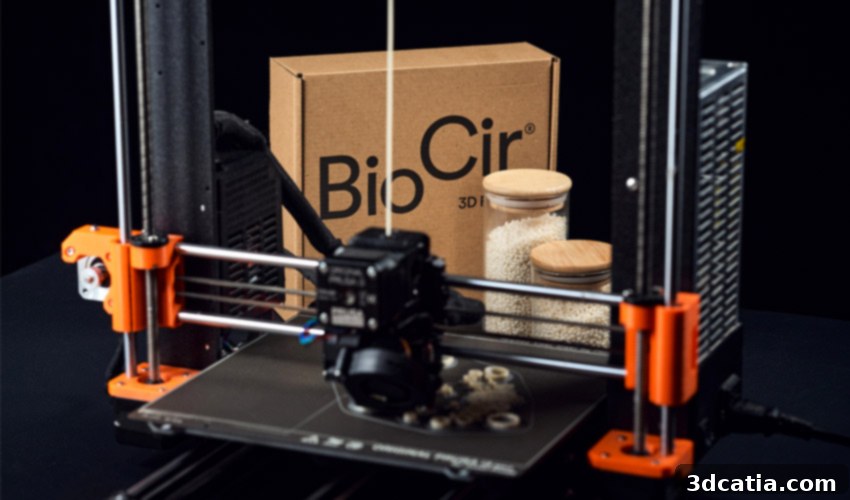
Revolutionizing Fashion: Balena’s BioCirFlex and 3D Printing for a Circular Economy
The global fashion industry, a powerhouse of creativity and economic activity, simultaneously casts a long shadow as one of the planet’s most significant polluters. Its enormous consumption of plastics, often discarded rapidly and improperly, contributes massively to landfills and ocean pollution, exacerbating an already urgent ecological crisis. In response to this pressing challenge, a visionary Israeli start-up, Balena, founded in 2020, has emerged with a groundbreaking mission: to develop sustainable solutions that grant a crucial second life to our clothing and fashion accessories. Balena specializes in creating innovative compostable and recyclable thermoplastic materials, including a remarkable solution tailored for additive manufacturing known as BioCirFlex. Available in both filament and pellet forms, this material holds the potential to profoundly reshape the fashion industry. We delve into a conversation with Balena’s dedicated team to uncover the distinctive characteristics of this revolutionary polymer and explore how it is poised to redefine sustainability within fashion.
Balena: Pioneering Sustainable Materials for Fashion’s Future
The Vision Behind Balena’s Innovation
Balena stands at the forefront of materials science, passionately committed to the development of advanced compostable and biodegradable thermoplastic materials. Founded by David Roubach, a fervent advocate for sustainability and the circular economy, Balena’s core mission is to establish a truly circular model for consumer goods. This ambitious endeavor directly confronts one of the fashion industry’s most formidable challenges: the pervasive issue of product end-of-life. David Roubach’s leadership is characterized by an unwavering dedication to fostering positive change within the industry through the creation of innovative and highly practical material solutions. Under his guidance, Balena is actively transforming the conventional paradigms of fashion production and consumption, striving to build a more sustainable and equitable future for everyone.
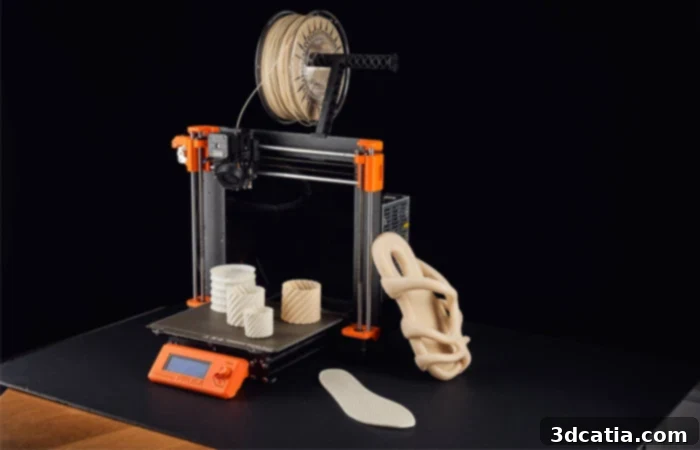
Balena develops compostable and biodegradable thermoplastic materials
The Urgent Need for Change: Fashion’s Plastic Problem
Addressing Fashion’s End-of-Life Challenge
The genesis of Balena stems from a stark reality: an astonishing 60% of all fashion garments produced today are composed of plastic. The environmental ramifications of this dependency are staggering. In the United States alone, over 21 billion pounds of garments reach their end-of-life annually, destined for incinerators or overflowing landfills. A disheartening statistic reveals that only a mere 1% of these items are recycled. This underscores a critical void in the market: the absence of a truly circular, comprehensive end-of-life solution capable of closing the loop for these plastic-laden garments, thereby mitigating the profound pollution inflicted upon our planet’s land and oceans.
Furthermore, while the global demand for bioplastics continues to surge, conventional biodegradable polymers currently available on the market often lack the advanced features and performance characteristics inherent in traditional plastic materials. This deficiency creates a significant hurdle for companies aiming to fully replace hazardous, polluting plastics in their products with viable, eco-friendly alternatives. Balena’s flagship material, BioCir™, represents a monumental leap forward. By developing BioCir, the company has forged an unprecedented opportunity to manufacture products that are not only high-performing but also designed for a truly circular lifecycle. At the culmination of their use, these products can be returned and undergo complete decomposition and biodegradation within a controlled compost environment, leaving absolutely no waste or contamination behind. This innovative approach offers a genuine solution to the pervasive problem of textile waste.
BioCirFlex: Advanced Compostable Materials for 3D Printing
Unpacking the Innovations of BioCirFlex
Balena’s BioCirFlex material represents a paradigm shift in sustainable manufacturing. It is an advanced, bio-based thermoplastic that is uniquely flexible and fully compostable. The primary objective behind its development is to significantly curtail the reliance on toxic, fossil fuel-based materials that have historically dominated the fashion industry. BioCir™ is not merely a niche material; its versatility allows it to be utilized for both high-volume mass production processes, such as injection molding, and for cutting-edge additive manufacturing applications, including 3D printing, where it is available in both filament and pellet forms. The true distinction of BioCir within the competitive landscape of the 3D printing industry lies in its unparalleled combination of genuine compostability and inherent flexibility. This unique blend addresses critical performance requirements while ensuring environmental responsibility, setting a new benchmark for eco-friendly materials.
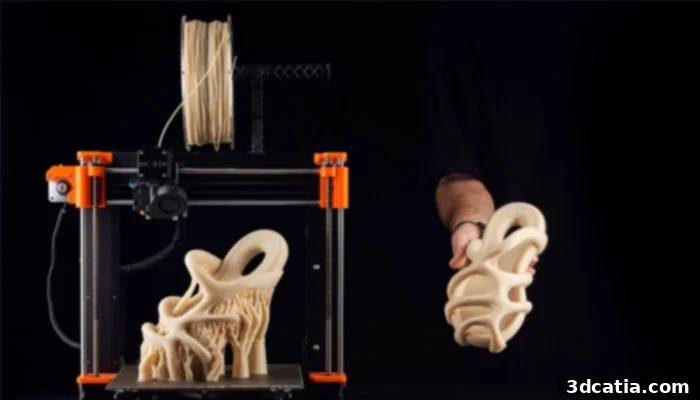
BioCir™ material is used in both injection molding and additive manufacturing, and is available in filament or pellet form.
Transforming the Fashion Industry with BioCir
Tackling Polluting Plastics Head-On
The fashion industry’s profound impact on the environment is undeniable, largely due to the widespread incorporation of plastics such as polyurethane (PU), ethylene-vinyl acetate (EVA), and polyvinyl chloride (PVC) into garments and accessories. These materials pose a critical environmental threat that will continue to affect our planet for generations. This alarming reality is precisely why Balena has strategically targeted the fashion industry as its initial focus. The core issue remains the critical absence of a truly circular, comprehensive end-of-life solution that can effectively close the loop for these plastic-intensive fashion items, thereby mitigating the extensive pollution and damage inflicted upon our ecosystems and oceans. Balena’s BioCir™ material offers a tangible, scalable answer to this dilemma, providing a sustainable alternative that upholds performance standards while ensuring environmental accountability.
Beyond Materials: A Sustainable Ecosystem
Balena’s vision extends beyond simply producing sustainable materials; it aims to foster an entire ecosystem where products are designed with their entire lifecycle in mind. By providing a material that is not only bio-based and flexible but also genuinely compostable, Balena empowers brands to rethink their design, manufacturing, and distribution processes. This encourages a shift from linear “take-make-dispose” models to circular ones, where resources are kept in use for as long as possible, and then regenerated at the end of their service life. This holistic approach is crucial for addressing the systemic issues that contribute to fashion waste and pollution, offering a pathway towards a future where consumer goods, particularly in fashion, contribute positively to the environment rather than detracting from it.
The ROOTS Concept: Showcasing Sustainable 3D Printed Footwear
A Collaboration for Innovation
To vividly demonstrate the transformative capabilities of BioCir™ and the potential of additive manufacturing in sustainable fashion, Balena embarked on an exciting collaboration with the renowned stylist, Kitty Shukman. This partnership culminated in the creation of the extraordinary ROOTS concept: a unique 3D-printed sandal that embodies both innovative design and ecological responsibility. Kitty Shukman, drawing inspiration from her namesake, was captivated by the organic forms of tree roots. She sought to replicate their intricate shapes and characteristic coils in the sandal’s design. The result is a visually striking entanglement between the sandal’s upper and sole, deliberately mimicking the complex network of roots found beneath our feet. These remarkable ROOTS sandals were meticulously 3D printed using Balena’s BioCir™ filament, serving as a powerful proof-of-concept. The overarching aim of this project was to showcase the viability of creating a truly circular and significantly more sustainable product for the fashion industry, particularly in the challenging footwear sector.
Design Inspiration and Environmental Impact
The ROOTS sandals are more than just a fashion statement; they represent a tangible step towards a greener future. The design, deeply rooted in nature, emphasizes the connection between humans and the environment, a theme that resonates perfectly with Balena’s mission. By leveraging 3D printing technology and BioCir™ material, the project not only achieved a unique aesthetic but also demonstrated how innovative design can converge with environmental consciousness. This collaboration highlighted the potential for designers to push boundaries with sustainable materials, creating products that are both aesthetically pleasing and fully compostable at the end of their lifespan, thereby minimizing their ecological footprint. It serves as an inspiring example of how sustainable innovation can be both functional and fashion-forward.
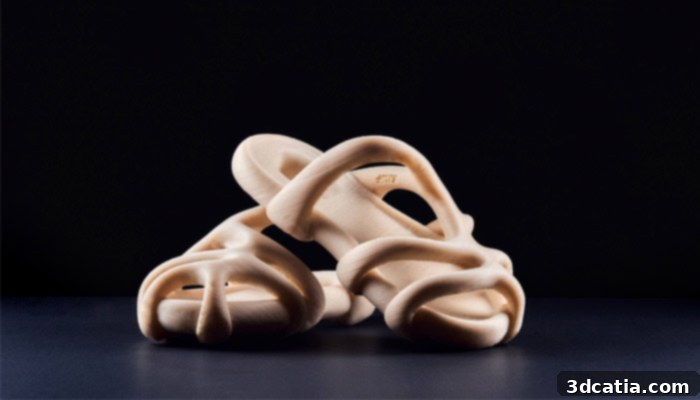
ROOTS sandals 3D printed with BioCir™ material.
Additive Manufacturing: A Cornerstone of the Circular Economy
How 3D Printing Drives Sustainability
Additive manufacturing, commonly known as 3D printing, is rapidly transforming various industries, and its impact on the fashion sector is particularly profound, paving the way for a more sustainable and genuinely circular economy. The inherent capabilities of 3D printing—such as its potential to drastically reduce material waste through precise, on-demand production, optimize resource utilization, and extend product lifespans through customization and repair—are opening up unprecedented possibilities for closed-loop manufacturing processes. This technology allows for the creation of complex geometries with minimal material consumption, and its localized production capabilities can significantly reduce transportation emissions and supply chain complexities. However, for a considerable period, the widespread success of 3D printing in critical applications like footwear production was constrained by the scarcity of suitable production-grade materials.
Overcoming Material Barriers in Sustainable Footwear
Historically, the materials available for 3D printing were often unable to meet the stringent high-performance standards required for durable and comfortable footwear production. This limitation hindered the full realization of 3D printing’s sustainable potential within this sector. Nevertheless, a new generation of advanced, 3D printable materials specifically engineered for footwear-friendly applications has now emerged. At the forefront of this innovation is Balena’s BioCir™ material. BioCir™ has been meticulously designed and rigorously tested to meet and even exceed the critical durability and flexibility standards essential for modern footwear manufacturing. This breakthrough material is unlocking entirely new possibilities within the 3D-printed footwear production industry, allowing for the creation of innovative, high-performance, and fully sustainable shoes. This development marks a significant step towards integrating truly circular practices into one of fashion’s most material-intensive categories. To delve deeper into Balena’s pioneering work and explore their full range of sustainable material solutions, we invite you to visit their official website HERE.
The Future of Fashion is Circular and 3D Printed
Join the Conversation
What are your thoughts on Balena, our featured 3D startup of the month? Do you believe their innovative BioCir™ material and commitment to compostable plastics will truly revolutionize the fashion industry, steering it towards a more sustainable and circular future? We eagerly await your insights and opinions. Share your thoughts in a comment below or engage with us on our various social media platforms, including LinkedIn, Facebook, and Twitter! Don’t miss out on the latest advancements and news in the dynamic world of 3D printing; remember to sign up for our free weekly Newsletter here, delivering the freshest updates straight to your inbox! Additionally, you can explore all our engaging videos and content on our dedicated YouTube channel.
*All Photo Credits: Balena